Recent POST



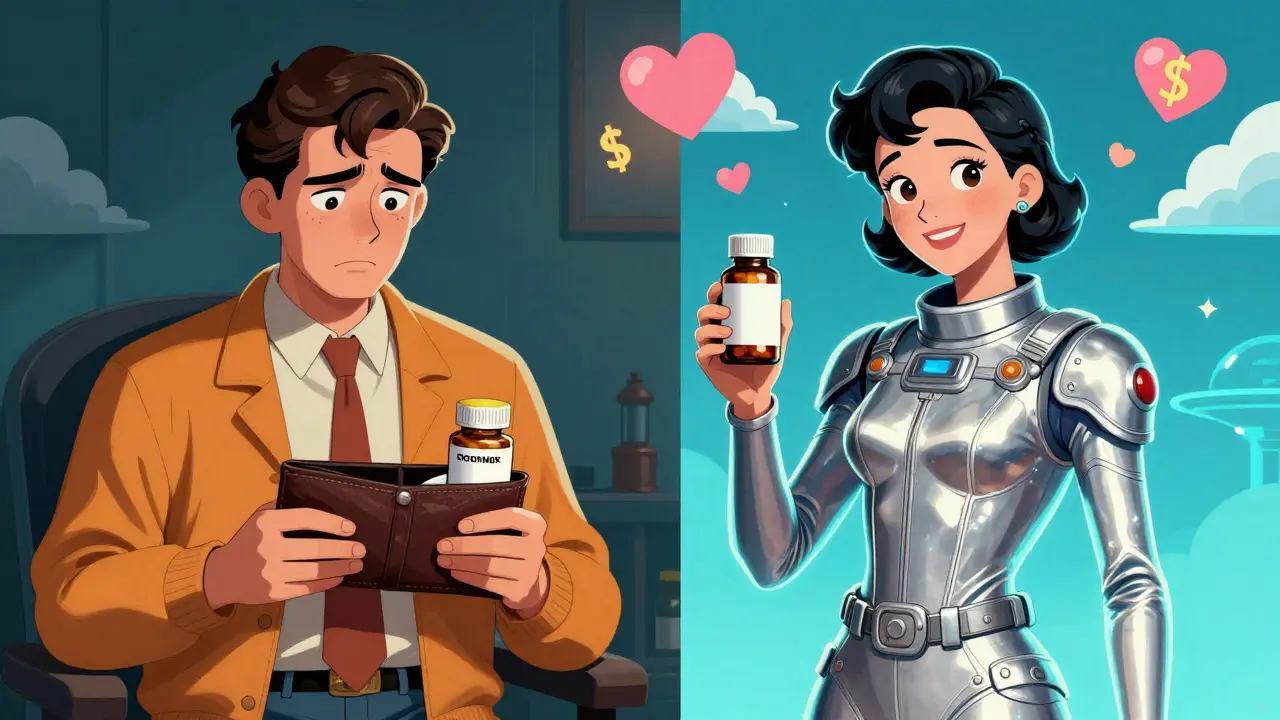
Imagine paying $40 a month for blood pressure medication when you could get the exact same therapeutic effect for $4. That isn't a hypothetical scenario; it is the daily reality for millions of people managing chronic conditions. The gap between brand-name and generic pricing is not just a minor discount-it represents a massive financial shift that can define your long-term health budget. When you are dealing with a condition like diabetes, hypertension, or asthma, medication is not optional. It is a lifelong commitment. Understanding how generic medications work within this framework is the key to unlocking significant lifetime savings without sacrificing your health outcomes.
The concept of generics might sound simple on the surface, but the regulatory machinery behind them is rigorous. You might worry that "cheaper" means "less effective," but federal regulations strictly prohibit that assumption. The Food and Drug Administration (FDA) requires every generic drug to demonstrate bioequivalence to its brand-name counterpart. This means the generic must deliver the same active ingredient, in the same strength, using the same route of administration, and produce identical therapeutic effects within a specific statistical margin. In practice, this ensures that your body processes the generic drug in virtually the same way as the original brand-name version.
The Economics of Bioequivalence
To understand why generics save so much money, you have to look at what drives pharmaceutical costs. Brand-name drugs carry the weight of research and development expenses, marketing campaigns, and patent protection periods that can last up to 20 years from filing. During this exclusive window, the manufacturer sets the price without competition. Once the patent expires, other manufacturers can step in. They do not need to repeat the expensive clinical trials because they only need to prove their product is bioequivalent to the already-approved brand name. This lack of R&D duplication allows them to sell the medication at a fraction of the cost.
The savings are quantifiable and substantial. Data indicates that generic drugs lower pharmaceutical costs by 80% to 85% compared to brand-name equivalents. Consider a patient with hypertension requiring lifelong treatment. If they stick with a brand-name drug like Prinivil, which might cost $40 to $50 per month, the annual expense quickly approaches $600. Switching to generic lisinopril reduces that monthly bill to approximately $4. Over a single year, that is a saving of roughly $1,200 to $2,000. Over a decade of managing the condition, those savings accumulate into tens of thousands of dollars-money that stays in your pocket rather than flowing through the healthcare system.
| Attribute | Brand-Name Drug | Generic Equivalent |
|---|---|---|
| Average Monthly Cost | $40 - $50 | $4 - $10 |
| Annual Savings Potential | $0 (Baseline) | $1,200 - $2,000+ |
| Regulatory Requirement | New Drug Application (NDA) | Abbreviated New Drug Application (ANDA) |
| Market Share (U.S.) | ~3% of prescriptions | ~97% of prescriptions |
This economic dynamic plays out across the entire healthcare landscape. In 2020, generics accounted for 90% of all dispensed prescriptions in the United States, yet they represented only 18% of total retail prescription drug expenditures. This disparity highlights the sheer volume of savings generated when patients and providers choose therapeutically equivalent, lower-cost options. The Hatch-Waxman Act of 1984 established this modern pathway, balancing the need to reward innovation with the public's right to affordable access. Today, this framework supports a market where generics dominate volume while drastically reducing overall spending.
Impact on Medication Adherence and Health Outcomes
Cost is not just a line item on a budget; it directly influences whether you take your medication consistently. Medication adherence-the extent to which patients follow their prescribed treatment plan-is one of the biggest challenges in chronic disease management. Studies show that high prescription drug costs act as a significant barrier, with 25% of rural patients reporting skipped doses due to affordability concerns. When you skip doses, your condition destabilizes. For diabetes, this means dangerous blood sugar spikes. For hypertension, it increases the risk of stroke or heart attack. These complications lead to emergency room visits and hospitalizations, which are exponentially more expensive than the medication itself.
Generic medications break this cycle of non-adherence driven by cost. Patients initiated on generic drugs are 18% to 22% more likely to maintain consistent medication regimens compared to those on brand-name drugs. This improvement in adherence translates directly to better health metrics. Research indicates that adherent patients experience 20% to 30% fewer hospitalizations and emergency visits. By lowering the financial friction, generics remove a primary obstacle to staying healthy. The result is a virtuous cycle: lower costs lead to better adherence, which leads to fewer complications, which leads to even greater long-term savings.
Medication Therapy Management (MTM) programs further amplify these benefits. Pharmacists play a critical role in optimizing medication regimens, identifying cost-effective alternatives, and monitoring for potential issues. Programs targeting chronic disease patients have been shown to reduce medication-related problems by 30% to 40% and improve adherence rates by an additional 15% to 25%. Through MTM, pharmacists help patients navigate insurance coverage, identify generic substitutions, and ensure they understand their treatment plans. This proactive approach reduces out-of-pocket costs by 25% to 35% for many patients, making lifelong management sustainable.

Addressing Common Misconceptions About Quality
Despite the clear economic and health benefits, misconceptions about generic quality persist. Some patients believe that because the packaging looks different or the pill has a different color, the drug inside is inferior. This perception often stems from differences in inactive ingredients-binders, fillers, or dyes-that do not affect the therapeutic outcome. While these inactive components can vary between manufacturers, the active pharmaceutical ingredient remains identical. The FDA mandates that any variation in inactive ingredients must not alter the drug's safety or efficacy.
Another common myth is that generics are only suitable for simple conditions like headaches or allergies. This view ignores the complexity of modern generic manufacturing. Experts like Dr. Aaron Kesselheim from Harvard Medical School emphasize that generic drugs treat some of the most complex and chronic diseases, including rare and orphan conditions. The development of "higher-value generics" and complex generics involves sophisticated delivery systems and combination therapies that address intricate medical needs. As patents expire on newer, more complex drugs, these advanced generics will continue to expand access to cutting-edge treatments at affordable prices.
Occasionally, patients report perceived reduced efficacy with generics. However, clinical evidence suggests these cases are largely attributed to placebo effects or individual sensitivities to specific inactive ingredients rather than the active drug itself. If a patient experiences genuine side effects from a particular generic formulation, switching to a different manufacturer's generic version often resolves the issue. Open communication with healthcare providers and pharmacists ensures that any such concerns are addressed promptly, maintaining trust in the treatment plan.

Strategic Implementation for Maximum Savings
Maximizing lifetime savings requires a strategic approach to medication management. Start by reviewing your current prescriptions with your pharmacist or doctor. Ask specifically if generic alternatives are available for each brand-name drug. In many cases, insurance plans automatically substitute generics, but verifying this step ensures no opportunities for savings are missed. For patients on multiple medications, known as polypharmacy, the cumulative savings from switching several drugs to generics can be profound.
Utilize resources like the FDA's Orange Book, which provides detailed information on approved generic drugs and their patent status. This tool helps patients and providers make informed decisions about therapeutic substitution. Additionally, explore Medication Therapy Management services, especially if you are covered by Medicare Part D or similar insurance plans. These services offer personalized reviews of your medication regimen, identifying redundancies, interactions, and cost-saving opportunities.
Educational interventions also play a crucial role. Healthcare providers who explain the rigorous bioequivalence requirements to patients can increase acceptance rates of generic medications by 45%. Understanding that the FDA tests generics as rigorously as brand-name drugs alleviates anxiety and encourages compliance. Patient assistance programs from pharmaceutical manufacturers and nonprofit organizations can provide additional support for those facing financial hardship, ensuring that cost never becomes a barrier to essential care.
Future Trends and Biosimilars
The landscape of affordable chronic care is evolving beyond traditional small-molecule generics. Biologic drugs, which are complex proteins used to treat conditions like rheumatoid arthritis, cancer, and inflammatory bowel disease, are increasingly entering the market with biosimilar alternatives. The Biologics Price Competition and Innovation Act of 2009 created pathways for these biosimilars, extending the principle of generic competition to biologics. While biosimilars are not identical copies like traditional generics, they are highly similar to the reference biologic with no clinically meaningful differences in safety, purity, or potency.
Projections suggest that biosimilars could save the U.S. healthcare system $300 billion over the next decade. As more biologic patents expire, patients will gain access to these high-cost treatments at significantly reduced prices. The global generic drugs market, valued at $232.4 billion in 2022, is expected to reach $356.8 billion by 2028, driven by increasing adoption in chronic disease management. Regulatory initiatives like the FDA's Generic Drug User Fee Amendments (GDUFA) III aim to accelerate approvals while maintaining strict quality standards, ensuring a steady supply of safe and effective options.
Legislative actions such as the Inflation Reduction Act of 2022 further enhance affordability by reducing out-of-pocket costs for Medicare beneficiaries. Seniors using generics for chronic conditions may save an average of $450 annually. These policy changes, combined with market dynamics, create a robust environment for sustained lifetime savings. As patent cliffs bring approximately $150 billion in brand-name drug sales to generic competition between 2023 and 2027, the opportunity for cost reduction continues to grow.
Are generic medications exactly the same as brand-name drugs?
Generic medications contain the same active ingredient, strength, dosage form, and route of administration as the brand-name drug. They must meet the same strict FDA standards for quality, performance, and consistency. The main differences lie in inactive ingredients, such as colors or flavors, which do not affect the drug's therapeutic effect. Bioequivalence testing ensures that the generic works in the body in the same way and within the same time frame as the brand-name version.
How much can I save by switching to generic medications for chronic conditions?
Patients can typically save 80% to 85% on their medication costs by choosing generics. For example, a monthly prescription costing $50 for a brand-name drug might cost only $4 to $10 for the generic equivalent. Over a year, this translates to savings of $1,200 to $2,000 or more, depending on the specific medication and dosage. For individuals managing multiple chronic conditions, these savings accumulate significantly over a lifetime.
Do generic drugs work as well as brand-name drugs for serious illnesses?
Yes, generic drugs are equally effective for treating serious and complex chronic diseases, including diabetes, hypertension, and even rare conditions. The FDA requires rigorous testing to prove bioequivalence, ensuring identical therapeutic outcomes. Research confirms that patients using generics achieve similar health results to those using brand-name drugs, with studies showing improved adherence and reduced hospitalization rates due to lower costs.
Why do some patients feel generics are less effective?
Perceived differences in effectiveness are often due to the placebo effect or sensitivity to inactive ingredients like binders or dyes, rather than the active drug itself. Clinical evidence shows no difference in therapeutic efficacy between generics and brand-name drugs. If a patient experiences side effects from a specific generic formulation, switching to a different manufacturer's version often resolves the issue, as inactive ingredients vary between producers.
What are biosimilars, and how do they differ from generics?
Biosimilars are biological products that are highly similar to an existing FDA-approved biologic reference product. Unlike traditional generics, which are chemical copies, biologics are complex molecules made from living organisms. Biosimilars cannot be identical copies but must demonstrate no clinically meaningful differences in safety, purity, or potency. They offer significant cost savings for high-priced biologic treatments used in conditions like cancer and autoimmune diseases.
How can I find out if my prescription has a generic alternative?
You can ask your pharmacist or doctor directly if a generic version is available for your medication. Most insurance plans automatically substitute generics when available to lower costs. You can also check the FDA's Orange Book online, which lists approved generic drugs and their patent status. Additionally, participating in Medication Therapy Management (MTM) programs can help identify cost-effective alternatives and optimize your treatment plan.
Will switching to generics affect my insurance coverage?
In most cases, switching to generics improves your insurance coverage by lowering your out-of-pocket costs. Insurance plans often categorize generics in lower copay tiers, meaning you pay less per prescription. Some plans may even require prior authorization for brand-name drugs if a generic alternative exists. Always check with your insurance provider to understand your specific formulary and coverage details.
Are there any risks associated with taking generic medications?
The risks associated with generic medications are minimal and comparable to those of brand-name drugs. The FDA enforces strict manufacturing and quality control standards to ensure safety. Rarely, patients may have sensitivities to specific inactive ingredients, but this can usually be managed by switching to a different generic manufacturer. Overall, the benefits of improved affordability and adherence far outweigh any negligible risks.

Vinay Bairagi
you think this is news? in india we have been taking generics for decades because the big pharma companies from the west dont care about our poverty. its not a 'transformation' it is survival. you americans are only now realizing what the rest of the world knows. stop acting like this is some new discovery. the system is rigged against us but at least we know how to navigate the cheap options while you pay premiums for fancy packaging.

Blythe Ward
oh please 🙄 the idea that generic equals brand name is a myth perpetuated by insurance companies to save pennies. i took my brand name drug and felt great then switched to generic and suddenly my blood pressure was all over the place. bioequivalence is a statistical game not a guarantee for your individual body chemistry. don't let these cost-cutting measures dictate your health outcomes just because they want to look good on a spreadsheet 😒

Casey Eickhoff
I appreciate the detailed breakdown here, as it addresses a common concern among patients who are hesitant to switch medications due to perceived quality differences. The regulatory framework established by the FDA ensures that generic drugs meet stringent standards for safety and efficacy, which is crucial for maintaining public trust in the healthcare system. It is important to note that while inactive ingredients may vary, the active pharmaceutical ingredient remains identical, thereby ensuring therapeutic equivalence. Furthermore, the economic benefits of switching to generics cannot be overstated, as they significantly reduce the financial burden on individuals managing chronic conditions. This allows patients to allocate their resources more effectively, potentially improving overall adherence to treatment plans and leading to better long-term health outcomes. We should continue to advocate for transparency in medication pricing and encourage healthcare providers to discuss generic alternatives with their patients proactively.

Sarah Boomgaard
this whole narrative is flawed because it ignores the fact that the human body is complex and unique. telling people they must take the cheapest option is morally wrong when health is at stake. you are prioritizing money over life. the placebo effect mentioned is real and if a patient feels worse on a generic their suffering is valid regardless of statistics. forcing compliance through cost savings is unethical.

Gilbert Bankual
Great points on the savings! I switched to generics last year and saved thousands. My doctor supports it fully. Keep advocating for affordable healthcare!

Ashley Loera
i cant believe people still fall for this propaganda. my cousin took a generic for her anxiety and ended up in the hospital because it didnt work right. the doctors said it was fine but she was shaking for days. its scary how they push these cheaper drugs without thinking about the side effects. its all about profit margins for the pharmacies.

Dawn Renee
The FDA is compromised by industry lobbyists and cannot be trusted to enforce true bioequivalence standards. They allow slight variations in absorption rates that can be detrimental to patients with narrow therapeutic index drugs. This is a slow poison designed to keep the population dependent and docile while the elite enjoy superior healthcare. Do not trust the government agencies that regulate these substances as they serve corporate interests above public health.

Divya Prakash
It is rather amusing to observe the sheer naivety displayed by those who unquestioningly accept the premise that generic medications are merely 'cheaper versions' of their brand-name counterparts, failing to recognize the intricate socio-economic machinations at play. One must consider the historical context of pharmaceutical monopolies and the deliberate obfuscation of clinical data by manufacturers seeking to prolong patent protections through evergreening strategies. The notion that a simple chemical substitution yields identical therapeutic outcomes ignores the nuanced interplay between excipients and active ingredients, which can significantly alter pharmacokinetics in susceptible populations. Furthermore, the reductionist approach to healthcare economics presented herein disregards the profound psychological impact of perceived inferiority associated with generic branding, a phenomenon well-documented in behavioral medicine literature. Thus, while the financial allure of generics is undeniable, one must remain critically aware of the potential pitfalls inherent in such systemic shifts towards commodified medicine.

Mohit Patil
they are watching us through our prescriptions every time you fill a script they track your location and health status. generics are laced with microchips or tracking agents to monitor compliance. why do you think they changed the colors? to hide the technology inside. wake up sheeple the big pharma cartel controls everything including your mind.

Chandan Sharma
One might argue that the semantic distinction between 'brand' and 'generic' is merely a linguistic construct imposed by marketing departments to create artificial hierarchies of value. In reality, the molecular architecture of the active ingredient remains steadfastly loyal to its chemical identity regardless of the label adorning the bottle. However, the theatrical presentation of pharmaceuticals-those vibrant hues and glossy coatings-serves as a potent placebo mechanism, tapping into our primal desire for premium experiences. To dismiss this psychosomatic dimension is to ignore the holistic nature of healing, where belief and expectation play pivotal roles in therapeutic success. Thus, while the wallet may rejoice at the lower price point, the soul may yearn for the familiar comfort of the branded vessel.

Katie Dixon
we need to support american made drugs even if they cost more. buying foreign generics hurts our economy and jobs. why are we letting other countries control our medicine supply chain? its a national security risk. we should demand domestic production even if it means paying higher prices. protect american workers first.

Anna Bartle
This is such helpful information! I always wondered about the difference. Thanks for sharing! I will definitely ask my pharmacist next time. You make it so easy to understand! Let's spread the word about saving money!

Chris Munton
The moral imperative to ensure equitable access to healthcare necessitates a critical examination of the pricing structures within the pharmaceutical industry, which often prioritize shareholder dividends over patient welfare. By embracing generic alternatives, we not only alleviate the financial strain on individuals but also contribute to a more just society where health is recognized as a fundamental right rather than a luxury commodity. The data presented clearly illustrates the substantial cost reductions achievable through generic substitution, thereby enabling resources to be redirected towards other essential needs such as nutrition and housing. Furthermore, the improved adherence rates associated with affordable medications underscore the direct correlation between economic accessibility and positive health outcomes, reinforcing the argument for widespread adoption of generic therapies. It is incumbent upon policymakers and healthcare providers to champion these cost-effective solutions to dismantle the barriers that prevent vulnerable populations from receiving adequate medical care.

Amrithaa Thayaparan
u guys r so dumb for trusting the system. the elites use generics to weaken the population slowly. its a eugenics plot. i refuse to take any meds given by the state. stay pure and natural u fools.
Write a comment