Recent POST





Levothyroxine Timing Calculator
Enter the time you take levothyroxine and the time you take calcium or iron supplements. The calculator will determine if you're spacing them properly according to medical guidelines. Remember: calcium should be separated by at least 4 hours from levothyroxine, and iron by 2-4 hours.
When you're taking levothyroxine for hypothyroidism, even small mistakes in how you take it can throw off your whole treatment. It's not about forgetting a pill-it's about what you take with it. Iron and calcium, two common supplements many people rely on, can block your body from absorbing levothyroxine properly. And if that happens, your TSH levels rise, your energy drops, and you start feeling like you did before treatment-even if you're taking your medication exactly as prescribed.
Why Iron and Calcium Interfere with Levothyroxine
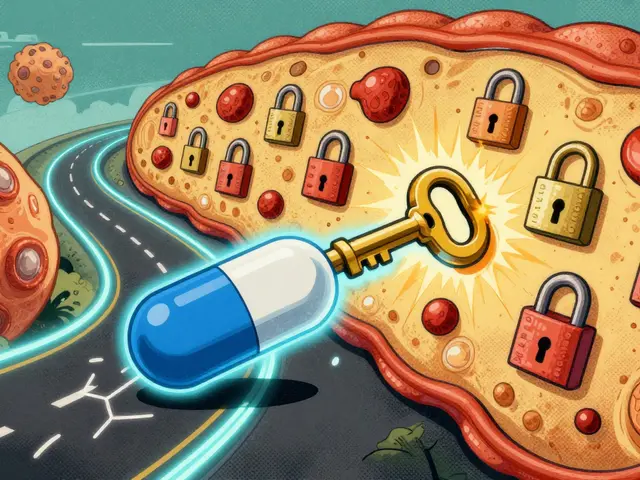
Levothyroxine is a synthetic version of the thyroid hormone T4. Your body needs it in very specific amounts. Too little, and you're hypothyroid. Too much, and you risk heart problems or bone loss. That’s why it’s called a narrow therapeutic index drug: even a 10% drop in absorption can cause noticeable symptoms. Iron and calcium don’t just pass by levothyroxine-they bind to it. In your stomach and intestines, these minerals form insoluble complexes with the hormone, trapping it so your body can’t absorb it. This isn’t a myth or old wives’ tale. It’s been proven in multiple clinical studies. One 2011 study in the Journal of Clinical Endocrinology & Metabolism showed that just 500 mg of elemental calcium reduced levothyroxine absorption by 22.3%. Another study found that 78.6% of patients on stable levothyroxine doses saw their TSH levels spike when they started taking iron supplements. It doesn’t matter if it’s calcium carbonate, citrate, or acetate-all forms interfere. Iron supplements, especially ferrous sulfate, are even more disruptive. A 2020 study tracking 605 patients found that 16% needed dose adjustments simply because they were taking calcium or iron without proper spacing.The 4-Hour Rule: What Science Says
The standard advice you’ll hear from doctors and pharmacists is to separate levothyroxine from calcium and iron by at least 4 hours. That’s not arbitrary. It’s based on how long it takes for these minerals to move through your digestive system and stop binding to the hormone. Here’s the breakdown:- Levothyroxine: Take on an empty stomach, 30 to 60 minutes before breakfast, with a full glass of water.
- Calcium supplements: Wait at least 4 hours after taking levothyroxine. Many people take calcium at dinner or bedtime, which works well.
- Iron supplements: Wait 2 to 4 hours after levothyroxine. Some experts recommend 4 hours for maximum safety, especially if you’ve had trouble with absorption before.
Real-Life Scenarios: How People Actually Do This
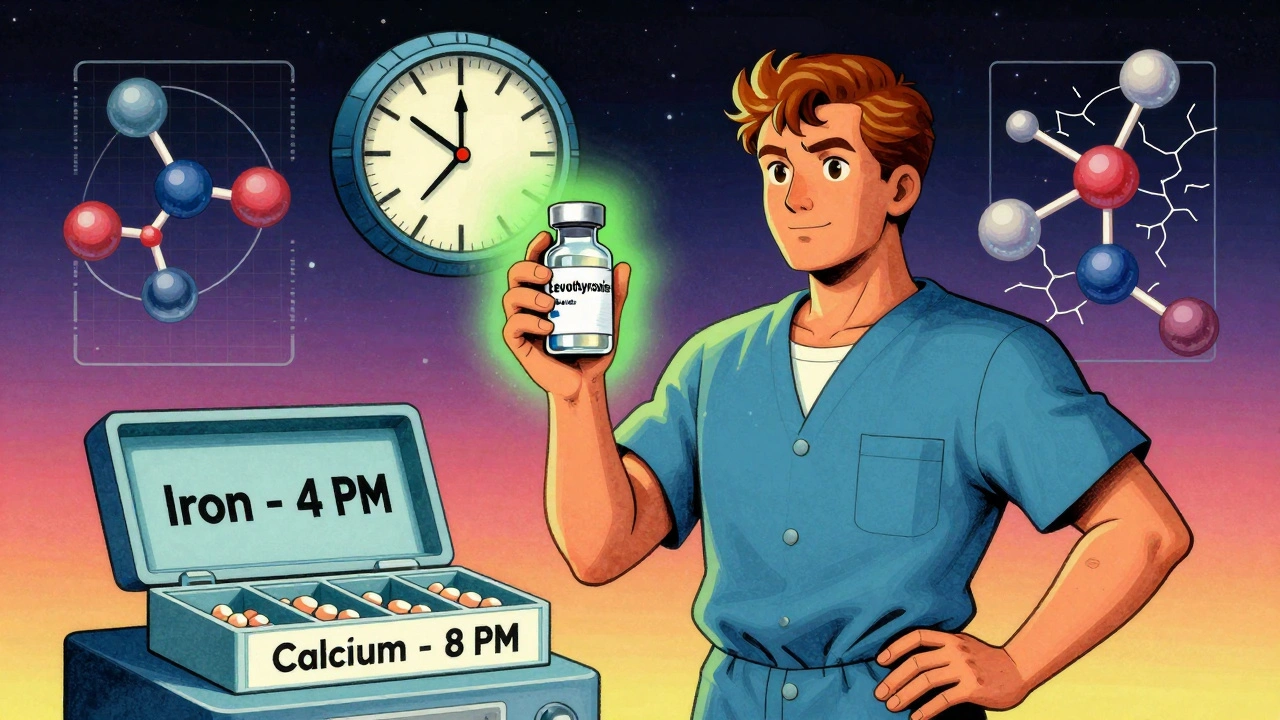
Let’s say you take levothyroxine at 6 a.m. before breakfast. What does your day look like?- 6:00 a.m. Take levothyroxine with water. Wait 60 minutes before eating.
- 7:00 a.m. Eat breakfast.
- 12:00 p.m. Lunch. No supplements.
- 4:00 p.m. Take your iron supplement. This is 10 hours after levothyroxine-safe and easy.
- 8:00 p.m. Take your calcium supplement with dinner. You’re now 14 hours away from your thyroid dose.

What If You Can’t Stick to the 4-Hour Rule?
Life isn’t perfect. Shift work, kids, travel, forgetfulness-all of it makes timing hard. If you consistently miss the window, your TSH will creep up over time. You might feel tired, gain weight, or get cold easily. Your doctor won’t know why unless you mention your supplement use. Here are practical fixes:- Use phone alarms: Set two alarms-one for your thyroid pill, one for your supplement. Most endocrinologists recommend this.
- Use a pill organizer: Get one with separate compartments for morning, afternoon, evening. Label them clearly.
- Switch to liquid levothyroxine: Studies show that liquid formulations (like Tirosint) are less affected by calcium and iron. One study found patients on liquid levothyroxine had TSH levels of 1.68 mIU/L when taking iron, compared to 8.74 mIU/L on tablets.
- Ask about extended-release options: A new FDA-approved extended-release form, Thyropatch ER, shows early promise in reducing interactions. While it’s not yet widely used, it’s an option worth discussing if you’re struggling.
What About Other Supplements and Foods?
Calcium and iron are the biggest offenders, but they’re not alone. Other things that can interfere with levothyroxine include:- Soy products: Soy isoflavones can reduce absorption. Avoid soy milk or tofu within a few hours of your dose.
- Fiber supplements: Psyllium husk and other high-fiber products bind to the hormone.
- Antacids and proton-pump inhibitors: These raise stomach pH, which changes how levothyroxine dissolves.
- Cholesterol-lowering drugs: Cholestyramine and colestipol are known to block absorption.
How to Know If It’s Working
The only way to know if your dose separation is working is to check your TSH levels. Your doctor will likely test them every 6 to 8 weeks after you change your routine. Normal TSH range is 0.4 to 4.0 mIU/L. If your TSH is above 4.0, your levothyroxine dose might be too low-or your supplements are interfering. If your TSH drops below 0.4, you might be getting too much hormone. One patient in a ThyroidUK case study had a TSH of 7.4 mIU/L while taking calcium with her levothyroxine. After switching to a 4-hour separation, her TSH dropped to 1.8 mIU/L-right in the ideal range.When to Talk to Your Doctor
Don’t adjust your levothyroxine dose on your own. If you’ve been taking calcium or iron close to your thyroid medication and you’re feeling off, tell your doctor. Bring your supplement list. Ask for a TSH test. If your levels are off, your doctor might:- Adjust your levothyroxine dose
- Switch you to liquid levothyroxine
- Change the timing of your supplements
- Recommend a different form of calcium or iron (e.g., ferrous fumarate instead of sulfate)
Final Tips for Success
- Always take levothyroxine on an empty stomach, 30-60 minutes before food. - Never take it with coffee, soy milk, or grapefruit juice-they also interfere. - Write down your schedule and stick to it for at least 2 weeks before retesting TSH. - If you miss a dose, take it as soon as you remember-unless it’s close to your next dose. Then skip it. - Keep a journal: note your doses, supplements, and how you feel. It helps your doctor spot patterns. Your thyroid medication works best when you treat it like a precision tool-not just another pill. A few minutes of planning each day can save you months of fatigue, weight gain, and unnecessary dose changes.Can I take calcium and iron together with levothyroxine if I space them 4 hours apart?
No. Even if you space calcium and iron 4 hours apart from levothyroxine, taking them together can still interfere. Calcium and iron compete for absorption in the gut. Take them separately-iron first, then calcium, or vice versa-with at least 2 hours between them. The safest approach is to take levothyroxine in the morning, iron in the afternoon, and calcium at bedtime.
What if I forget and take my calcium with my levothyroxine?
If you accidentally take calcium or iron with your levothyroxine, don’t panic. Skip that dose of the supplement for the day. Take your next dose of levothyroxine as scheduled the next morning. Don’t double up on your thyroid medication. One occasional mistake won’t ruin your treatment, but doing it regularly will. Track it and talk to your doctor if it happens more than once a week.
Is liquid levothyroxine worth the extra cost?
If you struggle with absorption despite following timing rules, yes. Liquid levothyroxine (like Tirosint) is absorbed more consistently and is less affected by calcium, iron, and food. Studies show it can lower TSH levels significantly compared to tablets when taken with supplements. It costs about 35% more, but if you’ve been getting frequent TSH spikes, the cost may be worth avoiding extra doctor visits and dose adjustments.
Can I take multivitamins with levothyroxine?
Most multivitamins contain iron, calcium, or magnesium-all of which interfere. Avoid taking them within 4 hours of your levothyroxine. If you need a multivitamin, take it at lunch or dinner, not in the morning. Some brands offer “thyroid-friendly” versions without iron or calcium-ask your pharmacist.
How long does it take for TSH to normalize after fixing my supplement schedule?
It usually takes 4 to 6 weeks for your TSH levels to reflect changes in your routine. Levothyroxine has a long half-life, so your body takes time to adjust. Don’t test too soon. Wait at least 4 weeks after you’ve consistently followed the 4-hour rule before asking for a blood test.

Jack Appleby
Let’s be unequivocally clear: the 4-hour rule isn’t merely a suggestion-it’s a biochemical imperative grounded in pharmacokinetic reality. Iron and calcium form insoluble chelates with levothyroxine in the duodenum, effectively neutralizing its bioavailability. A 22.3% reduction in absorption, as cited from the JCEM study, isn’t trivial-it’s clinically catastrophic for patients with subclinical hypothyroidism. Liquid formulations like Tirosint aren’t a luxury; they’re a pharmacological lifeline for those whose gut physiology refuses to cooperate with antiquated pill schedules. And yes, soy, fiber, and PPIs? All equally nefarious. This isn’t alternative medicine-it’s endocrinology 101.

Raj Rsvpraj
India has been managing thyroid disorders for decades without this Western overcomplication! In Delhi, patients take levothyroxine with breakfast-alongside calcium-rich yogurt-and their TSH remains stable. Why? Because our bodies are adapted! You Americans treat medication like a rocket launch-‘four hours apart!’-when in reality, the body metabolizes things holistically. Stop over-medicalizing! Also, why are you ignoring Ayurvedic practices? Triphala improves gut motility and absorption-no need for expensive liquid thyroid!

Rebecca Dong
Wait-so you’re telling me Big Pharma and the Endo-Industrial Complex are hiding the TRUTH? What if calcium and iron don’t interfere at all? What if the whole 4-hour rule is a scam to sell you pricier liquid thyroid? I’ve been taking my Synthroid with my multivitamin since 2018 and my TSH is LOWER than ever. My cousin’s oncologist told me TSH tests are rigged. And what about glyphosate? Isn’t that what’s really wrecking our thyroids? I’m not taking any more pills until I get a second opinion from a holistic healer who uses crystals.

Michelle Edwards
This post was so helpful-I’ve been struggling with fatigue for months and never realized my calcium supplement at breakfast was the culprit. I just switched to taking my iron at lunch and calcium at bedtime, and already, I feel like I can breathe again. Thank you for the clear schedule and the reminder to track TSH levels. You don’t need to be perfect-just consistent. Even if you mess up once a week, it’s okay. Progress, not perfection. You’ve got this.

Sarah Clifford
Okay but like… why is this even a thing? I just take my thyroid pill and call it a day. I don’t have time to be a scientist. My dog eats faster than I take supplements. Can’t we just… fix the pill? Why does everything have to be so hard??

Regan Mears
I appreciate the science here, but let’s not forget the human side: shift workers, single parents, people with chronic pain or cognitive fog-this 4-hour rule is impossible for many. I’ve been on levothyroxine for 12 years. I take my calcium at dinner, iron at 4 p.m., and my thyroid at 6 a.m. I’ve had zero issues. TSH has been stable for 3 years. Maybe the rule isn’t universal? Maybe some people metabolize differently? I’m not saying ignore the data-but don’t shame people who’ve found their own rhythm. Consistency > perfection.

Ben Greening
The data presented is methodologically sound. The cited studies are peer-reviewed and reproducible. The proposed regimen aligns with current clinical guidelines from the American Thyroid Association. However, the assumption that all patients require rigid temporal separation may overlook inter-individual variability in gastric emptying and intestinal transit time. Future research should explore pharmacogenomic predictors of absorption interference. For now, the 4-hour rule remains the gold standard.

Queenie Chan
It’s fascinating how a molecule as simple as levothyroxine-just a synthetic T4-can become this battleground between biochemistry, corporate profit, and personal autonomy. We treat it like a magic bullet, but it’s really a delicate dance between chemistry and physiology. And yet, we’re so quick to blame the patient when things go wrong. What if the problem isn’t the 4-hour rule, but the fact that we’ve outsourced our health to pills and schedules? What if the real solution isn’t better timing-but better gut health, less inflammation, fewer binders in our food? I’m not rejecting the science-I’m asking if we’re asking the right questions.

Stephanie Maillet
There’s a quiet tragedy in how we reduce human biology to clockwork. We say ‘take it 4 hours apart’ as if the body is a machine with discrete compartments. But the gut isn’t a factory line-it’s a living ecosystem, shifting with stress, sleep, microbiome, even the moon. I’ve seen patients who take calcium with thyroid and feel fine. Others who follow every rule and still crash. Maybe the answer isn’t in the timing-but in the trust. Trust your body. Trust your doctor. Trust the data-but don’t let it become a cage. We’re not algorithms. We’re humans trying to survive in a world that wants us to be perfectly timed.
Write a comment