Recent POST


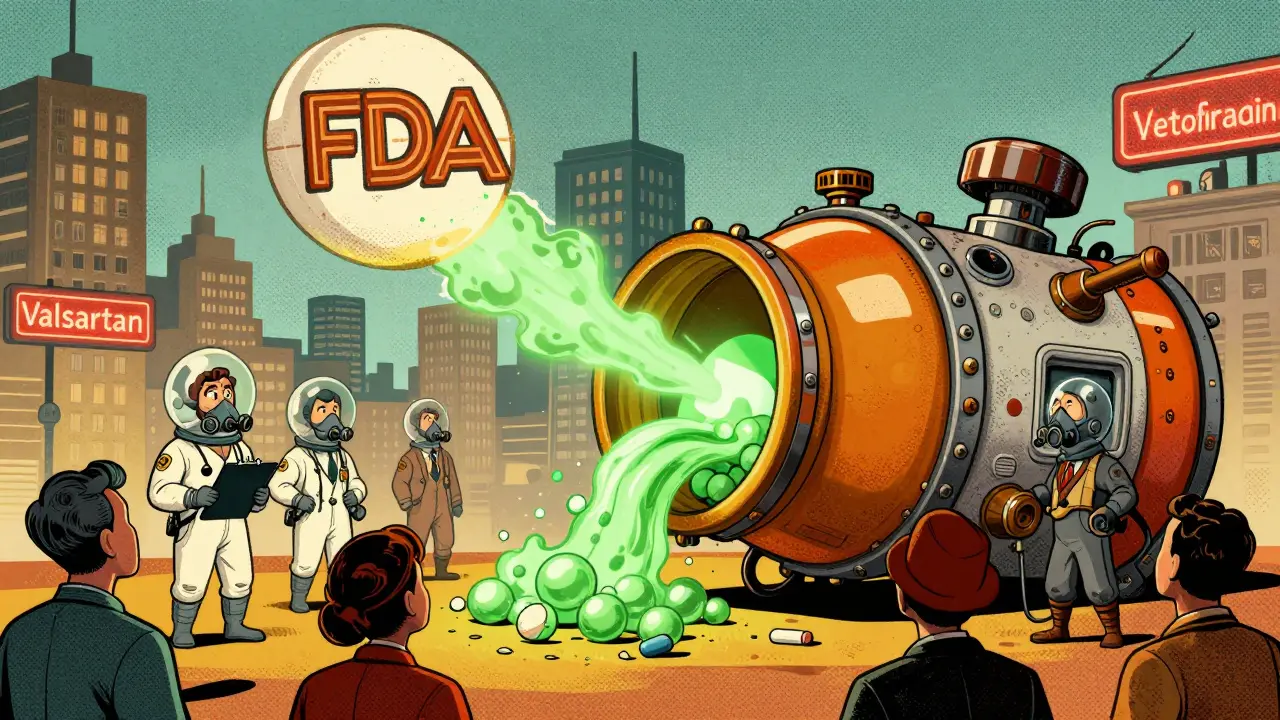
Since 2018, a quiet but dangerous problem has shaken the generic drug industry: nitrosamine contamination. These chemicals, formed accidentally during manufacturing, are potent carcinogens. Even tiny amounts-measured in nanograms-can raise cancer risk over time. What started with a single recall of valsartan, a blood pressure medicine, has grown into a global crisis affecting dozens of drugs, hundreds of batches, and thousands of patients. By mid-2025, the FDA had issued over 500 recalls linked to nitrosamines. This isn’t a glitch. It’s a systemic failure in how generic drugs are made, tested, and controlled.
What Are Nitrosamines and Why Do They Matter?
Nitrosamines are a group of chemical compounds that form when amines-common building blocks in drugs-react with nitrites under certain conditions. They’re not added on purpose. They’re accidental byproducts. The most notorious ones include NDMA (N-nitrosodimethylamine), NDEA (N-nitrosodiethylamine), and newer, more complex versions called NDSRIs (nitrosamine drug substance-related impurities), like N-nitroso-varenicline and N-nitroso-duloxetine.
The International Agency for Research on Cancer classifies many nitrosamines as probable or possible human carcinogens. That means even low-level, long-term exposure can increase cancer risk. The FDA’s 2024 guidance set strict limits: 96 nanograms per day for NDMA and NDSRIs, and just 26.5 ng/day for NDEA. To put that in perspective, 96 nanograms is less than the weight of a single grain of salt spread over a swimming pool. Yet, if a drug exceeds that limit, the FDA demands an immediate recall.
Which Drugs Were Affected?
The first wave hit in 2018 with ARBs-medicines like valsartan, losartan, and irbesartan used for high blood pressure. Within months, more than 10 products vanished from U.S. shelves. Then came ranitidine (Zantac), a top-selling heartburn drug pulled globally in 2020. After that, the list kept growing: metformin for diabetes, duloxetine for depression and pain, varenicline for smoking cessation, and even antibiotics like rifampin.
By 2025, over 40 specific drug products had been recalled in the U.S. alone. The pattern? Most were generics. Brand-name drugs rarely showed contamination-likely because their manufacturers had tighter control over raw materials and processes. Generics, competing on price, often relied on cheaper suppliers, older equipment, and less rigorous testing. That’s where things broke down.
How Did Contamination Happen?
It’s not one mistake. It’s a chain of small failures.
Early investigations focused on the active pharmaceutical ingredient (API). Some suppliers used solvents or reagents containing nitrites. Others used sodium nitrite as a catalyst in reactions, which later reacted with amines in the drug molecule. But the real surprise came later: packaging.
In 2022, the FDA found nitrosamines forming inside blister packs and bottle liners. Adhesives, colorants, and secondary amine-based materials in packaging materials were reacting with moisture and heat during storage. One case study showed an antibiotic tablet exceeded the 1,500 ng/day limit-not because of its formula, but because the blister film was leaking nitrosating agents over time.
Even excipients-fillers like magnesium stearate-became suspects. A European API supplier traced NDEA contamination in three different ARB products to a single batch of magnesium stearate from one vendor. Fixing it took 14 months and a complete supply chain overhaul.
The FDA’s Response: From Panic to Policy
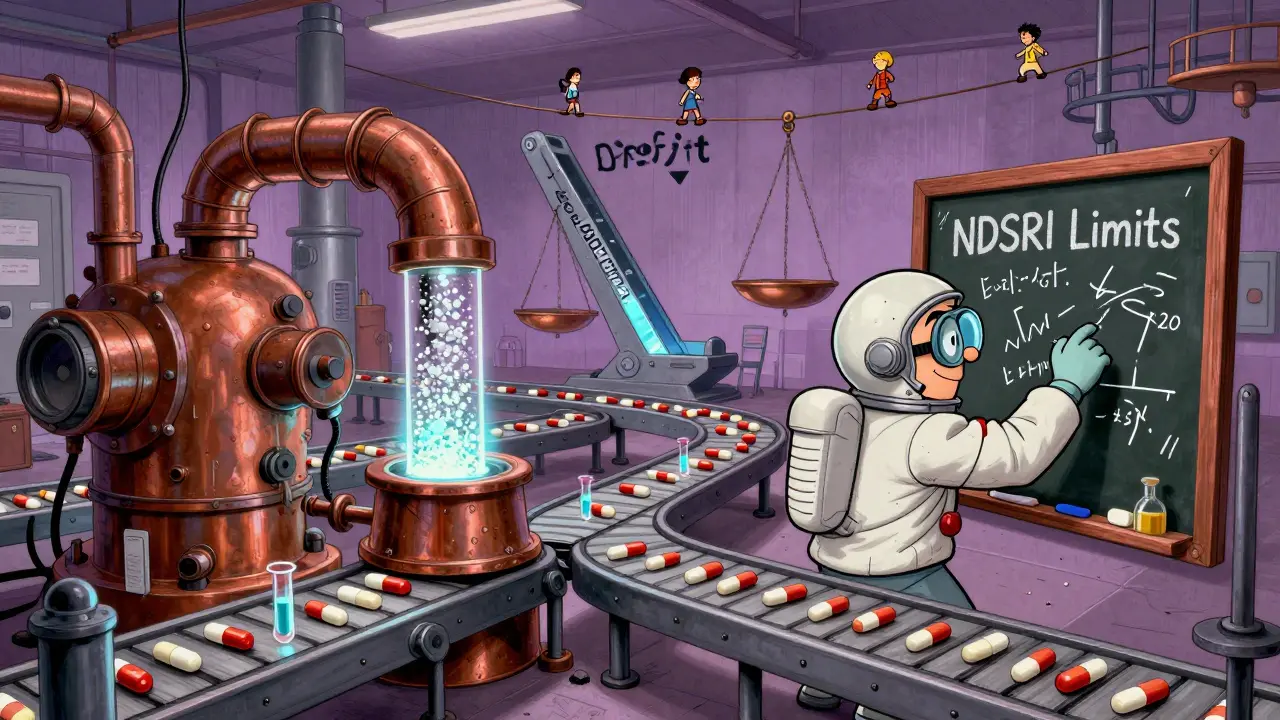
The FDA moved fast. In 2018, it issued its first alert. By 2023, it published detailed guidance on acceptable intake limits and testing methods. It required manufacturers to test every batch using highly sensitive LC-MS/MS instruments capable of detecting nitrosamines at 0.3-3 ng/mL levels. It demanded root cause analyses and control strategies.
But the agency also realized the burden was crushing smaller manufacturers. In June 2025, it quietly changed the rules. The original August 1, 2025 deadline for full compliance with NDSRI limits was softened. Now, companies don’t need to be fully compliant by then. They just need to submit progress reports showing they’re actively working on solutions-reformulating, testing, validating new processes.
This shift wasn’t a retreat. It was realism. As FDA officials admitted at the April 2025 Generic Drugs Forum, “Mitigation strategies vary widely and can demand extensive time and supply-chain adjustments.” One mid-sized manufacturer spent $2 million and 18 months just to fix nitrosamine issues in its metformin line. Many couldn’t afford that.
Who’s Struggling the Most?
Small and mid-sized generic manufacturers are getting squeezed. Testing alone costs $500,000 to $2 million per year. Building internal labs with LC-MS/MS machines, training staff, and redesigning processes takes years. For companies already operating on thin margins-sometimes less than 10% profit-it’s unsustainable.
As a result, consolidation is accelerating. Larger players like Teva, Fresenius Kabi, and Sun Pharma have invested heavily in quality systems. They now have the resources to test, reformulate, and document everything the FDA wants. Smaller companies either shut down, get bought out, or risk being shut out of the market entirely.
One manufacturer on Reddit described how fixing one nitrosamine pathway created a new one elsewhere. “We changed the solvent, then the drying temperature, then the packaging. Each fix made something worse. We did five reformulations in two years.”
What’s the Industry Doing Right?
Some companies got ahead of the curve. One manufacturer identified a potential nitrosamine risk during early development-before the drug even hit the market. They switched excipients, redesigned the synthesis route, and never had a recall. That’s the gold standard.
Others adopted proactive testing. Instead of waiting for FDA alerts, they started screening all new API batches and packaging materials. They built relationships with suppliers who could guarantee nitrite-free materials. They trained their quality teams to think like chemists-not just inspectors.
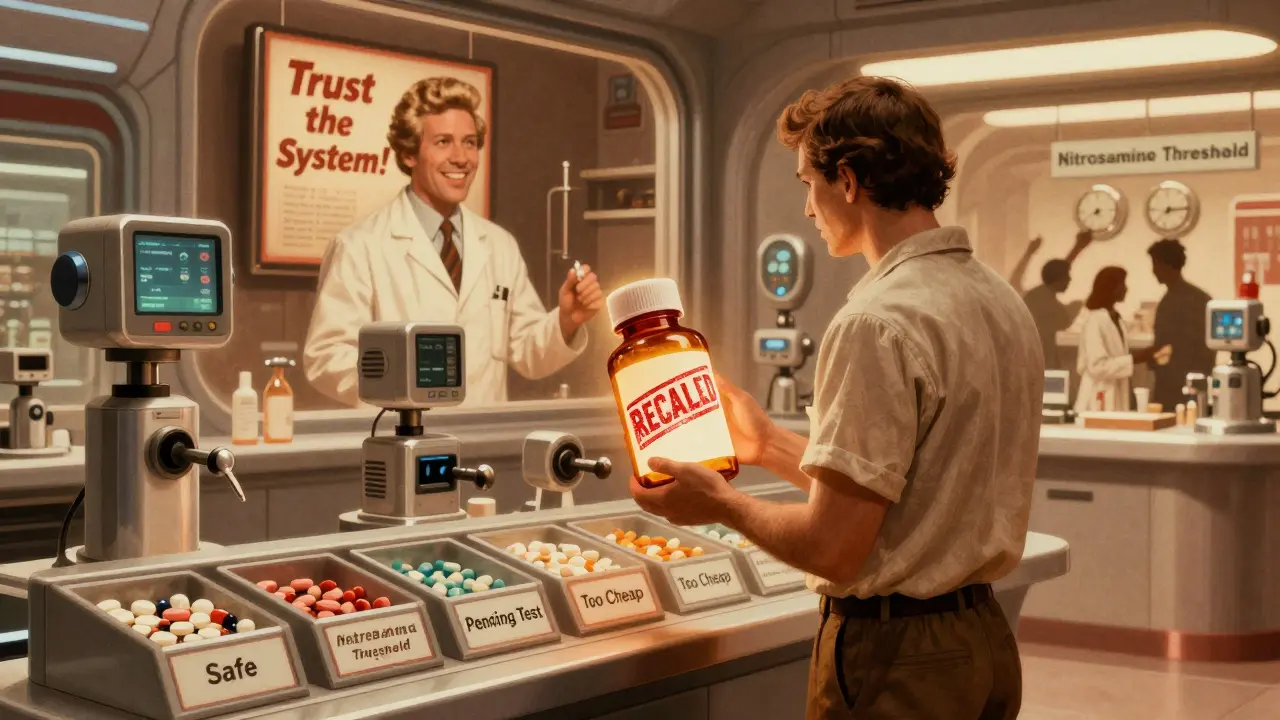
The FDA now gives preferential review to companies that show early, transparent efforts to control nitrosamines. Proactivity is becoming a competitive advantage.
Global Differences in Response
The FDA leads, but it’s not alone. The European Medicines Agency (EMA) has issued 32 recalls through mid-2025. Health Canada, the UK’s MHRA, and Japan’s PMDA have each reported between 5 and 15 recalls. But their approaches differ.
EMA allows more flexibility in setting limits for complex NDSRIs. The FDA, by contrast, demands compound-specific limits-meaning each unique nitrosamine gets its own strict threshold. That’s more precise but harder to implement. EMA’s timeline stretches into 2026. The FDA’s original deadline was August 2025. Now it’s a moving target.
Some countries lack the resources to test at the same level. That’s creating gaps in global supply chains. A batch cleared in one country might be rejected in another.
What Should Patients Do?
If you take a generic drug-especially for blood pressure, diabetes, or heartburn-don’t panic. The risk from nitrosamines is long-term, not immediate. You’re not going to get sick tomorrow.
But do pay attention. Check the FDA’s recall list regularly. If your drug is pulled, your pharmacy will notify you. Don’t stop taking your medicine without talking to your doctor. Going off a blood pressure or diabetes drug can be more dangerous than the nitrosamine risk.
Ask your pharmacist: “Is this generic version on the FDA’s recall list?” If it’s not, and your prescription hasn’t changed, you’re likely fine. The FDA has cleared most remaining products after reformulation.
The Road Ahead
Nitrosamine control isn’t going away. The FDA says it’s a top priority for the foreseeable future. Experts predict testing will expand to more drug classes-perhaps even antivirals, antifungals, and chemotherapy generics.
Manufacturers will need to treat nitrosamines like they treat microbial contamination: routine, unavoidable, and always monitored. That means more investment in analytical tools, supplier audits, and packaging innovation. Packaging materials are now part of the drug’s safety profile.
For patients, the message is simple: trust the system, but stay informed. For manufacturers, the lesson is harder: cut corners on quality, and you’ll pay far more than the cost of fixing it.
The nitrosamine crisis didn’t happen because someone was lazy. It happened because the system was built to move fast and cheap. Now, it’s being rebuilt to move right.

Mike Rengifo
So let me get this straight-we’re recalling drugs because of trace amounts that are literally less than a grain of salt in a pool, but we’re still letting Chinese factories ship out 500mg of acetaminophen with lead in it? The system’s broken, but not the way they’re telling you.

Sajith Shams
Everyone’s acting like this is new. Newsflash: Indian and Chinese API manufacturers have been cutting corners since the 90s. The FDA only started caring when it became politically embarrassing. The real issue? No one wants to pay $15 for a blood pressure pill when they can get it for $4. You want safety? Pay for it. Otherwise stop complaining.

Erica Vest
For anyone panicking: the cancer risk from nitrosamines in recalled drugs is statistically negligible for short-term users. The real danger is stopping your meds because you’re scared. If you’re on metformin or losartan and haven’t been notified of a recall, you’re fine. The reformulated versions now meet the 96ng/day limit-verified by independent labs. Don’t let fear override medical advice.

Kinnaird Lynsey
Wow. So the FDA’s response is basically ‘eh, we’ll let you keep trying’? That’s not realism-that’s corporate surrender wrapped in jargon. I bet the same people who wrote that guidance also think ‘progress reports’ are a substitute for actual accountability. Meanwhile, my grandma’s blood pressure meds are still sitting on the shelf because the pharmacy can’t restock. Thanks, bureaucracy.

Mark Able
Y’all are missing the forest for the trees. This isn’t about nitrosamines-it’s about the death of American manufacturing. We used to make our own APIs. Now we outsource to the cheapest bidder, then act shocked when the cheapest bidder cuts corners. We need tariffs on foreign generics. We need to bring production home. Or keep swallowing pills with carcinogens and calling it ‘affordable healthcare.’

jessica .
Did you know the FDA approved the first nitrosamine-contaminated valsartan batch in 2017? Same month the FDA director’s wife got a contract with a Chinese API firm. Coincidence? I think not. This is a cover-up. They knew. They let it happen. Now they’re ‘softening’ deadlines because they’re afraid of the truth coming out. Wake up people.

Marsha Jentzsch
OMG I just looked up my metformin batch and it’s NOT on the recall list-BUT WAIT-what if the list is fake?! What if the FDA is lying to us?! My pharmacist said it’s ‘safe’ but she’s probably on their payroll. I’m switching to organic turmeric and prayer. I’ve been feeling ‘off’ since 2020-this has to be it. I’m filing a class action. Anyone want to join?!!

Anna Sedervay
It is, indeed, a matter of profound and unsettling disquietude that the regulatory apparatus, ostensibly designed to safeguard the public health, has permitted the proliferation of sub-microgram quantities of nitrosamines-carcinogenic entities of unequivocal biological potency-within pharmaceuticals intended for chronic administration. The systemic collapse of quality assurance protocols, particularly within the generic pharmaceutical sector, reflects not merely negligence, but a catastrophic erosion of epistemic integrity in pharmacovigilance. One must ask: when did the commodification of human physiology supersede the sanctity of therapeutic safety?

Ryan van Leent
So we spent 7 years and billions on testing and now they just say 'keep trying'? What a joke. The real solution? Ban all generics. Let big pharma charge $500 a pill. Then maybe they'll actually care about quality. Until then, I'm just gonna keep my fingers crossed and hope I don't get cancer from my $4 diabetes meds. Who needs a liver anyway?
Write a comment