Recent POST
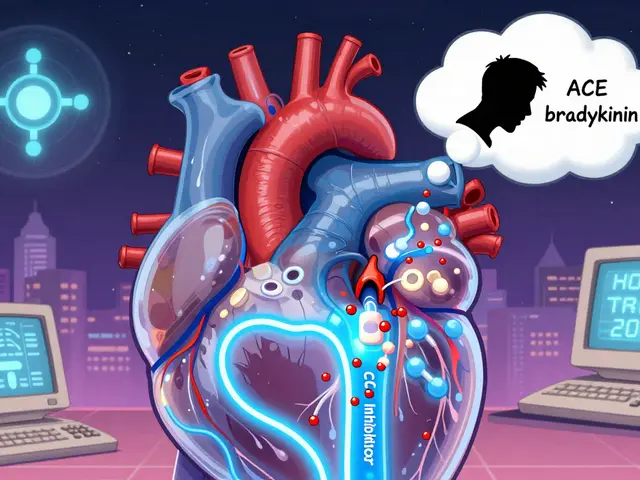
Every year, over 90% of prescriptions filled in the U.S. are for generic drugs. That’s not a small detail-it’s the norm. If you’ve ever picked up a pill bottle and seen a different name than what your doctor wrote, you’ve used a generic. But do you know how these cheaper versions get approved-and why they’re just as safe as the brand-name ones?
What Exactly Is a Generic Drug?
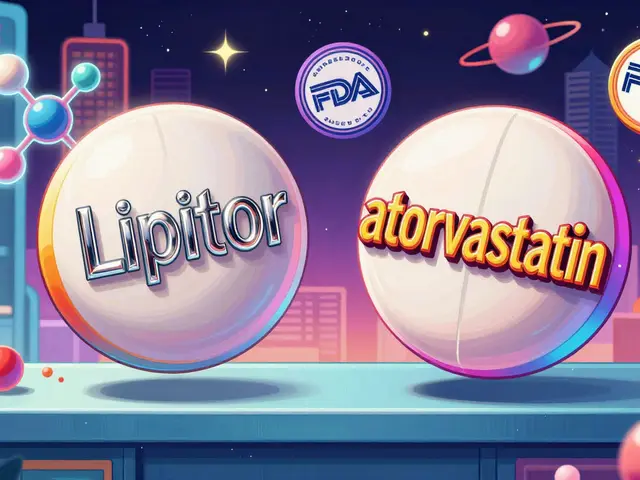
A generic drug is a copy of a brand-name medication that contains the exact same active ingredient, strength, dosage form, and way of being taken (like swallowing a pill or injecting it). It works the same way in your body. The only differences are usually the color, shape, flavor, or inactive ingredients-things like fillers or dyes that don’t affect how the medicine works.The FDA requires that generics meet the same strict standards as brand-name drugs. That means if your doctor prescribes Lipitor for cholesterol, the generic atorvastatin must deliver the same amount of medicine into your bloodstream at the same speed. It’s not a weaker version. It’s the same medicine, just without the brand name and marketing costs.
How Does the FDA Approve Generic Drugs?
The process is called the Abbreviated New Drug Application, or ANDA. It’s called “abbreviated” because manufacturers don’t have to repeat the long, expensive clinical trials that the original drug went through. Those studies were already done by the brand-name company. Instead, the generic maker must prove two things: pharmaceutical equivalence and bioequivalence.Pharmaceutical equivalence means the generic has the same active ingredient, dose, and form as the original. If the brand is a 20 mg tablet taken by mouth, the generic must be exactly that.
Bioequivalence is the real test. It’s done with healthy volunteers-usually 24 to 36 people-who take both the brand and the generic under controlled conditions. Blood samples are taken over time to measure how much of the drug enters the bloodstream and how fast. The results must show that the generic delivers the same amount of medicine, within a narrow range: between 80% and 125% of the brand’s levels. This gap might sound wide, but it’s scientifically proven to ensure no meaningful difference in how the drug works in your body.
On top of that, the manufacturing facility must pass an FDA inspection. The FDA checks for cleanliness, proper equipment, and consistent quality. About 1,500 inspections happen each year just for generic drug plants. No shortcuts. No exceptions.
Why Are Generics So Much Cheaper?
Brand-name drugs cost billions to develop. Companies spend years testing, filing patents, and running clinical trials. Once the patent expires, other companies can step in. Because they don’t have to repeat those expensive studies, their development cost is typically $5 million to $10 million-less than 1% of what the original company spent.That savings gets passed on. In 2023, generics made up 90% of prescriptions but only 23% of total drug spending in the U.S. That’s how they’ve saved the healthcare system over $2 trillion in the last decade.
Are There Times When Generics Might Not Work the Same?
For most people, generics work perfectly. But there are exceptions. Some drugs have what’s called a “narrow therapeutic index.” That means the difference between a dose that works and a dose that’s dangerous is very small. Examples include warfarin (a blood thinner), levothyroxine (for thyroid issues), and some seizure medications.Some patients report feeling different after switching between generic manufacturers-even though the FDA says they’re all equivalent. The FDA’s own patient survey in 2022 found that 18% of people taking these sensitive drugs noticed changes when switching brands. That doesn’t mean the generic is bad. It could be small differences in how the pill breaks down in your stomach, or how your body reacts to a tiny change in inactive ingredients.
If you’re on one of these drugs and you notice a change in how you feel after switching generics, tell your doctor. They may recommend sticking with one manufacturer or even staying on the brand if it’s medically necessary.
What About Complex Generics Like Inhalers or Creams?
Not all drugs are easy to copy. Simple pills? Easy. Inhalers, nasal sprays, eye drops, and topical creams? Much harder. These are called “complex generics.”Why? Because it’s not just about the chemical. It’s about how the drug is delivered. An inhaler has to spray the right amount at the right speed. A cream has to absorb through the skin the same way. These differences are harder to measure with blood tests. The FDA has been working hard on this. Since 2023, they’ve released 18 new guidance documents to help manufacturers meet the standard.
The first generic EpiPen was approved in September 2023 after 15 years of effort. That’s how tough these can be. Even though they make up only 15% of generic applications, they cause nearly 40% of FDA review delays.
How Long Does Approval Take?
The FDA aims to review a standard generic application within 10 months. But if it’s a complex product, it can take over two years. And if the FDA sends back a “complete response letter” asking for more data, the clock resets.Manufacturers often start preparing years before the brand-name patent expires. Some even challenge patents legally to get their product to market faster. In fact, about 72% of the first generic applications filed include a legal challenge to the brand’s patent. That’s why you sometimes see multiple generics hit the market at once-there’s a race to be first.
Can You Trust FDA-Approved Generics?
Yes. Over 15,000 generic drugs have been approved in the U.S. Since 1984, the system has worked without major safety failures. Pharmacists, who are on the front lines, overwhelmingly support generics. A 2022 survey found that 94% of community pharmacists recommend them without hesitation.Patients agree too. In the same FDA survey, 87% said they were satisfied with their generic medications. And the data doesn’t lie: millions of people take generics every day without issue.
What Should You Do as a Patient?
1. Ask if a generic is available. Your doctor or pharmacist can tell you. 2. Stick with one manufacturer if you’re on a narrow therapeutic index drug. If you switch and feel different, speak up. 3. Don’t assume generics are inferior. They’re held to the same standard. The FDA doesn’t approve them just because they’re cheap-they approve them because they work. 4. Check the FDA’s Orange Book. It’s a public database that lists all approved brand and generic drugs. You can search it online to see which generics are approved for your medication. 5. Report any side effects. Even if you think it’s minor. The FDA tracks these reports to catch rare problems.What’s Next for Generic Drugs?
The FDA is now testing AI tools to speed up reviews. They’re also pushing for better tracking of drug supplies and more transparency in pricing. Meanwhile, hundreds of brand-name drugs are set to lose patent protection by 2027. That means a wave of new generics is coming-especially for expensive medications like insulin, biologics, and cancer drugs.The goal hasn’t changed since 1984: give patients access to safe, effective medicine without the high price tag. And for most people, that’s exactly what they’re getting.
Are generic drugs as safe as brand-name drugs?
Yes. The FDA requires that generic drugs meet the same strict standards for safety, strength, quality, and performance as brand-name drugs. They use the same active ingredient and are tested to ensure they work the same way in your body. Thousands of patients take generics every day without issues.
Why do generic drugs look different from brand-name ones?
By law, generic drugs can’t look exactly like the brand-name version. That’s to avoid confusion. So the color, shape, size, or flavor might be different-but the active ingredient, dose, and how it works are identical. These differences are only in inactive ingredients like dyes or fillers, which don’t affect how the medicine works.
Can I switch between different generic brands?
For most medications, yes. But if you’re taking a drug with a narrow therapeutic index-like warfarin, levothyroxine, or some seizure meds-switching between manufacturers might cause small changes in how your body responds. If you notice new side effects or feel different after switching, talk to your doctor. You may need to stick with one brand.
How does the FDA make sure generic drugs are made safely?
All manufacturing facilities for generic drugs must pass FDA inspections to meet Current Good Manufacturing Practices (cGMP). The FDA inspects about 1,500 of these plants each year. They check for cleanliness, proper equipment, accurate labeling, and consistent quality. If a facility fails, the FDA won’t approve the drug until the problems are fixed.
Do generic drugs take longer to work than brand-name drugs?
No. Bioequivalence testing proves that generics enter your bloodstream at the same rate and to the same extent as the brand-name version. Whether it’s a pill, injection, or inhaler, the timing and amount of medicine your body receives are designed to be the same. If you feel a delay, it’s likely due to other factors-not the generic itself.
If you’re on a long-term medication, ask your pharmacist or doctor about generic options. You could save hundreds-or even thousands-of dollars a year without sacrificing quality or safety. The FDA’s system is built to protect you, not just cut costs. And for most people, that’s exactly what it does.

Frank Drewery
Just took my generic atorvastatin this morning. Been on it for 3 years. No issues. My cholesterol’s stable and my wallet’s happier. Seriously, why are people still scared of generics?

Ryan van Leent
generics are a scam the brand names spent billions on research so why should i pay less for something that might not work the same

Sajith Shams
You guys are clueless. The FDA bioequivalence range of 80-125% is a joke. That’s a 45% swing in blood concentration. In India we call that ‘pharma roulette’. I’ve seen patients on warfarin crash after switching generics. The FDA doesn’t test for long-term effects or metabolite buildup. You think a 24-person study proves safety? That’s not science, that’s corporate theater.

Adrienne Dagg
OMG YES!! I switched to generic levothyroxine last year and started feeling like a zombie 😵💫 My doc made me go back to Synthroid and I’m literally a new person now. So glad I didn’t just ‘tough it out’.

benchidelle rivera
It is imperative that patients understand that the regulatory framework governing generic drug approval is not merely a cost-reduction mechanism, but a rigorous scientific protocol designed to ensure therapeutic equivalence. The Abbreviated New Drug Application process is grounded in bioequivalence data, pharmacokinetic modeling, and current good manufacturing practices-all of which are subject to independent audit. Dismissing generics as inferior is not only scientifically unfounded, it is medically irresponsible.

Emily P
I’ve always wondered-how do they test bioequivalence for inhalers? Blood levels don’t really show lung deposition, right? Is there a special method for that?

Vicki Belcher
My grandma takes her generic blood pressure med and says it’s ‘just as good as the fancy one’-and she’s 82 and still gardening every day 🌷 I trust the FDA. They don’t mess around.

Jedidiah Massey
Let’s be real-the ANDA process is a regulatory arbitrage play. The original innovator absorbs the R&D burden, and the generic player exploits the patent cliff with a 5M capex and a 10-month review window. It’s not innovation-it’s parasitic efficiency. But hey, if you’re not a shareholder, I guess it’s a win for the ‘consumer’.

Lynsey Tyson
I get why people are nervous, especially if they’ve had a bad experience. But I think the system works better than we give it credit for. Maybe we just need better education for patients and docs about when to stick with one brand-especially for narrow window meds.

Edington Renwick
They’re letting Chinese factories make our life-saving pills and you’re just… okay with that? I saw a video of a plant in Shanghai with rats running through the warehouse. That’s not ‘FDA-approved’-that’s a horror movie.

Allison Pannabekcer
For anyone worried about switching generics: if you’re on warfarin, thyroid meds, or seizure drugs, write down your dosage and manufacturer on a sticky note and keep it in your pillbox. If you feel off after a refill, don’t ignore it. Talk to your pharmacist-they see more patterns than you think. And yes, it’s okay to ask for the same brand. Your body deserves consistency.

Sarah McQuillan
Why are we letting foreign countries control our medicine supply? The US used to make its own drugs. Now we import 80% of our active ingredients. This isn’t healthcare-it’s geopolitical vulnerability. And don’t tell me the FDA inspects them. I’ve seen those inspection reports. They’re a joke.

Kitt Eliz
As a pharmacist in Vancouver, I’ve seen this firsthand. Complex generics like inhalers? The bioequivalence isn’t just about blood levels-it’s about particle size, spray pattern, lung deposition. The FDA’s 2023 guidance on metered-dose inhalers? Game-changer. We’re finally catching up. And yes, the first generic EpiPen? It works. My kid uses it. No issues. 💉❤️
Frank Drewery
Hey, I read your comment about warfarin. I had the same thing happen last year. Switched generics and my INR went nuts. My pharmacist told me to stick with the one from Teva-never switched again. You’re not crazy, it happens more than people admit.
Write a comment