Recent POST




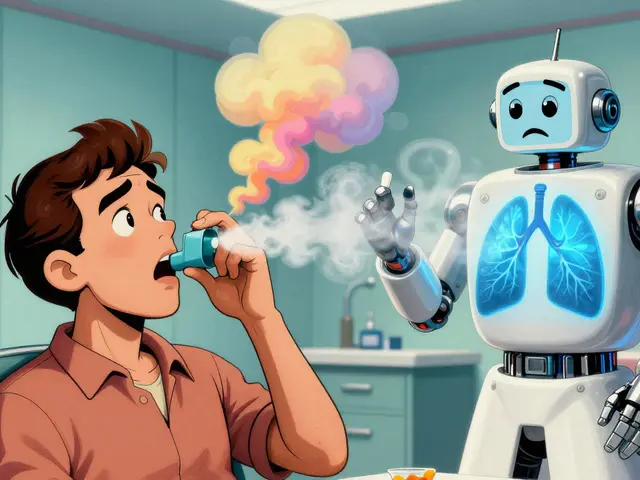
When a manufacturer discovers a defect - say, a batch of insulin pens with faulty needles or car brake sensors failing at high temperatures - they don’t just fix the bad units. They don’t just tweak the machine and keep going. That’s a correction. What they do next is far more important: they launch a corrective action. And that’s where real quality improvement begins.
What’s the Difference Between a Correction and a Corrective Action?
Think of it this way: if your car’s check engine light comes on, turning it off with a code scanner is a correction. Finding out why the sensor failed - maybe because the wiring frayed from constant vibration - and replacing the entire harness to stop it from happening again? That’s a corrective action. In manufacturing, corrections are quick fixes. Stop the line. Scrap the batch. Adjust the torque setting. Done. But without addressing the root cause, the same problem returns. In fact, 68% of quality failures in manufacturing come from mixing up corrections with true corrective actions, according to Cognidox’s 2023 analysis. Corrective action is systematic. It’s documented. It’s verified. And it’s required by law in regulated industries like medical devices, pharmaceuticals, and aerospace. The FDA’s 2023 guidance makes it clear: if you can’t prove you fixed the cause - not just the symptom - you’re not compliant.The Six-Step Corrective Action Process
Every effective corrective action follows the same six-phase structure, whether you’re making surgical tools or smartphone components. Here’s how it works:- Identify the problem - This starts with data. Not gut feeling. Real metrics: defect rates, customer complaints, in-process inspection failures. A single defective part might trigger an investigation if it’s part of a trend. The average time to identify a quality event? About 2.3 hours.
- Evaluate and categorize - Not all defects are equal. Is this a safety risk? A regulatory violation? A customer annoyance? High-risk issues get top priority. In pharmaceuticals, a deviation affecting patient safety triggers a full CAPA. A minor packaging error might just need a correction.
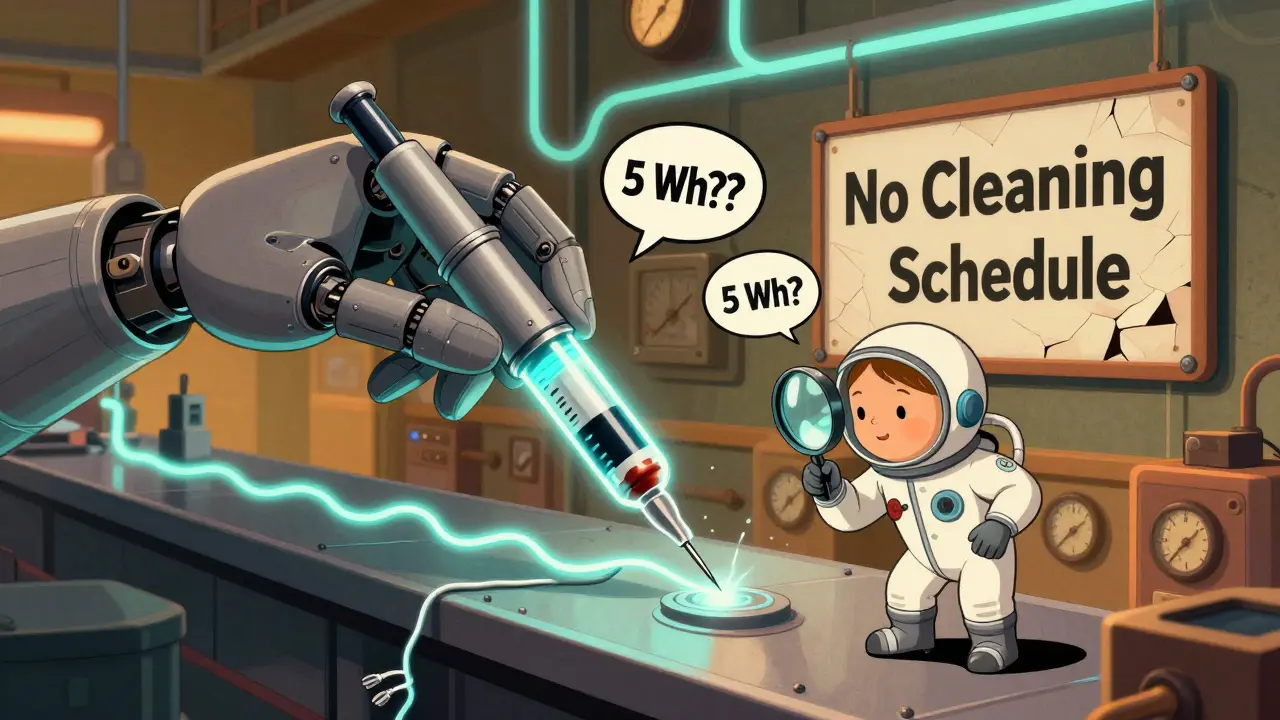
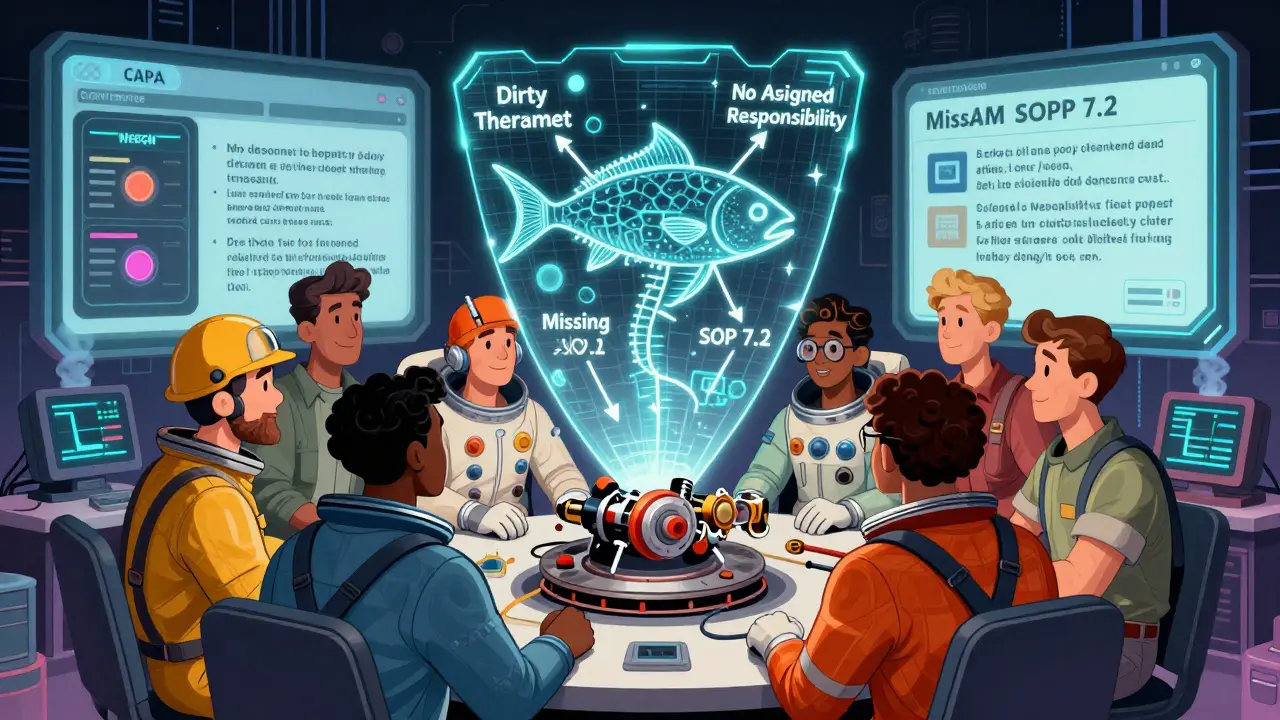
- Find the root cause - This is where most companies fail. 57% of failed CAPAs, per FDA warning letters, stop here. Tools like the 5 Whys or Fishbone diagrams force teams to dig deeper. Why did the seal leak? Because the adhesive didn’t cure. Why? The oven temperature dropped. Why? The thermostat sensor was dirty. Why? No cleaning schedule. Why? No one was assigned responsibility. That’s the root cause - not the leak, not the oven, not the sensor. It’s the missing process.
- Plan the fix - Now you write it down. A Corrective Action Plan (CAP) must include: specific actions, who’s responsible, when it’s due, and how you’ll know it worked. Vague plans like “improve training” fail. Specific plans like “train all assembly operators on sensor calibration by March 15, using new SOP 7.2, verified by 30 consecutive units tested to spec” work.
- Implement the solution - This isn’t just updating a document. It’s changing machines, retraining staff, modifying software, or redesigning parts. The average time to implement? It varies. But if it takes more than two production cycles, you’ve lost momentum.
- Verify effectiveness - This is non-negotiable. You don’t just assume it’s fixed. You test it. You collect data. You use statistical process control. Sample sizes must be significant - usually 30 or more units - to prove the fix holds. If defect rates don’t drop by at least 50% within three production runs, the action isn’t verified. And if it’s not verified, the FDA considers it incomplete.
Why CAPA Systems Are Non-Negotiable in Regulated Industries
In medical device manufacturing, ISO 13485:2016 requires every corrective action to prove it eliminated the root cause - not just the symptom. The FDA’s 21 CFR Part 820 demands the same. And they audit it. In 2022, 43% of FDA warning letters cited inadequate CAPA implementation. That’s not a typo. Nearly half of all quality system violations were about companies not proving they fixed the real problem. Dr. John Snow from the FDA’s Office of Compliance said it plainly: “The most common CAPA failure is addressing symptoms rather than root causes.” But it’s not just about avoiding fines. Companies with strong CAPA systems see real results:- 37% less downtime from quality issues
- 28% higher customer satisfaction scores
- 19% lower operational costs from reduced scrap and rework
- 27% fewer field recalls and product returns
The Hidden Cost: Paperwork and How to Cut It
Let’s be honest. CAPA systems can feel overwhelming. On Reddit’s r/QualityAssurance, user ‘FactoryQA’ said their system generates 47 pages of documentation per major issue. That’s not efficiency - that’s burnout. 65% of quality managers report excessive paperwork as their biggest pain point. But here’s the truth: the paperwork isn’t the problem. The lack of integration is. The most successful manufacturers don’t use spreadsheets or printed binders. They use digital CAPA platforms that connect directly to their production lines. Tulip’s 2023 report found that manufacturers using integrated systems reduced documentation time by 41%. How? When a sensor fails, the system auto-creates a CAPA ticket. It pulls in the machine logs, operator shift data, and maintenance history. The quality team doesn’t hunt for files - they review evidence. AI is making it even faster. Some manufacturers now use machine learning to analyze defect patterns and suggest root causes before humans even start. One company reduced investigation time by 52% and improved accuracy by 37%, according to Tulip.What Works - and What Doesn’t
Here’s what sets apart the manufacturers who get it right:- Cross-functional teams - 92% of ISO auditors say this is critical. The person who runs the machine, the engineer who designed the part, the quality inspector, the procurement lead - they all sit in the same room. Silos kill root cause analysis.
- Clear accountability - One name. One person responsible for making sure the fix happens. No “team effort” vagueness.
- Verification metrics - Not “we think it’s better.” But “defect rate dropped from 2.1% to 0.3% over 12,000 units.”
- Assigning CAPAs to junior staff with no authority to change processes
- Skipping verification because “it’s been fine for a week”
- Using the same CAPA template for a broken screw and a contaminated sterile pack

Who Needs This - And Who Doesn’t
CAPA isn’t one-size-fits-all. In industries with strict regulations, it’s mandatory:- Medical devices: 82% of firms have formal CAPA systems
- Pharmaceuticals: 76%
- Aerospace: 68%
- Automotive (IATF 16949): 63%
The Future: Predictive Corrective Actions
The next leap isn’t just fixing problems after they happen. It’s stopping them before they occur. The FDA’s 2023 Digital Health Innovation Plan is pushing manufacturers toward real-time quality monitoring. Sensors on machines feed data into AI systems that spot patterns - a slight vibration here, a temperature drift there - and flag potential failures before they create a defect. Gartner predicts that by 2027, 65% of manufacturers will use predictive CAPA systems. These systems don’t wait for a defect. They analyze trends across thousands of production runs and suggest preventive actions. That’s not just fixing problems - it’s eliminating them before they’re born. The result? An estimated 48% reduction in quality-related downtime industry-wide.Final Thought: Quality Isn’t a Department - It’s a Habit
The best manufacturers don’t treat corrective actions as a compliance task. They treat them as a daily practice. Every anomaly is a chance to learn. Every defect is a clue. Every CAPA is a step toward making something better than it was yesterday. It’s not about avoiding failure. It’s about making failure impossible.What’s the difference between a correction and a corrective action?
A correction fixes the immediate problem - like scrapping a bad batch or adjusting a machine setting. A corrective action finds and eliminates the root cause so the problem doesn’t happen again. Corrections are temporary; corrective actions are permanent.
Is CAPA required by law?
Yes, in regulated industries. FDA 21 CFR Part 820, ISO 13485 for medical devices, and cGMP for pharmaceuticals all require documented corrective and preventive actions. Failure to implement them properly is one of the top reasons for FDA warning letters.
How long should a corrective action take?
There’s no fixed timeline, but effectiveness is measured in production cycles, not days. Most successful CAPAs are verified within 2-3 production runs. The root cause analysis alone can take 8-12 hours per major issue. Speed matters, but thoroughness matters more.
Why do so many CAPAs fail?
Most fail because they address symptoms, not root causes. 61% of inspected firms can’t prove they prevented recurrence. Other common failures: poor documentation, no verification, lack of accountability, and using the wrong tools for the problem’s severity.
Can small manufacturers use CAPA?
Yes - but they don’t need the same complexity as a medical device company. Small manufacturers can use simplified versions: document the problem, find the cause, fix it, and verify it worked. The goal isn’t paperwork - it’s preventing the same mistake from happening again.
What technology is changing corrective actions today?
Digital CAPA systems integrated with production data are the biggest shift. AI-powered root cause analysis cuts investigation time by over 50%. Real-time sensors trigger CAPAs automatically. Blockchain audit trails make documentation tamper-proof. These tools turn CAPA from a paperwork burden into a real-time quality engine.

Priyanka Kumari
Really appreciate this breakdown-especially how you emphasized verification over assumption. In my last role at a pharma startup, we cut rework by 40% just by enforcing the 30-unit rule for verification. No more ‘it’s been fine for a week’ excuses. Data doesn’t lie, and neither does consistency.

John Tran
Okay so like… I just read this whole thing and I’m sitting here with my coffee and my existential crisis and I’m like-why are we even doing this? Like, why do we keep building things that break? Why do we keep pretending that fixing a sensor is the same as fixing a culture? You know? The real root cause isn’t the dirty thermostat-it’s the manager who never asked ‘why’ because they were too busy chasing KPIs that don’t even matter. We’re not in the business of fixing machines. We’re in the business of fixing human systems. And nobody wants to admit that. So we paper over it with CAPA templates and call it ‘quality.’ But it’s just performance art with clipboards. And I’m tired.

Pankaj Singh
68% of failures come from confusing correction with corrective action? That’s not a statistic-that’s a national embarrassment. If your QA team can’t tell the difference between a band-aid and a cure, you shouldn’t be allowed to produce anything that doesn’t come in a cereal box. This post is basically a textbook on how not to get sued. Read it. Learn it. Or get out.

Robin Williams
Man. This hit different. I work in a small shop making custom brackets. We don’t have fancy software. We just write stuff on a whiteboard. But we do the 5 Whys every time something breaks. Last week, a bolt kept snapping. We found out the guy who tightened it was using a torque wrench he’d never calibrated. Why? Because no one ever asked him to. So now we have a checklist. And it’s not perfect. But it’s honest. And that’s better than 47 pages of bullshit.

Trevor Davis
I used to think CAPA was just corporate nonsense until I saw a plant shut down for 3 weeks because they skipped verification. 3 weeks. 2 million in lost revenue. All because someone said ‘it looks fine.’ Don’t be that guy. Or girl. Or non-binary person. Just… verify. Please.

Rosalee Vanness
There’s something beautiful about turning failure into a ritual. Every defect isn’t a failure-it’s a whisper from the system saying ‘hey, I need you to pay attention.’ I’ve seen teams turn CAPA meetings into sacred spaces: no phones, no hierarchy, just people asking ‘what did we miss?’ And when you do that? The fixes stick. Not because they’re documented. But because they’re felt. Quality isn’t a department. It’s a community. And we’re all just trying to build something that lasts.

Avneet Singh
While the conceptual framework presented here is superficially coherent, one must interrogate the epistemological foundations of the ‘root cause’ paradigm itself. The 5 Whys is a heuristic, not a methodology-it collapses under ontological multiplicity. In complex adaptive systems, causality is emergent, not linear. To presume a singular root cause is not only reductionist-it is dangerously naïve. The real corrective action is abandoning the illusion of control altogether.

Acacia Hendrix
AI-driven predictive CAPA? Please. You’re just automating your ignorance. If your system is smart enough to predict failure, why are you still using legacy machines with no telemetry? Why are you still hiring people who can’t read a calibration certificate? This isn’t innovation-it’s outsourcing accountability to algorithms so you can keep your bonuses. The real problem isn’t the defect. It’s the leadership that refuses to invest in infrastructure.

Angel Tiestos lopez
bro this hit me like a 2x4 in the soul 😭 we had this one guy in my shop who’d always say ‘it’s just a little scratch’ and then 3 weeks later the whole batch got recalled. i started printing out this post and taping it to the wall next to the coffee machine. now everyone reads it before their shift. no more ‘it’s fine’ bullshit. we’re not perfect… but we’re trying. 🙏

mike swinchoski
You people are so obsessed with ‘root causes’ and ‘verification’ and ‘data’-but nobody ever asks why the guy who runs the machine doesn’t get paid enough to care. Fix the pay. Fix the hours. Fix the disrespect. Then you won’t need CAPA. You’ll just have people who show up and do good work because they’re not miserable.

Kimberly Mitchell
And yet, 90% of the CAPA systems I’ve audited are nothing more than glorified to-do lists with a fancy header. If your ‘verification’ is a manager nodding and saying ‘looks good,’ you’re not compliant-you’re delusional. This isn’t a checklist. It’s a legal obligation. Stop treating it like a suggestion box.
Write a comment