Recent POST





Rebound Congestion Recovery Timeline Calculator
How Long Have You Used the Decongestant?
How Are You Stopping?
Do You Have Other Nasal Conditions?
Ever used a nasal spray for a stuffy nose, only to find your congestion came back worse than before? You’re not alone. This isn’t just bad luck-it’s a real condition called rhinitis medicamentosa, or rebound congestion. It happens when you use over-the-counter nasal decongestant sprays-like Afrin, Neo-Synephrine, or Xylometazoline-for more than three or four days. What starts as quick relief turns into a cycle: spray to clear your nose, feel better for a few hours, then wake up more blocked than before. So you spray again. And again. Until your nose feels like it’s permanently stuffed, no matter what you do.
How Your Nose Gets Trapped by Decongestant Sprays
Nasal decongestant sprays work by shrinking swollen blood vessels in your nose. That’s why they feel like magic on day one. But your body doesn’t like being told what to do forever. After a few days, those blood vessels start to rebel. They dilate even more than before, causing worse congestion. This is called rebound vasodilation. Your nose becomes dependent on the spray just to function normally. The more you use it, the less it works-and the worse your congestion gets.Doctors see this all the time. About 10% of people who use these sprays beyond the recommended time develop rebound congestion. In the U.S. alone, around 500,000 cases are diagnosed every year. The problem? Most people don’t realize they’re causing it. They think their cold is just lasting longer. Or they blame allergies. But if you’ve been using a decongestant spray for more than a week, and your nose is still blocked-this is likely the culprit.
What It Feels Like When Your Nose Won’t Unblock
The symptoms of rhinitis medicamentosa are unmistakable:- Nasal congestion that returns as soon as the spray wears off
- No runny nose-just pure stuffiness
- Feeling like you can’t breathe through your nose at night, leading to mouth breathing and dry mouth
- Snoring, poor sleep, and daytime fatigue
- Nasal lining that looks red, swollen, or even crusty when checked by a doctor
It’s not just annoying-it’s exhausting. One patient on Reddit described it as “feeling like I’m suffocating every time I lie down.” Another said they couldn’t sleep for six nights straight because their nose was completely blocked. And the worst part? It gets worse the longer you keep using the spray. After a few months, the lining of your nose can become thin, dry, and prone to bleeding. You might even develop nasal polyps-small, noncancerous growths that make breathing even harder.
How to Break the Cycle: Stop the Spray
The only way to fix this is to stop using the decongestant spray. Sounds simple, right? But here’s the catch: when you stop, your congestion will likely get worse before it gets better. That’s the withdrawal phase. It can last anywhere from 5 to 14 days. The first three days are usually the toughest. You might feel like giving up and reaching for the spray again. But if you stick it out, your nose will recover.There are two main ways to stop:
- Stop both nostrils at once-This is the fastest way, but the most uncomfortable. Your congestion will peak within 48 hours and then slowly improve.
- Stop one nostril at a time-This is what Mayo Clinic recommends. Spray only one side for a few days, then switch to the other. This lets one side recover while the other still gets relief. Many patients find this method much easier to tolerate. In fact, 63% of people who tried it said their symptoms were manageable, compared to just 41% who stopped both sides at once.
Whichever method you choose, don’t go back to the spray. Even one use can reset the cycle. Your nose needs time to heal.
What to Use Instead: Proven Relief During Withdrawal
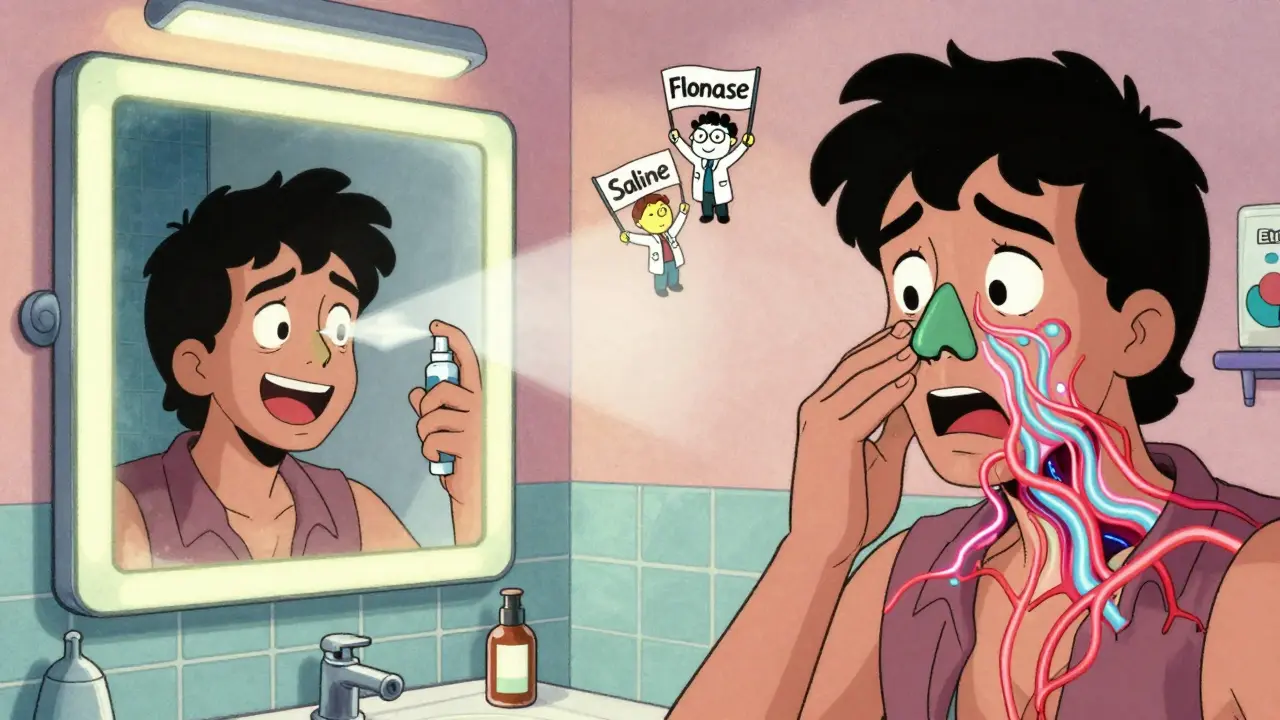
You don’t have to suffer through withdrawal alone. There are safe, effective alternatives that help your nose recover:- Intranasal corticosteroids-These are the gold standard. Sprays like Flonase (fluticasone) and Nasonex (mometasone) reduce inflammation and swelling. They don’t cause rebound. Studies show 68-75% of users see major improvement after 2-4 weeks of daily use. Start using them as soon as you stop the decongestant. Don’t wait.
- Saline nasal irrigation-Rinsing your nose with salt water (using a neti pot or squeeze bottle) helps clear mucus, soothe irritation, and reduce swelling. A 2022 review found it helped 60% of people with rebound congestion. Do it 2-3 times a day during withdrawal.
- Short-course oral steroids-For severe cases, doctors may prescribe a 5-day course of prednisone. One study showed 82% of patients had major relief. This isn’t for everyone-it’s for when symptoms are really bad.
- Capsaicin nasal spray-Used in Europe, this comes from chili peppers. It works by desensitizing nerve endings in the nose. Early trials show about 55% effectiveness. Not widely available in the U.S., but worth asking your doctor about.
And skip the oral decongestants like pseudoephedrine. They constrict blood vessels too-and can raise your blood pressure. One study found 1 in 7 people with high blood pressure had dangerous spikes when using them.
What Happens If You Don’t Stop?
Ignoring this isn’t an option. The longer you keep using decongestant sprays, the harder it gets to fix. After six months of overuse, your risk of developing nasal polyps goes up by 15%. Chronic mouth breathing can lead to dry mouth, bad breath, and even dental problems. Sleep gets worse. You might start snoring loudly or even develop sleep apnea. And once your nasal lining is damaged, it can take months-even years-to heal fully.Relapse is common. About 22% of people who stop the spray without support go back to using it within a month. But if you get counseling and stick to a plan, that drops to just 7%. That’s why working with a doctor or pharmacist matters. They can give you a clear roadmap: when to start corticosteroids, how often to use saline, and what to expect each week.
How to Prevent This From Happening Again
The best treatment is prevention. Here’s how:- Never use decongestant sprays for more than 3 days. Seriously. That’s the rule.
- Try saline irrigation first. It’s safe, cheap, and works for most mild congestion.
- If you need something stronger, use a corticosteroid spray like Flonase. It’s designed for daily, long-term use.
- Read the label. Since December 2022, the FDA requires all OTC nasal sprays to have a clear warning: “DO NOT USE MORE THAN 3 DAYS.” If your bottle doesn’t say that, it might be old or fake.
- Ask your pharmacist before buying. Most don’t ask if you’ve used it before-but they should. If you’ve had this issue before, tell them.
One study found only 28% of people got proper instructions when buying these sprays. Don’t be one of them. Take control.

What to Expect: A Week-by-Week Recovery Timeline
Here’s what most people experience when they stop the spray and start corticosteroids:- Days 1-3: Congestion is at its worst. You might feel like you’re suffocating. Use saline every 2 hours. Sleep with your head elevated. This is the hardest part.
- Days 4-7: Gradual improvement. Your nose starts to feel less blocked. Keep using Flonase twice a day. You might still wake up congested, but you’ll breathe better during the day.
- Days 8-14: Major improvement. Most people report 70-80% better breathing. Switch Flonase to once daily. You’ll start sleeping through the night.
- Week 3-4: Back to normal. Your nasal lining heals. You can breathe easily again. No more spray needed.
One Reddit user wrote: “After 3 weeks of Flonase and no Afrin, my nose finally cleared up-the first week was hell but worth it.” That’s the story of recovery.
Frequently Asked Questions
Can I use saline spray every day?
Yes. Saline nasal irrigation is safe for daily use, even long-term. It doesn’t cause rebound congestion or side effects. It’s the best first-line treatment for mild congestion and helps keep your nasal passages moist and clean.
How long does it take for Flonase to work after stopping the decongestant?
Flonase doesn’t work right away. It takes 3-5 days to start reducing inflammation, and full benefits show after 2-4 weeks of daily use. Don’t give up if you don’t feel better on day two. Consistency is key.
Is it safe to use decongestant sprays once a month?
No. Even occasional use can trigger rebound congestion in people who’ve had it before. Your nose remembers. If you’ve had rhinitis medicamentosa, avoid these sprays entirely. Use saline or corticosteroids instead.
Can children get rebound congestion from nasal sprays?
Yes. While less common, children who use decongestant sprays beyond 3 days can develop the same condition. Never give OTC nasal sprays to kids under 6 without a doctor’s advice. Saline drops and suction are safer for young children.
Why do some doctors recommend stopping one nostril at a time?
It reduces the shock to your system. By keeping one side clear, you can breathe more easily while the other side heals. This method cuts down on severe withdrawal symptoms and improves compliance. Many patients find it easier to stick with the plan this way.
Will my nose ever go back to normal?
Yes, if you stop the spray and give it time. Most people regain full nasal function within 4-6 weeks. The nasal lining regenerates. The key is patience and sticking to your treatment plan. Relapse is the only thing that prevents recovery.
Next Steps: What to Do Today
If you think you have rebound congestion:- Stop using the decongestant spray immediately.
- Start saline irrigation twice a day.
- Buy Flonase or another intranasal corticosteroid at the pharmacy (no prescription needed in Australia).
- Use it daily for at least 3 weeks, even if you feel better sooner.
- If symptoms don’t improve after 10 days, see your doctor.
This isn’t a quick fix. But it’s the only fix that works. Your nose can heal. You just have to let it.

Jarrod Flesch
I was addicted to Afrin for like 6 months. Didn’t even realize it until my wife said I was snoring like a chainsaw. Started Flonase + saline, day 3 was brutal-felt like my nose was full of cotton. But by week 2? Breathing like a champ. 🙌

Barbara Mahone
The FDA warning on the label is now mandatory, but many pharmacists still don’t mention it. I’ve seen people buy these sprays like candy. It’s a public health blind spot.

Andrew Rinaldi
It’s funny how we treat our bodies like machines you can just flip a switch on. The nose isn’t broken-it’s trying to tell you something. Stopping the spray isn’t quitting. It’s listening.

Gerard Jordan
Saline irrigation changed my life 😊 I use it every morning now-no spray, no guilt, no rebound. Just clean, calm sinuses. Pro tip: warm water + sea salt + pinch of baking soda. Feels like a spa for your nose.

Sangeeta Isaac
So let me get this straight... we're supposed to trust a spray that literally makes your nose hate you? And the solution is... more spray? But different spray? I’m out.

Uju Megafu
This is all Big Pharma’s fault. They knew this would happen. They profit off your addiction. They don’t want you healed-they want you buying more sprays. Wake up people!

shubham rathee
I used it for 2 weeks and it worked fine. Why do people always exaggerate? Maybe you just have bad allergies. Or maybe you’re weak

MAHENDRA MEGHWAL
I would like to respectfully underscore the importance of adhering to the recommended duration of use for topical decongestants. The pathophysiology of rebound congestion is well-documented in peer-reviewed otolaryngology literature. Patience and consistency with corticosteroids are paramount.

Melanie Pearson
I’m from the U.S. and I’ve never seen this happen. Maybe it’s a problem in other countries. We have better medicine here. You people just don’t know how to use these things properly.

Rod Wheatley
YOU CAN DO THIS! 💪 I stopped cold turkey-day 2 was the worst. I cried. I used ice packs on my face. I slept upright. But guess what? I’m now 3 weeks clean. No spray. No fear. My nose is FREE. You got this. I believe in you.

Jerry Rodrigues
I tried the one-nostril method. It worked. Took longer but didn’t feel like I was dying. Saline every day. Flonase every night. Done.

Stephen Rock
I read the study. The 63% number? That’s from a 2018 pilot with 47 people. Also, Flonase costs $30. Who’s gonna pay for that? Meanwhile, Afrin’s $8. The system is rigged.

Roisin Kelly
I used it for 10 days and now I’m addicted. I’ve been crying every night. My husband left me because I’m always snoring. I can’t breathe. I’m going to die. Someone help me. Please.
Write a comment