Recent POST
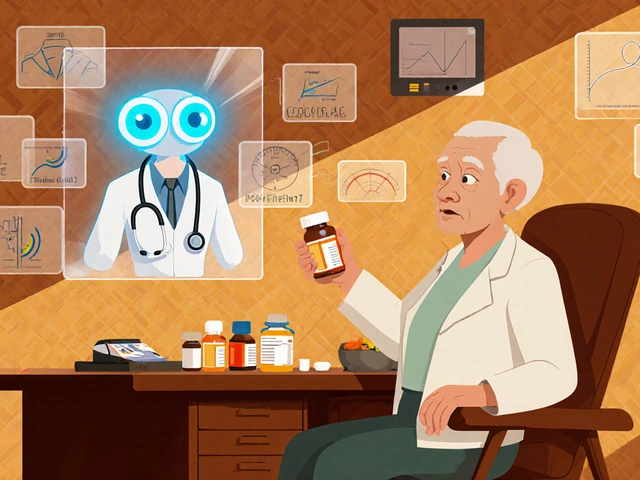
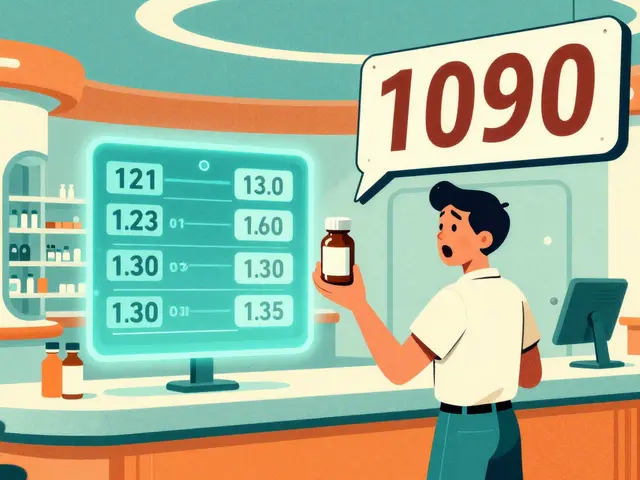
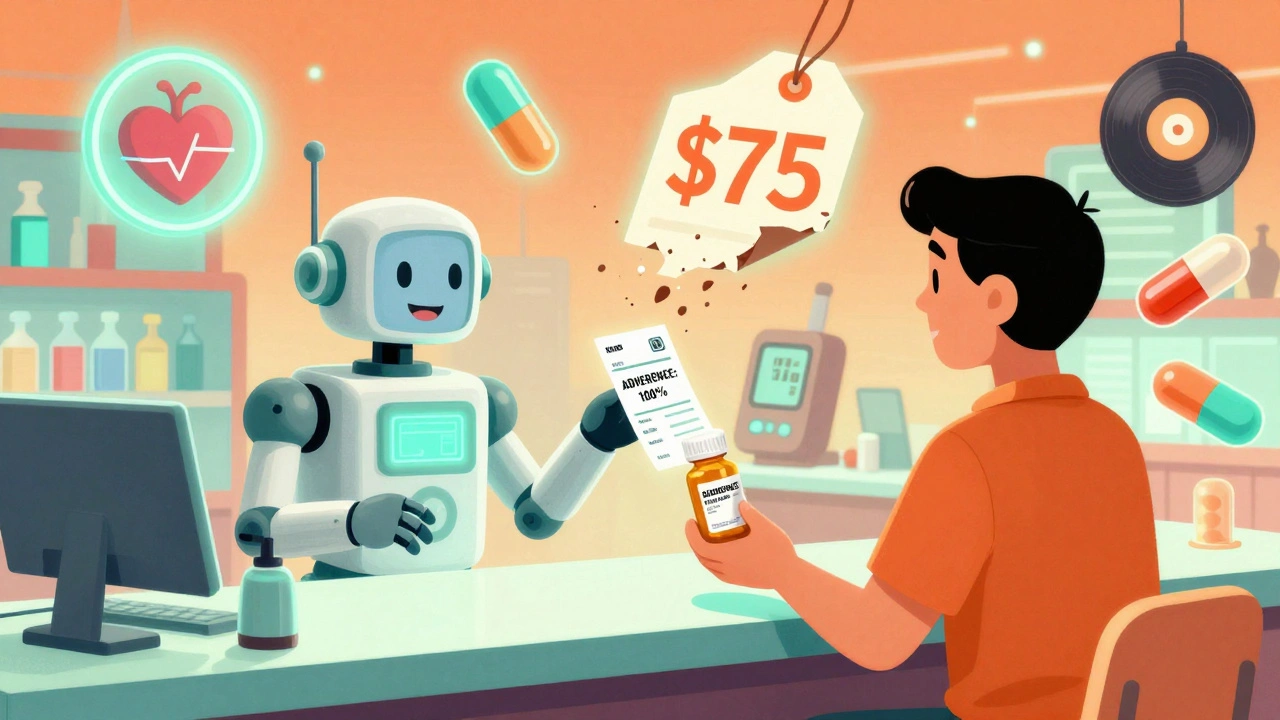
When a patient skips a dose because the pill costs too much, it’s not just a personal choice-it’s a system failure. And it’s happening far more often than most people realize. In the U.S., 32.7% of adults admit to skipping, cutting, or delaying their medications because of cost. That’s more than one in three people. For many, the difference between taking their medicine and not taking it comes down to a simple number: the copay.
Why Price Matters More Than You Think
It’s easy to assume that if a doctor prescribes a drug, the patient will take it. But the reality is messier. Medication adherence-the act of taking your drugs exactly as prescribed-isn’t just about remembering to fill the prescription. It’s about being able to afford it. And when the out-of-pocket cost jumps from $5 to $75, adherence drops. Fast. Studies show a clear pattern: every $10 increase in what a patient pays out of pocket leads to a 2-4% drop in adherence. For drugs used to treat chronic conditions like high blood pressure, diabetes, or cholesterol, that’s not a small blip. It’s a crisis. A 5% drop in adherence to statins, for example, means more heart attacks, more hospital stays, and more deaths-all preventable. Generic drugs aren’t cheaper because they’re weaker. They’re cheaper because they don’t carry the marketing, patent, and R&D costs of brand-name drugs. The FDA requires generics to have the same active ingredient, strength, dosage form, and route of administration. They must also be bioequivalent-meaning they work in the body within 80-125% of the brand-name version. In plain terms: they work the same. Yet, despite being clinically identical, generic medications are priced at 80-85% less than their brand-name counterparts. That’s not a discount. That’s a revolution.The Real Impact: When Generics Replace Brands
One of the most telling studies came from Medicare Part D data. Researchers looked at patients switched from brand-name statins (atorvastatin and rosuvastatin) to their generic versions. Before the switch, many were skipping doses because the copay was $40-$75. After switching to generics, the copay dropped to $5-$10. The result? Adherence jumped by 5.9%-a statistically significant and clinically meaningful change. The same pattern held for breast cancer patients on aromatase inhibitors. Those taking brand-name drugs had a 22.3% discontinuation rate. Those on generics? Just 17.8%. Adherence rates were 73.1% for generics versus 68.4% for brands. That’s not a minor difference. It’s the difference between survival and relapse. And it’s not just about pills. For GLP-1 receptor agonists used in diabetes, every $10 increase in cost led to a 3.7% drop in adherence-and a 5.2% increase in emergency room visits. That’s not just a health risk. It’s a financial one. Non-adherence contributes to up to $300 billion in avoidable healthcare costs in the U.S. each year. That’s more than the entire annual budget of the CDC.Real Stories Behind the Numbers
Behind every statistic is a person. One Reddit user, u/HeartHealthJourney, shared how switching from brand-name Crestor to generic rosuvastatin changed their life. Before: missing 3-4 doses a week because of the $75 copay. After: perfect adherence for 11 months straight, thanks to a $5 copay. No change in the drug. Just the price. Another patient, a 68-year-old woman with type 2 diabetes, told her pharmacist she was cutting her metformin in half because the $90 monthly cost was eating into her rent money. After switching to the generic, her copay dropped to $10. She started taking it fully-and her A1C dropped from 9.2% to 7.1% in six months. These aren’t rare cases. A 2023 JAMA Network Open survey of over 2,100 adults found that 78.1% of people who had skipped meds due to cost said they’d stop or delay treatment if the final price at the pharmacy was higher than what they’d seen in a real-time cost tool. And 54.2% said they’d be ‘moderately or extremely upset’ if their doctor used those tools but didn’t talk to them about price.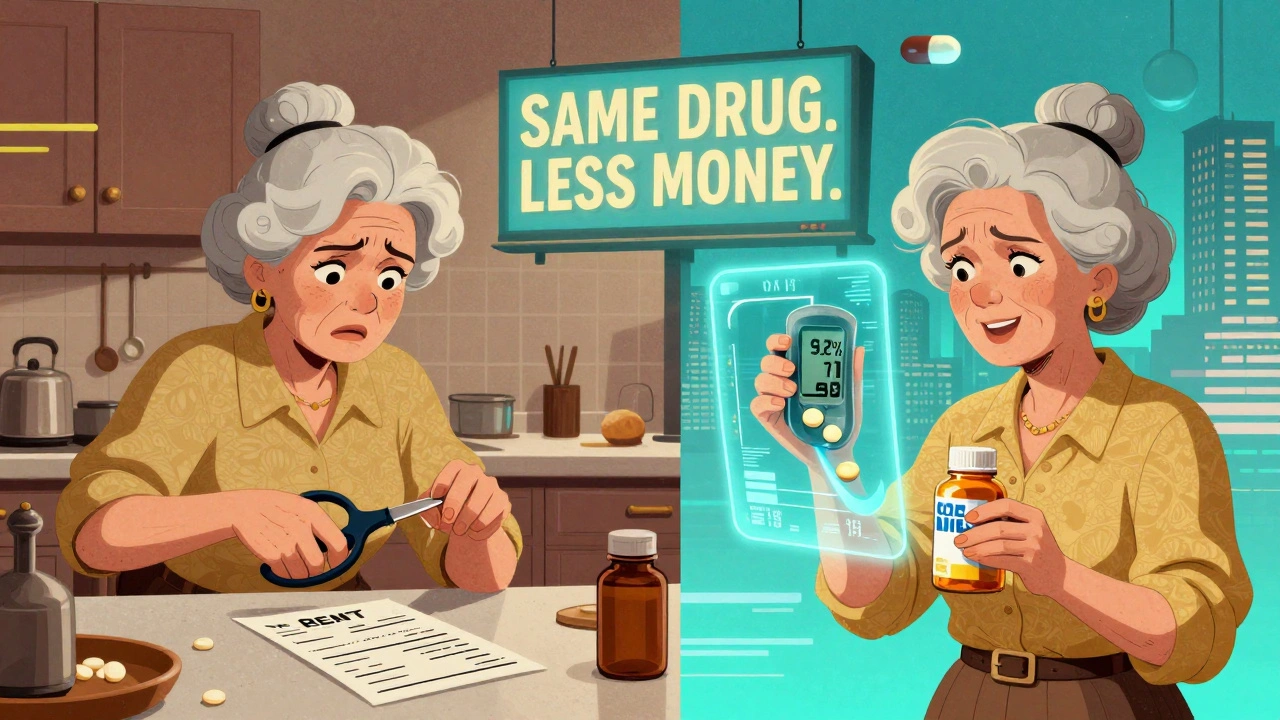
How the System Is Fixing Itself-Slowly
The good news? Change is happening. The Inflation Reduction Act of 2022 capped insulin at $35 a month. Starting in 2025, Medicare Part D will cap total out-of-pocket drug spending at $2,000 a year. That’s huge. It’s expected to help 1.4 million seniors stay on their meds. Pharmacies and insurers are also using real-time benefit tools (RTBTs) that show prescribers the cost of a drug before they write the script. In pilot programs, these tools have improved adherence by 12-15%. One program, Magellan’s inforMED, reported a 40% reduction in care gaps and a 2:1 return on investment. That means for every dollar spent on the tool, two dollars were saved in avoided hospitalizations and ER visits. But it’s not just about tech. It’s about trust. Many patients still believe generics are inferior. That’s why the FDA launched its “It’s Okay to Use Generics” campaign. And it’s why pharmacists need to explain, clearly and simply: “This generic has the same active ingredient. It works the same. It just costs less.”Where the System Still Fails
Despite all this, the U.S. still pays 256% more for brand-name drugs than countries like Australia, Germany, or Canada. In 2022-2023, nearly half of all drug prices rose faster than inflation. The average increase? $590 per drug. And here’s the irony: generics make up 90% of all prescriptions filled in the U.S., but only 23% of total drug spending. That means the system is already saving billions-but those savings aren’t reaching everyone equally. Some patients still face high copays because their insurance plan puts generics in a higher tier. Others get stuck with brand-name drugs because their doctor doesn’t know the generic is covered. Therapeutic duplication-prescribing two drugs for the same condition-is another hidden cost. It accounts for 20-30% of preventable spending. A pharmacist reviewing a patient’s full list of meds can often spot this and suggest a simpler, cheaper option.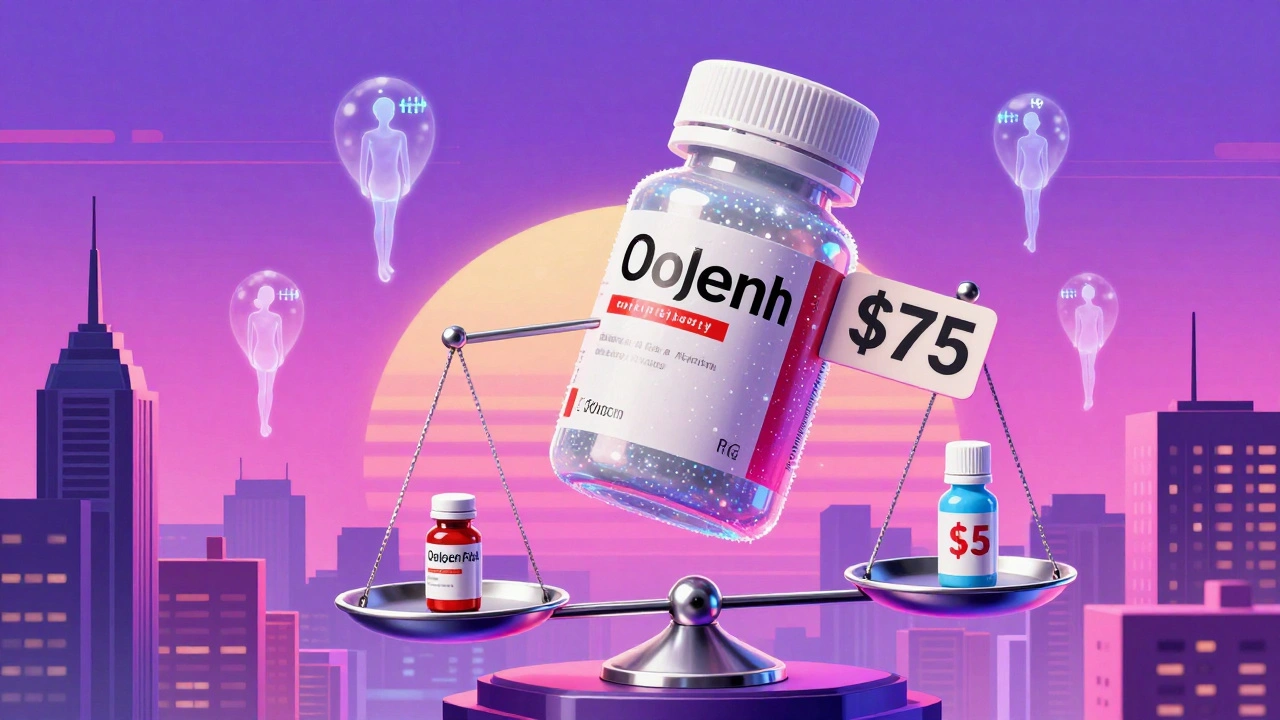
What Works-And What Doesn’t
The evidence is clear: lowering out-of-pocket costs for generics improves adherence. Period. And when adherence improves, hospitalizations drop, complications fall, and lives are saved. Here’s what actually moves the needle:- Moving generics to the lowest cost tier on insurance formularies
- Capping copays at $10 or less for chronic disease meds
- Using real-time cost tools at the point of prescribing
- Training providers to talk openly about cost with patients
- Pharmacists actively offering generic alternatives
The Bigger Picture
Lower generic prices aren’t just about saving money. They’re about dignity. About fairness. About giving people a real shot at staying healthy without having to choose between medicine and groceries. The data doesn’t lie. When the cost drops, people take their pills. When they take their pills, they get healthier. When they get healthier, the system saves money. It’s a loop that works-if we let it. The question isn’t whether lower generic prices help. The question is: why are we still making people pay so much for them?Do generic drugs work as well as brand-name drugs?
Yes. The FDA requires generic drugs to have the same active ingredient, strength, dosage form, and route of administration as the brand-name version. They must also prove they’re bioequivalent-meaning they’re absorbed into the body at the same rate and to the same extent. In over 90% of cases, generics work just as well. Many patients don’t notice any difference at all.
Why do some people still prefer brand-name drugs?
Some believe brand-name drugs are stronger or better made. Others have had a bad experience with a generic in the past-though that’s often due to different inactive ingredients (like fillers or dyes), not the active drug. A small number of patients with epilepsy or thyroid conditions may need to stick with one brand for stability, but those cases are rare. For most conditions, generics are just as safe and effective.
How much can I save by switching to a generic?
On average, you’ll save 80-85%. For example, a brand-name statin might cost $75 per month with insurance. The generic version could cost $5-$10. Even without insurance, generics are often under $20 for a 30-day supply. That’s hundreds of dollars a year saved.
Can my doctor prescribe a generic instead of a brand?
Yes, unless the prescription says “dispense as written” or “no substitution.” Most prescriptions allow generics. If you’re not sure, ask your doctor: “Is there a generic version of this drug?” Many don’t know unless you ask. Pharmacists can also suggest alternatives.
What if I can’t afford even the generic?
Many pharmacies offer discount programs-GoodRx, SingleCare, and RxSaver can cut prices further. Some drugmakers offer patient assistance programs for low-income patients. Medicare Part D’s new $2,000 out-of-pocket cap in 2025 will also help. And don’t be afraid to ask your pharmacist: “Is there a cheaper option?” They’re trained to help.
Does this apply outside the U.S.?
Yes, but the gap is smaller. In countries like Australia, Canada, and the UK, drug prices are regulated. Generics are even cheaper, and adherence rates are higher. The U.S. pays more than double what other wealthy countries pay for the same drugs. Lowering generic prices here would bring us closer to global standards-and better health outcomes.

Hamza Laassili
This is why america is broken. You pay $75 for a pill that costs 50 cents to make. And they call it capitalism. I swear, if I could vote with my wallet, I'd burn the whole system down. #MedicareForAll

Constantine Vigderman
OMG YES!! I switched my dad to generic lisinopril and he's been taking it daily for 8 months now!! 🙌 His BP is stable and he didn't skip a single dose. It's crazy how a $5 copay changes EVERYTHING. Life changing stuff!

Emma Sbarge
I work in a pharmacy. I see this every day. People crying because they have to choose between insulin and groceries. It's not a debate. It's a moral crisis. We're not a developed country if we let this continue.

Richard Ayres
The data is unequivocal. Lower out-of-pocket costs lead to higher adherence, which leads to reduced hospitalizations and lower overall system costs. The economic argument alone justifies policy changes. Why this remains unresolved is beyond me.

Sheldon Bird
You're not alone. I had a friend who skipped her metformin for six months because she couldn't afford it. She ended up in the ER. After switching to generic? She's back to work, her A1C is normal, and she's smiling again. Small change. Big impact.

Karen Mccullouch
Pharma CEOs are laughing all the way to the bank while grandmas cut pills in half. I'm so sick of this. These companies don't care about you. They care about profit. And we let them. #WakeUpAmerica

Michael Gardner
Actually, studies show that some generics have different fillers that can affect absorption in sensitive patients. It's not always the same. And let's not pretend brand-name drugs are just marketing. Some have better stability profiles.

Jennifer Taylor
I KNOW THEY'RE DOING THIS ON PURPOSE. The FDA is in bed with Big Pharma. The 'bioequivalence' standards are a joke. They test on 20-year-old college kids, not 70-year-olds with kidney disease. And then they say 'it's the same'. LIES. I've seen people crash after switching. It's not coincidence.

Lauren Scrima
So... you're telling me that if I just paid less, people would magically take their meds? Wow. Groundbreaking. Next you'll say water is wet. And yes, I know generics work. But your tone is so condescending it makes me want to skip my pills just to spite you.

sharon soila
Health is a human right. Not a privilege. When someone chooses between food and medicine, we have failed as a society. This isn't about economics. It's about compassion. Let's build a system that honors life.

nina nakamura
You're ignoring the fact that 90% of prescriptions are generic already. The problem isn't price, it's compliance. People are lazy. They forget. They don't care. Stop blaming the system. Fix the person.

Jamie Clark
The real issue is that we treat medicine like a commodity. It's not. It's a necessity. And by pricing it like a luxury good, we're creating a class-based healthcare system. The poor die early. The rich live longer. That's not capitalism. That's cruelty dressed in economics.

Webster Bull
My mom took generic Lipitor for 10 years. Same results, $10/month. She's alive today because of it. Don't let anyone tell you generics are inferior. They're just cheaper. And that's a good thing.

Bruno Janssen
I don't care. I'm not getting involved. This system is rigged. Nothing changes. I'll just keep skipping doses and hoping I don't die. It's easier than fighting.

Scott Butler
This is why you can't trust government programs. The Inflation Reduction Act? Just more debt. You think capping insulin helps? It just shifts costs to taxpayers. And you wonder why the system's broken.
Write a comment