Recent POST


Doctor Appointment Prep Checklist
What to Bring
What to Discuss
Preparation Summary
Here's your appointment preparation status:
Nothing to see here yet. Check items as you prepare.
What to Bring to Your Doctor Appointment
Showing up to your doctor’s office with nothing but your name and a vague feeling of discomfort is a recipe for missed clues and rushed answers. You’re not just wasting your time-you’re risking your health. The truth is, most doctors don’t have time to guess what’s going on. They need facts. And you’re the only one who has them.
Start with your medication list. Not just the prescriptions. Include every pill, patch, vitamin, herb, or supplement you take. Write down the exact name, dose, how often you take it, and why. For example: Atorvastatin 20mg, one tablet daily, for high cholesterol, prescribed by Dr. Chen, since 2021. Don’t say “I take my blood pressure medicine.” That’s not enough. Mayo Clinic found that patients who bring accurate medication lists reduce medication errors by 37%. Most people get this wrong-45% of initial lists have mistakes, like forgotten over-the-counter painkillers or old supplements you stopped taking but didn’t mention.
Bring your insurance card and government-issued photo ID. Sounds obvious, but clinics turn people away if they can’t verify identity or coverage. If you’ve switched plans recently, double-check your provider is still in-network. Ambetter Health and other insurers now require this confirmation before appointments, and some won’t even let you check in without it.
Don’t forget your family health history. Write down conditions that run in your family-diabetes, heart disease, cancer, mental health disorders-and which relatives had them. Mayo Clinic recommends including at least three generations: grandparents, parents, siblings. If your mother had breast cancer at 48, your doctor needs to know. That changes screening timelines. If your dad had a stroke at 55, your blood pressure and cholesterol targets shift. This isn’t gossip-it’s data that guides prevention.
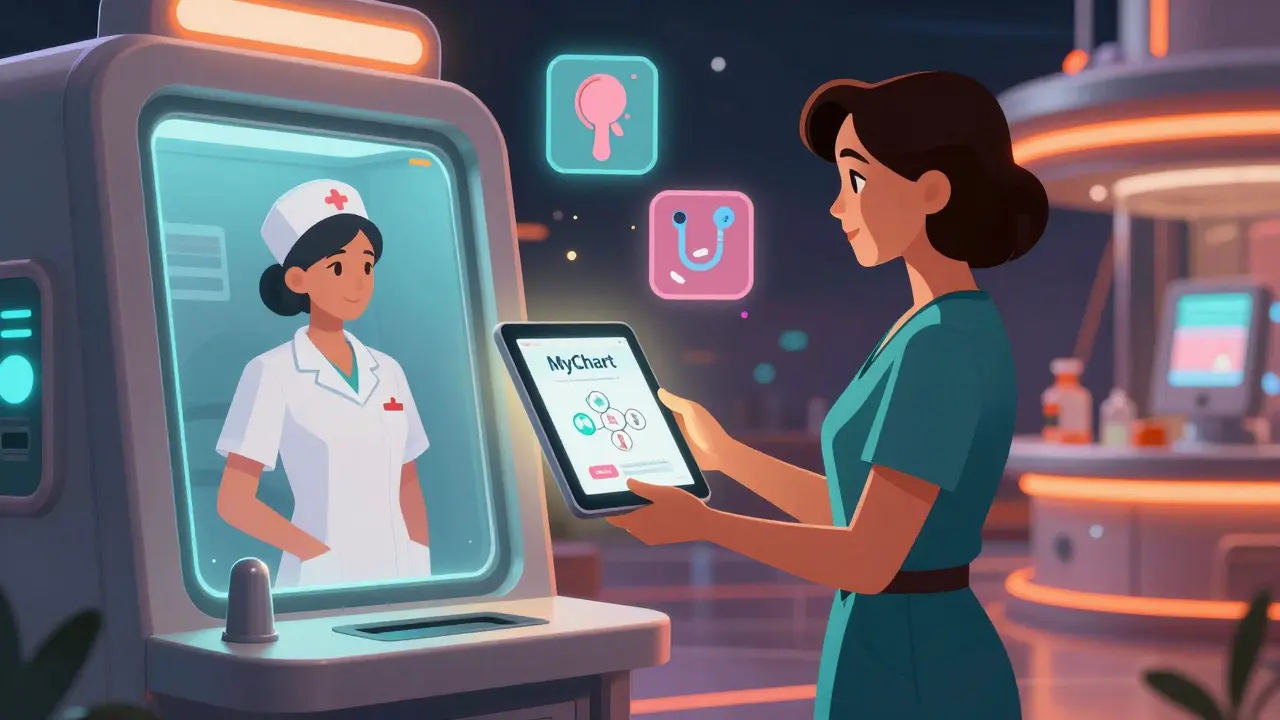
If your clinic uses a digital system like Cleveland Clinic’s AppointmentPass®, log in to MyChart at least 30 minutes before your appointment. Generate your digital check-in code. You’ll skip the front desk line and get straight to the nurse. Over 90% of patients using this system complete their prep faster and with fewer missing details.
Bring any recent test results, imaging reports, or specialist notes-even if you think they’re irrelevant. Your doctor might not have access to them yet. A simple MRI from three months ago could explain your new headaches. Don’t assume they’ve seen it.
What to Discuss: The 12 Topics That Matter
Your 15-minute appointment flies by if you don’t lead with what matters. Don’t wait for your doctor to ask. Bring your own list of concerns. The Institute for Healthcare Improvement calls this “goal setting,” and it’s proven to boost resolution rates. Patients who prepare 3-5 clear questions resolve 89% of their main issues. Those who don’t? Only 63%.
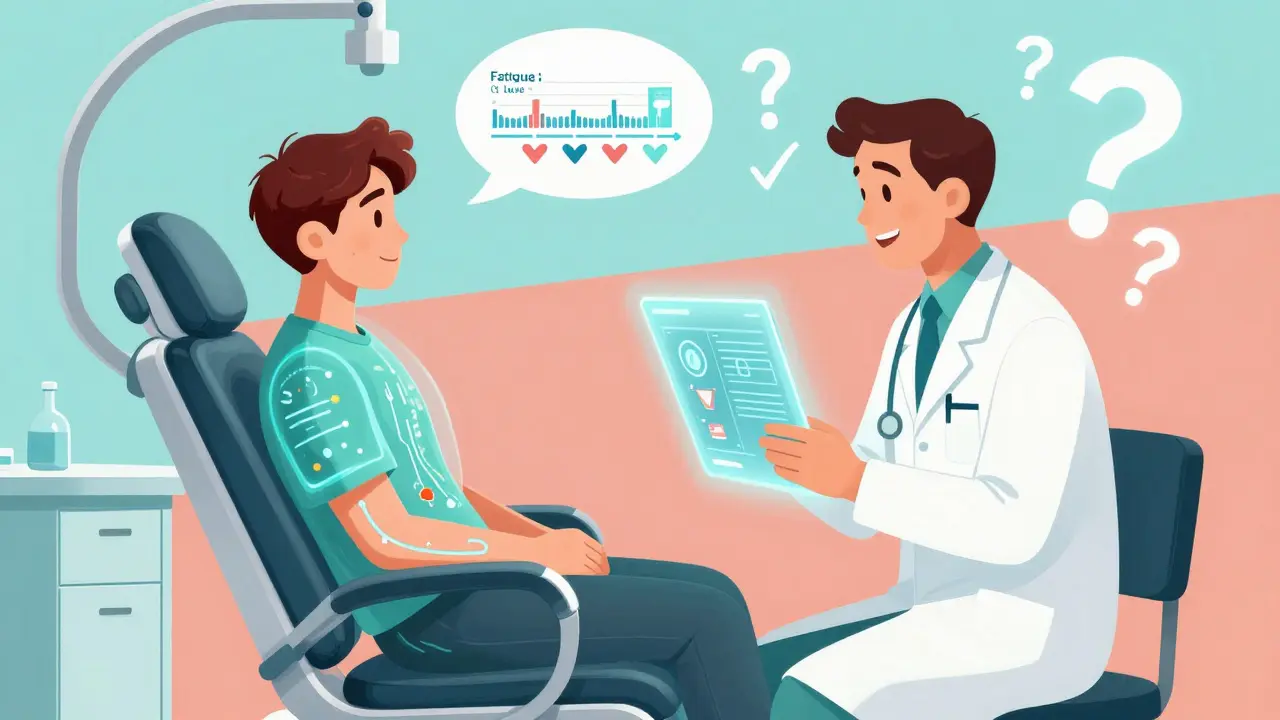
Start with symptoms. Don’t say, “I’ve been tired.” Say: “I’ve felt exhausted since mid-October. It’s worse after lunch. I nap for 45 minutes every day. It’s a 7 out of 10 on the fatigue scale. Coffee doesn’t help. I’ve lost 5 pounds without trying.” Include onset, duration, frequency, intensity (1-10 scale), and what makes it better or worse. AdventHealth’s research shows 68% of patients underreport symptoms because they think it’s “not serious enough.” It’s never too small.
Ask about medications. If your doctor suggests a new drug, ask: “Why are you recommending this?” “What are the side effects?” “What would you do if this were your parent?” That last one works. It shifts the conversation from textbook to human. Doctors respond differently when you ask them to imagine their own family in your shoes.
Discuss lifestyle. Be honest. How much alcohol do you drink? Not “a few drinks on weekends.” Say: “Two glasses of wine, four nights a week.” How much exercise? Not “I try to walk.” Say: “I walk 20 minutes, three days a week.” Are you smoking? Even one cigarette a day? Say it. Your doctor isn’t judging-they’re protecting you. AdventHealth’s data shows patients who disclose tobacco or alcohol use get better-targeted care and fewer unnecessary tests.
Ask about prevention. What screenings are you due for? Colonoscopy? Mammogram? Bone density? Blood sugar? Don’t assume your doctor remembers your last visit. Bring up your last one and ask if anything’s changed. For women over 50, or men over 55, these aren’t optional-they’re life-saving.
Bring up mental health. If you’ve felt down, anxious, or overwhelmed for more than two weeks, say it. Depression isn’t weakness. It’s a medical condition. Your doctor can help-through therapy, medication, or referrals. And if you’ve had thoughts of self-harm, say it. That’s not something to hide. It’s a red flag that needs immediate attention.
Ask about follow-up. Don’t leave without knowing the next step. “When should I come back?” “What signs should I watch for?” “Who do I call if this gets worse before my next visit?” If you’re prescribed a new test, ask when you’ll get results and how you’ll be contacted. Don’t wait for a call that might never come.
How to Organize Your Info Before You Go
Don’t wing it the night before. Set aside 20 minutes a week to update your health notes. Use your phone’s Notes app, a simple Word doc, or even a paper notebook. Keep it in your wallet or phone case so it’s always with you.
Break it into four sections:
- Medications-Name, dose, frequency, reason, prescribing doctor
- Symptoms-What, when, how bad, what helps or hurts
- Questions-Top 3 things you want answered
- History-Family illnesses, past surgeries, allergies, hospital stays
Use apps if they help. Mayo Clinic’s app lets you sync pharmacy records from 27 major chains and pulls data from Apple Health or Google Fit. Ambetter Health’s system auto-updates your meds when you refill prescriptions. Cleveland Clinic’s symptom checker asks you a series of questions and builds a report your doctor sees before you walk in.
But don’t rely on tech alone. You’re the only one who knows how you feel. A tracker can’t tell your doctor that you’ve been crying at night because you’re scared of what the test results might show. That’s yours to say.
Common Mistakes and How to Avoid Them
Here’s what most people do wrong-and how to fix it.
- Mistake: “I don’t remember the names of my pills.” Fix: Take a photo of your pill bottles before your appointment. Or bring the bottles themselves.
- Mistake: “I didn’t think this was important.” Fix: If it’s been bothering you for more than a week, it’s important. Write it down anyway.
- Mistake: “I didn’t want to bother the doctor.” Fix: Your doctor is paid to listen. You’re not bothering them-you’re helping them help you.
- Mistake: “I’ll remember to ask.” Fix: Write your questions down. Use sticky notes. Say them out loud before you leave the house.
And never, ever lie. Not even a little. Saying you “never drink” when you have wine every Friday? That’s not protecting yourself-it’s hiding risk. Your doctor can’t treat what they don’t know.
What Happens After the Appointment
Don’t walk out and forget it. Right after your visit, jot down what was said. Write down: the diagnosis, the plan, the next steps, and any new meds or tests. If your doctor said “come back in three months,” put it on your calendar. Set a reminder.
If you got a prescription, ask the pharmacist to explain how to take it. Many people don’t know the difference between “take with food” and “take on an empty stomach.” One wrong instruction can cause side effects-or make the medicine useless.
If you’re confused, call. Don’t wait. Most clinics have a nurse line. Use it. If your doctor says “call if you feel worse,” and you’re unsure if you feel worse, call anyway. Better safe than sorry.
Why This Matters
This isn’t about being “good” at doctor visits. It’s about survival. Patients who prepare properly spend less time waiting, get fewer duplicate tests, avoid dangerous drug interactions, and are more likely to catch problems early. Aurora Health Care found that prepared patients save 14.7 minutes per appointment-and that’s time your doctor can use to actually listen.
And here’s the real win: when you come in ready, your doctor sees you as a partner, not a problem to solve. That changes everything. You’re not just a chart. You’re a person with a life, a history, and a voice. Use it.
What if I forget something important during my appointment?
It happens. If you realize later that you missed something, call the clinic. Most have a nurse line or patient portal where you can send a secure message. Don’t wait until your next appointment-especially if it’s weeks away. A quick follow-up can prevent a bigger issue.
Do I need to bring all my pill bottles?
Not always, but it helps. If you’re unsure about names or doses, bringing the bottles eliminates guesswork. If you can’t bring them, take clear photos of the labels. Many clinics accept photos via secure messaging portals.
Can I bring a friend or family member?
Yes, and you should if you’re anxious or dealing with a complex issue. A second set of ears helps you remember what was said. Just let the doctor know upfront so they can include them in the conversation.
What if I don’t have insurance?
You still deserve care. Many clinics offer sliding-scale fees based on income. Community health centers and public hospitals often have programs for uninsured patients. Don’t skip care because you’re worried about cost-ask about options before your visit.
How far in advance should I prepare?
Start three to five days before. Update your medication list, write down symptoms, and think about your top questions. Don’t wait until the night before. Rushed prep leads to forgotten details. A little time ahead makes a big difference.

Himanshu Singh
bro i just brought my pill bottles to my doc last week and she was like 'wow, you're the first person who didn't make me guess what's in your medicine cabinet' 😅 honestly this post saved my life. i forgot i was still taking that ginseng thing from 2020. my bp dropped like a rock.

Jasmine Yule
THIS. I’ve been telling people this for YEARS. My mom got misdiagnosed because she said 'I take my heart meds' and the doc assumed it was lisinopril. Turns out it was carvedilol. She ended up in the ER. Don’t be vague. Write it down. Bring the bottles. I’m not mad, I’m just disappointed.

Emma Duquemin
OH MY GOD. I just realized I’ve been lying to my doctor about my alcohol intake for 3 years because I thought 'a glass of wine' was 'social drinking.' I’ve been having two glasses, four nights a week. I’m not a problem. I’m a patient. I’m updating my list right now. I’m crying. Not because I’m sad-because I’m SO RELIEVED I didn’t wait until I had liver damage to get honest. Thank you for this. I’m printing this and taping it to my bathroom mirror.
Also-bring your damn pill bottles. I took a photo of mine last night. My meds look like a rainbow explosion in a pharmacy. I didn’t even know I had that many. My doctor’s gonna think I’m a pharmaceutical wholesaler.
And mental health? I’ve been crying in the shower every night for six months. I didn’t say anything because I thought 'it’s just stress.' Now I’m gonna say it. I’m scared. But I’m gonna say it. This post just gave me courage. Thank you.
Also-do NOT skip the family history part. My aunt had ovarian cancer at 42. I didn’t tell my doc because I thought 'it’s not my mom’s side.' Turns out it’s my dad’s cousin. Now I’m getting screened. I’m alive because I read this. I’m not exaggerating.
And if you’re thinking 'I don’t have time'-you have 20 minutes a week. That’s less than your TikTok scroll. Your life is worth it.
PS: I just called my sister and made her update her list too. We’re doing this together. #HealthIsPower

Kevin Lopez
Medication reconciliation is non-negotiable. Polypharmacy increases all-cause mortality by 19% in patients over 65. OTC NSAIDs are the most commonly underreported agents. Failure to document herbals introduces CYP450 interactions. You’re not 'just' taking turmeric. You’re inducing CYP3A4 inhibition. Document everything. Or die.

Duncan Careless
Good stuff. I’ve been doing this for years-keep a little notebook in my wallet. I write down symptoms in the car on the way. I always bring my meds. I even write down questions in pencil so I can cross them off as we go. Helps me stay calm. Doc says I’m one of the easiest patients he’s got. Honestly? I just don’t want to waste his time. Or mine.

Samar Khan
you’re all so naive. your doctor doesn’t care. they’re paid to see 30 people a day. you think they’re gonna remember your 'family history'? they’re thinking about their lunch. your 'med list'? they glance at it for 2 seconds. this whole thing is a scam. you’re just doing extra work so they can feel like they did their job. you’re not a partner. you’re a data point. 😔

Russell Thomas
Oh wow, so now I’m supposed to become a medical transcriptionist before my 15-minute appointment? What’s next? Do I need to write a 10-page essay on my anxiety and attach a Spotify playlist of my mood? 🙄 I just want to be seen, not interrogated by a spreadsheet.

Joe Kwon
Just wanted to say-this is exactly why I started using MyChart. I sync my Apple Health data, it auto-populates meds from my pharmacy, and I can send pre-visit notes to my doctor. They actually read them. Last visit, they said 'I saw your note about the dizziness after meals-let’s check your glucose.' That’s the first time a doc followed up on something I wrote. It works. Try it.

Nicole K.
People who don’t bring their meds are just lazy. And if you’re drinking wine every night? You’re an alcoholic. And if you’re crying at night? You’re weak. Just toughen up. This post is enabling bad behavior.

Fabian Riewe
Y’all are killing it. I’m 72, never wrote anything down before. Last week I brought my pill bottles and a sticky note with 'I feel like I’m forgetting things.' Doc said, 'That’s not normal aging-that’s mild cognitive impairment. Let’s run some tests.' I didn’t know I had a name for it. Now I’m doing brain games and walking daily. I feel like I got my brain back. You’re not just helping your doctor-you’re helping yourself. Keep going.

Amy Cannon
While I deeply appreciate the earnestness of this piece and the commendable intention behind its dissemination, I must respectfully submit that the structural and lexical architecture of the advice, though fundamentally sound, may inadvertently perpetuate a biomedical hegemony that privileges Western, technocratic models of patient agency while marginalizing epistemologies rooted in communal, intergenerational, and somatic wisdom traditions. For instance, in many Indigenous and Global South contexts, health knowledge is transmitted orally, embodied, and contextualized within familial and spiritual networks-not through digitized checklists or pharmaceutical inventories. The implicit assumption that 'writing it down' is the only valid form of preparation risks cultural erasure and epistemic violence, particularly for elderly, low-literacy, or non-Western patients. A more inclusive framework might integrate oral testimony, ritual documentation (e.g., prayer journals, herbal lineage charts), and community elder consultation as equally valid forms of 'preparation.' While I applaud the intent, I urge a decolonial reframing of 'preparedness' that does not equate literacy with legitimacy.
Himanshu Singh
lol i just told my doc i cried last night and she said 'that’s fine, i cry too.' we talked for 20 extra minutes. she gave me a referral. i didn’t even ask. she just saw it in my eyes. you don’t need a list to be heard. just be real.
Write a comment