Recent POST

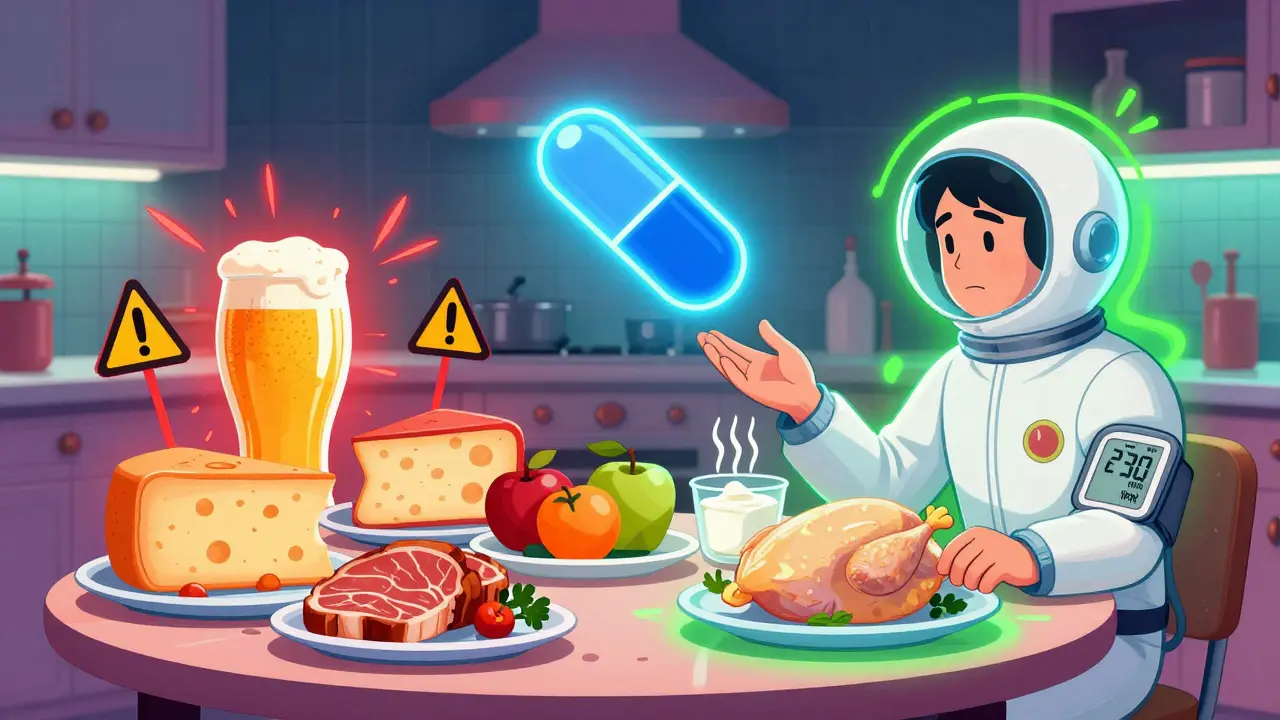
When you’re prescribed linezolid for a stubborn infection - maybe MRSA, maybe a resistant staph infection - your doctor focuses on killing the bacteria. But there’s another battle happening inside your body, one that has nothing to do with germs and everything to do with what’s on your plate. Linezolid doesn’t just fight bacteria. It quietly blocks an enzyme called monoamine oxidase. And when that enzyme slows down, tyramine - a natural compound in certain foods - starts building up in your blood. That’s when your blood pressure can skyrocket, sometimes to life-threatening levels.
Why Linezolid and Tyramine Don’t Mix
Linezolid is an antibiotic. It’s powerful. It works when others fail. But it’s also a weak monoamine oxidase inhibitor (MAOI). That means it interferes with how your body breaks down chemicals like tyramine. Normally, your liver uses MAO enzymes to clear tyramine from your bloodstream. But when linezolid is in your system, that cleanup crew gets slowed down. Tyramine builds up. And when it does, it triggers a massive release of norepinephrine - your body’s natural adrenaline. That’s what causes your blood pressure to spike.It’s not theoretical. Between 2018 and 2023, over 1,200 adverse events linked to linezolid and high blood pressure were reported to the FDA. Some patients ended up in the ICU. At least three deaths were directly tied to this interaction since 2018. One case from a 2023 report described a patient whose systolic pressure hit 230 mmHg after eating aged cheddar cheese. That’s higher than the pressure in a firehose. He needed IV meds, constant monitoring, and three days in intensive care.
What Foods Are Dangerous?
You don’t need to starve. But you do need to know what to avoid. The rule is simple: skip anything with more than 100mg of tyramine per serving. That’s not as hard as it sounds - if you know what to look for.- Aged cheeses: Blue cheese, cheddar, Swiss, parmesan, gouda - these are the big ones. A single ounce of aged cheddar has about 150mg of tyramine. Blue cheese? Up to 1,500mg per 100g. One bite can be enough to trigger a crisis.
- Fermented or cured meats: Pepperoni, salami, summer sausage, liverwurst. Even a small slice can pack 100-300mg of tyramine.
- Tap beer and draft beer: These contain 100-200mg per 100ml. Bottled or canned beer is usually safe, but tap beer? Avoid it. Same goes for homebrewed or unpasteurized beer.
- Red wine: Especially Chianti, Burgundy, and other full-bodied varieties. A glass can contain 5-100mg. White wine and sparkling wine are lower risk, but still check labels.
- Fermented soy: Soy sauce, miso, tempeh, and tofu that’s been fermented. Even a tablespoon of soy sauce can have 100mg or more.
- Overripe or spoiled foods: Tyramine forms as food ages. A banana that’s too brown? A yogurt past its date? A leftover stew left out too long? They’re not worth the risk.
Here’s what’s generally safe: fresh meat, fresh poultry, fresh fish, eggs, most fruits and vegetables, fresh bread, pasteurized dairy (milk, cottage cheese, ricotta), and non-fermented soy products like plain tofu. But be careful - if it’s been sitting, aged, or fermented, assume it’s risky.
How Long Do You Need to Worry?
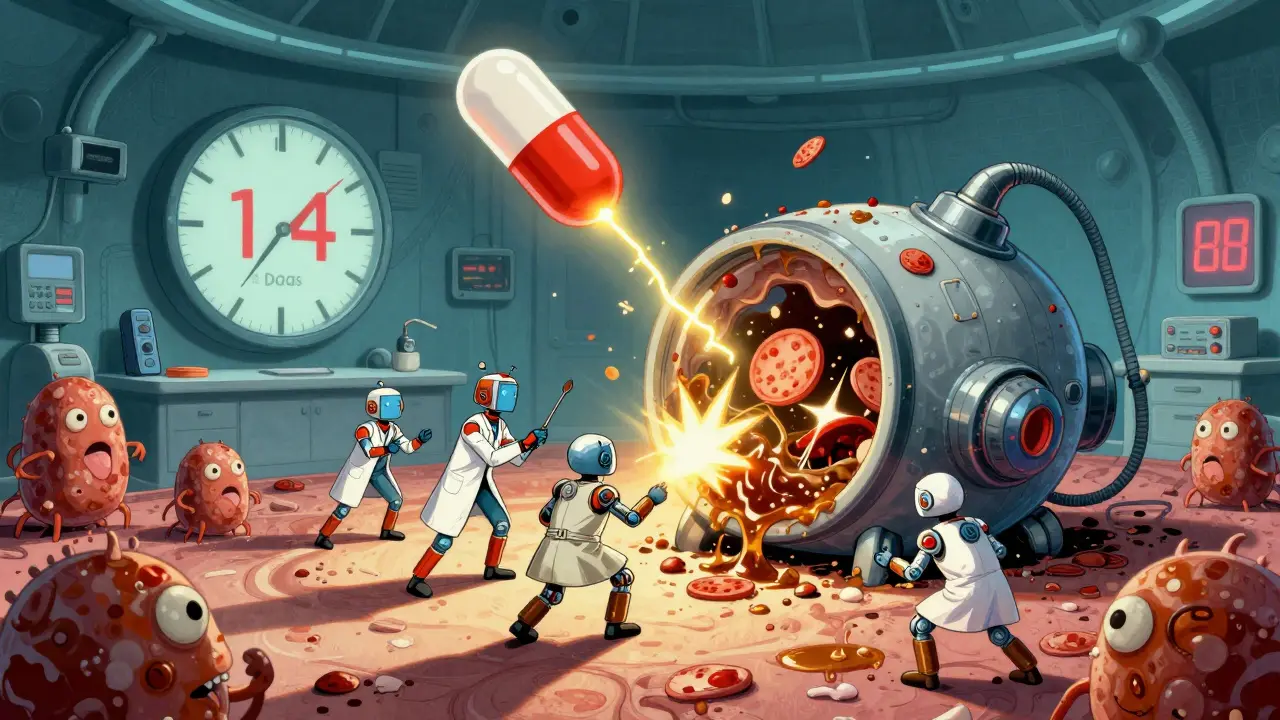
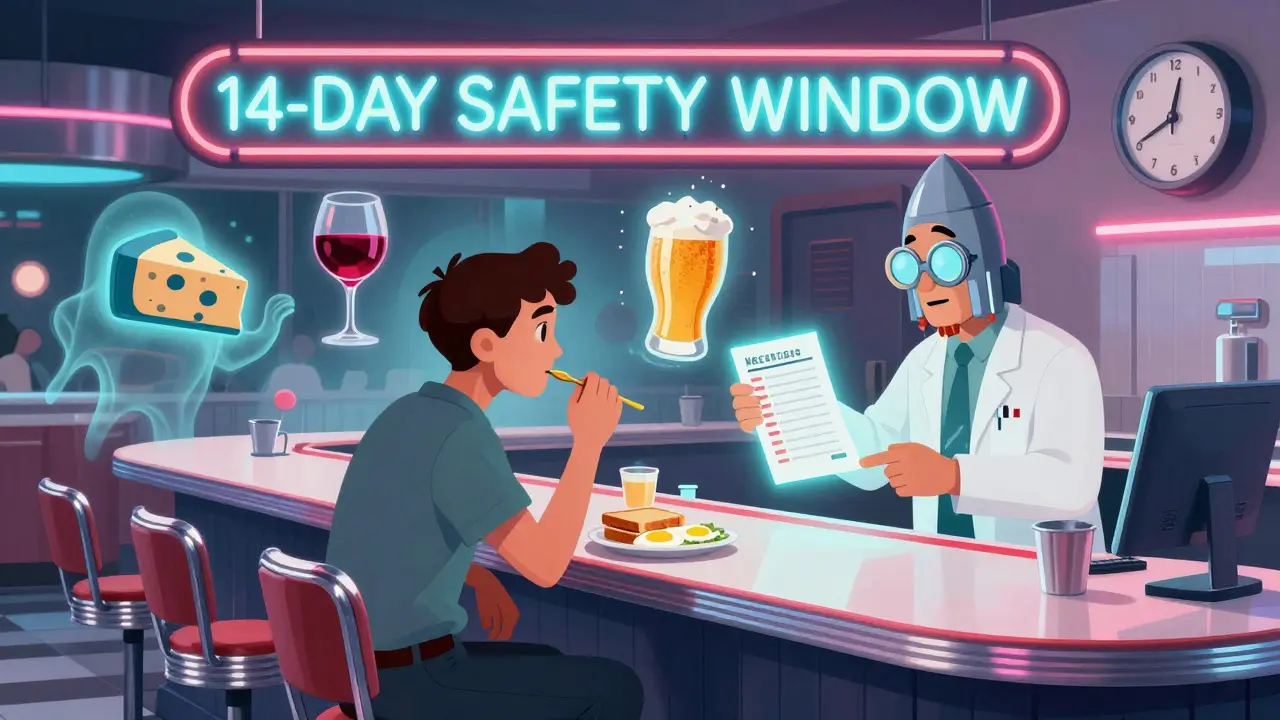
This is where people get confused. You don’t need to avoid these foods forever. Linezolid’s effect on MAO is reversible. Once you stop taking it, your body starts making new enzymes. Most people recover within 24 to 48 hours. But here’s the catch: the drug sticks around longer than you think. Its half-life is about 5 days. That means it takes up to two weeks for your MAO enzymes to fully bounce back.That’s why guidelines now recommend avoiding high-tyramine foods 24 hours before starting linezolid, throughout your treatment, and for 14 days after your last dose. It’s not a suggestion. It’s a safety window. Skip it, and you’re gambling with your blood pressure.
What About Other Medications?
Linezolid doesn’t just clash with cheese. It can also react badly with common over-the-counter and prescription drugs.- Decongestants: Pseudoephedrine, phenylephrine - found in cold and allergy meds. These can spike your blood pressure even without tyramine.
- Antidepressants: SSRIs like sertraline, SNRIs like venlafaxine, even St. John’s Wort. Combine them with linezolid, and you risk serotonin syndrome - a dangerous surge in brain chemicals that can cause seizures, fever, and confusion.
- Stimulants: ADHD meds like Adderall, or even strong caffeine (over 400mg/day). These add fuel to the fire.
- Other MAOIs: Never take linezolid with phenelzine, tranylcypromine, or moclobemide. That’s a recipe for disaster.
If you’re on any of these, tell your doctor before starting linezolid. And if you’re unsure, ask your pharmacist to check your full medication list. Many hospitals now use electronic alerts to flag these interactions - but not all do. Don’t assume someone else caught it.
Why Do So Many People Get It Wrong?
You’d think this would be common knowledge by now. But a 2022 study found that only 44% of patients prescribed linezolid got written dietary instructions. Many doctors assume patients know about MAOIs because of older antidepressants. But linezolid is different. It’s an antibiotic. People don’t expect it to have food restrictions. They think, “It’s just a pill for infection. I’ll eat normally.”And it’s not just patients. A 2023 survey showed that only 59% of internal medicine residents could correctly list all the high-tyramine foods. Nurses, pharmacists, even some infectious disease specialists miss it. That’s why the FDA issued a safety alert in May 2024 - 12 more cases of severe reactions were confirmed, all preventable.
What If You Accidentally Eat Something Risky?
If you eat aged cheese, salami, or tap beer while on linezolid, don’t panic - but act fast.- Check your blood pressure immediately if you have a home monitor. Systolic over 180? Diastolic over 120? That’s a red flag.
- Call your doctor or go to the ER. Don’t wait. Hypertensive crises can lead to stroke, heart attack, or organ damage.
- Stop taking linezolid - but only if your doctor tells you to. Don’t quit antibiotics on your own unless instructed.
- Don’t take extra blood pressure meds unless directed. Some over-the-counter pills can make things worse.
One patient in a 2023 case report had his blood pressure stay elevated for 26 days after stopping linezolid. That’s how long it took his body to fully clear the drug and rebuild its enzyme supply. The longer you wait, the riskier it gets.
What’s Changing in 2025?
The tide is turning. New antibiotics are coming. Contezolid - a drug that kills the same resistant bacteria as linezolid but without the MAO inhibition - is in Phase III trials. FDA submission is expected in mid-2025. That’s good news. But until then, linezolid is still a go-to for serious infections.Guidelines are tightening. The 2024 IDSA recommendations now require doctors to check your blood pressure before starting linezolid and monitor it twice daily during treatment - especially if you already have high blood pressure. Hospitals are starting to use visual food charts, dietitian consultations, and automated EHR alerts. But in community clinics and outpatient settings? Still patchy.
What does that mean for you? If you’re prescribed linezolid, assume you need to change your diet. Don’t rely on memory. Don’t trust vague advice. Ask for a printed list. Ask for a pharmacist consult. Ask for a dietitian if you’re on it for more than a week. Your life might depend on it.
Final Thought: It’s Not About Perfection - It’s About Awareness
You don’t need to become a nutritionist. You don’t need to memorize tyramine levels. Just know this: if it’s aged, fermented, cured, or sitting out too long - skip it. Stick to fresh. Stick to simple. Stick to what’s clearly labeled.Linezolid saves lives. But it can also take them - if you don’t pay attention to what’s on your fork. This isn’t a minor side effect. It’s a silent, avoidable emergency. And it’s entirely in your control.

Connie Zehner
OMG I ate blue cheese on day 3 of my linezolid and I thought my head was gonna explode 😱 I thought it was just a headache but my BP was 210/110-ER, IV labetalol, 3 days in ICU. Don’t be like me. Just don’t.

Mahammad Muradov
People still don’t get it. Linezolid isn’t penicillin. It’s a biochemical landmine. If you’re eating fermented foods while on it, you’re not just being careless-you’re playing Russian roulette with your cerebral vasculature. The FDA data isn’t a suggestion. It’s a autopsy report waiting to happen.

holly Sinclair
It’s fascinating how a simple enzyme inhibition can unravel an entire metabolic pathway. Monoamine oxidase doesn’t just handle tyramine-it’s part of a delicate neurochemical equilibrium. When you inhibit it, you’re not just blocking one reaction, you’re triggering a cascade of catecholamine surges that mimic a stress response amplified by a hundredfold. The body doesn’t distinguish between psychological stress and dietary-induced hypertension in that moment. It just reacts. And that’s why it’s so terrifying. It’s not the cheese. It’s the invisible biochemical betrayal.

Monte Pareek
Look I’ve been a pharmacist for 22 years and I’ve seen this kill people. Don’t mess around. Fresh meat, fresh veggies, pasteurized milk, bottled beer-stick to that. If it’s been sitting, aged, pickled, or smells like a brewery’s basement, skip it. And no, your ‘I’ve had this cheese for years’ story doesn’t matter. Your body changes. Your MAO enzymes reset. You think you’re immune? You’re not. And if you’re on any antidepressant or cold medicine? Double down on the caution. I’ve had patients die because they thought ‘it’s just one slice.’ One slice is enough. Don’t be the statistic.

Kelly Mulder
It is profoundly disconcerting that the general populace continues to conflate pharmaceutical efficacy with culinary autonomy. The pharmacodynamic profile of linezolid is unequivocally incompatible with the ingestion of tyramine-rich substrates. One is compelled to question the efficacy of public health literacy when a patient consumes 150mg of tyramine from aged cheddar and then blames the ‘side effects’ on ‘bad luck.’ This is not a side effect. It is a preventable pharmacological catastrophe.

Emily P
Wait so… is soy sauce always bad or just the fermented kind? I use low-sodium tamari sometimes-is that okay? I don’t want to overthink this but I also don’t wanna end up in the ER.

Vicki Belcher
Thank you so much for this!! 🙏 I was just prescribed linezolid and I was about to have a pizza with parmesan 😅 I’m so glad I read this first. I made a little cheat sheet and taped it to my fridge. Fresh food only now 🍎🥦🥚 I got this!!

Jedidiah Massey
MAO inhibition is a pharmacokinetic minefield. The pharmacodynamic cascade triggered by tyramine accumulation leads to uncontrolled norepinephrine release via the sympathetic nervous system, resulting in vasoconstriction and hypertensive urgency. This isn’t ‘diet advice’-it’s a neurochemical emergency protocol. If you’re not familiar with the adrenergic receptor cascade, you shouldn’t be eating anything beyond plain rice and boiled chicken.

Alex Curran
Just had linezolid last month. Ate some pepperoni on a pizza and my heart felt like it was trying to punch out of my chest. Took my BP at home-205/108. Called my doc, he said ‘next time just skip the cured meats’ and hung up. I’m still mad. No one told me about this. Not my doc, not the pharmacist, not the label. This needs to be on the pill bottle. Like, right there. Big red letters.

Lynsey Tyson
I get that this is serious but I also think we need to be kinder to people who accidentally mess up. My aunt did this-ate blue cheese, panicked, didn’t tell anyone for 8 hours. She’s fine now but she’s terrified to even touch dairy. Maybe instead of shaming, we should make it easier to find safe food lists? Like, a QR code on the prescription bottle that links to a simple chart? I think that’d save more lives than yelling.

Edington Renwick
People are dying because they think ‘it’s just antibiotics.’ I told my sister this and she said ‘I’m not a child, I know what I’m doing.’ Two weeks later she was in the ICU. Her husband didn’t even know what MAOI stood for. This isn’t about willpower. It’s about systemic failure. Doctors aren’t trained. Pharmacies don’t warn. Patients aren’t warned. And now people are dead. And we’re still acting like it’s a minor inconvenience.

Allison Pannabekcer
I’m so glad this post exists. I work with older patients and I’ve seen so many get confused because they’re on linezolid for a skin infection and they think ‘I’ll just have my wine with dinner.’ I started making little printed cards with ‘SAFE’ and ‘AVOID’ lists-simple, big font, no jargon. I give them to every patient. And I always ask: ‘Who’s helping you cook?’ Sometimes it’s a grandkid who doesn’t know what ‘fermented’ means. We need to talk to families, not just patients. This isn’t just medical advice-it’s a household safety plan.
Write a comment