Recent POST
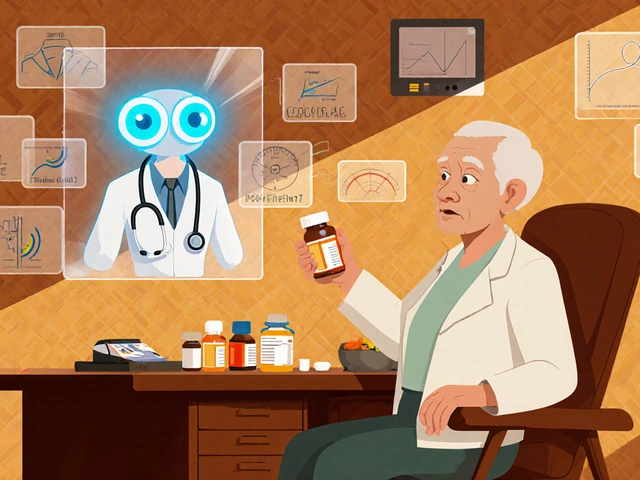
Every year, millions of people around the world take medicine they think is real - but it’s not. Fake pills, fake bottles, fake labels. They look identical. They cost less. And they can kill you.
You might think this only happens in faraway countries. But it’s happening here too. In Australia, the U.S., Europe - anywhere people buy medicine online or from unlicensed sellers. The World Health Organization says counterfeit drugs make up 10-30% of the market in low-income countries. In rich nations, it’s around 1%. But even 1% means thousands of dangerous pills in circulation. And most of them? They never get caught by regulators. That’s where patient vigilance comes in. You. The person holding the bottle. Your eyes. Your hands. Your questions.
What Exactly Is a Counterfeit Medicine?
A counterfeit medicine isn’t just expired or poorly made. It’s a deliberate lie. It might have the right packaging - same color, same logo, same barcode. But inside? It could be sugar, chalk, rat poison, or too little of the real drug. Some fake antibiotics have zero active ingredient. Fake heart pills might have double the dose. Fake insulin? That’s a death sentence.
The WHO defines it clearly: falsified medical products are those that deliberately misrepresent their identity, composition, or source. They’re not mistakes. They’re crimes. And they’re big business. Johnson & Johnson estimates the global counterfeit drug market is worth $200 billion a year. That’s more than the GDP of most countries.
Why Can’t Technology Fix This Alone?
You’ve probably heard about serialization - those unique codes on medicine boxes. In Europe, since 2019, every prescription drug has a 2D barcode that pharmacies scan to verify it’s real. In France, since early 2024, you can scan a QR code on the box to see the digital leaflet. In Brazil, the same system launched in June 2024.
These are great tools. But they’re useless if you don’t know how to use them. A 2023 survey by the National Association of Boards of Pharmacy (NABP) found that 41% of U.S. consumers had bought medicine online without checking if the site had the '.pharmacy' seal. Only 28% of respondents regularly checked for tamper-proof seals. Most people don’t know what to look for.
Technology helps. But it doesn’t replace human eyes. A 2022 study in PMC10184969 showed that people who followed basic inspection steps could spot 70-80% of counterfeits just by looking. That’s not magic. That’s attention.
How to Spot a Fake Medicine - The BE AWARE Checklist
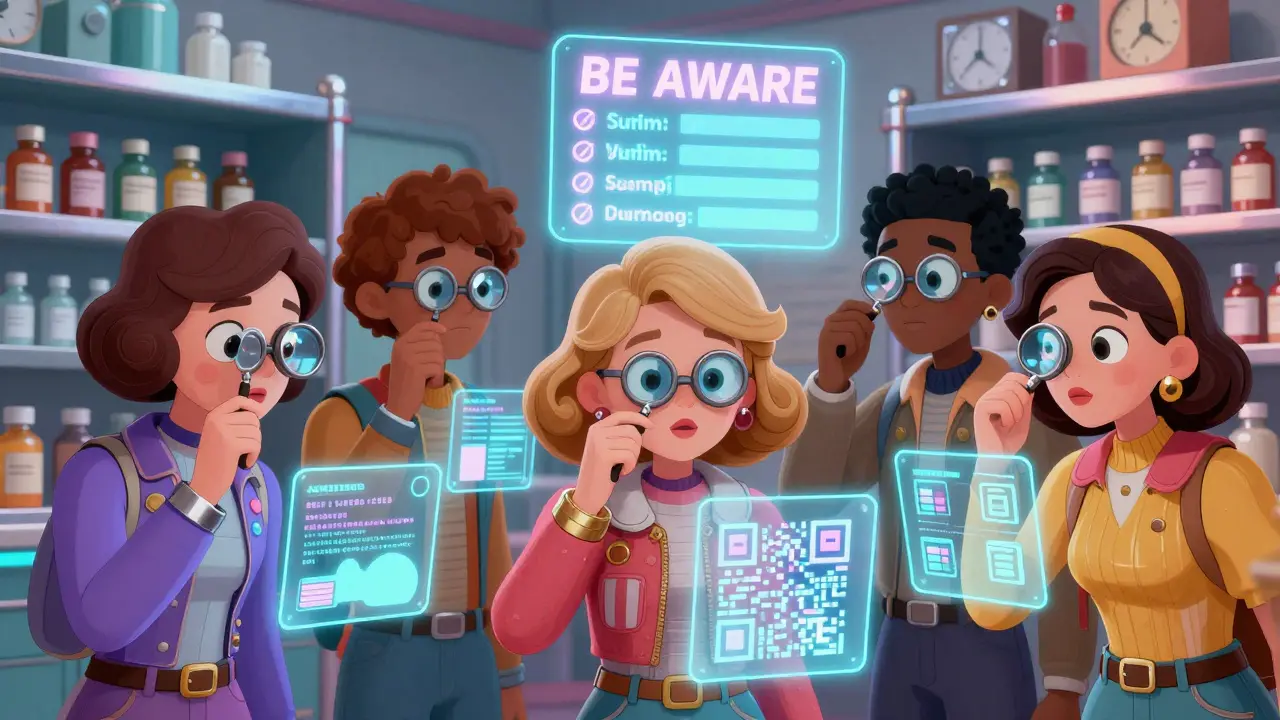
The World Health Professions Alliance created a simple tool called BE AWARE. It’s not complicated. Just check these six things every time you get medicine:
- B - Box integrity: Is the packaging cracked? Are the seals broken? Are there spelling errors? Fake makers cut corners. A misspelled word like "Lipitor" instead of "Lipitor"? Red flag.
- E - Expiration date: Is it faded? Smudged? Does it look like it was changed? Legitimate drugs have clear, printed dates. No stickers.
- A - Appearance of the medicine: Look at the pill or capsule. Does it look different than the last time? Wrong color? Wrong shape? Wrong markings? Even small changes matter. A diabetes pill that used to say "500" on it now says "50"? That’s not a batch variation - that’s fake.
- A - Authenticity features: Does it have a serial number or QR code? Scan it. Use the MedCheck app (used by over 1.2 million people) or the WHO’s Medicines Safety app. If the code doesn’t work, don’t take it.
- W - Where you bought it: Did you buy it from a pharmacy? A hospital? Or a website that looks like a pharmacy but isn’t? Only trust sites with the '.pharmacy' seal. If it’s on Instagram, Facebook, or a Google ad promising "50% off insulin," it’s fake.
- E - Excessive price: If it’s too good to be true, it is. A 30-day supply of metformin for $5? That’s not a deal. That’s a trap.
One real example: In January 2024, a woman in Brazil named Maria Silva noticed her diabetes pills looked different. The markings were off. She called ANVISA (Brazil’s health agency). They confirmed it was counterfeit. She saved her husband’s life. He’d been taking the fake pills for months.
Where Are Fake Medicines Coming From?
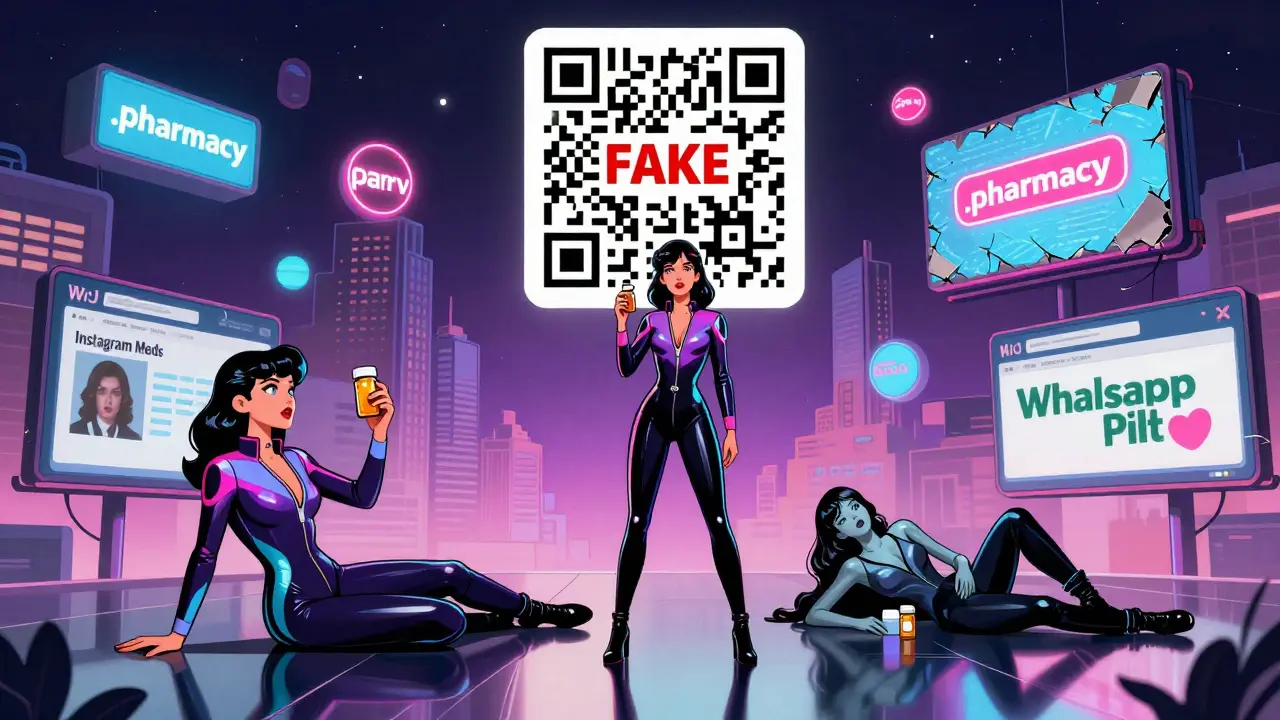
Most fake drugs come from online sources. Pfizer’s 2023 report says 89% of counterfeit exposures happen through unlicensed websites. Social media ads, WhatsApp groups, Instagram influencers selling "generic" versions of expensive drugs - these are the new front lines.
Even in rich countries, people are getting tricked. NABP’s survey found 18% of those who bought from unverified online pharmacies later had adverse reactions linked to fake medicine. And the problem is growing. The FDA says social media-based counterfeit sales rose 11% last year.
It’s not just pills. Fake insulin pens. Fake COVID vaccines. Fake erectile dysfunction drugs. Fake cancer treatments. The fake industry is adapting. Some counterfeits now use 3D printing to replicate packaging. INTERPOL’s Operation Pangea found 12% of 2023 test samples passed initial checks - because they looked perfect.
What You Can Do - Beyond Just Looking
Spotting fake medicine is step one. Step two is acting.
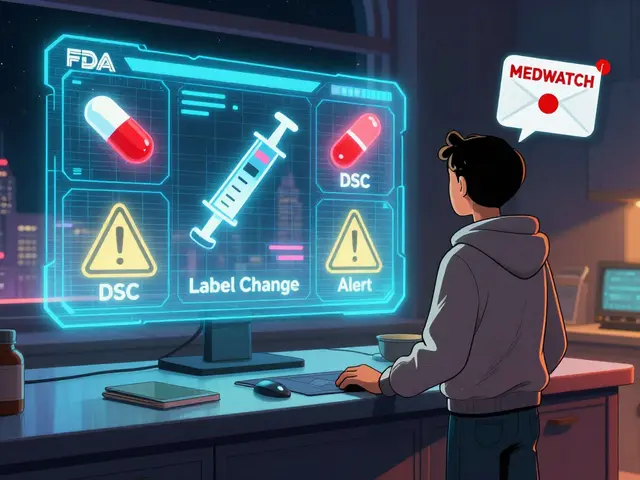
- Report it. If you suspect a fake, tell someone. In Australia, contact the TGA (Therapeutic Goods Administration). In the U.S., use the FDA’s MedWatch system. In the EU, contact your national medicines agency. Pfizer says 14,000 consumer reports in 2023 led to 217 counterfeit interdictions - preventing 3.2 million harmful doses from being used.
- Use verified pharmacies. Only buy from pharmacies with the '.pharmacy' seal. If you’re unsure, call the pharmacy. Ask them to scan the serial number. They’re required to do it.
- Ask questions. If your pharmacist can’t explain the packaging or the code, walk out. Legitimate pharmacies are happy to answer. Fake ones? They don’t exist.
- Teach others. Show your parents, your friends, your neighbors. A 2022 Pfizer pilot in 200 U.S. pharmacies found that community education boosted vigilance compliance by 52%.
The Hard Truth: Vigilance Isn’t Enough Everywhere
Let’s be honest. Not everyone can check packaging. Not everyone can read. Not everyone can afford to buy medicine from a licensed pharmacy. In Sub-Saharan Africa, 30% of drugs are fake. In parts of Southeast Asia, it’s 25%. People there don’t have the luxury of choosing where to buy. They take what they can get.
Dr. Paul Newton from Oxford University put it bluntly in The Lancet: "Putting the burden of detection on patients in poor regions is ethical outsourcing of regulatory failure." He’s right. No one should have to risk their life just to check a seal.
But here’s the thing: Until governments fix those systems - until every country enforces serialization, until every pharmacy is monitored, until every online seller is blocked - your vigilance is the last line of defense. And for millions, it’s the only one.
What’s Changing in 2026?
Things are moving. India launched a blockchain pilot in April 2024 that lets you scan a code and see a drug’s journey from factory to pharmacy. France’s QR code leaflets are now mandatory. Brazil’s system is gaining traction. Pfizer says 95% of prescription drugs will have consumer verification features by 2027.
But the goal isn’t to make you a detective. It’s to make you a confident user. You don’t need to be an expert. You just need to be careful. Ask: "Does this look right?" "Did I buy it from somewhere I trust?" "Does this price make sense?"
Because the truth is simple: No app, no scanner, no government agency can protect you like you can. You hold the medicine. You open the bottle. You swallow the pill. That’s your power. And your responsibility.
How can I tell if my medicine is fake just by looking at it?
Check the packaging for spelling mistakes, loose seals, or faded expiration dates. Compare the pill’s color, shape, and markings to previous bottles. If it looks different, even slightly, it could be fake. Use the WHO’s Medicines Safety app or MedCheck to scan any QR or barcode codes. If the code doesn’t work or leads to a strange website, don’t take it.
Can I trust online pharmacies that offer huge discounts?
No. Legitimate online pharmacies don’t sell prescription drugs at 70% off. If a site offers insulin for $5 or Viagra for $1 a pill, it’s fake. Only use pharmacies with the '.pharmacy' seal. You can verify them at the NABP website. If the site doesn’t ask for a prescription, it’s illegal - and dangerous.
What should I do if I think I’ve taken a fake medicine?
Stop taking it immediately. Contact your doctor or pharmacist. Report the medicine to your national health authority - like the TGA in Australia or the FDA in the U.S. Keep the packaging and any receipts. If you feel unwell, seek medical help right away. Fake medicines can cause serious harm, even if you don’t notice it right away.
Are counterfeit drugs only a problem in poor countries?
No. While 10-30% of drugs are fake in low-income countries, even developed nations have counterfeit medicines - about 1% of the market. Most come from online sources. In the U.S., 89% of fake drug exposures happen through unlicensed websites. Fake insulin, fake heart pills, and fake antibiotics are being sold to people in Australia, Canada, and Europe every day.
Is there an app I can use to check if my medicine is real?
Yes. The WHO’s Medicines Safety app (available in 12 languages) lets you scan QR codes on medicine packaging to verify authenticity. MedCheck is another trusted app used by over 1.2 million people globally. Both are free. If your medicine has a serial number or QR code, use one of these apps before you take it.
Why don’t governments just shut down fake medicine sellers?
They try. But counterfeiters operate across borders, use fake identities, and move quickly. A website shut down in one country reappears in another. Enforcement is slow, and laws vary. That’s why consumer vigilance is critical - it’s the only system that works everywhere, all the time. Reporting fake products helps authorities track and shut them down faster.
Final Thought: You’re Not Just a Patient. You’re a Guardian.
Counterfeit drugs don’t just hurt individuals. They erode trust in medicine. They waste healthcare money. They make real drugs less effective when people take fake ones.
But you can change that. Every time you check a seal. Every time you report a suspicious website. Every time you tell a friend to be careful. You’re not just protecting yourself. You’re helping protect others.
Medicine is supposed to heal. Fake medicine kills. Don’t wait for someone else to fix this. Start with the bottle in your hand.