Recent POST
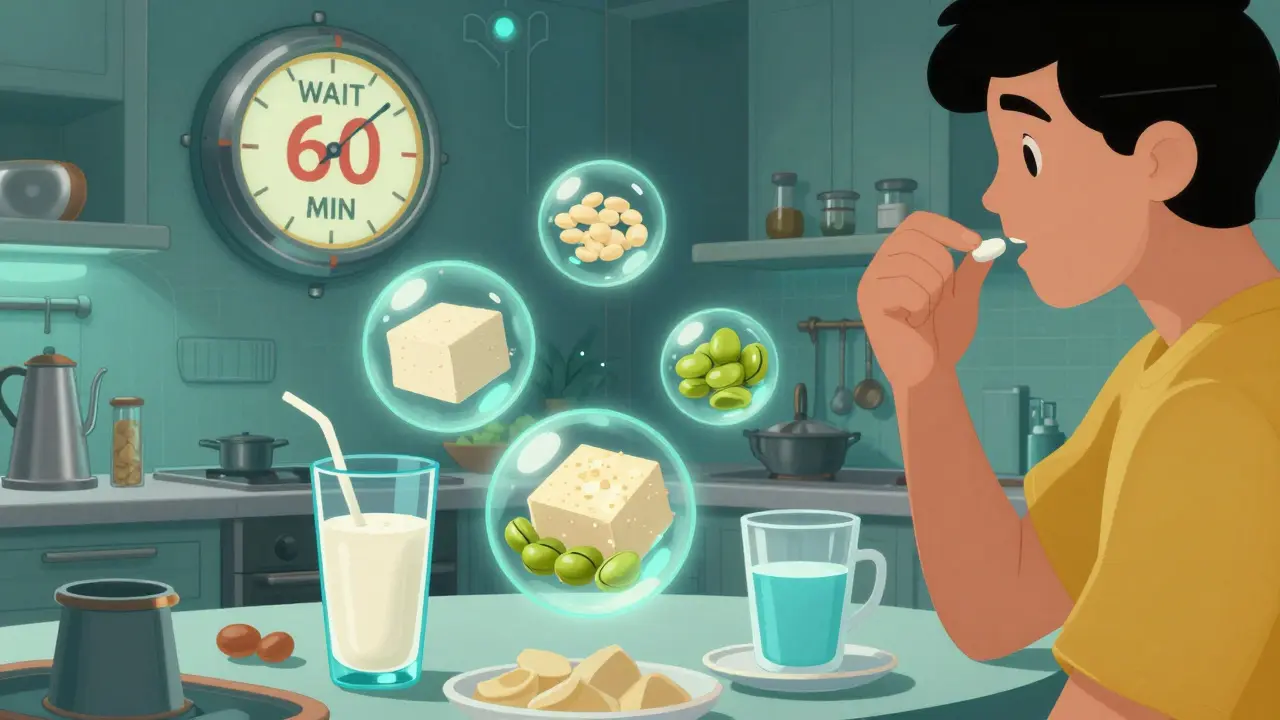
Take your thyroid medication with water. Wait an hour. Then eat breakfast. But if your breakfast includes tofu, soy milk, or edamame, you might be undoing the work of your medicine-without even realizing it.
This isn’t theory. It’s clinical fact. For people taking levothyroxine (the most common thyroid hormone replacement), soy can reduce how much of the drug your body actually absorbs. Studies show drops in absorption between 9% and 30%, depending on timing, form, and individual metabolism. That’s enough to push your TSH levels out of range, cause fatigue, weight gain, or brain fog-even if you’re taking your pill every day like clockwork.
Why Soy Interferes with Thyroid Medication
Soy doesn’t make your thyroid worse. It doesn’t cause hypothyroidism. But it does get in the way of your medication.
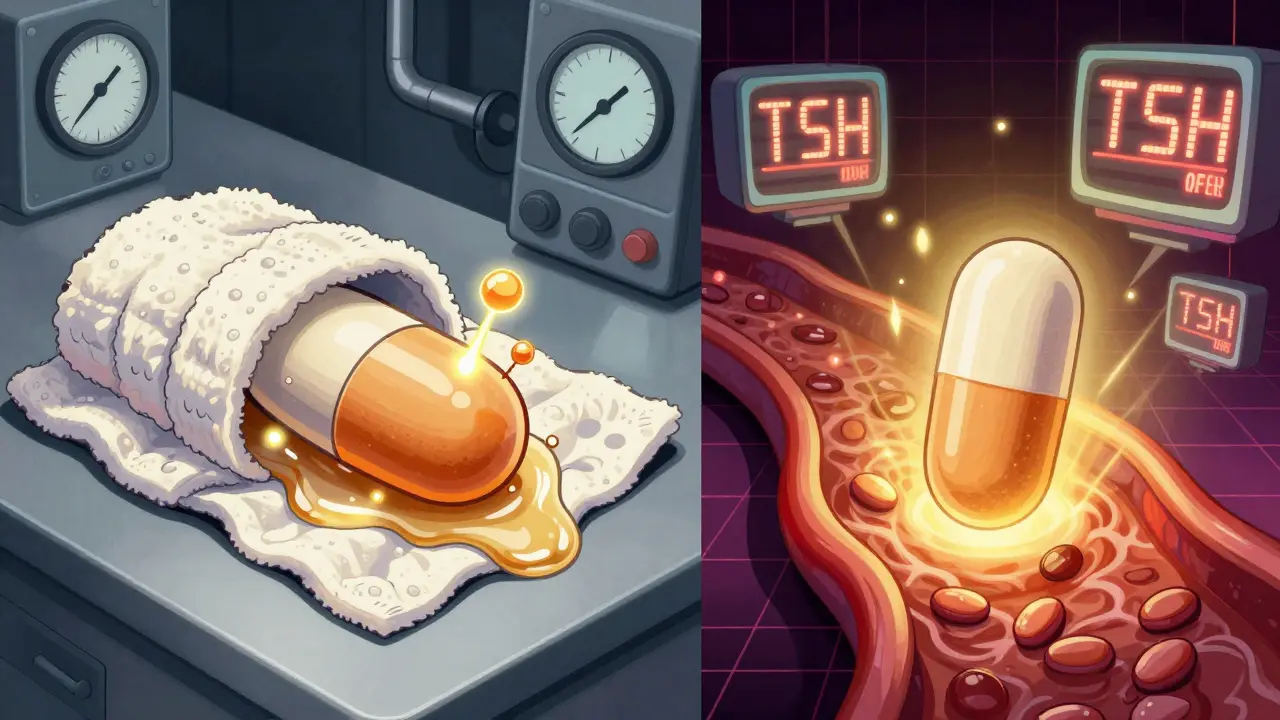
The culprits are soy isoflavones-mainly genistein and daidzein. These plant compounds bind to levothyroxine in your gut, sticking to the drug like glue. This prevents it from being absorbed into your bloodstream. Soy protein also physically coats the medication, making it harder for your body to pull it in. Think of it like wrapping your pill in a thick towel before swallowing it.
It’s not just soy milk or tofu. Soy protein powders, soy-based meat substitutes, and even soy-based infant formulas have shown this effect. One case study from 2006 followed a woman who took 200 mcg of levothyroxine daily-double the usual dose-because she drank soy protein shakes right after her pill. Her TSH stayed high until she stopped combining them.
What’s surprising is that this interference doesn’t happen with everyone the same way. Some people can eat soy with their pill and see no change. Others need strict separation. That’s why timing matters more than total avoidance.
How Much Soy Is Too Much?
It’s not about cutting soy out of your life. It’s about managing when you eat it.
Whole soy foods-like tofu, tempeh, edamame, and soy milk-have the strongest interference. That’s because they contain both protein and isoflavones in natural, concentrated forms. Soy isoflavone supplements (pills or extracts) seem to have less impact, though they still carry risk.
Compare it to other common food interactions:
- Calcium supplements: reduce absorption by 25-36%
- Iron supplements: reduce absorption by 30-40%
- Coffee: reduces absorption by about 20%
- Soy products: reduce absorption by 9-30%
Soy is right up there with calcium and iron-two things doctors always tell you to avoid for 4 hours after your pill. But here’s the twist: you don’t need to wait that long for soy.
Timing Is Everything: The 2- to 4-Hour Rule
The key is separation. Not elimination.
According to the Mayo Clinic’s updated 2023 guidelines, you should wait at least 2 hours after taking levothyroxine before eating soy products. For children, infants, or if you’re on a higher dose, extend that to 3-4 hours.
Why the range? Because research is evolving. A January 2023 study in the European Thyroid Journal found that just a 2-hour gap between levothyroxine and soy milk brought TSH changes down to less than 0.1 mIU/L-barely noticeable. That’s why many clinics now accept 2 hours as sufficient for most adults.
But here’s what works best in real life:
- Take your levothyroxine first thing in the morning, on an empty stomach, with a full glass of water.
- Wait 60 minutes before eating or drinking anything else.
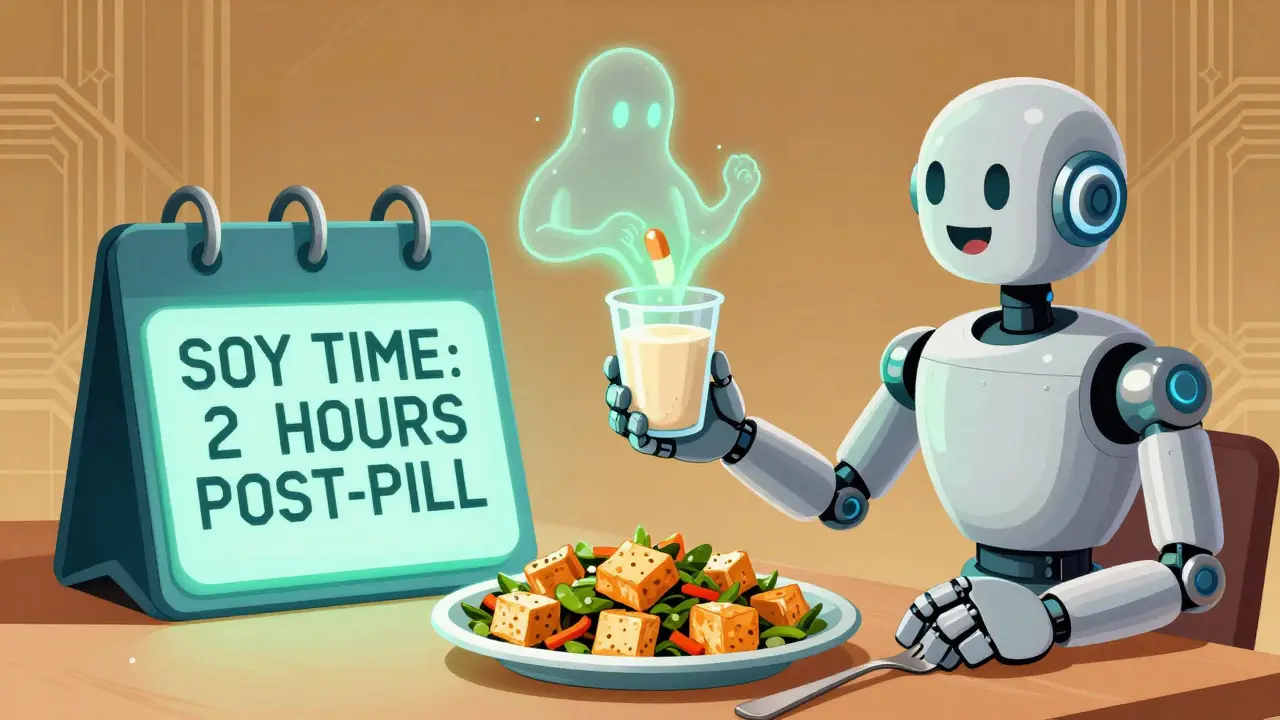
- Wait at least 2 more hours before having soy milk, tofu, soy yogurt, or any soy-based snack.
- If you prefer to take your pill at night, do it 2-3 hours after your last meal-and avoid soy dinner or late-night snacks.
One patient, a 52-year-old vegan from Perth, told her endocrinologist she’d been eating soy yogurt with breakfast for years. Her TSH was 6.8-way too high. She switched to eating soy at lunch instead. Three months later, her TSH dropped to 2.1. No dose change. Just better timing.
What About Vegans and Vegetarians?
Over 70% of plant-based eaters with hypothyroidism report being advised by their doctor about soy interactions. That’s not a coincidence.
If you’re vegan, soy is often your main source of protein. Cutting it out isn’t realistic. But you can still eat it-just not right after your pill.
Here’s how to adapt:
- Swap soy milk for oat or almond milk in your morning coffee or cereal.
- Have tofu at lunch or dinner, not breakfast.
- Use tempeh or lentils as your main protein at breakfast instead of soy crumbles.
- If you use soy protein powder, mix it into a smoothie for midday, not morning.
Some patients even take their levothyroxine at bedtime-after dinner and at least 2 hours after their last meal. That’s a solid option if your schedule allows it. No morning rush. No soy conflict.
What If You’ve Been Eating Soy With Your Pill?
If you’ve been taking your thyroid medication and eating soy together for months or years, your TSH might be artificially high. That doesn’t mean you’re “failing.” It just means your body isn’t absorbing the full dose.
Signs you might be affected:
- Feeling tired, cold, or sluggish despite taking your pill
- Weight gain that won’t budge
- Brain fog or memory issues
- Your TSH keeps creeping up even when you take your medication regularly
Don’t panic. Don’t stop your pill. Just make one change: separate soy by at least 2 hours. Then wait 6-8 weeks before getting your next blood test. You might be surprised how much your TSH drops.
One Reddit user, @HypoWarrior42, increased their dose from 75 mcg to 100 mcg after starting daily soy milk. Their TSH jumped from 1.8 to 5.2. After switching to soy at lunch, their TSH fell back to 1.9-without any dose change.
What About Other Foods and Supplements?
Soy isn’t the only thing that messes with levothyroxine. Calcium, iron, fiber, and even coffee can interfere.
Here’s a quick cheat sheet:
| Substance | Absorption Reduction | Recommended Separation |
|---|---|---|
| Calcium supplements | 25-36% | 4 hours |
| Iron supplements | 30-40% | 4 hours |
| Coffee | ~20% | 60 minutes |
| High-fiber foods (bran, psyllium) | 15-25% | 2-3 hours |
| Soy products | 9-30% | 2-4 hours |
Rule of thumb: If it’s a supplement or a strong fiber source, wait 4 hours. If it’s coffee or soy, 2-3 hours is usually enough. Water? Always fine.
When to Talk to Your Doctor
You don’t need to guess. If you’re eating soy and your TSH isn’t where it should be, it’s time to check your routine.
Ask your doctor:
- “Could my soy intake be affecting my medication?”
- “Should I get my TSH retested after adjusting my timing?”
- “Is my dose high enough to compensate for dietary interference?”
Many endocrinologists now track soy intake during follow-ups. If you’re vegetarian, vegan, or just love tofu, mention it. It’s not a weird question-it’s a smart one.
And if your doctor says, “It’s fine,” but you still feel off? Get a second opinion. This isn’t folklore. It’s evidence-based medicine.
Final Takeaway: You Don’t Have to Give Up Soy
You can still have your tofu stir-fry. Your soy latte. Your edamame snack. You just need to plan it.
Thyroid medication isn’t broken. Soy isn’t evil. It’s just a timing game.
Take your pill on an empty stomach. Wait an hour. Eat your breakfast. Wait two more hours. Then enjoy your soy.
That’s it. No drastic changes. No deprivation. Just a small shift that makes a big difference.
And if you’re unsure? Get your TSH checked after 6 weeks of better timing. You might find your dose can go down-or you might just feel like yourself again.