Recent POST




When you’re seeing more than one doctor, pharmacist, or specialist, keeping track of your medications isn’t just a chore-it’s a safety issue. Every year, medication communication failures lead to avoidable hospital visits, dangerous drug interactions, and even deaths. If you’re taking five or more medications, or if you’ve been treated by multiple providers in the past year, you’re at higher risk. The good news? You don’t have to wait for your providers to fix this. You can take control-right now.
Why Medication Communication Breaks Down
Imagine this: Your cardiologist prescribes a new blood thinner. Your rheumatologist adds an anti-inflammatory. Your primary care doctor adjusts your diabetes med. None of them know what the others prescribed. That’s not a rare mistake-it’s the norm in fragmented care systems.
According to a 2022 NIH study, patients with three or more providers are over three times more likely to have conflicting medications. Specialists initiate 41% of new prescriptions without checking with your main doctor. And here’s the kicker: 83% of patients think their providers talk to each other. They don’t.
Electronic health records (EHRs) were supposed to fix this. But a 2023 CMS report found that 43% of providers struggle to access full medication histories across different systems. If your cardiologist uses one hospital’s EHR and your pharmacist uses another, they’re working in the dark. And when systems don’t talk, patients pay the price.
The Four Essential Elements of a Medication List
Stop relying on memory. Stop trusting sticky notes. Start using a real, updated list-with four key details for every medication:
- Name (brand and generic, if applicable)
- Dosage (e.g., 10 mg, 500 mg)
- Frequency (e.g., once daily, twice a week)
- Purpose (e.g., "for high blood pressure," "for arthritis pain")
This isn’t optional. Happier at Home’s 2022 clinical guidelines show that patients who use this format reduce medication errors by 37%. Keep it in your wallet, on your phone, and give a copy to every provider-even the nurse who checks your vitals.
Update it every time something changes. If your pharmacist switches you from a brand-name drug to a generic, add that. If your doctor cuts a dose, update it. If you stop a med because of side effects, cross it out. This list is your lifeline.
Who Should Be on Your Care Team
You’re not just a patient-you’re the captain of your care team. That means knowing who to talk to and when.
- Your primary care provider should be your central hub. They see the full picture. Make sure they have your complete list.
- Your pharmacist is your best ally. They’re trained to spot interactions. Many pharmacies now offer free Medication Therapy Management (MTM) services. Ask for it.
- Specialists often focus on one issue. Don’t assume they know what else you’re taking. Always say: "I’m on these other meds. Can you check if this new one conflicts?"
- Nurses and care coordinators in clinics or hospitals often manage transitions. Give them your list when you’re admitted or discharged.
Research from Asteroid Health in 2023 found that patients who worked directly with clinical pharmacists had 32% higher medication adherence and 63% more confidence in their regimen. That’s not magic-it’s communication.
How to Talk to Your Providers-Without Sounding Accusatory
You don’t need to argue. You just need to ask the right questions.
Before every appointment, write down:
- What side effects you’ve noticed (even small ones)
- Any changes in your sleep, mood, appetite, or energy
- Whether you’ve missed doses or skipped meds
Then, say this:
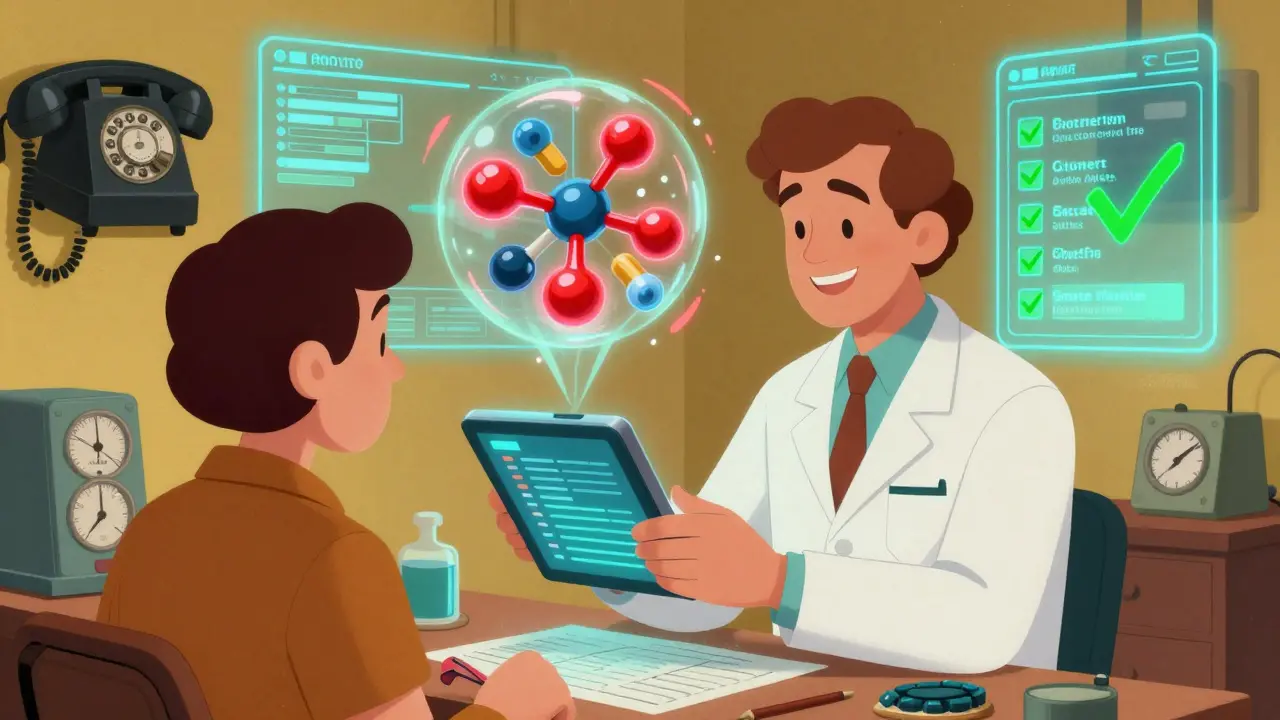
"I’ve been keeping a list of all my meds. I want to make sure everything I’m taking still makes sense together. Can we go through it?"
This opens the door without putting anyone on the defensive. Studies show that when patients use this approach, providers are 50% more likely to review all medications-not just the one they came in for.
Use the Teach-Back Method: After your provider explains a new med, say, "Just to make sure I got it right-you’re saying I take this once a day with food because it helps with stomach upset, right?" That simple trick reduces misunderstandings by 45%, according to the AHRQ.
Track Your Body’s Response
Doctors can’t read your mind. But a journal can.
Start a simple log: date, medication, dose, and what you felt that day. Did you feel dizzy after taking your new blood pressure pill? Did your knee pain get worse after starting the new painkiller? Did you sleep worse after the antibiotic?
University of California San Francisco’s 2023 study found that patients who tracked symptoms this way had 22% fewer adverse drug events. You’re not just reporting side effects-you’re giving your providers data they can’t get otherwise.
Keep it digital (a notes app works) or on paper. The key is consistency. Even 30 seconds a day adds up.
When You’re in the Hospital
Transitions between care settings are the most dangerous moments. A 2022 study found that 56% of hospital transitions involve medication reconciliation errors-and 28% of those are potentially harmful.
Before you’re discharged, insist on this:
- A full review of all your meds by a pharmacist
- A written update to your primary care provider
- A copy of your updated medication list in your hands
Ask: "Who will make sure my primary doctor gets this?" Don’t assume it’s done. If they say "We’ll send it," ask for a phone number to follow up.
What Works: Integrated Care Systems
Not all systems are broken. Accountable Care Organizations (ACOs) and integrated health networks show real results. CMS data from 2022 shows ACO patients had 27% fewer medication-related hospital readmissions.
Why? Because they have:
- Shared EHRs across providers
- Pharmacists embedded in care teams
- Regular team huddles to review complex cases
One Medicare beneficiary in a CMS patient story credited her ACO’s care team with spotting five dangerous interactions across her three specialists. "They caught what no one else did," she said.
If you’re in an ACO or similar system, use it. Ask if you have a care coordinator. Ask if your meds are reviewed quarterly. You’re paying for this service-demand it.
What’s Coming Next
Change is happening. By 2025, 78% of independent pharmacies will offer formal medication therapy management services. AI tools at places like Mayo Clinic are cutting medication review time from 15 minutes to under a minute. The Commonwealth Fund estimates every $1 spent on better communication returns $7.30 in saved hospital costs.
But none of this matters if you’re not involved. The system won’t fix itself. You have to be the glue.
Start Today: Your Action Plan
Here’s what to do this week:
- Write down every medication you’re taking-name, dose, frequency, purpose.
- Update it with your pharmacist. Ask if they can help you review it.
- Bring your list to your next doctor’s appointment. Say: "Can we go through this together?"
- Start a simple symptom log. Just note changes in how you feel.
- Ask your primary care provider: "Who should I call if I have a question about my meds?" Get their direct number.
You don’t need permission. You don’t need to be an expert. You just need to be consistent. One list. One conversation. One journal. That’s all it takes to prevent a mistake that could change your life.
What should I do if my doctors prescribe conflicting medications?
If you notice conflicting medications-like two drugs that interact or duplicate effects-don’t stop taking anything. Contact your pharmacist or primary care provider immediately. They can review the list, contact the other providers, and suggest safer alternatives. Never adjust doses or stop meds on your own without professional advice.
Can my pharmacist really help me with multiple providers?
Yes. Pharmacists are trained to spot drug interactions and are often the only provider who sees all your prescriptions. Many pharmacies offer free Medication Therapy Management (MTM) services, where they review your entire regimen, contact your doctors, and create a clear action plan. Ask for it-no referral needed.
Why do specialists often prescribe without consulting my primary doctor?
Specialists focus on one condition, and many don’t have access to your full medication history. EHR systems often don’t talk to each other, and there’s no legal requirement for them to coordinate. That’s why you need to be the bridge-always bring your list, ask if they checked your other meds, and follow up.
How often should I update my medication list?
Update it every time you start, stop, or change a medication-even if it’s temporary. Also update it after every hospital visit, ER trip, or pharmacy refill. Keep it current. A 2023 Tulane study found patients with up-to-date lists had 37% fewer medication errors.
What if I’m too overwhelmed to manage this?
You’re not alone. Many patients feel this way. Ask your primary care provider if they have a care coordinator or social worker who can help. Some clinics offer medication management support. You can also ask a trusted family member to help you update your list or attend appointments with you. It’s okay to ask for help-it’s part of staying safe.

Betty Kirby
Let me get this straight-you’re telling people to carry a laminated list like it’s a holy scripture? I’ve seen people in ERs with ten pages of handwritten scribbles, half of them outdated. The real problem isn’t the list-it’s the system that forces patients to become pharmacists just to stay alive. This article reads like a corporate brochure disguised as advice. You’re not empowering people. You’re just making them work harder for a broken system.

Erica Banatao Darilag
I appreciate the effort put into this guide, though I must admit I made a few typos while updating my own med list-my hand was shaking from anxiety. But seriously, having a written record has saved me twice. Once when the ER doc almost prescribed me a beta-blocker I’m allergic to. Another time when my pharmacist caught a duplicate with my blood pressure med. It’s not glamorous, but it’s vital. Thank you for the clarity.

Josiah Demara
Oh wow. Another feel-good piece for people who think their life is a medical drama. You think writing down ‘dose’ and ‘purpose’ is going to fix a healthcare system that outsources charting to third-world contractors? The real issue is that specialists are incentivized to prescribe, not coordinate. Your ‘four essential elements’? Cute. Try telling that to a cardiologist who’s paid per procedure. This isn’t about lists-it’s about profit motives disguised as care. You’re giving people bandaids while the hemorrhage keeps bleeding.

Charlotte Dacre
So let me get this straight-you want me to become a full-time medication coordinator, keep a journal, and beg my doctors to talk to each other? And this is supposed to be empowering? Honey, if I had a dollar for every time a provider said ‘We’ll send it’… I’d have enough to pay for a private nurse. But hey, at least I can now add ‘Professional Meds Manager’ to my LinkedIn. #Sarcasm

Esha Pathak
There is a cosmic truth here: the body remembers what the system forgets. Your pills are not just chemicals-they are echoes of your choices, your fears, your silence. When you write down your meds, you are not organizing data-you are reclaiming your soul from the machine. The EHRs don’t speak because they were never meant to. They were built to serve institutions, not individuals. So you? You become the bridge. Not because you must-but because you are the only one who can.

Mike Hammer
Been there. Got the list. It’s in my phone, on my fridge, and printed in my wallet. Honestly? The biggest win wasn’t the list-it was asking my pharmacist for MTM. She called my docs, found three conflicts I didn’t even know about, and saved me from a hospital trip. No drama. No yelling. Just a quiet, professional conversation. If you’re overwhelmed, just start there. Talk to your pharmacist. They’re the real MVPs.

Kapil Verma
Why are Americans so helpless? In India, we don’t need a 12-step plan to manage our meds. We have family. We have tradition. We have elders who remember every pill ever taken. You people turn simple things into crises because you’ve lost your roots. This article reads like a manual for people who can’t even remember their own birthdays. Why not ask your auntie to help? Or your cousin who works at the clinic? Stop overcomplicating. Your ancestors didn’t need apps to survive.

Michael Page
I’ve been tracking my meds for two years. I don’t use a journal. I use a spreadsheet. Date, name, dose, effect. I’ve noticed patterns no doctor ever asked about-like how my anxiety spikes every time I take my statin after 3 p.m. I shared it with my PCP. She said, ‘I’ve never seen this before.’ That’s the problem. We’re not being listened to. We’re being cataloged. The list isn’t the solution. Being heard is.

Mandeep Singh
Oh, you think a laminated card is going to fix this? Please. I’ve been on 11 medications at once. I’ve had ER visits, ICU stays, and a near-fatal interaction because a specialist didn’t check my list-because ‘it wasn’t in the system.’ This isn’t about being organized. This is about systemic neglect. The real solution? Burn down the EHRs. Replace them with human beings who are paid to care, not to bill. And stop telling patients to fix the system themselves. You’re not helping-you’re gaslighting them.
And don’t get me started on ‘teach-back.’ That’s not communication. That’s performance. You’re making patients prove they’re smart enough to survive their own treatment. Shameful.

Kaye Alcaraz
This is critical work. Your list is not a suggestion-it is a lifeline. Your journal is not a chore-it is data that saves lives. Your pharmacist is not a vendor-they are a frontline guardian. Do not underestimate the power of consistency. One entry. One conversation. One moment of clarity. That is how change begins. You are not alone. You are not powerless. You are the most important member of your care team. Start today. Keep going. You are doing vital work.

Sarah Barrett
As someone who works in healthcare administration, I can confirm: the fragmentation is real. EHRs don’t talk. Pharmacists are overworked. Specialists operate in silos. But I also see what happens when patients bring a clean, updated list. Providers light up. Suddenly, they can see the whole picture. It’s not about blame. It’s about clarity. The tools exist. The willingness is the missing piece. And you, the patient, hold that key.

Daniel Dover
List. Pharmacist. Journal. Done.
Write a comment