Recent POST


What Is a Kidney Transplant?
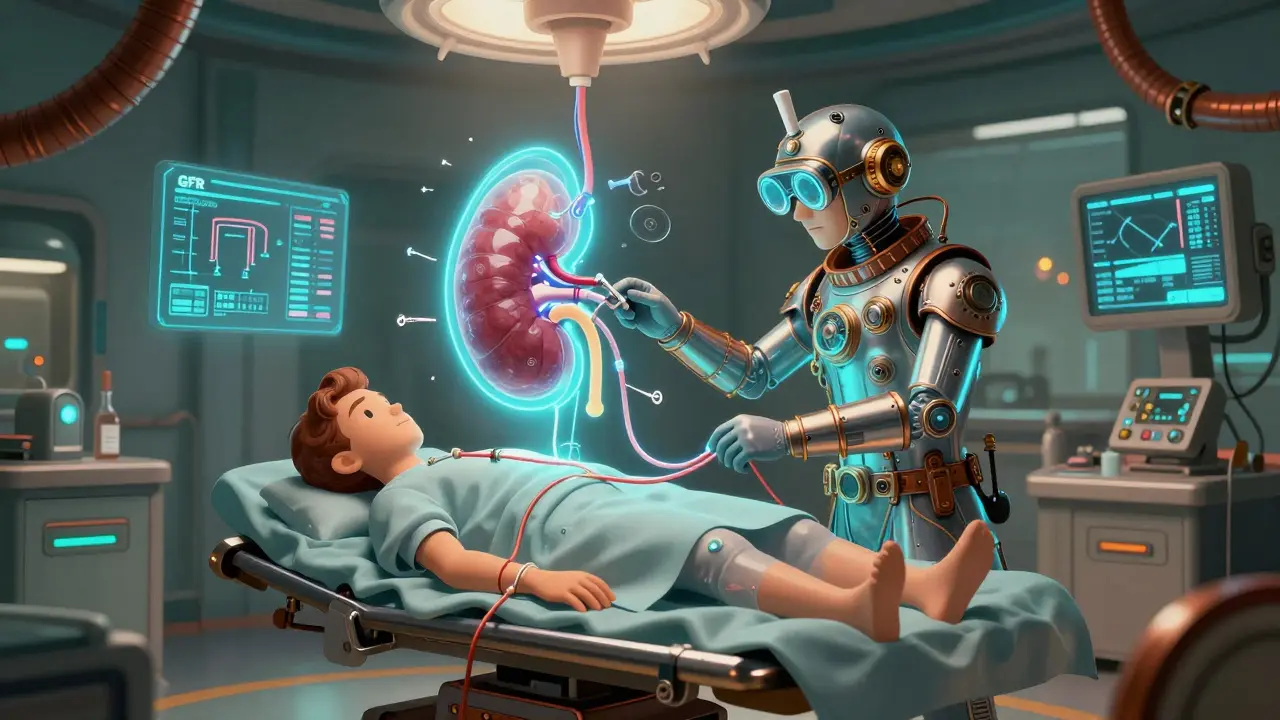
A kidney transplant is when a healthy kidney from a donor replaces a failing one. It’s not just a treatment-it’s often the best chance to get your life back. People with end-stage renal disease (ESRD), where kidneys work at 15% or less of normal function, usually need this. Dialysis keeps you alive, but it’s exhausting. A transplant gives you back energy, freedom, and a much better shot at living longer. Studies show transplant recipients live about 85% longer than those on dialysis after five years.
Who Can Get a Kidney Transplant?
Not everyone with kidney failure qualifies. Transplant centers look at more than just your GFR (glomerular filtration rate). Most require a GFR of 20 mL/min or lower. Some centers, like Mayo Clinic, will consider you if your GFR is up to 25 mL/min-but only if your kidneys are getting worse fast or you have a living donor ready.
Age isn’t a hard cutoff. While Vanderbilt says age 75+ is a concern, UCLA doesn’t rule anyone out based on age alone. They look at your overall health. If you’re 80 but active, strong, and mentally sharp, you might still qualify.
Weight matters too. A BMI over 45 usually blocks eligibility. Why? Extra weight makes surgery riskier and increases the chance the new kidney fails. Even a BMI above 35 is flagged-it’s not a dealbreaker, but you’ll likely need to lose weight first. One study found obese patients have a 35% higher risk of surgical complications and 20% higher graft failure rates.
Heart and lung health are checked hard. If your right heart pressure is over 50 mm Hg (Mayo) or 70 mm Hg (Vanderbilt), you won’t qualify. If you’re on oxygen long-term because of COPD, that’s usually a no-go. Your heart needs to handle the stress of surgery and lifelong medication.
What Disqualifies You?
Some things are absolute no’s:
- Active cancer-not just any cancer, but one that’s likely to come back or spread after transplant. You usually need to be cancer-free for 2-5 years, depending on the type.
- Untreated HIV with a low CD4 count or high viral load. Newer treatments have changed the game, but uncontrolled HIV still disqualifies you.
- Active hepatitis B with detectable virus in your blood.
- Uncontrolled mental illness or substance abuse. If you can’t reliably take pills every day, you can’t safely have a transplant.
- Severe, untreated infections like tuberculosis or endocarditis.
It’s not about being perfect-it’s about being able to survive the surgery and stick to the lifelong care plan. The NHS in the UK puts it simply: you must be well enough for major surgery, and the transplant must have a good chance of working.
The Evaluation Process
Getting approved isn’t quick. It takes weeks, sometimes months. You’ll go through a full battery of tests:
- Blood tests for infections like HIV, hepatitis, and CMV
- Cancer screenings-colonoscopy, mammogram, skin checks
- Heart tests: EKG, echocardiogram, stress tests
- CT scans or ultrasounds of your kidneys and blood vessels
- Tissue typing to match you with a donor
They also look at your life outside the hospital. Do you have someone to help you take your meds? Can you get to appointments? Do you have depression, anxiety, or a history of missing doses? Penn Medicine and Nebraska Medicine both require a designated care partner. This isn’t optional-it’s critical.
For older patients, frailty tests matter. Are you losing weight without trying? Do you feel tired all the time? Can you walk slowly or grip weakly? These aren’t just signs of aging-they’re signs your body might not handle transplant stress.
The Surgery: What Happens
The surgery itself takes 3-4 hours. You’re under full anesthesia. The new kidney goes into your lower belly-not where your old kidneys are. Surgeons connect its blood vessels to your iliac artery and vein, then stitch the ureter to your bladder. Your own kidneys? Usually left in place. They don’t cause harm unless they’re infected or bleeding.
Most transplanted kidneys start working right away. But about 1 in 5, especially those from deceased donors, need temporary dialysis for a few days. That’s called delayed graft function. It’s not failure-it’s just a delay. The kidney usually catches up.
Recovery starts fast. Most people are out of bed the next day. Hospital stays are typically 3-7 days. You’ll feel sore, but the pain is manageable. Walking helps. You’ll be on pain meds, antibiotics, and the first doses of anti-rejection drugs before you even leave.
Life After Transplant: The Lifelong Commitment
This is where many people underestimate what comes next. You’re not “cured.” You’re now on a lifelong drug regimen to stop your body from attacking the new kidney.
Your anti-rejection meds usually include three types:
- A calcineurin inhibitor: tacrolimus or cyclosporine
- An antiproliferative: mycophenolate or azathioprine
- A steroid: prednisone
Some people get extra drugs at first-monoclonal antibodies-to give the new kidney a smoother start. These drugs weaken your immune system. That means you’re more vulnerable to infections. You’ll need to avoid crowds in the first few months, skip raw sushi, and get annual flu and pneumonia shots.
Side effects are real. Weight gain, high blood pressure, diabetes, tremors, and even hair loss can happen. But these are manageable. Your doctor will adjust doses. You’ll learn what works for you.
Follow-Up and Monitoring
After surgery, your checkups are frequent:
- Weekly for the first month
- Monthly for the next 3-6 months
- Every 3 months after that
- Once a year for life
Each visit includes blood tests to check kidney function and drug levels. Too much immunosuppressant? You’re at risk for infection. Too little? Your body might reject the kidney. It’s a tight balance.
Long-term, you’re watched for chronic rejection-slow damage that shows up years later. That’s why annual checkups never stop. You’ll also be screened for skin cancer, lymphoma, and other conditions linked to long-term immunosuppression.
Living vs. Deceased Donor Kidneys
Not all transplants are the same. Living donor kidneys last longer and work better. One-year survival rates are 97% for living donor transplants versus 93% for deceased donor. Five-year survival? 85% vs. 78%.
Why? Living donor kidneys are healthier. They’re removed from a healthy person, cooled briefly, and implanted quickly. Deceased donor kidneys can sit in cold storage for hours, sometimes days. That’s why delayed function is more common.
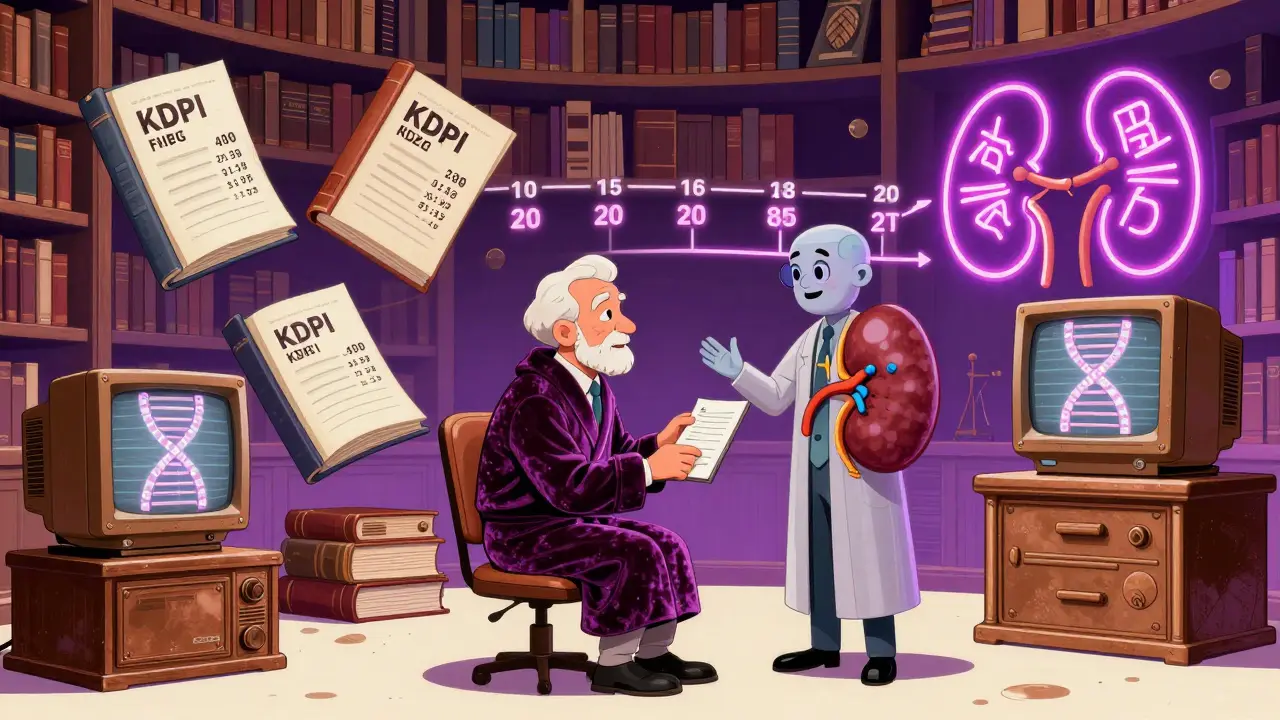
There’s also the Kidney Donor Profile Index (KDPI). It’s a score from 0-100 that estimates how long a kidney will last. A lower score means a better kidney. Centers now use this to match kidneys to recipients. A young person might get a low-KDPI kidney. An older person might take a high-KDPI kidney-still better than staying on dialysis.
What’s New in Kidney Transplants?
Science is moving fast. Researchers are testing ways to reduce or eliminate lifelong drugs. Some trials at Stanford and the University of Minnesota are trying to train the immune system to accept the new kidney without drugs. It’s early, but promising.
Organ preservation has improved too. New machines keep donor kidneys alive and beating with blood and oxygen during transport. This means fewer damaged kidneys and better outcomes.
Even kidneys from older donors or those with mild diabetes are being used more often. As long as the KDPI score is reasonable, they still give patients years of better life than dialysis ever could.
Can You Live a Normal Life After?
Yes. Most people return to work, travel, exercise, and even have children. You’ll need to be careful with sun exposure (skin cancer risk), avoid certain foods (grapefruit interferes with meds), and never skip a dose.
Many patients say their quality of life skyrockets. No more dialysis sessions. No more fluid limits. More energy. Better sleep. You can eat what you want-within reason. You’re not just surviving. You’re living.
What If the Transplant Fails?
Transplants don’t last forever. The average kidney from a living donor lasts 15-20 years. From a deceased donor, 10-15 years. If it fails, you go back to dialysis. You can be re-listed for another transplant.
It’s not the end. Many people have two or even three transplants. Each one gives you more time. The key is sticking to your meds and follow-ups. Most failures happen because people stop taking their pills-not because the kidney was bad.

Dusty Weeks
this is so real i cried reading it 🥲 no more dialysis = freedom

Sally Denham-Vaughan
i had a transplant in 2020 and honestly? best decision i ever made. still take my meds like gospel but i can eat pizza now lol

Liam George
they say 'transplant saves lives' but have you ever wondered who's really profiting? Big Pharma's immunosuppressants are a multi-billion dollar racket. The system doesn't want you cured - it wants you dependent. The real cure? Immune system reprogramming. They're hiding it. Why? Because pills = profit. Ask yourself: who benefits from your lifelong drug regimen?

Bryan Anderson
The KDPI score detail is crucial. Many patients don't realize a higher KDPI kidney can still be life-changing. I've seen elderly recipients thrive on kidneys from donors in their 70s. It's not about perfection - it's about timing and need. The data supports this, and it's something transplant coordinators should emphasize more during counseling.

sharad vyas
in my country, people wait years. sometimes they die waiting. i think if we could make donation easier, more people would say yes. not because of money, but because of love

Matthew Hekmatniaz
I appreciate how this breaks down the real barriers - not just medical, but social. The care partner requirement? That’s not bureaucracy. That’s survival. I’ve seen people get approved then fall through the cracks because they live alone. We need more support systems built into the process, not just after.

Olukayode Oguntulu
Ah yes, the Western medical industrial complex rebranded as 'hope'. You speak of 'better life' but neglect the existential toll - the constant surveillance, the chemical imprisonment, the loss of bodily autonomy. A transplant is not liberation. It is the substitution of one cage for another, adorned with the glitter of statistical optimism.

jaspreet sandhu
People think if you get a transplant you're saved but in reality you're just traded one problem for another. You think you're free from dialysis but now you're chained to pills that make you fat and shaky and scared of catching a cold. And they tell you to be grateful? I've seen too many people die because they missed a dose or couldn't afford the meds. This isn't medicine - it's a lottery with terrible odds.

LIZETH DE PACHECO
To anyone considering this - you’re not alone. I was terrified before my transplant. But the nurses, the support groups, the other patients? They held me up. And yes, the meds are a pain. But so is dialysis. You don’t have to be perfect. You just have to show up. One pill at a time.

Alex Warden
America has the best transplant system in the world. If you can't get a kidney here, you're not trying hard enough. Other countries? They're still stuck in the dark ages. We have the tech, the doctors, the infrastructure. Stop complaining. Get healthy. Get on the list. Stop blaming the system.
Write a comment