Recent POST

Lipid-Based Medication Fat Checker
Enter your medication name to see if it requires dietary fat for proper absorption. This tool is based on the science behind lipid-based medications.
When you take a pill with a fatty meal, you might think you’re just eating to settle your stomach. But for certain medications, that burger or avocado toast isn’t just comfort food-it’s part of the treatment. Lipid-based medications rely on dietary fat to work properly. Without it, they may not absorb at all. This isn’t a myth or an old wives’ tale. It’s science-and it’s changing how thousands of people manage chronic conditions.
Why Fat Matters for Some Pills
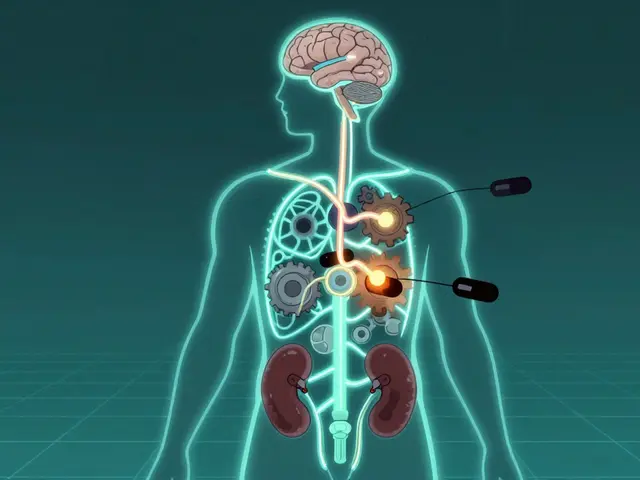
Not all drugs behave the same way in your body. About 70% of new medicines being developed today don’t dissolve well in water. These are called poorly water-soluble drugs. They sit in your gut like oil in a sink-floating, not mixing. That’s a problem because your body can only absorb what’s dissolved. If the drug doesn’t dissolve, it passes through unused. That’s where fat comes in. When you eat fatty foods, your body releases bile and digestive enzymes. These break down the fat into tiny droplets. These droplets don’t just disappear-they trap the drug molecules inside them, like a sponge soaking up water. This keeps the drug dissolved long enough for your intestines to absorb it. Studies show this can boost absorption by 20% to over 300%, depending on the drug. Take cyclosporine, a drug used after organ transplants. The original version, Sandimmune®, needed to be taken with fatty meals to work. Patients had to plan meals around doses, or risk rejection. The newer lipid-based version, Neoral®, changed everything. It doesn’t need high-fat meals anymore. Why? Because the fat is already built into the pill. The drug is pre-encapsulated in oil, surfactants, and co-solvents that mimic what your body does when you eat fat.The Science Behind the Food Effect
The term "food effect" isn’t just a buzzword. It’s a well-documented phenomenon in pharmacology. When a drug’s absorption changes based on what you eat, regulators require clinical studies to prove it. The FDA and EMA both have guidelines for testing this. For lipid-based drugs, the effect isn’t random-it’s predictable. Here’s how it works step by step:- You eat a meal with fat (like cheese, nuts, or fried food).
- Your stomach slows down emptying to give your body time to digest.
- Your liver releases bile into the small intestine.
- Enzymes break down the fat into fatty acids and monoglycerides.
- These components form tiny structures called micelles.
- Drug molecules slip into these micelles, staying dissolved.
- These micelles move along the intestine, delivering the drug to absorption sites.
Which Medications Need Fat to Work?
Not every pill needs a side of fries. But if you’re on one of these, fat matters:- Cyclosporine (Neoral®): Used for transplant patients. The lipid version reduces dosing frequency and eliminates meal timing stress.
- Fenofibrate (Tricor®): Lowers triglycerides. The lipid-based version allows once-daily dosing and cuts stomach upset by 87% compared to older forms.
- Itraconazole (Sporanox®): An antifungal. The liquid formulation absorbs 2.8 times better than the capsule, even on an empty stomach.
- Ritonavir: An HIV protease inhibitor. Fat boosts its absorption by over 100%.
- Atazanavir: Another HIV drug. Requires food with at least 400 calories and 15g of fat for optimal levels.
What Happens If You Skip the Fat?
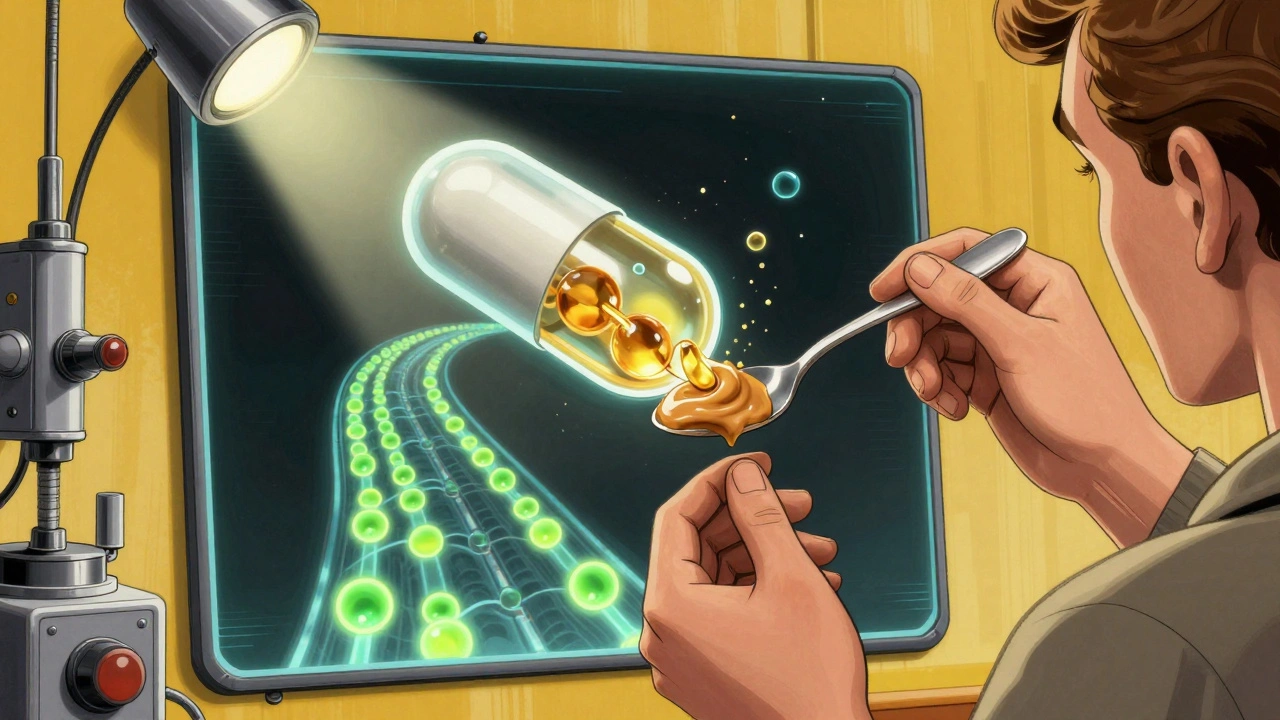
Taking a lipid-based drug on an empty stomach isn’t just less effective-it can be dangerous. For example, if a transplant patient takes cyclosporine without fat, their blood levels might drop too low. That increases rejection risk. For HIV meds, low absorption can lead to drug resistance. But here’s the twist: some newer lipid formulations are designed to work regardless of food. That’s the goal of modern drug design-removing the burden from the patient. Neoral® and Tricor® are examples. They’re engineered to trigger the same biological response internally, so you don’t have to rely on what’s on your plate. Still, if you’re on an older version-like generic itraconazole capsules-you must take it with a full meal. Skipping it means the drug might not work. And you won’t know until it’s too late.Cost, Convenience, and Trade-Offs
There’s a price tag on this science. Lipid-based drugs often cost 20% to 40% more than their generic counterparts. Sporanox oral solution runs about $1,200 for a 30-day supply. Generic capsules? Around $300. That’s a huge gap for people on fixed incomes. And it’s not just cost. These drugs usually come in soft gel capsules or special liquid forms. They’re more sensitive to heat, light, and moisture. That means they need special packaging. You can’t just toss them in a pill organizer next to your vitamins. But patients report real benefits. Reddit threads from transplant and HIV communities are full of posts like: "Switching to Neoral got rid of my 3-hour meal waiting game," or "Tricor doesn’t wreck my stomach like Lopid did." For many, the convenience and fewer side effects outweigh the cost.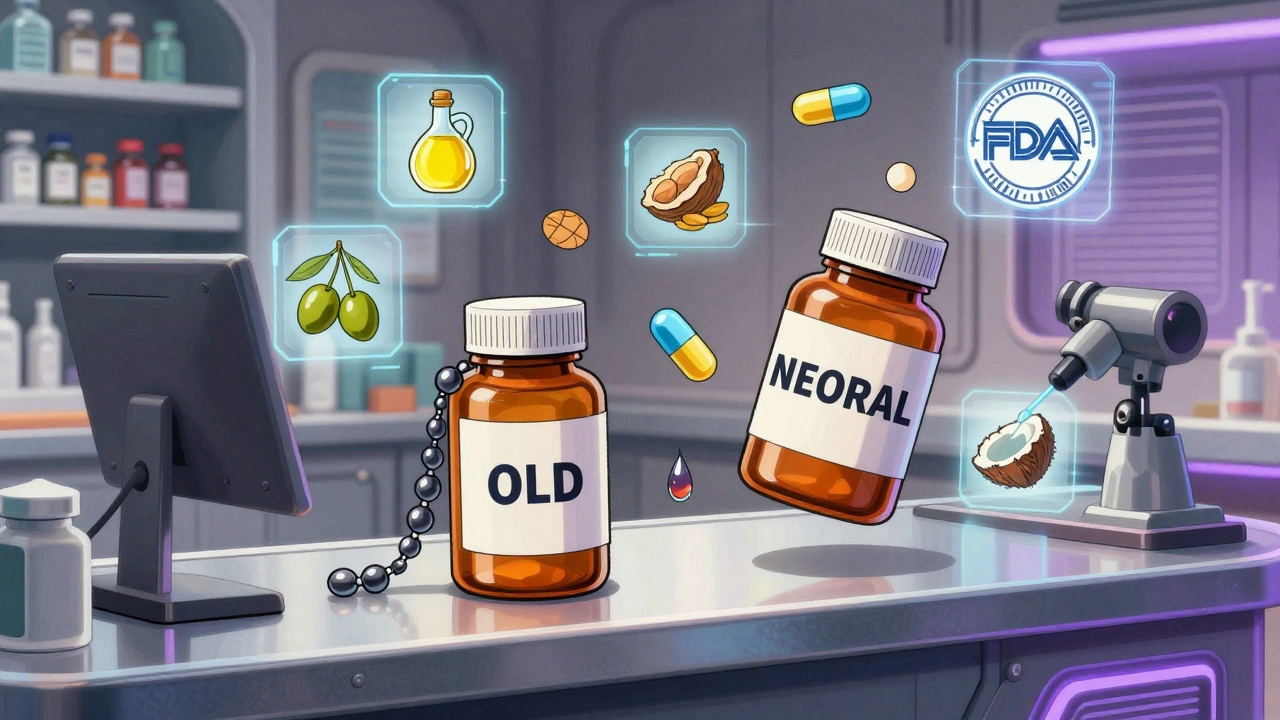
What About Plant-Based or Low-Fat Diets?
If you’re vegan, keto, or on a low-fat diet for health reasons, you might worry. Can you still take these drugs? For older formulations-yes, but you need to be strategic. Add a tablespoon of olive oil, a handful of nuts, or a spoonful of peanut butter with your pill. You don’t need a full meal. Just enough fat to trigger the bile response. For newer lipid-based versions? You’re usually fine. The fat is built in. But always check with your pharmacist. Some drugs still require dietary fat-even if the formulation is advanced. There’s also emerging research into plant-based lipid carriers. Traditional formulations sometimes use fish oil derivatives. But environmental concerns are pushing manufacturers toward palm, coconut, or sunflower oils. The European Federation for Pharmaceutical Sciences is calling for more sustainable options-and companies are listening.What’s Next?
The future of lipid-based delivery isn’t just about adding fat-it’s about smart delivery. MIT researchers recently tested a "smart lipid capsule" that changes its release based on real-time gut conditions. It senses pH and enzyme levels and adjusts drug release accordingly. Early results show 92% bioavailability for antifungal drugs-far better than older versions. Another innovation? Enzyme-triggered release. Matinas BioPharma’s LNC platform uses enzymes naturally present in the gut to open the capsule only when and where it’s needed. That reduces side effects and improves consistency. The goal? No more "take with food" instructions. No more guessing. Just a pill that works-no matter what you ate.What Should You Do?
If you’re on a medication that might need fat:- Check the label. Does it say "take with food" or "take with a fatty meal"?
- Ask your pharmacist: Is this a lipid-based formulation? Does it need dietary fat?
- If you’re on a low-fat diet, ask if there’s a newer version available.
- Never skip a dose because you didn’t eat fat. Call your doctor instead.
- Keep a log: Note what you ate and how you felt. Patterns help your provider adjust.
Do all lipid-based medications need food to work?
No. Older versions often require fatty meals to trigger absorption. But newer lipid-based formulations are engineered to work without food. They contain built-in oils and surfactants that mimic the body’s natural fat digestion process. Examples include Neoral® and Tricor®. Always check your prescription label or ask your pharmacist.
What if I’m on a low-fat or vegan diet?
If you’re on an older formulation that requires fat, you don’t need a full meal. A tablespoon of olive oil, a few almonds, or a spoonful of nut butter is enough to trigger bile release. For newer lipid-based drugs, you usually don’t need extra fat-they’re designed to work regardless. But always confirm with your pharmacist. Plant-based lipid carriers are becoming more common, so sustainability concerns are being addressed.
Can I take lipid-based drugs with water only?
For drugs that require food, taking them with water alone can lead to poor absorption-sometimes as low as 10-20% of the intended dose. This can be dangerous for drugs like cyclosporine or HIV medications, where low blood levels risk rejection or drug resistance. If you can’t eat fat, contact your doctor. There may be an alternative formulation.
Why are lipid-based drugs more expensive?
Lipid-based formulations require complex manufacturing. They use specialized oils, surfactants, and co-solvents in precise ratios. The capsules are often soft-gel, which is more expensive to produce than tablets. Packaging must protect against heat and moisture. These factors increase production costs by 25-35%. While they cost more upfront, many patients save money long-term by needing lower doses or fewer side effects.
Are there side effects from taking fat with these drugs?
The fat itself doesn’t cause side effects-but the drug might. Many lipid-based formulations actually reduce side effects. For example, patients switching from Lopid® to Tricor® reported 87% fewer stomach issues. The fat helps the drug absorb more evenly, reducing spikes and crashes that cause nausea or diarrhea. Still, if you’re sensitive to fatty foods, talk to your doctor about alternatives.

Alicia Marks
This is such a game-changer for people on meds like cyclosporine. I didn’t realize a handful of almonds could make or break my treatment. Thanks for breaking it down so clearly!

Paul Keller
While the scientific rationale is sound, one must consider the broader socioeconomic implications. The cost differential between lipid-based formulations and their generic counterparts is not merely a fiscal concern-it is a public health equity issue. Patients on fixed incomes are being forced into a binary choice: adhere to dietary protocols or pay premium prices for engineered bioavailability. This is not innovation-it is pharmaceutical rent-seeking disguised as progress.

Shannara Jenkins
Love this post! I’m on Tricor and switched from the old version last year. No more stomach cramps, and I don’t have to plan my whole day around a fatty breakfast. Just a spoon of peanut butter and I’m good. Life changed. 😊

Elizabeth Grace
So… I’m supposed to eat fat to make my pills work? But my therapist says I’m emotionally tied to food and I’m supposed to ‘detox’ from using it for comfort? Now I’m confused. Are my meds making me a bad person? 😭

Steve Enck
One cannot help but observe the paradoxical nature of this pharmacological advancement: the body’s natural mechanism for lipid absorption is being artificially replicated in pharmaceutical design, thereby rendering the physiological process obsolete. This is not therapeutic evolution-it is the commodification of biology. We are no longer treating disease; we are engineering dependency on proprietary molecular scaffolds. The patient becomes a passive node in a corporate bio-technological network.

Jay Everett
Bro. This is straight-up wizardry. 🤯 Imagine your pill carrying its own little oil slick to help it sneak into your bloodstream like a ninja. Neoral® is basically a fat-powered stealth drone for your gut. And the fact that they’re now using coconut oil instead of fish oil? That’s sustainability meets science. 🌱💊 I’ve been on atazanavir for 8 years-used to need a whole damn avocado with my pill. Now I just crush a cashew and call it a day. Life’s good.

मनोज कुमार
This is basic pharmacokinetics. Fat enhances solubility. Everyone knows this. Why is this news? Also why so many words? Just say it works with fat. Done.

Joel Deang
omg i just realized why my generic itraconazole never worked when i took it with my green smoothie 😅 i thought i was being healthy but i was just wasting my money. now im eating peanut butter with it like a pro. thanks for the life hack!! 🥜💪

Rebecca M.
So let me get this straight… if I don’t eat a bacon cheeseburger with my HIV meds, I could die? But if I take the fancy $1200 version, I can eat salad? That’s not science. That’s a scam with a lab coat.

Lynn Steiner
It’s sad how America turns medicine into a luxury. You need fat? Fine. But you need money too. My cousin in India takes the same drug, but he just eats rice with ghee. He doesn’t pay $1,200 for it. We’re being exploited. 💔

Roger Leiton
Okay, I’m curious-what about people who can’t digest fat due to gallbladder removal or IBS? Do they just get left out? Is there any research on fat-free lipid carriers? I’ve got a friend who’s on cyclosporine and can’t eat oil without a crisis. Would love to know if there’s hope beyond ‘just eat a spoon of butter’.
Write a comment