Recent POST


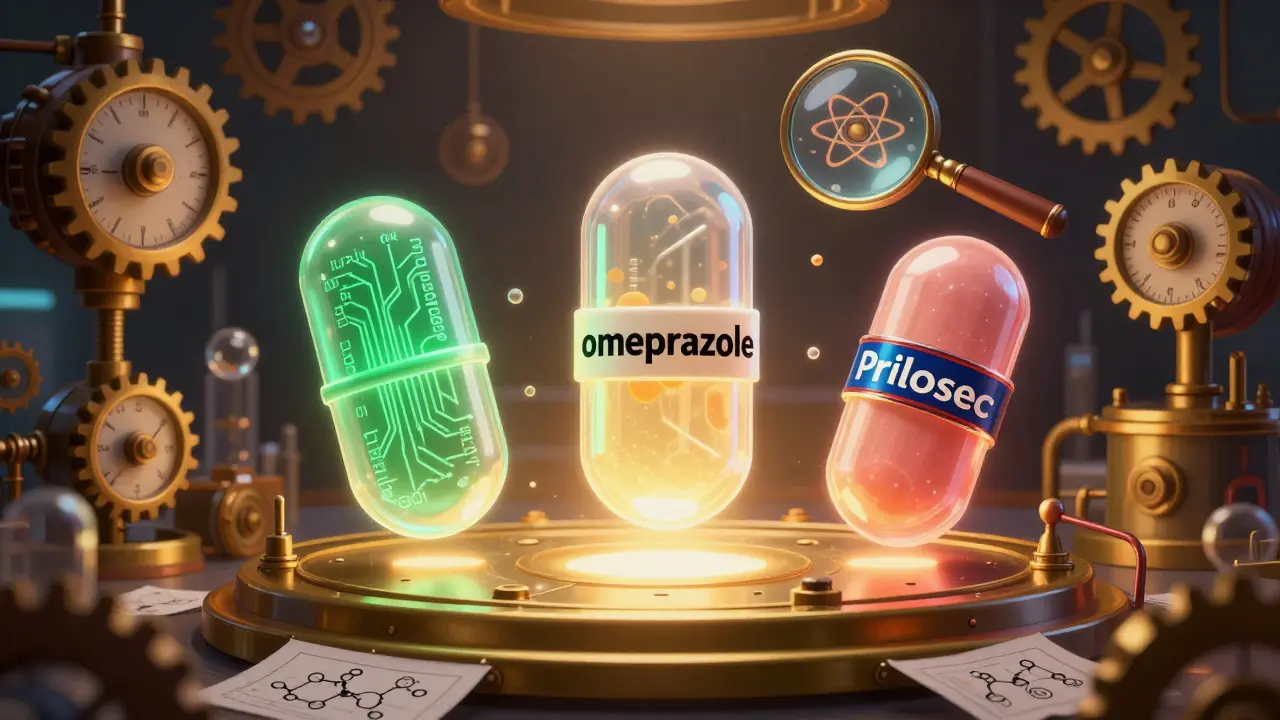
Ever wonder why some pills are called omeprazole while others are labeled Prilosec? Or why a drug like lisinopril sounds so strange compared to its brand name Zestril? It’s not random. There’s a whole science behind how drugs get their names-and it’s designed to keep you safe.
Why Drug Names Matter More Than You Think
Medication errors kill thousands every year. In the U.S. alone, the Institute of Medicine found that at least 1.5 million preventable injuries happen annually because of confusion over drug names. That’s why the World Health Organization and the FDA didn’t just pick names out of a hat. They built a system.
Think of drug nomenclature like a language. It has three dialects: chemical names, generic names, and brand names. Each one serves a different purpose. Get them mixed up, and you could end up with the wrong dose, the wrong drug, or even a dangerous interaction.
Chemical Names: The Scientific Blueprint
If you opened a chemistry textbook and saw the full name of a drug, you’d probably stop reading. Take propranolol, a common beta-blocker. Its chemical name is 1-(isopropylamino)-3-(1-naphthyloxy)propan-2-ol. That’s 50+ characters long. No doctor is writing that on a prescription. No pharmacist is saying it out loud.
This name comes from the International Union of Pure and Applied Chemistry (IUPAC) system. It’s like a molecular GPS-it tells you exactly how the atoms are arranged. The prefix tells you the carbon chain, the suffix shows functional groups, and the numbers pin down where everything connects.
It’s precise. It’s scientific. And it’s useless in a hospital. That’s why we have generic names.
Generic Names: The Safety Code
Generic names-also called nonproprietary names-are the backbone of safe prescribing. They’re assigned by international bodies like the World Health Organization (WHO) through its International Nonproprietary Names (INN) Programme, and in the U.S., by the United States Adopted Names (USAN) Council.
Here’s the trick: the ending of a generic name tells you what kind of drug it is. These endings are called stems. If you know the stem, you know the class.
- Drugs ending in -prazole (omeprazole, esomeprazole, pantoprazole) are proton pump inhibitors-used for acid reflux.
- Those ending in -tinib (imatinib, sunitinib, dasatinib) are tyrosine kinase inhibitors-often used in cancer.
- Drugs ending in -mab (adalimumab, rituximab) are monoclonal antibodies.
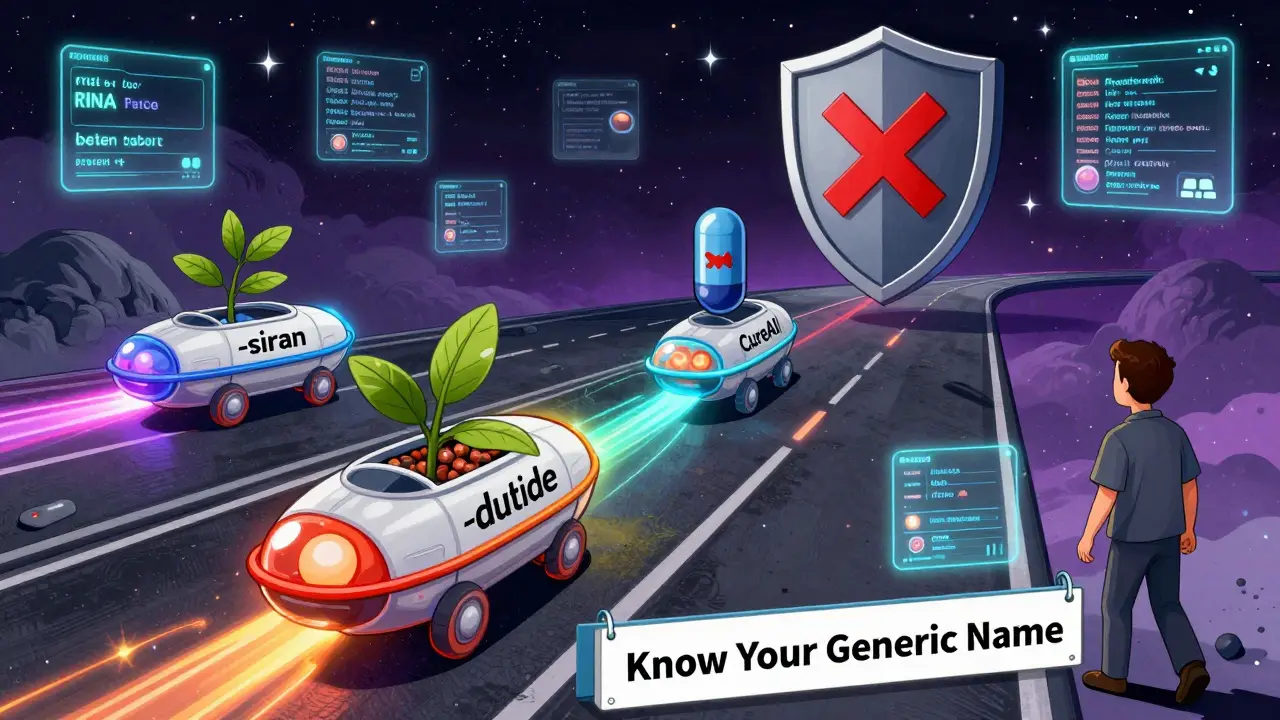
- Newer ones like -siran (for RNA-based therapies) and -dutide (for peptide-drug conjugates) are being added as science evolves.
The prefix? That’s what makes each drug unique. So ome-prazole and lanso-prazole are both in the same class, but they’re different molecules. The USAN Council spends months testing these prefixes. About 30% of proposed names get rejected-not because they’re ugly, but because they sound too similar to existing drugs. Imagine confusing glipizide with glyburide. One wrong letter, and you could overdose.
Dr. Robert M. Goggin, former head of the USAN Council, says standardized stems reduce medication errors by 27%. That’s not a guess. That’s data from real hospital records.
Brand Names: The Marketing Mask
Now, here’s where things get tricky. A drug like lisinopril becomes Zestril when it’s sold by Merck. Same active ingredient. Same effect. But the name is chosen to stand out, not to inform.
Pharmaceutical companies spend millions on naming. They submit 150 to 200 options to the FDA. The FDA’s Division of Medication Errors and Technical Support reviews each one. They check for:
- How it sounds when spoken aloud
- How it looks written down
- Whether it resembles any other drug name
- Whether it implies a medical benefit (like “CureAll” or “HeartStrong”)
One in three brand names get rejected. In 2022, the FDA blocked a name because it looked too much like Levothyroxine. A tiny typo could mean a thyroid patient gets the wrong drug.
Companies also use internal codes during development. Pfizer uses PF-04965842-01 for abrocitinib. The first two letters are the company code. The numbers are the compound ID and salt form. It’s like a barcode for molecules.
Brand names are designed to be memorable, catchy, and trademarkable. But they tell you nothing about how the drug works. That’s why pharmacists always check the generic name on the label.
Why Generic and Brand Drugs Look Different
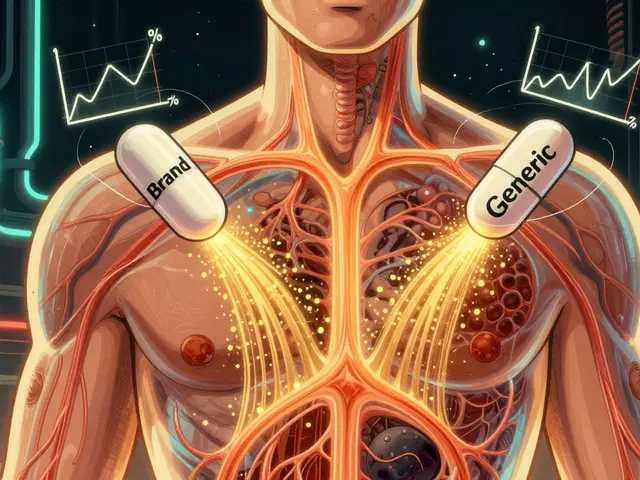
Here’s a common myth: generic drugs are inferior. Not true. The 1984 Hatch-Waxman Act requires that generics have the same active ingredient, strength, dosage form, and route of administration as the brand. They work the same.
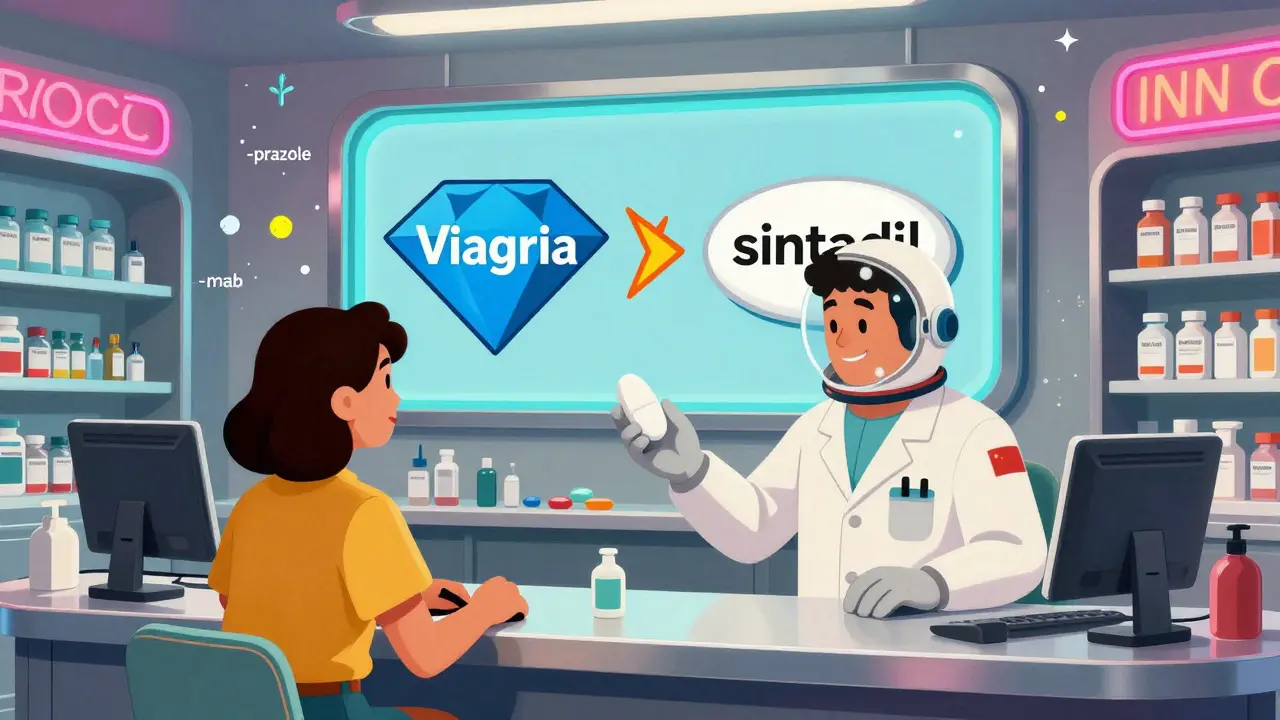
But they don’t look the same. Why? Because trademark law says a generic can’t copy the shape, color, or logo of the brand. So Viagra is blue and diamond-shaped. Its generic version, sildenafil, might be white and oval. That’s fine-unless a patient doesn’t recognize it and skips a dose.
In 2022, the Institute for Safe Medication Practices reported 347 medication errors linked to appearance changes in generics. Patients thought the new pill was fake. Or they confused it with another drug.
That’s why pharmacists now hand you a leaflet explaining what the generic version is. And why you should always ask: “Is this the same as my old pill?”
The Naming Process: From Lab to Shelf
Drug naming doesn’t happen at the last minute. It starts early.
- Company code: Right after discovery, the molecule gets a lab name like PF-04965842.
- Generic name: During Phase I clinical trials (usually 2-3 years in), the company proposes a name to USAN or WHO. It goes through review, testing, and sometimes rejection.
- Brand name: About 6-12 months before launch, the company submits brand options to the FDA. Final approval comes after months of back-and-forth.
The whole process takes 4 to 7 years. And it’s not just paperwork. It’s safety engineering.
What’s Changing Now?
Drug development is getting more complex. We’re not just making pills anymore. We have RNA therapies, gene treatments, protein degraders.
That’s why WHO and USAN are updating their rules. In 2023, they introduced new stems:
- -siran for RNA-based drugs
- -dutide for peptide-drug conjugates
- -tecan for targeted protein degraders (expected to grow fast)
And the USAN Council now uses AI to scan 15,000 existing drug names in milliseconds. It checks for sound-alikes, look-alikes, and spelling traps. Since 2021, this system has cut naming risks by 42%.
The FDA’s 2023 Modernization Act now requires every new drug application to include a full nomenclature risk report-analyzing 12 linguistic factors. That’s how seriously they take this.
What You Should Know as a Patient
You don’t need to memorize stems. But you should know this:
- Always ask for the generic name. It’s the real identifier.
- If your pill looks different, don’t assume it’s wrong. Ask your pharmacist.
- Don’t trust brand names to tell you what the drug does. A name like Cardiva doesn’t mean it’s for heart disease-it’s just a marketing label.
- Use apps or websites that show both brand and generic names side by side. GoodRx and MedlinePlus are reliable.
Studies show 68% of patients find generic names confusing without explanation. But 83% of pharmacists say standardized naming makes their job safer. That’s the gap. And it’s why your pharmacist is your best ally.
Final Thought: Names Are a Lifeline
Behind every drug name is a system built to prevent death. Chemical names map the molecule. Generic names tell doctors what it does. Brand names sell it to you.
But only one of them saves lives: the generic name. It’s the universal language of medicine. And if you learn to recognize it, you take control of your own safety.

Hayley Ash
So let me get this straight-pharmaceutical companies spend millions to make a drug sound like a sci-fi villain’s spaceship while the actual medicine has a name that sounds like a typo in a chemistry exam? Brilliant. We’re all just lab rats in a branding circus.

kelly tracy
This entire system is a farce. The FDA approves names based on how they look on a billboard, not whether they prevent death. And don’t get me started on how generics are forced to look different so patients panic. It’s not safety-it’s corporate theater.

srishti Jain
generic names save lives. brand names sell lies. end of story.

Cheyenne Sims
The structural integrity of pharmaceutical nomenclature is a cornerstone of public health safety. The systematic application of IUPAC-derived stems, standardized by the USAN Council in accordance with WHO guidelines, ensures unambiguous pharmacological classification. Any deviation or casual dismissal of this protocol constitutes a dangerous erosion of clinical precision.

Colin L
Have you ever thought about how much emotional labor goes into naming a drug? Like, imagine being the guy in a conference room in New Jersey trying to convince ten lawyers and five marketing execs that 'Dutidex-9' doesn't sound like a bad energy drink. And then the FDA says no because it rhymes with 'duloxetine.' So now you go back to the drawing board, and your team’s been working on this for two years, and you're just... exhausted. And then you realize-no one cares. Patients don't know the difference between -prazole and -tidine. They just want the pill to work. And the pharmacist? They're just trying to get through their shift without someone yelling at them because the pill looks different today. I mean, really. We've turned medicine into a crossword puzzle with lives at stake.

Shae Chapman
This is so important!! 💯 I’ve had patients cry because their 'new' pill looked different and they thought it was fake. We need more education, more clarity, more compassion. Pharmacists are the real heroes here 🙌

Nadia Spira
It’s not about stems or nomenclature-it’s about the epistemic collapse of medical authority. The entire framework is a performative illusion engineered by capitalist biotech monopolies to obscure the fact that all drugs are just molecular approximations of biological homeostasis. You think -mab means anything? It’s just a linguistic placebo. The real cure is systemic de-commodification of healthcare. But no, let’s keep playing name games while people die.

henry mateo
im not a doc or nothing but i always check the generic name now after i got the wrong pill once. i thought my blood pressure med changed color so i stopped taking it. turned out it was just the generic. dumb mistake. but this post helped me understand why. thanks

Kunal Karakoti
It's fascinating how language becomes a vessel for both precision and deception in medicine. The generic name, stripped of marketing, becomes the purest expression of pharmacological intent-a linguistic artifact of scientific consensus. Meanwhile, the brand name, a carefully curated cultural signal, functions as a modern totem, imbued with trust, fear, and desire. The tension between these two names mirrors humanity's broader struggle between rationality and illusion.

Kelly Gerrard
Patients must be educated to recognize generic names as the only true identifier. Brand names are marketing tools, not medical facts. If you don't know the generic, you don't know your medicine. Always ask. Always verify. Your life depends on it.
Write a comment