Recent POST
Buying prescription meds shouldn’t feel like a game of chance. You pick up your pill bottle, hand over your card, and get hit with a bill that makes you pause-again. But what if you could cut that cost by 75% or more without changing your treatment? The answer isn’t magic. It’s knowing how to ask the right questions about generics and authorized generics.
What’s the Difference Between Generic and Authorized Generic Drugs?
Let’s clear up the confusion first. A generic drug is a copy of a brand-name medicine. It has the same active ingredient, works the same way, and meets the same FDA safety standards. The only differences are in the inactive ingredients-like fillers or dyes-and the packaging. Generics hit the market after the brand’s patent expires, and they’re usually way cheaper. An authorized generic is different. It’s made by the same company that makes the brand-name drug-but sold under a generic label. Think of it like a company selling the exact same product in a plain box instead of the fancy branded one. Authorized generics aren’t copies. They’re the real thing, just without the brand name. You get the same pills, same factory, same quality. But because they’re labeled as generic, they often cost less than the brand. Here’s the catch: even though both types are chemically identical to the brand, insurance companies treat them differently. Some plans put authorized generics on a higher copay tier than traditional generics. Others don’t cover them at all unless you specifically ask. That’s why asking the right question matters more than ever.Why Generics Save You Hundreds-Sometimes Thousands-Each Year
In 2022, generic and biosimilar drugs saved the U.S. healthcare system over $408 billion. That’s not a typo. That’s real money. For you, that translates into $500, $1,000, even $3,000 a year in savings, depending on your meds. Take Truvada, the HIV prevention pill. Before generics came out, it cost about $50 per tablet. Within two years of generic approval, the price dropped to $3. That’s a 94% drop. For someone taking it daily, that’s over $16,000 saved per year. Even for common prescriptions, the numbers add up. A 2022 report from the Association for Accessible Medicines found that the average copay for a generic prescription was $6.16. For brand-name drugs? $56.12. That’s nearly nine times more. And 93% of generic prescriptions cost less than $20 to fill. But here’s where it gets tricky: if your plan treats an authorized generic like a brand-name drug, you might still pay $45-even if the list price is $12.How to Ask for Generic or Authorized Generic Options
You don’t need to be a pharmacist to get the best price. You just need to know what to say. Here’s exactly what to ask the next time you’re at the pharmacy counter:- “Is there a generic version of this drug available?” This is the baseline. If they say no, ask why. Sometimes it’s just a formulary issue, not a lack of availability.
- “Is this an authorized generic?” Don’t assume. Many pharmacists don’t know the difference. If they’re unsure, ask to speak with the pharmacist on duty. Authorized generics often have the brand name printed on the bottle under “Manufacturer” or “Distributed by.”
- “How does my insurance treat authorized generics compared to traditional generics?” This is the most important question. Some plans put AGs on the same tier as brands. Others treat them like cheaper generics. Your copay could change drastically depending on the answer.
- “Can I switch between generic types to save money?” Sometimes, the traditional generic costs less than the authorized one-even if they’re the same pill. Always compare.
Why Your Copay Might Still Be High Even With a Generic
Here’s the hidden problem: list price ≠ what you pay. The price on the shelf is just the starting point. Insurance companies and pharmacy benefit managers (PBMs) negotiate rebates behind the scenes. Those rebates don’t always reach you. If your plan has a high deductible or uses a tiered system, you might pay more for an authorized generic than a traditional one-even if the AG is cheaper overall. One Reddit user shared: “My insulin went from $350 brand to $90 authorized generic, but my copay stayed at $45.” Why? Because their insurance classified the AG as a brand-name drug for formulary purposes. Another user switched from an authorized generic to a traditional generic for blood pressure meds-and saved $20 a month. Same drug. Same effect. Different price tag because of how the plan was structured. That’s why you need to check your plan’s formulary. Call your insurer. Ask: “What tier is [drug name] on? What’s the copay for the generic version? What about the authorized generic?” Write it down. Don’t trust the app. Don’t trust the website. Call.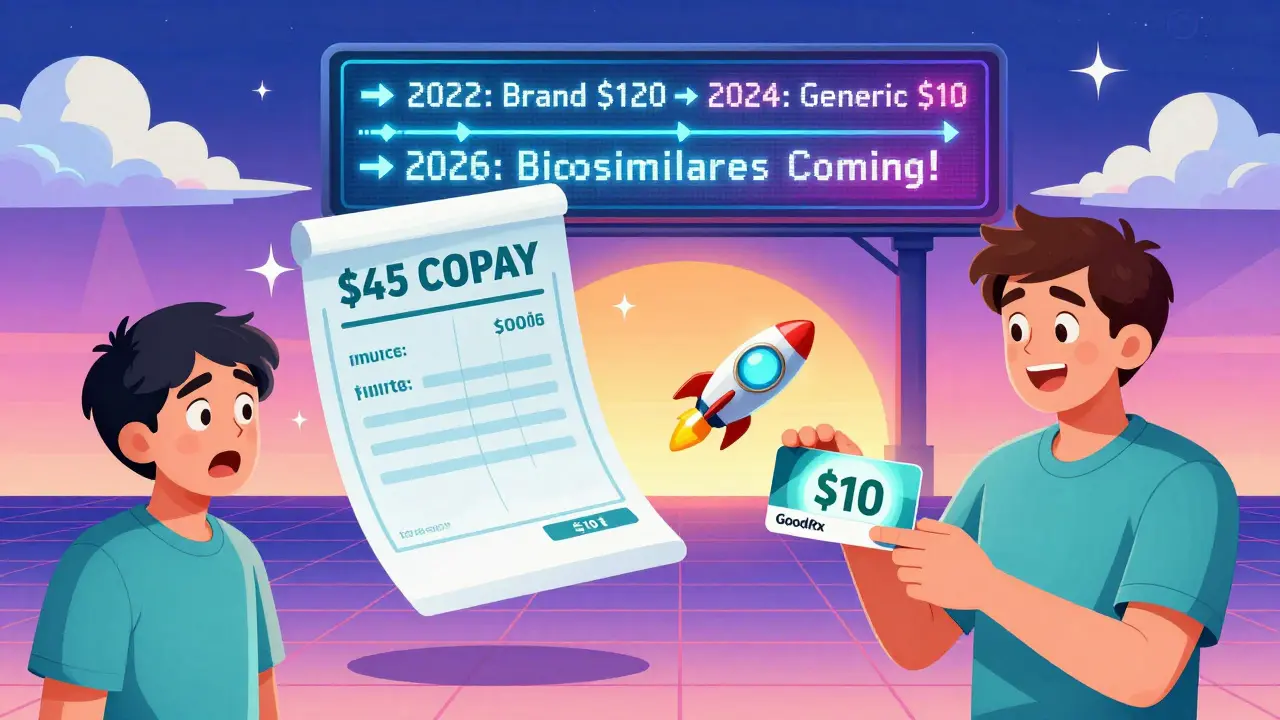
Tools to Compare Prices Across Generic Types
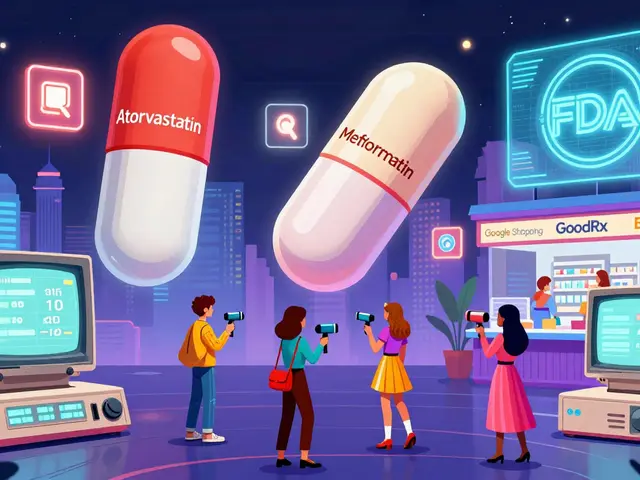
You don’t have to guess. Use free tools to see what you’re actually paying.- GoodRx shows cash prices for every version of a drug-brand, traditional generic, and authorized generic. You can compare side by side. Sometimes the AG is cheapest. Sometimes the traditional generic wins.
- SingleCare and RxSaver work the same way. Enter your drug, zip code, and pharmacy. See real-time prices.
- Your pharmacy’s loyalty program might offer discounts on generics. CVS, Walgreens, and Walmart often have $4 generic lists. Ask if your drug is included.
What to Do When Your Pharmacist Doesn’t Know the Difference
A 2022 survey found only 43% of independent pharmacists could clearly explain how authorized generics affect pricing. That’s not their fault-they’re busy. But it means you need to be the expert. If they’re unsure, say: “I read that authorized generics are made by the brand company. Can you check if this is one?” Show them the bottle. Look for the manufacturer name. If it matches the brand, it’s an authorized generic. If it’s a different company-like Teva, Mylan, or Sandoz-it’s a traditional generic. You can also ask: “Can you look up the NDC code?” That’s the 10-digit number on the label. You can search it online to see who makes it. If the NDC belongs to the brand company, it’s an authorized generic.When Authorized Generics Might Not Be the Best Deal
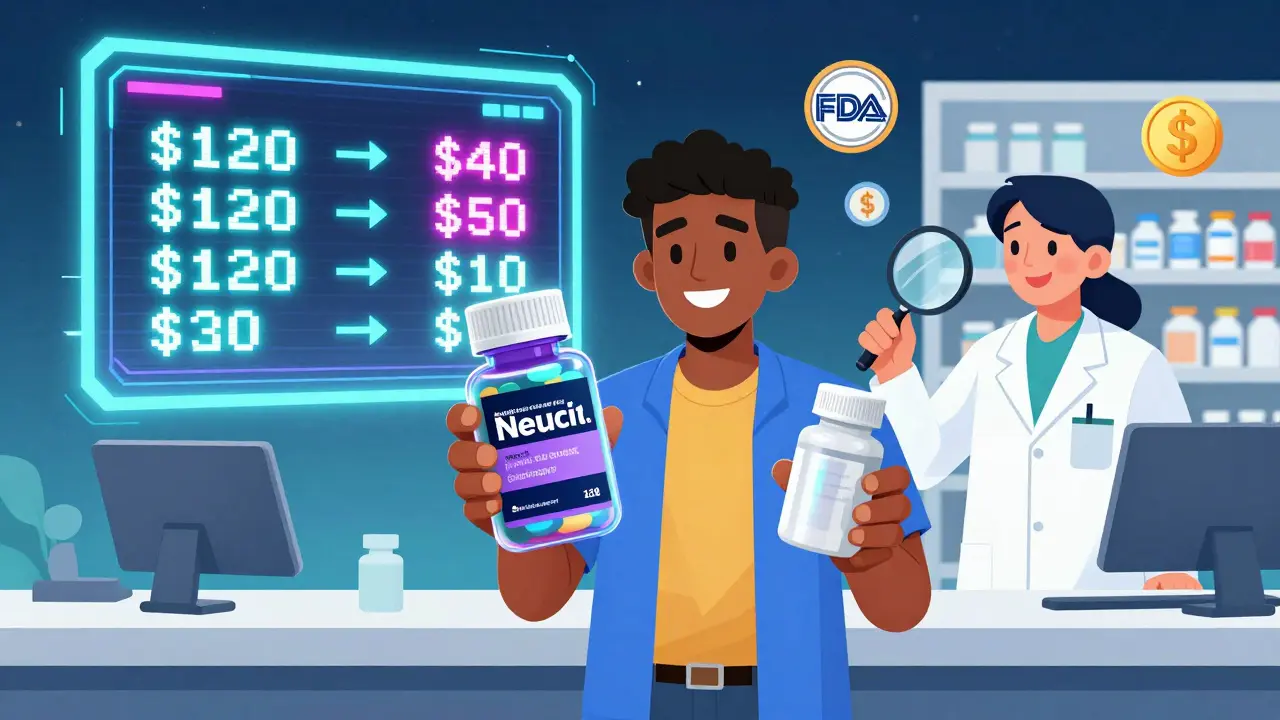
It’s not always about the lowest price. Sometimes, traditional generics are cheaper. Why? Because brand companies often set higher list prices for their authorized generics to maintain profit margins. Then PBMs negotiate big rebates on traditional generics, which lowers the final cost to you. Example: The brand-name drug costs $120. The authorized generic list price is $80. The traditional generic list price is $50. But the PBM negotiates a $40 rebate on the traditional generic, bringing the net cost to $10. Your copay? $10. The authorized generic? Your plan doesn’t apply rebates, so you pay $80-unless you use a coupon. Always compare. Don’t assume AG = cheapest.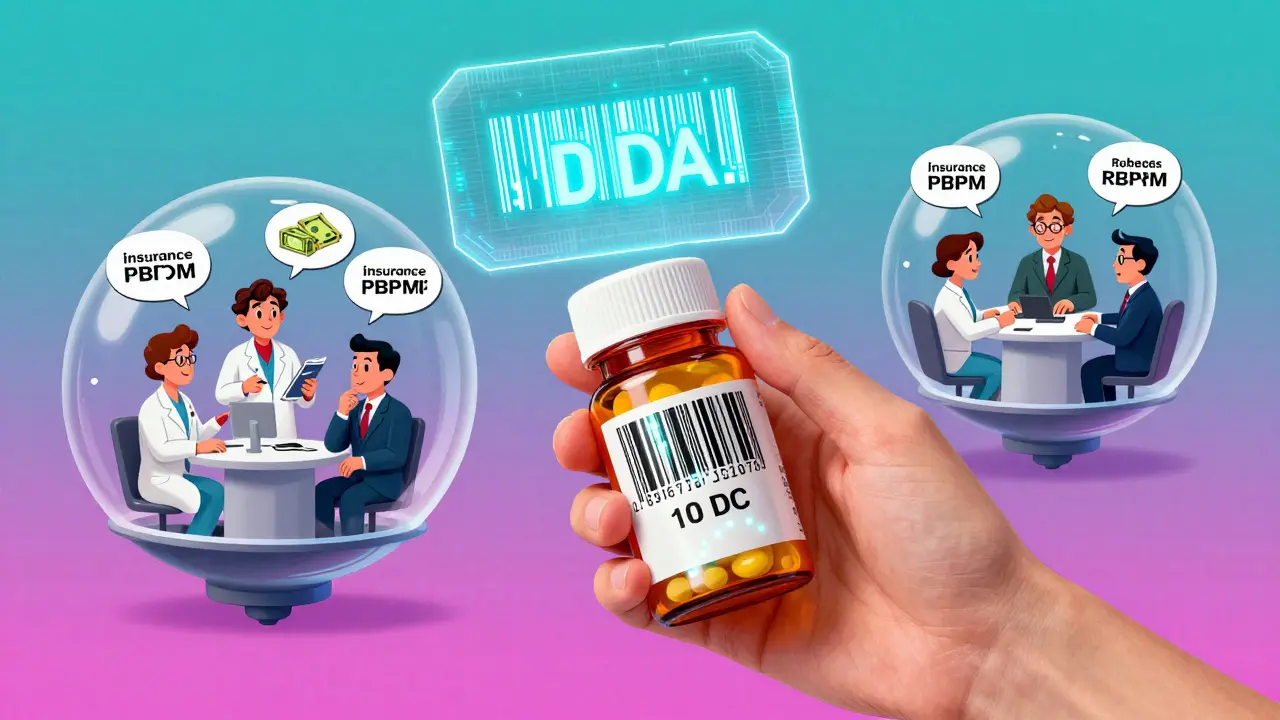
What’s Changing in 2026-and How It Affects You
The FDA is pushing harder to approve complex generics-like inhalers, skin creams, and injectables-that used to be hard to copy. More competition means more savings. The number of authorized generics being used to delay competition is dropping, which is good news for patients. Biosimilars (generic versions of biologic drugs like Humira or Enbrel) are also growing fast. In 2023, they saved over $7 billion. If you’re on a biologic, ask if a biosimilar is available. You could save thousands. And while the U.S. still pays more than most countries for drugs, new policy proposals aim to tie prices to international benchmarks. That could make generics even more valuable in the future.Bottom Line: Ask, Compare, Save
You don’t need to be a medical expert to save big on prescriptions. You just need to ask three simple questions every time you fill a script:- Is there a generic?
- Is it an authorized generic?
- How does my plan treat each version?
Generics aren’t just cheaper. They’re proven, safe, and just as effective. But the savings only work if you know how to ask for them.
Are authorized generics as safe as brand-name drugs?
Yes. Authorized generics are made by the same company as the brand-name drug, using the same ingredients, equipment, and facilities. The FDA requires them to meet the same strict quality and safety standards. There is no difference in effectiveness or safety between an authorized generic and the brand-name version.
Why is my copay the same for a generic and a brand-name drug?
Your insurance plan may classify the generic-especially an authorized generic-as a brand-name drug for formulary purposes. Some plans don’t apply rebates to authorized generics, or they put them in a higher tier. Always ask your insurer how they treat each version. Sometimes paying cash is cheaper than using your insurance.
Can I switch from a brand to a generic without my doctor’s approval?
In most cases, yes. Pharmacists can substitute a generic for a brand-name drug unless the prescription says “Dispense as Written” or “Do Not Substitute.” But if you’re switching to an authorized generic, your doctor may need to update the prescription if your plan requires it. Always check with your pharmacist first.
Do all pharmacies carry authorized generics?
Not always. Authorized generics are less common than traditional generics and may not be stocked at every pharmacy. Chain pharmacies like CVS or Walgreens are more likely to carry them. Independent pharmacies may need to order them. Always ask ahead of time or use a price comparison app like GoodRx to find where it’s available.
How do I know if my drug is an authorized generic?
Check the bottle. Look for the manufacturer name. If it’s the same company that makes the brand-name version, it’s an authorized generic. You can also search the NDC code (the 10-digit number on the label) online. If the manufacturer matches the brand, it’s authorized. Your pharmacist can also help identify it.
Are there any downsides to using authorized generics?
The main downside is that they can delay traditional generic competition. Brand companies sometimes launch authorized generics right after patent expiry to block other companies from entering the market. This can keep prices higher longer. But in 2026, this practice is declining. For patients, the bigger issue is insurance confusion-not the drug itself.
Next Steps: What to Do Today
1. Look at your last prescription receipt. Is it a brand, traditional generic, or authorized generic? If you’re not sure, call your pharmacy and ask. 2. Go to GoodRx.com. Enter your drug name. Compare cash prices for all versions. 3. Call your insurance. Ask: “What tier is my drug on? What’s the copay for the generic? What about the authorized generic?” 4. Ask your pharmacist next time you pick up a script. Use the exact phrases above. Small questions. Big savings. You’ve already done the hard part-taking your meds. Now make sure you’re not overpaying for them.
Jan Hess
Just saved $80 this month by switching my blood pressure med to the generic after asking the pharmacist if it was authorized. Didn't even know there was a difference until I read this. Seriously, why isn't this common knowledge?

Amy Ehinger
I used to think generics were just cheap knockoffs until I found out my insulin was an authorized generic made by the same company as the brand. Same pills, same box, just no fancy logo. My copay dropped from $45 to $12. I still can't believe I didn't ask sooner. I'm telling all my friends now. Honestly, if you're paying full price for meds without checking this stuff, you're leaving money on the table. And yeah, I know GoodRx is everywhere now but most people still just hand over their card and walk away. We need a public service campaign or something.

Crystel Ann
This made me cry a little. My mom took 7 different prescriptions and every time she'd say 'I can't afford this' I'd just nod and feel helpless. Now I'm going through all her bottles, checking NDC codes, calling her insurer, comparing prices. She's going to be so relieved. Thank you for writing this like someone actually cares.

Nat Young
Let me stop you right there. You're all acting like this is some groundbreaking tip but PBMs have been hiding these tiers for decades. The real problem isn't that people don't know how to ask - it's that the entire system is rigged to make you feel stupid for trying. Authorized generics? They're a tactic to stall real competition. The brand companies launch them the second the patent expires so no other generic makers can get a foothold. You're not saving money - you're just being funneled into a slightly less expensive trap. And GoodRx? That's just a middleman that takes a cut while you still pay more than you should. This whole thing is a shell game and you're all just happy you got the smaller shell.

Niki Van den Bossche
Ah, the tragic ballet of pharmaceutical capitalism - where the body becomes a ledger and the soul a line item in a PBM’s quarterly report. We are not merely patients, dear interlocutors, but commodified vessels in a neoliberal pharmacopeia. The authorized generic? A gilded cage wrapped in the velvet of pseudo-affordability. We are told to 'ask' - as if inquiry were a talisman against systemic predation. Yet the NDC code, that arcane sigil, reveals not truth but the architecture of control: who manufactures, who profits, who is permitted to survive. To pay cash is to reject the sacrament of insurance, yes - but is that liberation or merely the quiet surrender of a citizen who has learned to beg in the right tone? The FDA may approve, but the market disposes. We are all just waiting for the next rebates to vanish, the next tier to shift, the next pill to become unaffordable again. And still we ask. Still we hope. Still we check the bottle.

Jami Reynolds
Did you know that the FDA allows manufacturers to change inactive ingredients in generics without notifying patients? That means your 'same drug' could have different fillers that trigger allergies or interact with other meds. And authorized generics? They're often used to manipulate formulary tiers so insurers can charge more while pretending they're saving you money. This whole 'ask the pharmacist' advice is dangerous. Most pharmacists are overworked and underpaid - they're not regulators. You're being told to become your own pharmacist while the real culprits - PBMs and Big Pharma - laugh all the way to the bank. This isn't empowerment. It's exploitation dressed up as advice.

Iona Jane
They're watching us. Every time you search GoodRx. Every time you call your insurer. Every time you check the NDC code. That's how they track who's saving money - and who's not. Next thing you know, your premiums go up because you're 'too savvy.' They don't want you to know about authorized generics. They want you to stay confused. I've seen the patterns. My cousin got flagged after asking about insulin prices. His insurance suddenly 'changed coverage.' Coincidence? I don't believe in coincidences.

RUTH DE OLIVEIRA ALVES
It is imperative to underscore the significance of pharmacovigilance and patient advocacy within the contemporary healthcare ecosystem. The distinction between generic and authorized generic pharmaceuticals is not merely semantic; it constitutes a critical determinant of out-of-pocket expenditure and formulary compliance. One must systematically consult the insurer’s formulary documentation, verify manufacturer information via National Drug Code (NDC) databases, and, where applicable, request a medication therapy management session with a licensed pharmacist. The assertion that cash pricing may surpass insurance-based copayments is empirically substantiated by multiple peer-reviewed studies published in the Journal of the American Pharmacists Association. It is therefore both ethically and fiscally responsible to pursue these avenues with diligence and precision. The onus, regrettably, remains upon the patient - a circumstance which reflects a systemic deficiency in transparency, not individual negligence.
Write a comment