Recent POST

Drug Side Effect Risk Calculator
This calculator estimates your risk of adverse drug reactions based on the article's research about gut bacteria transforming medications. Enter your medication and key factors to see your personalized risk level.
Note: This is an educational tool based on published research. It does not provide medical advice. Always consult your doctor for treatment decisions.
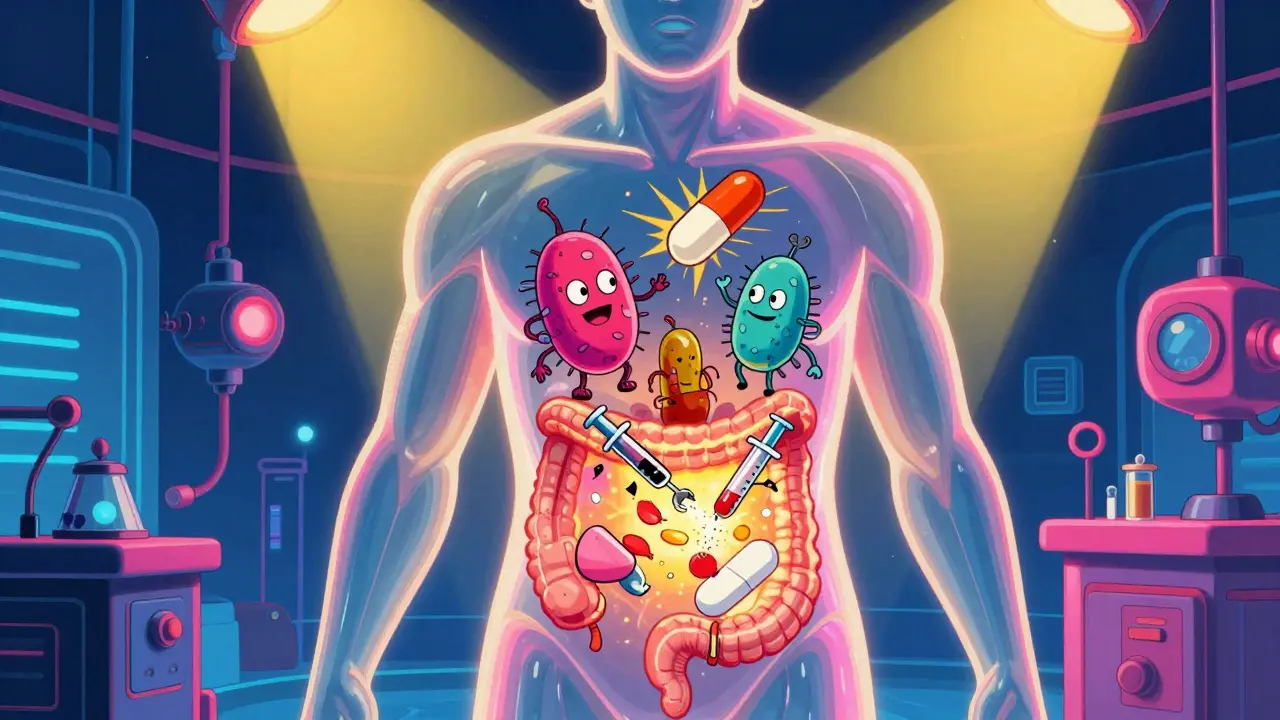
Every time you swallow a pill, your body doesn’t work alone. Trillions of bacteria in your gut are already at work-breaking down, activating, or even poisoning the medicine before it even reaches your bloodstream. This isn’t science fiction. It’s happening right now, in millions of people, and it’s the reason why two people taking the same drug can have wildly different outcomes-one feels better, the other ends up in the hospital.
Why Some Drugs Make You Sick (Even When They Shouldn’t)
For decades, doctors assumed drug reactions were mostly about liver enzymes, kidney function, and dosage. But that model kept failing. Why did one patient get severe diarrhea from chemotherapy while another didn’t? Why did some people have toxic reactions to common antibiotics or heart medications, even at standard doses? The answer wasn’t in their genes-it was in their gut. A landmark 2019 study from Yale showed that gut bacteria directly transformed three commonly used drugs into toxic compounds. In some cases, up to 80% of the harmful metabolites circulating in the blood came from bacteria, not the human body. That’s not a side note-it’s the main event. And it explains why 1.3 million emergency room visits in the U.S. each year are tied to unexpected drug reactions. Take irinotecan, a chemotherapy drug used for colon cancer. About one in three patients develops life-threatening diarrhea. Why? The drug is turned into a harmless form in the liver, then sent to the gut to kill cancer cells. But certain gut bacteria, armed with an enzyme called beta-glucuronidase, reverse that process. They turn it back into its toxic form-right inside the intestines. Studies show that patients with higher levels of this enzyme have a 87% stronger link to severe diarrhea. The bacteria aren’t just present-they’re actively sabotaging the treatment.It’s Not Just Chemotherapy
This isn’t limited to cancer drugs. The same thing happens with common medications you might take every day. - Clonazepam, an anti-seizure drug, reaches 40-60% higher levels in the blood of mice without gut bacteria. That means your microbiome is normally helping break it down. If your bacteria are wiped out by antibiotics, you could overdose without even knowing it. - Digoxin, a heart medication, is inactivated by a specific gut bacterium called Eggerthella lenta. If you have this bug, the drug won’t work. If you don’t, you might get toxicity. That’s why some patients need double the dose-and others get sick on the same amount. - Prontosil, an old-school antibiotic, doesn’t work at all unless gut bacteria activate it. In mice treated with antibiotics, the drug’s effectiveness dropped from 90% to just 12%. That’s not a minor drop-it’s a total failure. Even statins like lovastatin are affected. Long-term antibiotic use can reduce their ability to lower cholesterol by 35%. That’s not just about gut health-it’s about your heart.How Do Bacteria Change Drugs?
Your gut microbes don’t just digest food. They’ve evolved to break down plant compounds, toxins, and yes-even pharmaceuticals. They do this with seven key chemical reactions: acetylation, deacylation, decarboxylation, dehydroxylation, demethylation, dehalogenation, and hydrolysis of drug conjugates. The most common and dangerous one? Beta-glucuronidase. This enzyme, made by certain bacteria, strips off protective sugar molecules that the liver adds to drugs to make them safe. When that happens, the drug becomes toxic again. In the case of irinotecan, this single enzyme is responsible for 95% of the gut damage. Other bacteria use reductive metabolism to change nitro groups (found in drugs like nitrazepam) into harmful amines. Still others break down azo bonds in drugs like prontosil, releasing active compounds. These aren’t random accidents. These are precise biochemical reactions-ones that vary wildly from person to person based on their unique microbial makeup.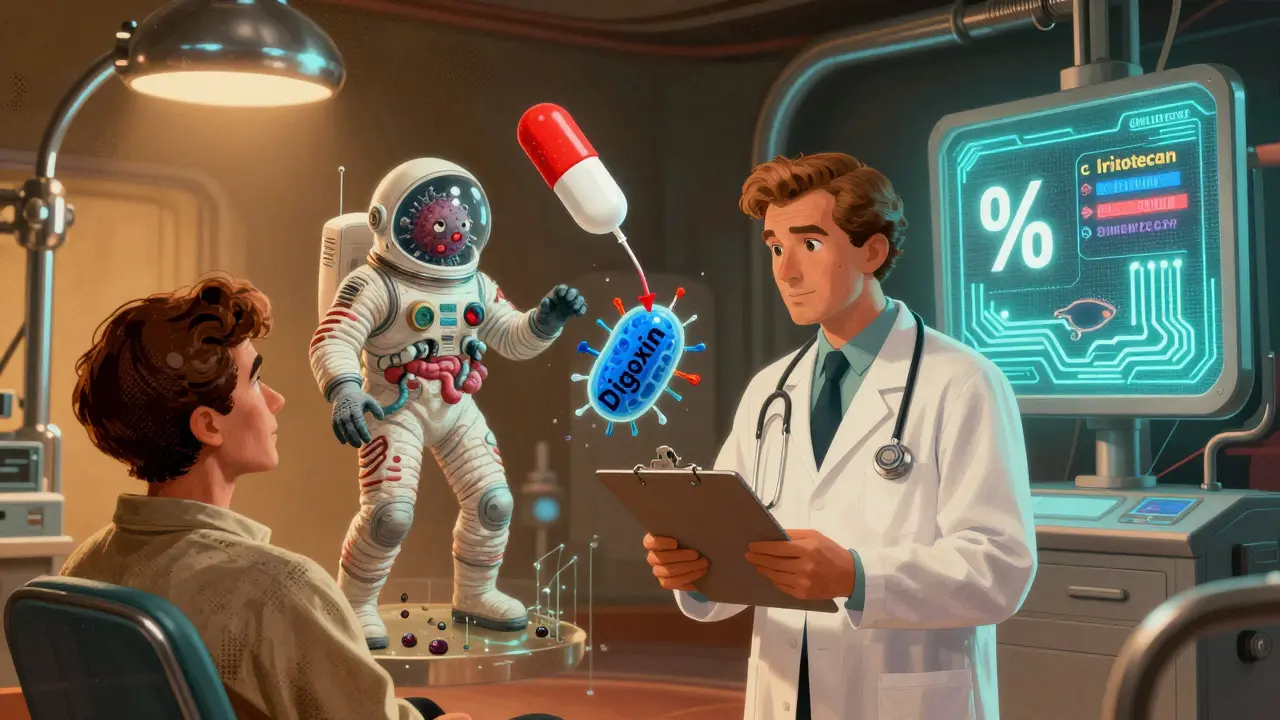
The Real-World Cost of Ignoring the Microbiome
Pharmaceutical companies used to treat the microbiome as noise. Now, they’re paying for it. Since 2020, Pfizer, Merck, and others have started testing new drugs against gut bacteria in early trials. Why? Because if a drug turns toxic in the presence of common gut microbes, it can fail in Phase III-after spending hundreds of millions. One failed drug can cost $500 million in lost revenue and liability. Adding microbiome screening adds about $2.5 million to development costs. But that’s a bargain compared to the alternative. The FDA and European Medicines Agency now recommend microbiome testing for drugs with narrow safety margins-especially cancer treatments. In oncology, 65% of new drug applications now include microbiome data. Neurology and cardiology are catching up. But most doctors still don’t ask about your gut health before prescribing.Can We Fix This?
Yes-but not with a one-size-fits-all solution. One promising approach? Beta-glucuronidase inhibitors. These are drugs designed to block the enzyme that turns safe drugs toxic. In clinical trials, they’ve reduced chemotherapy-induced diarrhea by 60-70%. One such inhibitor is now in Phase II trials (NCT04216417). Another? Personalized probiotics. Researchers are testing strains of bacteria engineered to either break down or protect drugs based on individual needs. A trial (NCT05102805) is already testing custom probiotic pills that can modulate how your body handles specific medications. Then there’s fecal microbiota transplantation (FMT). It’s expensive-$3,000 to $6,000 per procedure-but in some cases, it’s the only way to restore the right balance of bacteria that metabolize drugs properly. And for those who want to act now? Metagenomic stool tests (costing $300-$500) can tell you which drug-metabolizing genes are present in your gut. You won’t get a diagnosis-but you’ll know if you’re at risk for certain side effects.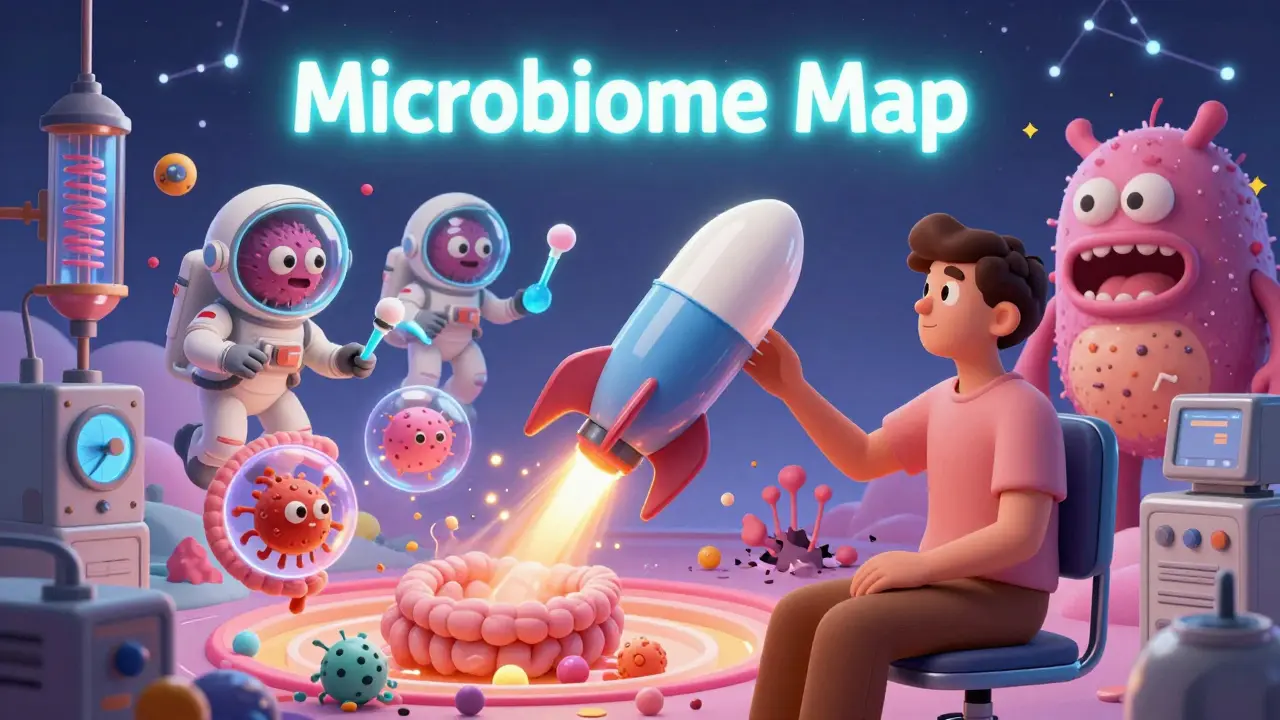
What This Means for You
If you’re on long-term medication-especially for cancer, epilepsy, heart disease, or mental health-your gut bacteria might be silently changing how it works. Antibiotics, diet, stress, even travel can shift your microbiome in ways that alter drug effectiveness. You can’t control every factor. But you can start asking questions:- Could my side effects be linked to my gut health?
- Have my medications been tested for microbiome interactions?
- Am I on antibiotics right now? Could that be making my drug less effective-or more toxic?
The Future Is Personal
The next five years will bring a quiet revolution in medicine. Instead of prescribing based on weight and age, doctors may soon prescribe based on your microbial profile. Algorithms will predict whether you’ll react badly to a drug before you even take it. Dosing will be adjusted not just for your liver-but for your bugs. The NIH has already invested $14.7 million in research through 2025. Companies are racing to build diagnostic tools. And patients? They’re finally starting to understand why their medicine didn’t work-or why it made them sick. This isn’t just science. It’s survival. For millions of people, the difference between healing and harm isn’t in the pill bottle. It’s in the gut.Can antibiotics make my medications less effective?
Yes. Antibiotics can wipe out gut bacteria that are needed to activate certain drugs-like the old antibiotic prontosil, which becomes useless without them. They can also kill bacteria that help break down other drugs, leading to higher blood levels and potential toxicity. For example, long-term antibiotic use can reduce the cholesterol-lowering effect of statins like lovastatin by up to 35%.
Are there tests to check if my gut bacteria affect my drugs?
Yes. Metagenomic stool tests (costing $300-$500) can identify genes in your gut bacteria linked to drug metabolism, like beta-glucuronidase or azoreductase. These tests don’t give you a diagnosis, but they can flag risks-for example, if your microbiome is likely to turn irinotecan toxic or inactivate digoxin. They’re not yet routine, but they’re available through specialized labs.
Can probiotics help with drug side effects?
Some probiotics might help, but most over-the-counter ones won’t. The bacteria that affect drugs are highly specific. Commercial probiotics usually don’t contain the right strains. However, experimental personalized probiotics-currently in early trials-are being designed to either block harmful enzymes or restore missing ones. These aren’t available yet, but they’re the future of precision medicine.
Why don’t doctors talk about the microbiome when prescribing drugs?
Because until recently, the science wasn’t reliable enough. Most doctors learned pharmacology without microbiome training. But that’s changing. Regulatory agencies like the FDA and EMA now recommend microbiome testing for new cancer drugs. As more data becomes available and testing gets cheaper, it will become standard practice-probably within the next five to seven years.
Do diet and lifestyle affect how my gut bacteria process drugs?
Absolutely. Diet shapes your microbiome. High-fiber diets promote bacteria that help break down drugs safely. Antibiotics, processed foods, and chronic stress can reduce microbial diversity and increase harmful enzyme activity. Even travel and sleep patterns can shift your gut bugs temporarily. While you can’t control everything, eating whole foods and avoiding unnecessary antibiotics can help maintain a healthier balance.
Is this why some people have worse side effects than others?
Yes. This is one of the biggest reasons why two people on the same drug can have totally different experiences. One might have a gut microbiome that turns the drug toxic. Another might have bacteria that break it down too fast, making it useless. It’s not about being “sensitive” or “immune”-it’s about which microbes live in your gut. That’s why personalized medicine is shifting from genes to microbes.

Vatsal Srivastava
So basically we're all just walking bioreactors with a side of bad luck. No wonder pharma keeps failing. They're treating humans like identical widgets when we're all just microbial soup with different spice levels.
Also, beta-glucuronidase? Sounds like a villain from a Marvel movie. The real MCU is the Microbiome Control Unit.

Brittany Marioni
This is so important-and I’m so glad someone finally said it out loud!
We’ve been ignoring the gut for decades, and now we’re seeing the consequences: unnecessary ER visits, failed trials, people suffering because we thought ‘one size fits all’ was enough.
Please, if you’re on any long-term med-especially chemo, heart meds, or antidepressants-ask your doctor about microbiome testing. It’s not ‘alternative’-it’s science.
And if your doctor doesn’t know what you’re talking about? That’s not your fault. It’s a system failure. You’re not crazy. You’re just ahead of the curve.

Monica Slypig
This whole thing is just another overhyped Silicon Valley scam wrapped in lab coats. We’ve been dosing people for 100 years without knowing what bacteria they have and nobody died-except the ones who were already dying.
Now they want to charge $500 for a poop test? In America we don’t need to know what bugs we have-we just take the pill and shut up.
Also, FMT? That’s just poop transplants. We’re not in a sci-fi novel. This is medicine, not a Netflix documentary.

Becky M.
I’ve been on digoxin for 7 years and never knew my gut could be making it useless or dangerous.
My doctor never mentioned it. I thought my weird dizziness was just aging.
I just ordered a stool test. $420 is a lot, but if it means I don’t end up in the hospital because my bugs decided to go on strike? Worth it.
Also, if you’re on antibiotics right now? Pause your meds and talk to your doc. Seriously. Don’t just assume it’s fine.

jay patel
You know what’s wild? We spend billions on gene therapy to fix our DNA, but we ignore the fact that we’re half microbe and half human.
Your gut bugs are basically your co-pilots, and most of us don’t even know how to talk to them.
I took a 3-week course of amoxicillin last year for a sinus infection. Since then, my blood pressure meds haven’t worked right. My doctor said it was ‘stress.’
Nah. My bugs are probably still in recovery mode. And yeah, I’m totally getting that stool test. I’m not paying for another $2000 ER visit because some bacteria decided to rebel.

phara don
Fascinating. So if I take probiotics, could I accidentally make my meds less effective? Or more?
Like, if I’m on statins and I start taking Lactobacillus acidophilus-could that mess with lovastatin? Or is it only specific strains?
Also, is there a public database of which bacteria do what? Like a microbiome drug interaction chart? I’d love to see that.

Hannah Gliane
Of course the ‘gut health’ influencers are gonna love this.
Now they’ll sell you $80 ‘microbiome booster’ powders that are just sugar and glitter.
And you? You’ll be popping them like candy while your doctor’s scratching their head because your chemo isn’t working.
The real solution? Stop eating processed junk. Stop taking antibiotics like they’re candy. And stop believing that a $300 poop test will fix your life.
🤦♀️

Murarikar Satishwar
This is the future of medicine, and honestly, it’s long overdue.
We’ve been treating the body like a black box since the 1950s. Now we’re finally seeing that the real magic happens in the gut-where microbes evolved alongside us for millions of years.
The fact that Pfizer is now screening drugs against gut bacteria? That’s not a trend. That’s a paradigm shift.
I’m not a scientist, but I’ve seen friends suffer from chemo side effects that no dosage adjustment could fix. Now I know why. It wasn’t their body. It was their bugs.
We need to stop blaming patients for ‘not responding’ and start asking: what’s living inside them?
This isn’t just science. It’s justice.
Write a comment