Recent POST

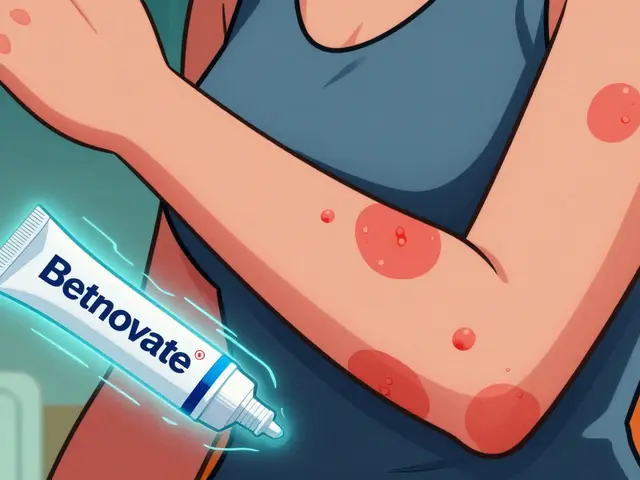



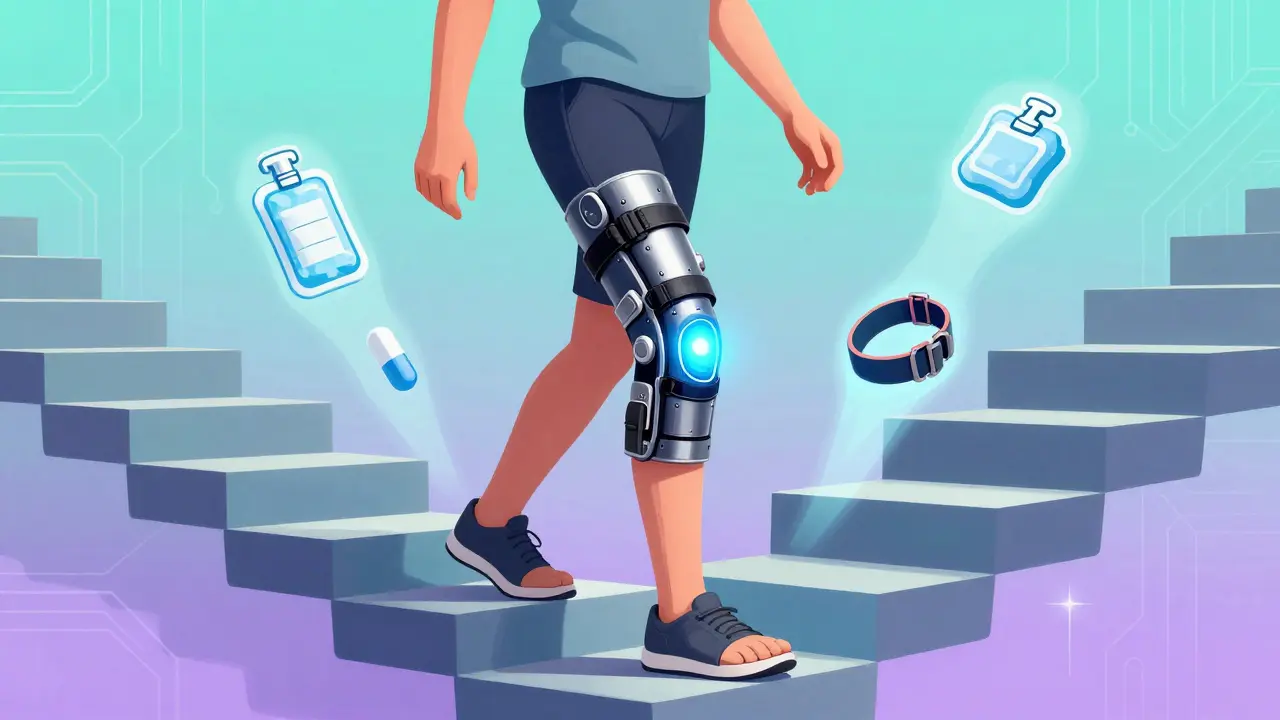
More than 250 million people worldwide live with knee osteoarthritis. It’s not just aging - it’s pain that makes stairs feel like mountains, walking to the mailbox a chore, and sitting down or standing up a slow, stiff process. You’ve probably tried rest, ice, or over-the-counter pills. But what really helps when the pain won’t quit? The answer isn’t one thing. It’s knee osteoarthritis pain management built on three proven tools: bracing, injections, and exercise. And together, they do more than mask pain - they help you move again.
Bracing: The Hidden Weapon Most People Ignore
Knee braces aren’t just for athletes or post-surgery recovery. For osteoarthritis, especially when the pain is on the inner side of the knee (medial compartment), unloader braces can be game-changers. These aren’t your basic compression sleeves. They’re engineered to shift pressure away from the worn-out part of the joint. Think of it like putting a wedge under a wobbly table - it stabilizes what’s broken. Studies show these braces reduce pain by 30-45% on the WOMAC scale, a standard measure used by doctors. That’s not minor. That’s the difference between needing help to get out of a chair and doing it yourself. They also cut the force on the knee by 20-40% during walking, which slows down further damage. One 2023 analysis of 139 trials found bracing ranked highest for pain, function, and stiffness relief among all non-surgical options. But here’s the catch: they have to fit right. A brace that’s too loose won’t help. One that’s too tight causes skin irritation or cuts off circulation. Most insurance plans cover them if prescribed by a doctor and fitted by a certified orthotist. Expect to pay $300-$1,200 out-of-pocket if uninsured. Medicare covers 80% after you hit your annual deductible. And yes, it takes a few weeks to get used to wearing one. People report discomfort at first, but 82% of 5-star Amazon reviews say the pain drops immediately during walking.Injections: Fast Relief, But Not a Fix
If you need quick relief - say, before a family event or to get through a bad flare-up - injections are the fastest option. There are four main types, each with different pros and cons. Corticosteroids are the most common. They’re cheap ($50-$150), work fast, and reduce swelling. Most people feel better in a few days. But the relief lasts only 4-12 weeks. And repeated use? It can harm cartilage over time. The FDA recommends no more than 3-4 injections per year. Hyaluronic acid (like Gel-Syn 3, newly FDA-approved in 2023) acts like synthetic joint fluid. It’s more expensive - $500-$1,200 per shot, often given in a series of 3-5 weekly injections - but can provide relief for up to 22 weeks. It’s not magic, but for some, it’s the difference between limping and walking without a cane. PRP (platelet-rich plasma) and botulinum toxin are newer options. PRP uses your own blood to trigger healing. It costs $500-$2,000 and isn’t covered by most insurance. Botulinum toxin, usually for muscle spasms, is being tested for OA pain and shows promise, but it’s still experimental. Patient reviews tell a mixed story. On Healthgrades, corticosteroid injections score 3.8 out of 5. Why? 65% say they help, but 32% get rebound pain after the relief fades. And 57% say the injection itself is painful. Still, 92% of people stick with injections because they’re quick and require no effort on your part. The trade-off? They don’t strengthen your knee - they just numb it. And that’s dangerous if you start moving too much because you feel better.Exercise: The Only Treatment That Gets Better With Time
This is where most people give up - and where the real long-term win is. Exercise doesn’t just reduce pain. It rebuilds your knee’s support system. Stronger muscles take pressure off the joint. Better flexibility means less stiffness. Improved balance cuts your risk of falling. And yes, it works. A 12-week program of land-based exercise cuts pain by 22.3% on the Visual Analog Scale. Water-based exercise? Even better - 28.7% reduction. Both require 2-3 sessions per week, 45-60 minutes each. And it’s not just about walking. The best programs include strength training (like seated leg lifts and mini-squats), stretching (hamstrings, calves, quads), and low-impact cardio (cycling, swimming). One study found regular stretching improved total knee range of motion by 8.2 degrees after just 6-8 weeks. The problem? Adherence. Only 48% of people stick with exercise after a year. Why? It’s hard. It takes time. You don’t feel it working right away. But look at the data: after 12 months, exercise improves function by 32.5%. Injections? Just 18.7%. And unlike braces or shots, exercise doesn’t cost much - just your time and a pair of sneakers. Patients who stick with it say things like, “I can carry groceries again,” or “My hip pain went away because I’m not limping anymore.” That’s the hidden bonus - when your knee improves, your whole body benefits.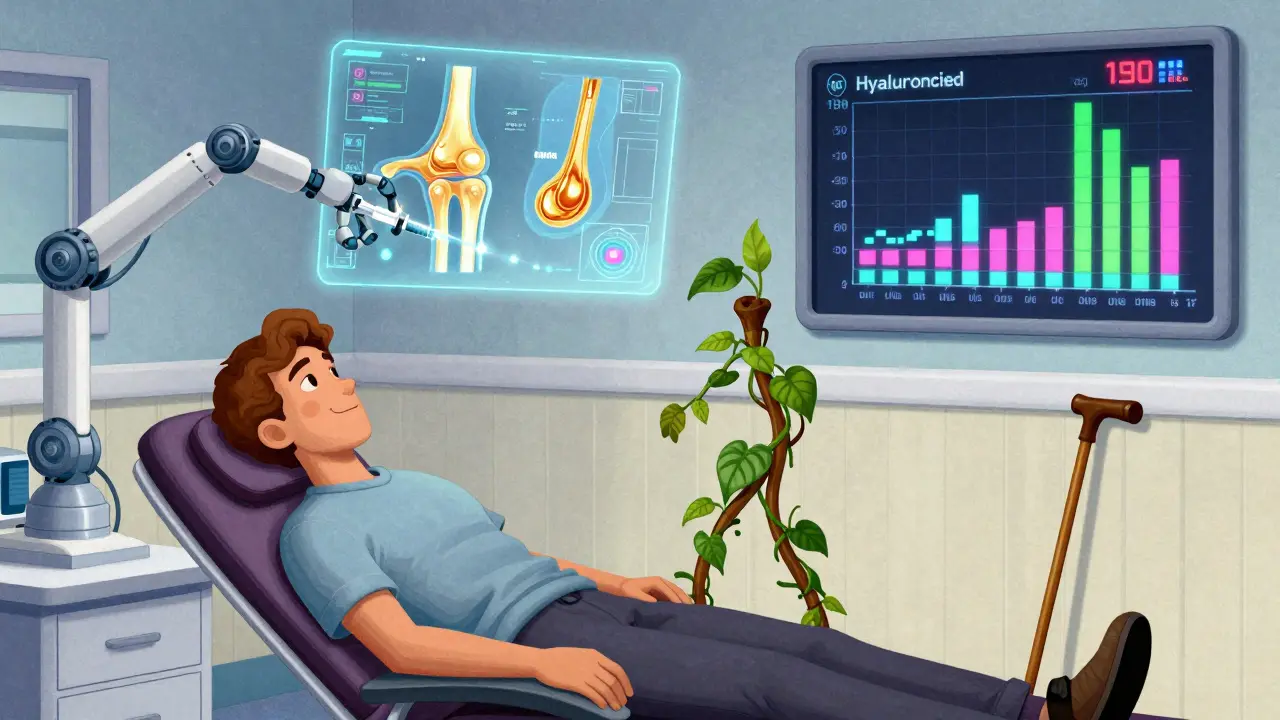
What Works Best Together?
No single treatment is perfect. But combining them? That’s where the magic happens. Dr. Tuhina Neogi, a leading rheumatologist, says it plainly: “Combination therapy - exercise plus bracing plus periodic injections for flare-ups - is the most comprehensive approach.” Here’s how it works in real life:- Use a brace during daily activities to reduce pain and protect the joint.
- Do your exercise routine every day to build strength and flexibility.
- Get an injection only when pain spikes - not as a regular crutch.
What to Avoid
Don’t fall for quick fixes. TENS units? The AAOS says there’s limited proof they help. Knee wraps from the drugstore? They might feel supportive, but they don’t unload pressure like a real brace. And never skip exercise just because you got an injection. That’s how muscle loss starts - and once your muscles weaken, your knee gets worse faster. Also, don’t wait until you’re in agony to act. The earlier you start, the better your outcomes. If you’re over 50 and have knee pain that lasts more than a few weeks, talk to your doctor. Don’t assume it’s just “getting old.”
Getting Started
You don’t need a gym membership or a $1,000 brace to begin.- Ask your doctor for a referral to a physical therapist. Even 4-6 sessions can teach you the right moves.
- If you need a brace, ask for a referral to an orthotist. Don’t buy one online without a fitting.
- Start with water aerobics or seated leg exercises if your pain is high. You don’t have to run to get results.
- Track your pain on a scale of 1-10 every day. You’ll see patterns - what makes it better, what makes it worse.
Can knee braces cure osteoarthritis?
No, braces don’t cure osteoarthritis. They don’t repair cartilage or reverse damage. But they do reduce pain and slow progression by shifting pressure away from the most worn part of the joint. Think of them as a support system, not a fix.
How often can I get knee injections?
Corticosteroid injections should be limited to 3-4 times per year to avoid cartilage damage. Hyaluronic acid injections are usually given as a series of 3-5 shots, once per year. PRP and botulinum toxin have no official limits yet, but doctors typically space them out by 6-12 months. Always follow your doctor’s advice - more isn’t better.
Is walking good for knee osteoarthritis?
Yes - if done correctly. Walking is low-impact and helps maintain joint mobility. But if your knee hurts badly while walking, try water walking or using a cane. Walk on flat surfaces, wear supportive shoes, and avoid steep hills or uneven ground until your strength improves. Start with 10-15 minutes a day and build up.
Do knee injections hurt?
They can. The needle goes into the joint, which can be uncomfortable. Most doctors use a local anesthetic to numb the area first. The pain usually lasts only a few seconds. Some people feel sore for a day or two afterward. If you’re anxious, ask if you can have ice applied before or after.
Why do I keep losing motivation for exercise?
You’re not alone. Two out of five people quit exercise within a year. The key is to make it part of your routine - not a chore. Try pairing it with something you enjoy: listen to music, watch a show, or do it with a friend. Set small goals - like walking 10 minutes a day - and celebrate progress, not perfection. A physical therapist can help you adjust your routine when pain flares up.
Should I wait until my pain is worse before starting treatment?
No. Waiting makes things harder. The earlier you start with exercise and bracing, the more you protect your joint from further damage. Pain is a signal, not a timer. Don’t wait for it to become unbearable. Small, consistent steps now prevent big problems later.
What Comes Next?
If you’re still in pain after trying these three approaches, talk to your doctor about advanced options - like custom orthotics, weight loss programs, or referral to a specialist. But don’t rush to surgery. For most people, the right mix of bracing, injections, and exercise delays or even avoids the need for a knee replacement entirely. The science is clear: your knee doesn’t need to be perfect to work well. It just needs support, movement, and smart care. Start with one step - put on that brace, sign up for water aerobics, or schedule your next injection. Progress isn’t loud. It’s quiet. And it’s possible.
Margaret Khaemba
I’ve been using an unloader brace for 8 months now and honestly? It’s been a game-changer. At first I thought it was just hype, but after the orthotist fitted it right, I could actually walk to the corner store without wincing. The discomfort faded after two weeks, and now I forget I’m wearing it. I didn’t realize how much I’d stopped doing until I could do it again.
Also, water aerobics saved my sanity. No more knee pain during workouts, and I’ve lost 12 pounds just from showing up three times a week. My hips stopped aching too. Who knew?
Don’t skip the PT referral. Even one session taught me how to squat without killing my joint. You don’t need to be an athlete to benefit.

Alec Amiri
Let’s be real - braces are just expensive paperweights for people who don’t want to lose weight. If your knee hurts because you’re carrying 300 pounds, no brace is gonna fix that. And injections? They’re just a bandaid with a price tag. The only thing that works is cutting carbs and walking more. Simple. No magic. No gadgets. Just stop being lazy.
Also, PRP is a scam. You’re paying $2K to get your own blood injected. Cool. I’ll stick with ibuprofen and a cane.

Lana Kabulova
Okay so I tried the hyaluronic acid shots and I’m not gonna lie - the pain was brutal during the injection, like someone jammed a knitting needle into my knee and twisted it. But after three days? I could climb stairs without screaming. Lasted 16 weeks. Not perfect. Not forever. But enough to get through my daughter’s wedding.
And the brace? I bought one off Amazon because I didn’t want to deal with insurance. It was a disaster. Cut off circulation. Got a rash. Now I go to a real orthotist. Worth every penny. Don’t be like me. Get fitted.
Exercise? I still hate it. But I do 10 minutes of seated leg lifts every morning while I drink coffee. It’s not glamorous. But it’s something. And it adds up.

Chiraghuddin Qureshi
From India, here! 😊 I’ve seen so many older folks here suffering with knee pain and just accepting it as ‘age’. But I showed my uncle this article and he started walking in the pool at the local temple pond - no brace, no shots, just water and consistency. Now he walks 3 km every morning and says he feels 20 years younger. 💪
Exercise doesn’t need fancy gear. Just movement. And community. We all need to stop treating pain like a weakness.
Also, if you’re in India, ask for Ayurvedic oil massages - they help with stiffness too! 🙏

Lauren Wall
Braces are for people who don’t want to do the work. Injections are for addicts. Exercise is the only real answer. End of story.
Stop wasting money. Start moving.

shivani acharya
Let me guess - this whole thing was paid for by the brace and injection companies. They love these ‘combo therapy’ articles because they make people think they’re doing something proactive when really they’re just getting hooked on expensive treatments. And don’t get me started on PRP - it’s just a fancy way to sell blood draws to desperate people.
Why not just admit that Big Pharma and orthopedic equipment makers profit off chronic pain? They don’t want you to heal. They want you to keep buying. I’ve seen it happen to my aunt. She spent $15K on ‘treatments’ and still ended up with a replacement knee.
Real solution? Lose weight. Stop sitting. Eat real food. Not some miracle brace that costs more than your phone.
And don’t even get me started on ‘smart braces’ tracking your steps. Next they’ll implant chips in your knee to send data to your insurer. 😒

Sarvesh CK
There is a profound philosophical truth embedded in this article - that healing is not a singular event but a continuous practice. We live in an age of instant solutions, yet the body demands patience, repetition, and humility. The brace offers mechanical support, the injection temporary respite, but only exercise cultivates resilience - not just in the joint, but in the spirit.
Consider that the knee is not merely a hinge but a mirror: it reflects how we treat ourselves. Do we neglect it until it screams? Or do we tend to it daily, quietly, without fanfare? The most effective treatment is not the most expensive one - it is the one we do not abandon.
And yet, access to care remains deeply unequal. A $1,200 brace is meaningless to someone working two jobs. We must ask not just ‘what works’ but ‘who gets to use it?’
Perhaps the truest innovation is not in technology, but in community - a neighbor teaching an elderly person how to do seated leg lifts, a clinic offering sliding-scale PT, a church hosting water aerobics. Healing, in the end, is relational.

Hilary Miller
I just started the brace and water aerobics last week - already feel better! 🙌 My dog is so happy I can walk him without limping. Small wins matter.
Also, if you’re scared of injections, just ask for ice beforehand. It helps a ton.

arun mehta
As a medical professional in India, I have observed that the integration of evidence-based non-surgical interventions - such as bracing, judicious use of intra-articular injections, and structured physical therapy - significantly delays the progression of knee osteoarthritis and reduces the burden of surgical intervention.
However, cultural barriers persist. Many patients equate physical activity with pain, and thus avoid movement entirely. This misconception must be addressed through community education and culturally adapted exercise protocols.
Additionally, the affordability of custom orthotics and braces remains a critical issue in low-resource settings. Public health initiatives should prioritize subsidizing basic unloader braces and training community health workers to provide foundational physiotherapy.
Exercise is not a luxury. It is a right - and a necessity. The human body is designed to move. When we deny it that, we pay the price in chronic pain, disability, and diminished quality of life.
Let us not mistake medical technology for holistic healing. The most powerful tool remains the disciplined, daily commitment to movement - regardless of cost or convenience.

Oren Prettyman
This article reads like a marketing brochure for orthopedic equipment manufacturers. Where is the data on long-term outcomes beyond 12 months? Where are the randomized controlled trials comparing this 'combo therapy' to placebo or no treatment at all? You cite Amazon reviews like they're peer-reviewed journals. That's not science. That's anecdotal noise.
Also, you claim 'bracing ranked highest for pain, function, and stiffness relief among all non-surgical options' - but you don't cite the actual study. You say '139 trials' - which ones? Name them. Link them. Or this is just pseudoscience dressed up in bullet points.
And why is there no mention of the placebo effect? Injections, especially corticosteroids, have a well-documented placebo component. People feel better because they believe they're getting treatment - not because the substance is doing anything.
Exercise? Sure. That's fine. But don't sell me a package deal as if it's a medical breakthrough. It's just a rebranding of common sense.

Liberty C
Of course you're going to recommend braces and injections - because those are the expensive, profitable options. The real solution? Stop being overweight. Stop sitting all day. Stop pretending you're too old to change. You're not 80 - you're 55 and you just don't want to put in the effort.
And let’s be honest - if you can’t afford a $1,200 brace, maybe you shouldn’t be getting knee injections either. This whole thing is a luxury for the middle class.
Meanwhile, people in developing countries manage with walking sticks and sheer grit. Maybe we should stop romanticizing medical gadgetry and start demanding accountability - from doctors, from insurance, from the entire industry that profits off our suffering.
And don’t even get me started on PRP. That’s not medicine. That’s a spa treatment for people who think their blood is magic.
Just move. Eat better. Lose weight. That’s it. Everything else is noise.

Malik Ronquillo
Braces work if they fit. Injections help if you're in a pinch. But exercise? That's the only thing that actually makes your knee stronger - not just numb it.
I did PT for 6 months. Now I hike. No pain. No brace. No shots.
Just consistency.
That's it.

Brenda King
I’m 68 and started this regimen last year - brace during walks, water aerobics twice a week, and one cortisone shot when my knee flared before my granddaughter’s recital.
I can now bend down to tie my shoes without help. That’s not a miracle. That’s science.
And you know what? I didn’t do it alone. My daughter and I do stretches together every morning. It’s our thing now.
It’s not about fixing your knee.
It’s about getting your life back.
And you can. I did.

Keith Helm
While the non-surgical interventions described possess clinical merit, the absence of a comprehensive cost-benefit analysis, stratified by socioeconomic status, undermines the generalizability of the recommendations.
Furthermore, the reliance on Amazon review metrics as evidence of efficacy constitutes a methodological flaw incompatible with evidence-based medicine.
It is imperative that future discourse prioritize randomized, double-blind, longitudinal studies over anecdotal testimonials.
Until then, the presented framework remains speculative.
Write a comment