Recent POST

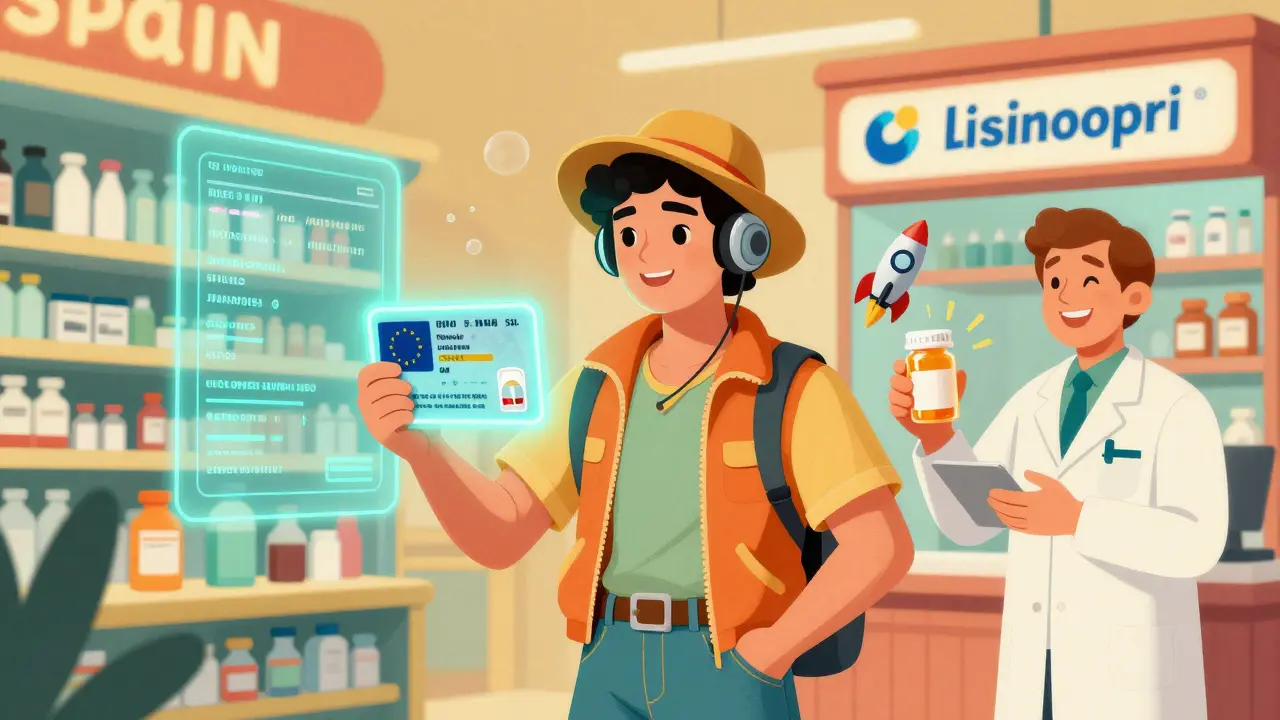
Imagine you’re on vacation in Spain, and your blood pressure medication runs out. Back home in Germany, your doctor sent an electronic prescription. You walk into a local pharmacy, hand over your EU digital ID, and walk out with your pills - no hassle, no paperwork. This isn’t science fiction. It’s happening right now across the European Union, thanks to a quiet revolution in how generic drugs move across borders.
How the EU Makes Generic Drugs Available Across Borders
The EU’s cross-border pharmacy system isn’t about importing cheap drugs from outside the bloc. It’s about letting you use your home country’s prescription at a pharmacy in another EU country. This works because of ePrescription and eDispensation services, which are now active in all 27 EU and EEA countries. Your doctor sends your prescription digitally to a national system. That same system talks to pharmacies in other countries. All you need is your electronic ID and consent to share your health data. The backbone of this system is the eHealth Digital Service Infrastructure (eHDSI), branded as MyHealth@EU. It’s not a single app or website. It’s a secure network connecting national health databases. When you travel, your prescription data flows safely from your home system to the pharmacy’s system. The pharmacy sees your name, medication, dosage, and - crucially - your allergies and current treatments through your Patient Summary. That’s how they avoid dangerous interactions, even if they don’t speak your language.What You Can Actually Get Across Borders
You can get any generic drug that’s legally available in the country you’re visiting - as long as it’s on your prescription. That includes common meds like metformin, lisinopril, or levothyroxine. But here’s the catch: not every generic is the same everywhere. A pill made in Poland might have different fillers than one made in Italy. Pharmacists are trained to check for equivalence, but if your condition is sensitive - like epilepsy or thyroid disease - you might need to stick with the brand you know. The system doesn’t cover medications that aren’t approved in the destination country. So if you need a rare specialty drug only available in Austria, you won’t find it in Portugal, even with a valid ePrescription. Also, controlled substances like strong painkillers or ADHD meds often have extra restrictions. Some countries don’t allow them to be dispensed across borders at all.Where It Works Best - And Where It Falls Apart
The system shines in border regions. In the Netherlands-Germany area, 78% of patients report smooth access to medications when crossing the border. Why? Because local pharmacies have trained staff, shared protocols, and patients who do it regularly. It’s become routine. But in non-border areas, only 42% of people succeed. Why the gap? Because many pharmacists haven’t been trained. Many patients don’t know they can do it. And some countries still use paper-based systems that don’t connect to the EU network. Iceland is the latest to join - fully integrated by August 2025 - but before that, even countries like Cyprus and Malta had patchy adoption. The biggest headache? Consent. To share your data, you must log into your national portal - like Germany’s eHealth card system or France’s Ameli - and manually approve access to your health records for a specific country and time. Some people get lost in the steps. One Reddit user in r/EUHealthcare described spending 45 minutes trying to authorize access in Italy, only to be told the pharmacy couldn’t see the data anyway because the system was down.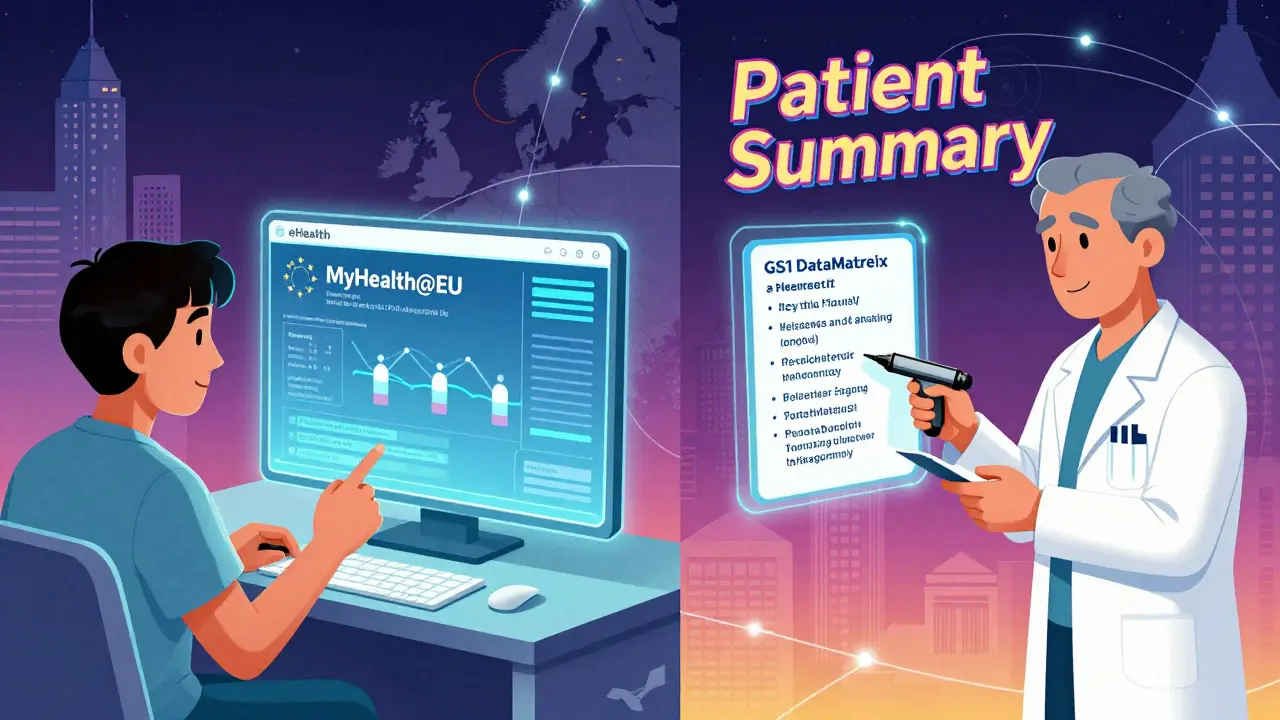
Regulation: A Patchwork of Rules
There’s a legal framework - Directive 2011/24/EU - that says you have the right to get medicine abroad. But each country implements it differently. Only eight EU countries have clear rules for how pharmacists should handle e-prescriptions from other nations. That means a pharmacy in Ireland might reject a prescription from a UK telehealth service - even if it looks legit - because UK prescriptions aren’t recognized under EU rules after Brexit. The same goes for prescriptions from non-EU countries like Switzerland or Norway, which have separate agreements. Italy made headlines in February 2025 by replacing old paper prescription stickers with GS1 DataMatrix codes - scannable barcodes that hold all the prescription data. Other countries are still using handwritten notes or PDFs. That creates confusion. A pharmacist in France might not know how to read an Italian code, and vice versa. And then there’s the issue of reimbursement. If you buy your meds in Spain, will your home insurance cover it? Sometimes. But you often have to pay upfront and file a claim later. The rules vary wildly. Some countries pay the full cost. Others only cover what they’d pay for the same drug at home. If the Spanish version costs more, you’re out of pocket.Why This Matters for Generic Drugs
Generic drugs are the backbone of affordable healthcare in the EU. They make up over 80% of prescriptions. Cross-border mobility lets patients access cheaper versions when their home country has shortages. For example, during the 2024 insulin shortage in France, patients in Germany were able to get supplies from Belgian pharmacies through the ePrescription system. The EU’s new Critical Medicines Act (2025) forces manufacturers to report supply issues in real time. That means if a generic drug runs out in one country, the system can flag alternatives from another. This isn’t just about convenience - it’s about saving lives. But here’s the problem: the market is uneven. Big e-pharmacies like those in Germany and Austria are integrated into national health systems. Smaller pharmacies, especially in Eastern Europe, lack the tech or training. The European Association of E-Pharmacies (EAEP) says without coordinated action, digital access will stay unequal. That’s why awareness is so low - only 38% of EU citizens know they can get meds abroad.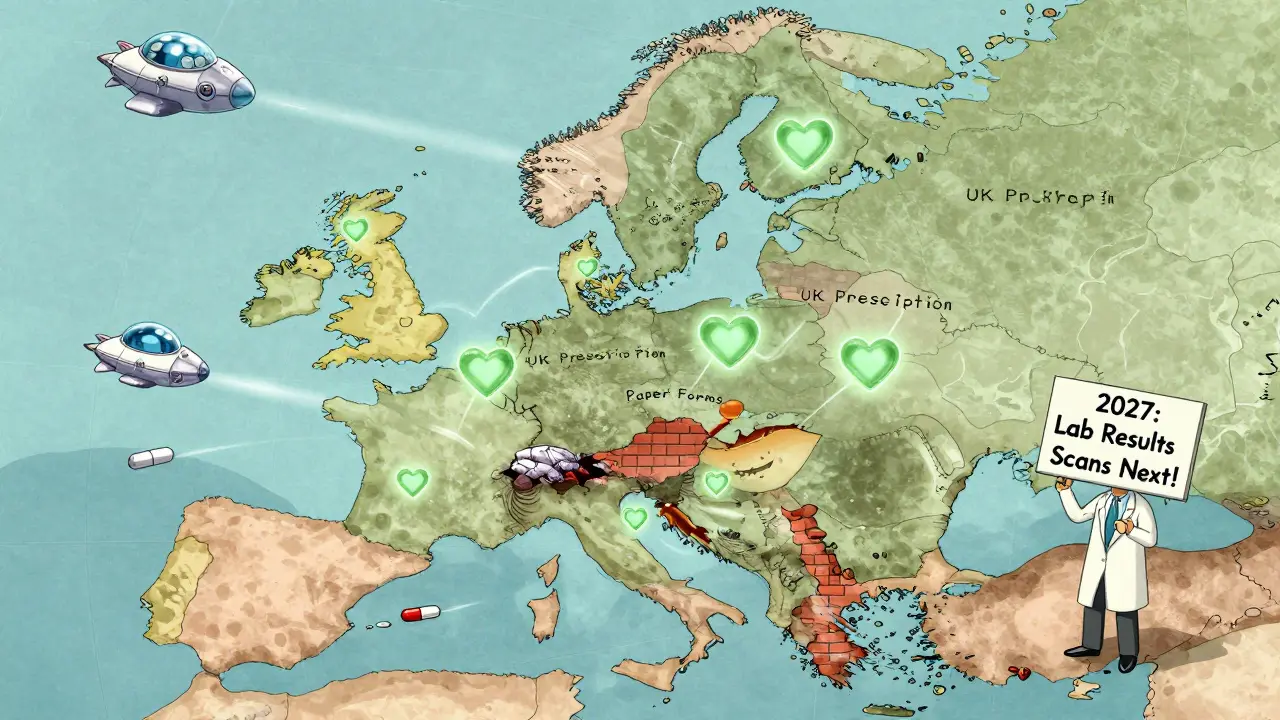
What You Need to Do to Use It
If you want to use cross-border pharmacy services, here’s what works:- Ask your doctor for an ePrescription - not a paper one. Make sure it’s issued through your national digital health system.
- Log into your country’s health portal (e.g., MyKela in Finland, eHealth in Estonia) and enable MyHealth@EU access for your destination country.
- Carry your national electronic ID card or mobile authentication app.
- When you arrive, go to a pharmacy that displays the EU cross-border symbol (a green cross with a heart).
- Ask if they can access your ePrescription via the EU network. If they say no, ask to speak to the pharmacist in charge - they’re the ones trained on the system.
What Doesn’t Work
Don’t try this:- Using a UK telehealth prescription in Ireland - it’s legally invalid.
- Buying meds online from a non-EU pharmacy - those aren’t covered by EU rules.
- Assuming your insurance will cover the full cost - always check with your provider first.
- Bringing a prescription from a non-EU country like the US or Australia - those won’t be accepted.
The Future: What’s Coming Next
By 2027, the EU plans to expand MyHealth@EU to include lab results, imaging scans, and hospital discharge summaries. That means your doctor in Sweden could see your MRI from a hospital in Poland - and adjust your meds accordingly. The goal is to reduce medication errors by 35% and cut chronic disease mismanagement by 2030, according to IQVIA. But that depends on political will. Right now, countries are still setting their own rules. Training for pharmacists is inconsistent. Awareness is low. And the system still feels like a patchwork quilt - beautiful in places, frayed in others. If you’re someone who travels often, manages a chronic condition, or relies on generics to stay healthy - this system is your secret weapon. But you have to know it exists. And you have to know how to use it.Can I get my prescription filled in another EU country if I’m just visiting?
Yes, if your prescription is issued electronically through your home country’s national system and you’ve granted consent via MyHealth@EU. You must have a valid EU electronic ID and visit a pharmacy that participates in the cross-border system. Not all pharmacies do - ask first.
Are all generic drugs available across borders?
No. Only generics that are legally approved and stocked in the country you’re visiting. Some countries restrict certain formulations or dosages. If your medication is specialized or has narrow therapeutic windows (like epilepsy drugs), check availability ahead of time.
Why won’t my UK prescription work in Ireland?
After Brexit, UK prescriptions are no longer recognized under EU law. Even if issued by a licensed doctor, Irish pharmacists are required to reject them unless they meet strict UK-specific criteria - which most telehealth prescriptions don’t. You must get a new prescription from an EU-based provider.
Do I need to pay upfront when buying meds abroad?
Usually yes. You pay the local price at the pharmacy and then apply for reimbursement from your home country’s health insurer. The amount you get back depends on your country’s rules - sometimes you’re reimbursed only up to what the same drug costs at home.
Can I use this system if I live near the border and work in another country?
Yes, and many people do. If you’re a cross-border worker, you can register with a pharmacy in your workplace country and have your home country’s prescriptions sent there. This is common in regions like Luxembourg-Belgium or Austria-Slovenia.
What if the pharmacy says the system is down?
Ask for a printed copy of your prescription (if your doctor provided one) and your Patient Summary. If you have no backup, the pharmacy may issue an emergency supply for up to 30 days, depending on local rules. Always carry a physical copy of your prescription as backup.
Is this service safe for my personal health data?
Yes. The system uses encrypted channels, requires your explicit consent for each access, and follows strict EU data protection rules under Regulation (EU) 2025/327. Your data isn’t stored in a central EU database - it stays in your home country’s system. Only the pharmacy you authorize can access what’s necessary to fill your prescription.

Amy Ehinger
So I just got back from a trip to Portugal and used this system to refill my thyroid med. Honestly? It was way easier than I expected. The pharmacist had a little green cross sticker on the window, asked for my digital ID, and within two minutes had my prescription pulled up. No translation issues, no questions asked. I was expecting chaos, but it felt like ordering coffee at a familiar café. The EU’s quiet little miracle is working.

Jan Hess
This is huge for people like me who travel for work. I’m in Spain every other month and my blood pressure med’s cheaper there. I used to stockpile pills before trips but now I just show up and grab what I need. No more panic when the bottle runs out. Seriously, if you’ve never tried it - do it. It’s not magic, it’s just good policy.

Nat Young
Let’s be real - this whole system is a propaganda stunt. The EU doesn’t care about patients, they care about control. Your health data flows through a centralized network they call ‘secure’ but we all know the bureaucrats can access it anytime. And don’t get me started on how they force you to opt-in manually - that’s not empowerment, it’s obfuscation. This isn’t freedom, it’s surveillance with a green cross.

Jami Reynolds
While the EU touts this as a triumph of interoperability, the reality is a fragmented, poorly implemented patchwork that undermines data sovereignty. The MyHealth@EU infrastructure, while technically elegant, relies on national systems that remain non-compliant in over half of member states. Furthermore, the requirement for explicit consent introduces a dangerous cognitive burden on patients - many of whom lack digital literacy - effectively disenfranchising the elderly and low-income populations. This is not healthcare innovation; it is bureaucratic theater dressed in digital aesthetics.

Crystel Ann
I know someone who had a seizure last year because their epilepsy med was switched out for a different generic in Italy and the pharmacy didn’t catch the filler difference. It’s amazing that this system exists, but please - if you have a condition that’s sensitive to tiny changes in medication, don’t risk it unless you’ve talked to your doctor first. Safety first, convenience second.

Niki Van den Bossche
How ironic that the EU, the very institution that birthed the concept of the ‘European soul,’ now reduces the sacred act of healing to a transactional data stream - a cold, algorithmic handshake between sovereign databases. We’ve turned the body’s vulnerability into a compliance checklist. Is this the apotheosis of neoliberal medicine? To be healed not by care, but by barcode? The green cross is not a symbol of solidarity - it’s the logo of a corporate-technocratic regime that mistakes accessibility for humanity.

Haley Graves
If you’re reading this and you’re on a chronic med - go to your national health portal right now and enable MyHealth@EU. It takes five minutes. Do it. Then tell three people you know. This system saves lives, but only if people know it exists. Stop assuming it’s too complicated. You’re capable. You’ve got this.

RUTH DE OLIVEIRA ALVES
It is imperative to underscore that the legal framework underpinning this system - Directive 2011/24/EU - remains fundamentally unenforced in several jurisdictions, particularly those with under-resourced primary care infrastructures. The disparity in implementation between Northern and Southern member states is not merely logistical; it is ethical. The right to cross-border pharmaceutical access, as codified in Union law, cannot be contingent upon the technological sophistication of one’s nation of origin. A patient in Cyprus deserves the same efficacy of service as a patient in the Netherlands. Until harmonization is achieved, the principle of solidarity remains aspirational rather than actualized.
Write a comment