Recent POST
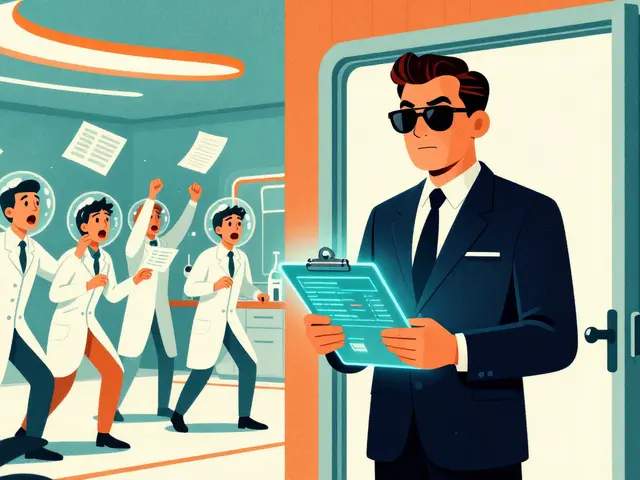

Ever lie awake at 3 a.m. because your back, joints, or nerves are screaming? And then the next day, the pain feels worse-like someone turned up the volume? You’re not imagining it. This isn’t just bad luck. It’s a biological loop: pain keeps you from sleeping, and lack of sleep makes your pain worse. It’s a cycle that traps millions, and it’s not going away unless you break it the right way.
How Pain Steals Your Sleep
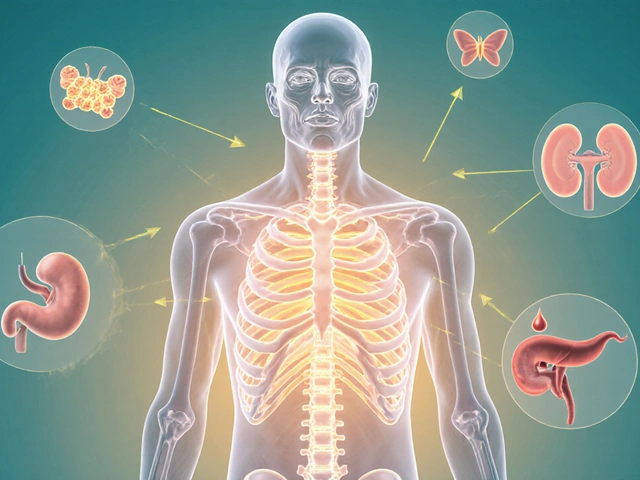
Chronic pain doesn’t just hurt. It hijacks your nervous system. When you’re in pain, your brain stays on high alert. Your body releases stress hormones like cortisol, which block the deep, restorative stages of sleep. You might fall asleep fine, but you wake up every 20 to 40 minutes-often without even realizing it. That’s called sleep fragmentation. People with chronic pain average 6.2 hours of sleep a night. Healthy adults get 7.1. That 50-minute gap adds up. Over weeks, it rewires how your brain processes pain. Studies show that after just one night of poor sleep, pain sensitivity jumps by 10 to 20%. That means a dull ache becomes sharp. A mild flare becomes unbearable. Your body’s natural painkillers-like endogenous opioids-drop by 30 to 40%. At the same time, inflammation spikes. Pro-inflammatory chemicals like IL-6 rise by 25 to 35%. You’re not just tired. You’re biologically primed to feel more pain.How Sleep Loss Makes Pain Worse
It’s not just that pain keeps you awake. The reverse is just as true: sleep loss turns up the dial on pain. Think of your brain like a thermostat. Normally, it keeps pain signals in check. But when you don’t sleep, that thermostat breaks. A 2023 study from Massachusetts General Hospital found that sleep deprivation shuts down the brain’s internal pain control system. Even mild stimuli-like a light touch or a chair pressing against your leg-can trigger real pain signals. That’s why some people wake up with pain they didn’t have the night before. Dopamine, the brain’s motivation and pain-regulating chemical, also drops by 20 to 30% after poor sleep. That’s why people with chronic pain often feel drained, unmotivated, and emotionally raw. It’s not just fatigue. It’s a chemical imbalance tied directly to sleep loss. And it’s why anxiety and depression climb alongside pain-40% more in those with both insomnia and chronic pain, compared to those with pain alone.The Numbers Don’t Lie
Here’s what the data says about this cycle:- 50 to 80% of people with chronic pain have serious sleep problems.
- People with insomnia but no pain have a 56% higher chance of developing chronic pain within five years.
- Chronic pain patients with insomnia report pain levels 35 to 45% higher than those who sleep well.
- They take 25 to 30 minutes longer to fall asleep and wake up 62 minutes per night on average-nearly double healthy adults.
- 54% of chronic pain patients meet the clinical diagnosis for insomnia disorder-compared to just 10 to 15% of the general population.
What Doesn’t Work
Over-the-counter sleep aids? They’re a trap. The Arthritis Foundation found that 72% of chronic pain sufferers try them. Only 35% get lasting relief. And 42% say the next-day grogginess makes their pain worse. Melatonin supplements? They help a little with sleep onset, but they don’t fix the brain’s pain-control system. Benzodiazepines or sleeping pills? They can be addictive and don’t improve pain-sometimes they make it worse by disrupting natural sleep architecture. Even strong pain meds like opioids can wreck sleep. They reduce deep sleep and increase light, restless stages. That’s why many patients end up on a cycle of taking more painkillers to cope with pain, which then makes sleep worse, which then makes pain worse.
The Only Treatment That Actually Breaks the Cycle
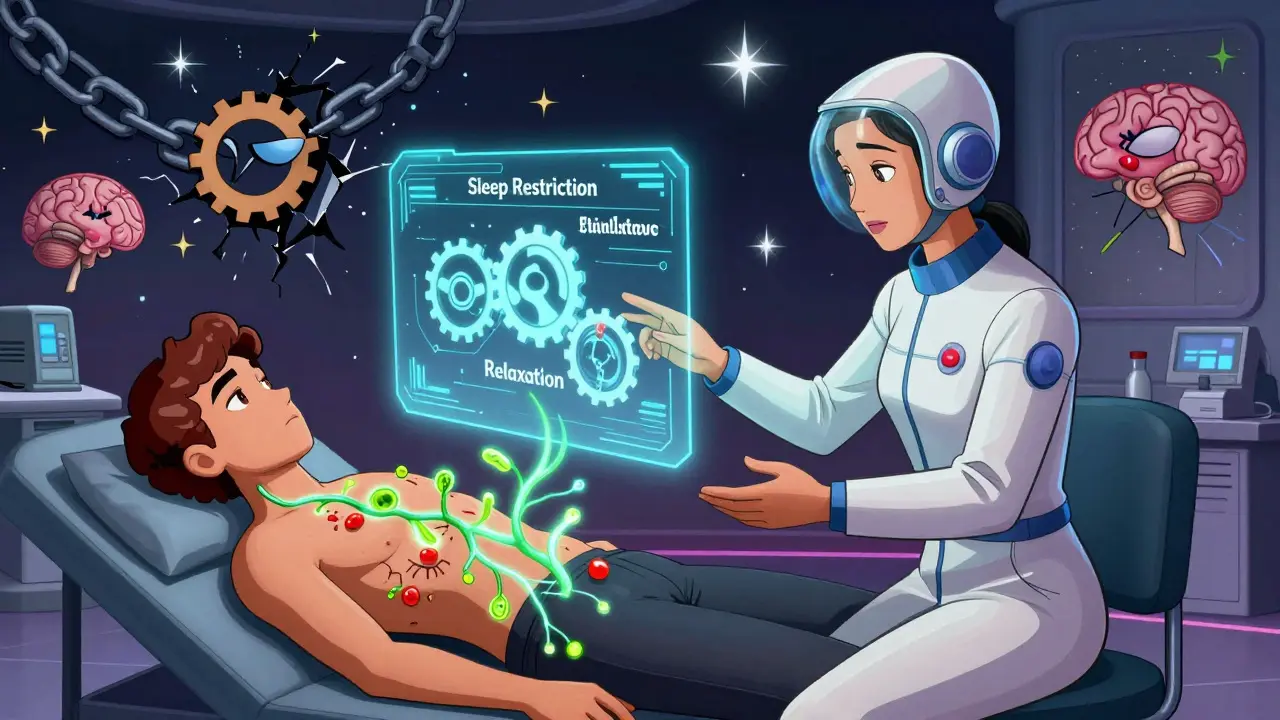
There’s one approach that’s been proven again and again to break this loop: Cognitive Behavioral Therapy for Insomnia (CBT-I). CBT-I isn’t about pills. It’s about rewiring your brain’s relationship with sleep. It’s structured, evidence-based, and delivered over 8 to 10 weekly sessions with a trained therapist. Here’s what it does:- Sleep restriction: You limit time in bed to match how much you actually sleep. This builds sleep pressure and makes sleep more efficient.
- Stimulus control: You only use your bed for sleep and sex. No scrolling, no watching TV, no lying there worrying. Your brain relearns: bed = sleep.
- Cognitive restructuring: You challenge thoughts like “I’ll never sleep again” or “If I don’t sleep, my pain will explode.” These thoughts keep you tense-and awake.
- Relaxation training: Techniques like diaphragmatic breathing and progressive muscle relaxation calm the nervous system.
What About New Medications?
There’s promising research on drugs targeting kappa opioid receptors. These are different from traditional opioids. They don’t cause addiction or respiratory depression. Early trials show 30 to 35% improvement in sleep quality and 25 to 30% reduction in pain for people with neuropathic pain. Phase 3 trials are underway, and FDA Fast Track designation is expected by mid-2024. But these aren’t available yet. And even when they are, they’ll work best alongside behavioral therapy-not instead of it.How to Start Breaking the Cycle Today
You don’t need to wait for a specialist or a new drug. Start here:- Track your sleep and pain for 14 days. Use a simple journal. Note: When you went to bed, how long it took to fall asleep, how many times you woke up, total sleep time, and your pain level on a scale of 1 to 10. This isn’t about perfection. It’s about spotting patterns.
- Use the Insomnia Severity Index (ISI). It’s a free 7-question tool. Score above 15? You have clinically significant insomnia. That means you need targeted help.
- Get out of bed if you’re awake for more than 20 minutes. Go to another room. Read under dim light. Don’t check your phone. Come back only when you’re sleepy.
- Stop caffeine after 2 p.m. Even if you think you’re “used to it,” caffeine blocks adenosine-the chemical that makes you sleepy. And adenosine also plays a role in pain signaling.
- Try a 10-minute breathing exercise before bed. Inhale for 4 counts, hold for 4, exhale for 6. Repeat. This activates your parasympathetic nervous system and lowers pain sensitivity.
When to Seek Help
If you’ve tried these steps for 3 to 4 weeks and your sleep hasn’t improved-or your pain is getting worse-it’s time to find a specialist. Look for a clinic that offers integrated pain and sleep care. Ask: “Do you have a certified CBT-I therapist on staff?” “Do you use sleep diaries and ISI scores to track progress?” Clinics that treat both pain and sleep together have patient satisfaction ratings of 4.7 out of 5. Those that treat pain alone? 3.2. The difference isn’t just in the treatment. It’s in the approach. One treats symptoms. The other treats the system.The Bigger Picture
This isn’t just about feeling better tomorrow. It’s about breaking a cycle that’s been silently worsening your health for years. Poor sleep and chronic pain together increase your risk of heart disease, diabetes, depression, and early mortality. Fixing one helps the other. And fixing both? That’s when real recovery begins. The science is clear. The tools exist. You don’t need to suffer in silence. Your brain can heal. Your sleep can return. And your pain? It can drop-not because you took another pill, but because you gave your body what it’s been begging for: rest.Can chronic pain cause insomnia, or does insomnia cause chronic pain?
It’s both. Chronic pain disrupts sleep by keeping your nervous system on high alert. At the same time, lack of sleep lowers your pain threshold, making existing pain feel worse and even triggering new pain. This creates a loop where each condition feeds the other. Research shows people with insomnia but no prior pain have a 56% higher risk of developing chronic pain within five years.
Is melatonin helpful for pain-related insomnia?
Melatonin may help you fall asleep faster, but it doesn’t fix the deeper issue: your brain’s broken pain-control system. It doesn’t restore deep sleep or reduce inflammation caused by sleep loss. For chronic pain, melatonin alone isn’t enough. It’s a band-aid, not a cure.
Why do painkillers sometimes make sleep worse?
Many pain medications, especially opioids and NSAIDs, disrupt sleep architecture. They reduce deep (slow-wave) sleep and increase light, fragmented sleep. Some also cause nighttime awakenings due to side effects like restlessness or frequent urination. Over time, this makes your body less able to recover, which worsens pain sensitivity.
How long does CBT-I take to work for pain-related insomnia?
Most people see improvements in sleep within 2 to 4 weeks. By the end of the full 8 to 10 sessions, 65 to 75% report major improvements in sleep quality. Pain reduction usually follows-often by 30 to 40%-as the brain’s natural pain control systems recover with better sleep.
Can I do CBT-I online?
Yes. Digital platforms like Sleepio and SHUTi have shown 60 to 65% effectiveness in chronic pain patients. But completion rates are lower than in-person therapy-only about 55% finish the full program. For best results, combine digital tools with occasional check-ins from a certified therapist.
What’s the biggest mistake people make when trying to sleep with chronic pain?
Staying in bed too long when they can’t sleep. Lying there for hours, worrying about pain or sleep, trains your brain to associate the bed with stress-not rest. The fix? Get up after 20 minutes of wakefulness. Go to another room, do something calm and quiet, and only return when sleepy.
Are there any new treatments on the horizon?
Yes. Researchers are developing kappa opioid receptor modulators that improve both sleep and pain without addiction risk. Phase 2 trials show 30%+ improvement in sleep quality and 25%+ reduction in pain. These are expected to enter phase 3 trials soon, with possible FDA approval by 2026. But even these will work best paired with behavioral therapy like CBT-I.
What to Do Next
Start tonight. Write down your sleep and pain for the next two weeks. Don’t judge. Just observe. Then, if you’re seeing patterns-like worse pain after nights with less than 6 hours of sleep-reach out to a provider who treats sleep and pain together. You don’t have to wait for a miracle drug. The solution is already here. It just takes one step: choosing to break the cycle.
Christina Bischof
Been there. Lying there at 3 a.m. with my sciatica screaming like a banshee. No pills helped. Just got up, sat in the kitchen with a warm tea, and breathed. Didn't sleep much that night, but the next day? Pain was lower. Weird, right?

Lisa Davies
This is so true 💗 I used to think I just needed more painkillers. Then I tried CBT-I and it was like my body finally got a break. Not magic. Just science. And it works. 🌱

Nupur Vimal
You people are overcomplicating this. Just take melatonin and stop being weak. I've had back pain for 15 years and I sleep fine. You just need discipline.

Mike Nordby
While the anecdotal evidence for CBT-I is compelling, the longitudinal studies on pain reduction remain limited in sample size. The mechanism by which sleep efficiency directly modulates endogenous opioid release requires further neuroimaging validation. That said, the correlation is statistically significant and clinically meaningful.

Melissa Taylor
Thank you for writing this. I’ve been trying to explain this cycle to my doctor for years. They keep pushing me toward stronger meds. I’m starting CBT-I next week. Fingers crossed.

John Samuel
As a former physical therapist turned sleep researcher, I can attest: the bidirectional neurobiological feedback loop between nociception and sleep architecture is one of the most underappreciated phenomena in chronic pain management. The suppression of slow-wave sleep via cortisol dysregulation creates a cascade effect-reduced glymphatic clearance, amplified glial activation, and downregulated mu-opioid receptor sensitivity. CBT-I doesn’t just ‘help’-it resets the autonomic nervous system’s baseline. It’s neuroplasticity in action.
And yes, digital platforms like Sleepio show promise, but the dropout rate reflects a deeper issue: the human element. A therapist’s tone, pacing, and nonverbal validation activate the ventromedial prefrontal cortex in ways an algorithm never can. That’s why I always pair digital tools with biweekly check-ins.
For those skeptical of ‘talk therapy’-this isn’t therapy in the Freudian sense. It’s behavioral engineering. Sleep restriction isn’t deprivation; it’s precision recalibration. Stimulus control? It’s classical conditioning for the modern age.
And let’s be blunt: opioids don’t treat pain. They mask it while sabotaging the very systems that could heal it. The data is irrefutable: opioid use correlates with reduced REM latency and increased stage 1 sleep. You’re not sleeping-you’re sedated.
That 56% increased risk of developing chronic pain after insomnia? It’s not a coincidence. It’s a warning. Your brain isn’t broken. It’s overwhelmed. And rest isn’t luxury-it’s the most potent analgesic we’ve got.
Start tracking. Start small. One 10-minute breathwork session. One night out of bed after 20 minutes. One less cup of coffee after 2 p.m. These aren’t hacks. They’re acts of radical self-respect.
And if you’re reading this at 3 a.m.? Put the phone down. Go sit in the dark. Breathe. You’re not failing. You’re healing.

Raj Kumar
bro i tried the 20 min rule and it worked but only cuz i started reading physical books not my phone. my brain finally stopped linking bed with stress. also caffeine after 2pm? yeah i thought i was immune but nope. my pain spiked every morning after that 4pm espresso. real talk.

John Brown
Man, I wish I’d known this 10 years ago. I wasted so much money on gimmicky mattresses and ‘pain relief’ creams. The only thing that changed my life? Getting up when I couldn’t sleep. Sounds dumb, but it worked. My wife even started doing it with me. Now we both sleep better. No pills. Just quiet.

Michelle M
There’s something poetic about this-the body screaming for rest, and the mind mistaking stillness for failure. We’re taught to push through pain, to grind, to endure. But what if the bravest thing isn’t enduring? What if it’s surrendering to the rhythm your nervous system is begging you to follow? Sleep isn’t passive. It’s the most active form of healing we have.
And maybe the real enemy isn’t the pain. It’s the story we tell ourselves-that we’re broken because we can’t sleep. But you’re not broken. You’re recalibrating.

Jocelyn Lachapelle
Just wanted to say thank you for sharing this. I’m from a small town in Texas and no one here talks about sleep like this. My mom has arthritis and she’s been on pills for 12 years. I’m printing this out for her. Maybe it’ll be the push she needs.

Cassie Henriques
CBT-I sounds great but what about the cost? Most insurers won’t cover it unless you’ve tried 3 meds first. And finding a certified therapist in rural areas? Good luck. Digital tools are the only realistic option for most. The 55% completion rate? That’s still better than the 12% adherence to nightly opioids.

Jake Sinatra
The data presented here is methodologically sound and aligns with the latest meta-analyses from the Journal of Pain and Sleep Medicine. However, I must emphasize that individual variability in neurochemical response remains significant. While CBT-I demonstrates group-level efficacy, personalized biomarker-guided interventions (e.g., cortisol rhythm analysis, HRV monitoring) may soon enhance outcome prediction. Until then, the framework outlined here remains the gold standard.

Sai Nguyen
Why are you all so soft? In India we just endure. Pain is life. Sleep is for the weak. Take a pill and move on.
Write a comment