Recent POST

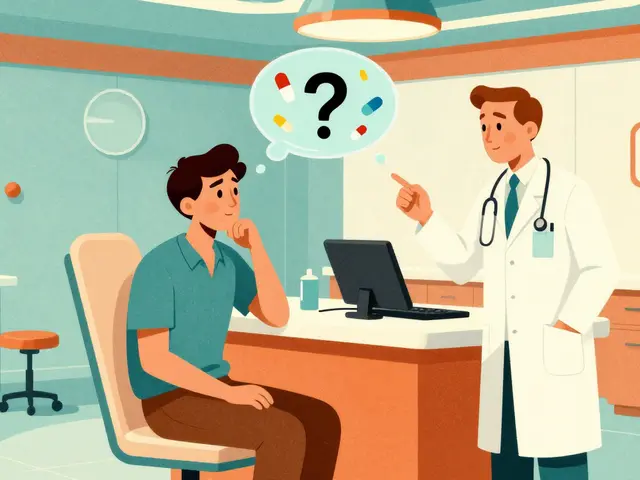

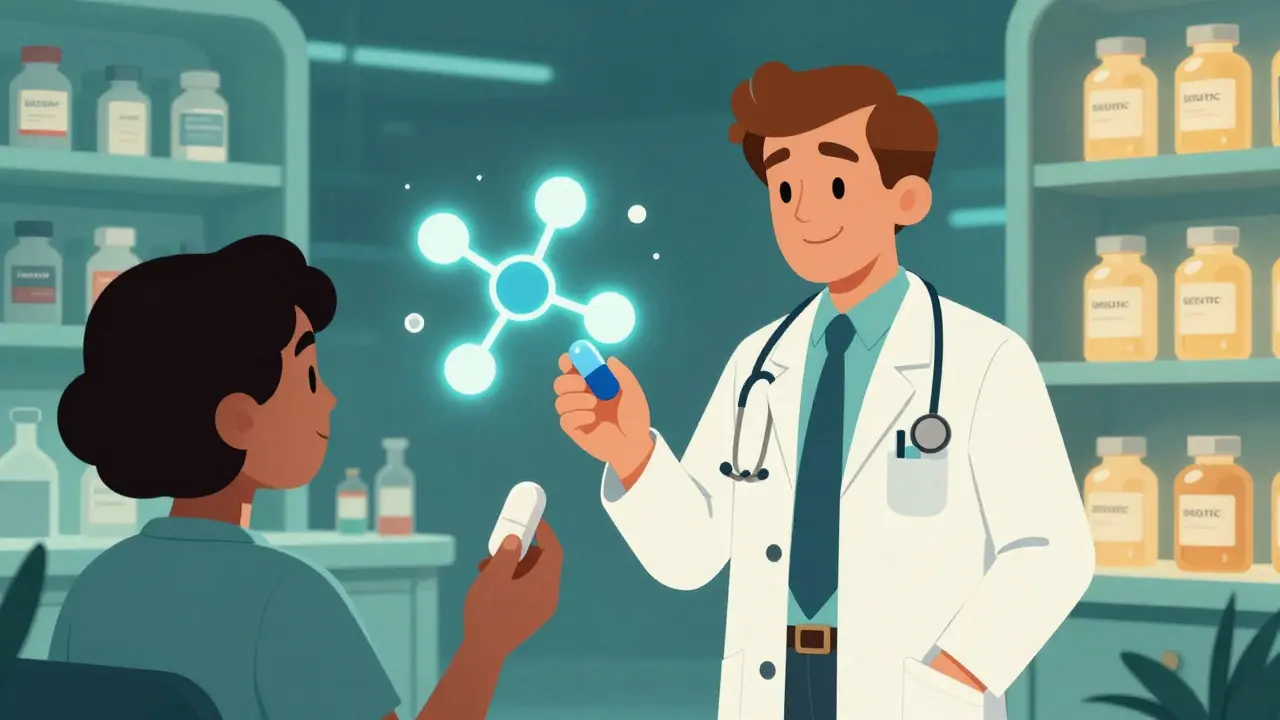
When a patient picks up a prescription and sees a pill that looks completely different from what they’ve taken before, it’s natural to wonder: Is this really the same medicine? As a provider, you’re not just handing out a prescription-you’re managing trust. And trust starts with how you talk about generic drugs.
Generics aren’t cheap knockoffs. They’re FDA-approved copies of brand-name drugs that contain the exact same active ingredient, in the same strength, and work the same way in the body. The difference? They cost 80-85% less. In 2023, generics made up 90% of all prescriptions filled in the U.S., but saved only 23% of total drug spending. That means they’re not just common-they’re essential to keeping care affordable.
Why Patients Doubt Generics (Even When They Shouldn’t)
Let’s be honest: patients aren’t irrational for being suspicious. A blue pill becomes a white pill. A capsule turns into a tablet. The label says “rosuvastatin” instead of “Crestor.” To someone who’s been told their health depends on taking the right medicine, that change feels risky.
Research shows 28% of patients worry about switching from brand to generic. One in six actually stop taking their medication after the switch. Why? Because they think it’s weaker. Or less safe. Or just “not the same.”
Here’s the truth: the FDA requires generics to meet the same standards as brand-name drugs. The active ingredient must deliver the same amount of medicine into the bloodstream within the same time frame. The bioequivalence range? 80-125% of the brand. That’s not a guess-it’s science. And it’s backed by 47 studies involving over 9,000 patients, which found no meaningful difference in effectiveness for heart medications.
But patients don’t read FDA reports. They read Reddit threads. They hear stories. “My cousin took the generic for levothyroxine and felt awful.” Or: “The last generic made me dizzy.” These aren’t myths-they’re real experiences. And they matter.
The TELL Framework: A Simple Way to Build Trust
There’s no one-size-fits-all script. But there’s a proven method: TELL.
- Tell them the generic has the same active ingredient. Say it clearly: “This pill has the same medicine in it as your old one.”
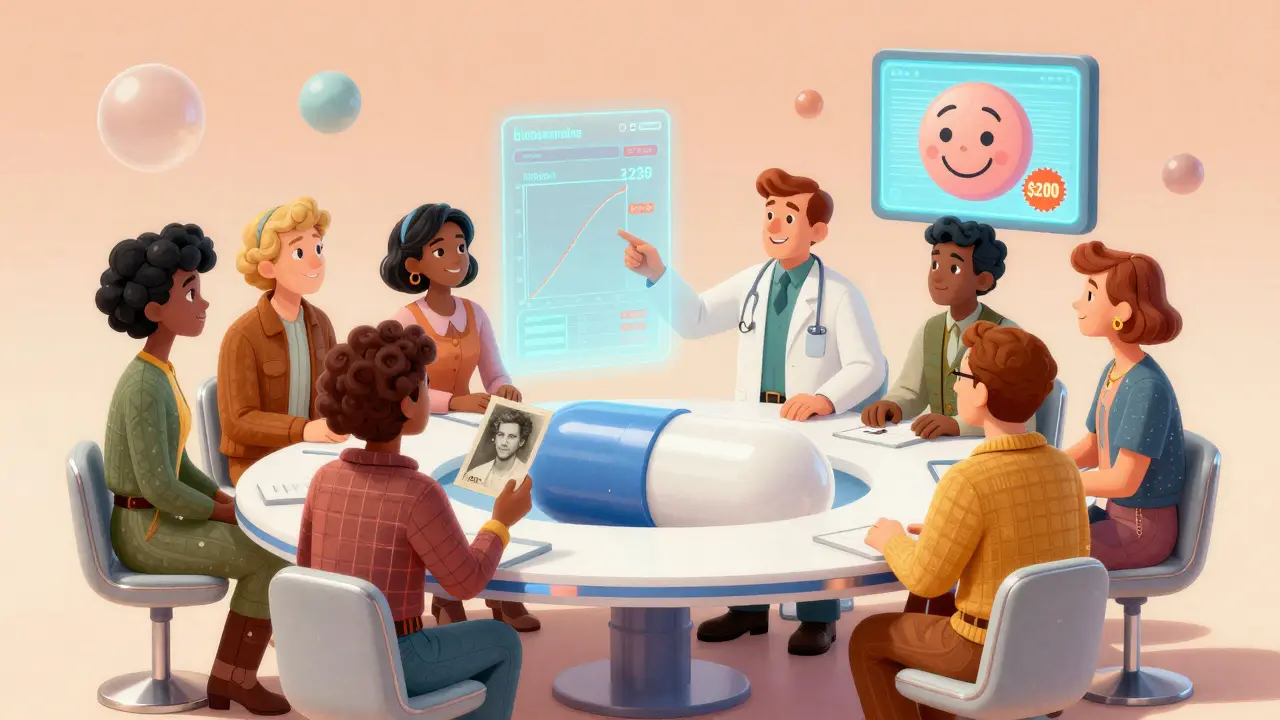
- Explain why it looks different. “Trademark laws don’t let generic makers copy the color or shape. That’s why it’s white instead of blue. But the medicine inside? Identical.”
- Listen. Don’t interrupt. Ask: “What are you most worried about?” Maybe it’s cost. Maybe it’s a bad experience last time. Let them say it.
- Link it to their goals. “I know you want to avoid hospital visits. This generic saves you $200 a month. That’s money you can use for groceries, transportation, or your next checkup.”
This isn’t a sales pitch. It’s a conversation. And it takes three to five minutes. But those minutes reduce refill delays, prevent drops in adherence, and cut down on follow-up calls.
What to Say When They Ask the Hard Questions
Patients will ask the same things over and over. Be ready.
“Is this really the same medicine?”
Yes. Same active ingredient. Same dose. Same way it works. Different fillers-like dyes or binders-that don’t affect how the medicine works.
“Why does it look different?”
Brand-name companies own the color, shape, and logo. The law says generics can’t copy them. But the medicine? Exactly the same.
“Is it as strong?”
The FDA requires generics to be just as strong. In fact, they’re tested to make sure they release the same amount of medicine into your blood-within a very tight range.
“I had a bad reaction to a different generic before.”
That’s important. Some people react to inactive ingredients-like a dye or preservative-not the medicine itself. Let’s note that. If we switch again, we’ll pick one without that ingredient.
Using the “teach-back” method helps. Ask: “Can you tell me in your own words why this generic is safe?” If they can explain it, they’re more likely to take it.
What Providers Often Miss
Most providers assume patients understand generics. They don’t. And they rarely ask.
Pharmacists are the ones who actually talk to patients most often-67% of patients get their generic info from their pharmacist, not their doctor. But even pharmacists need training. Programs like APhA’s “Communicating with Patients about Generics” have shown a 65% increase in provider confidence after just four hours of instruction.
Also, don’t assume all generics are equal. Some drugs, like levothyroxine or warfarin, have narrow therapeutic windows. Small changes in absorption can matter. That’s why the FDA requires extra scrutiny for these. If a patient switches between multiple generic makers, monitor them closely. Not because generics are unsafe-but because consistency helps.
And here’s something else: authorized generics exist. These are made by the original brand-name company, just sold under a generic label. They look and taste exactly like the brand. If a patient is resistant, offering an authorized generic can be a bridge. Thirty-seven percent of top-selling brand drugs now have them.
Cost Isn’t Just a Number-It’s a Lifeline
For many patients, the difference between brand and generic is the difference between taking their medicine and not.
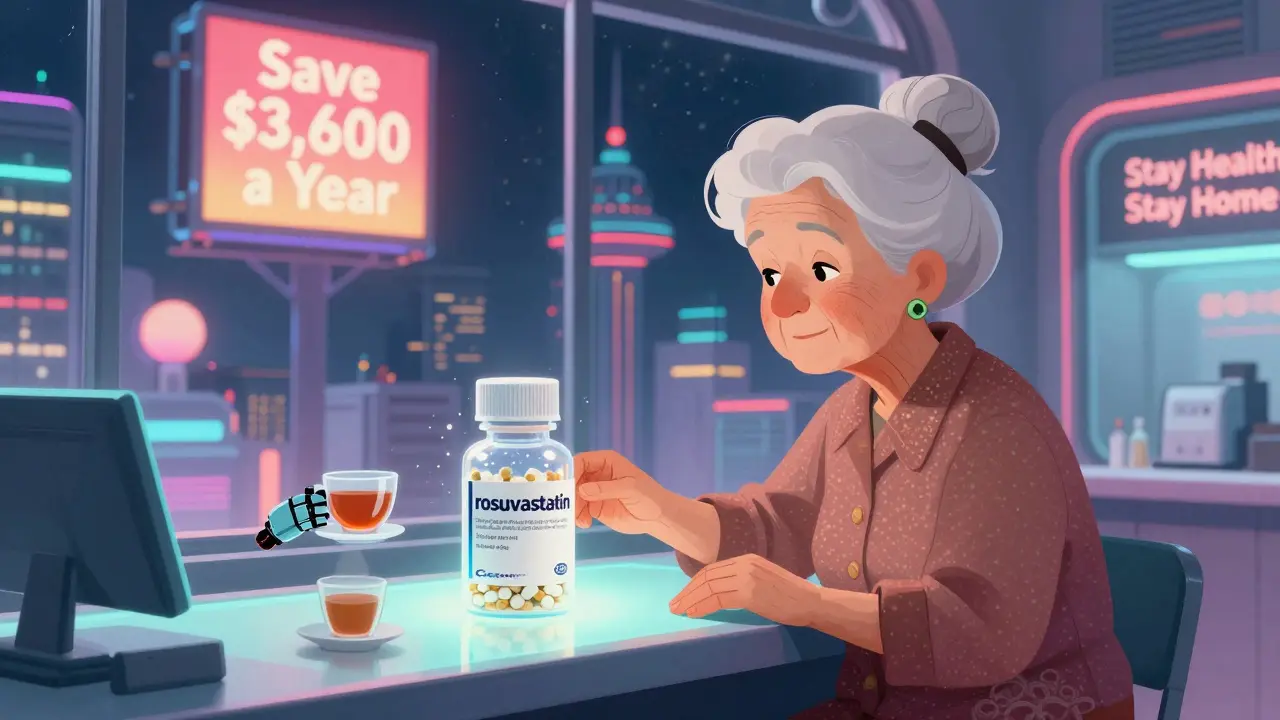
A Medicare patient switched from brand-name Crestor to generic rosuvastatin and saved $300 a month. That’s not a “nice-to-have.” That’s $3,600 a year for rent, food, or gas. One study found that 78% of patients who got a clear explanation about generics were highly satisfied. Only 42% of those who got a quick “It’s fine” were.
Generics saved the U.S. healthcare system $373 billion last year. But that number means nothing to someone choosing between pills and groceries. When you explain the cost savings in real terms-“This will cut your monthly copay in half”-you’re not just talking about drugs. You’re talking about stability.
What’s Next? The Future of Generics
The FDA is now funding video-based patient education tools. Early results show combining video with a quick conversation boosts patient acceptance by 31%. That’s huge. And it’s coming to clinics soon.
Biosimilars-the next wave of complex generics for biologic drugs like insulin or rheumatoid arthritis treatments-are entering the market. They’re not exact copies. They’re highly similar. And they’ll need even more thoughtful communication. The FDA has approved 43 biosimilars as of late 2023. Providers will need to explain how they’re different from traditional generics.
Meanwhile, the Congressional Budget Office predicts generics will save $1.7 trillion over the next decade. That’s not policy jargon. That’s millions of people who can afford to stay on their meds.
Final Thought: Your Words Matter More Than You Think
It’s easy to think, “They’ll figure it out.” But they won’t. Not unless you say it.
Patients don’t need a lecture. They need clarity. A moment of reassurance. A reason to trust.
When you take five minutes to explain, listen, and connect the medicine to their life-you’re not just filling a prescription. You’re helping them stay healthy. And that’s what this whole thing is for.

Skilken Awe
So let me get this straight - we’re celebrating generics like they’re some kind of healthcare miracle, but the FDA’s bioequivalence range is 80-125%? That’s a 45% swing. My blood pressure med could be 20% weaker or 25% stronger and we’re calling that ‘identical’? This isn’t science - it’s a spreadsheet fantasy. And don’t even get me started on the ‘inactive ingredients’ that cause real reactions. You think a patient doesn’t notice when their skin breaks out or their anxiety spikes after a switch? Nah, they’re just being drama queens. 😏

steve sunio
lol so the doc says 'same medicine' but the pill looks diff and costs less so obviously its fake. i mean cmon. my cousin took generic lisinopril and started hallucinating. he thought his cat was talking. the pharmacy said 'its just the fillers' like thats a thing. also why is this even a conversation? just give em the brand. if they cant afford it they shouldnt be on meds. simple.

athmaja biju
In India, we’ve been using generics for decades - and our healthcare system still functions. Why? Because we don’t treat medicine like a luxury brand. The FDA’s standards are laughably lenient, but at least they exist. In the U.S., you’ve turned pills into status symbols. Crestor isn’t medicine - it’s a lifestyle accessory. When your neighbor takes a blue pill and you take a white one, you don’t feel equal. You feel inferior. And that’s not a pharmacological issue - it’s a cultural one. We need to stop selling pills and start selling dignity.

Neha Motiwala
I’ve seen this before. My sister switched to generic levothyroxine and her TSH went from 2.1 to 8.7 in three weeks. She went from feeling fine to being too tired to get out of bed. The pharmacist said 'it’s within range' - but what range? The range where people still feel like zombies? I’m not saying generics are bad - I’m saying the system is rigged. The FDA doesn’t test long-term effects. They test blood levels for 14 days. What about the person who takes it for 10 years? What about the cumulative effect of different fillers? No one asks. No one cares.

Robert Petersen
This is such a needed conversation. I’ve had patients cry because they couldn’t afford their brand, then light up when I explained the generic would save them $200/month - money they could use to take their kid to a baseball game. One woman told me, 'I’ve been taking this for 12 years. I thought I was losing my mind when the pill changed.' I just said, 'It’s the same medicine. Just in different clothes.' She laughed. Then she hugged me. That’s the power of clarity. We’re not just prescribing pills. We’re giving people back control. And that’s worth five minutes of your time.

Craig Staszak
Generics are the unsung heroes of modern medicine and we’re overcomplicating this. The science is solid. The savings are real. The fear? Mostly from marketing. Brand names spent billions convincing people that color = quality. It’s nonsense. I tell patients: 'If your insulin works, your blood pressure is stable, and your cholesterol is down - then the pill works. Doesn’t matter if it’s blue white or polka-dotted.' Stop the panic. Start the conversation. And for god’s sake - stop treating patients like they’re clueless.

alex clo
The TELL framework is a commendable approach, and I would argue that it aligns closely with principles of patient-centered care as outlined in the Institute of Medicine’s 2001 report. The emphasis on active listening and teach-back methodology is not merely pedagogical - it is evidence-based behavioral intervention. Furthermore, the integration of pharmacist-led education, as referenced by APhA, represents a critical expansion of the interprofessional care model. One might consider formalizing this into EHR prompts to ensure consistency across care settings.

Alyssa Williams
I had a patient last week who refused generics because she said the 'white pill made her feel like she was dying.' Turns out she was terrified because the last time she switched, she had a panic attack. We talked. We found out she was allergic to the dye. Switched to a different generic. She’s been stable for 3 months. No drama. No panic. Just a good conversation. That’s all it takes. Stop overthinking it. Just talk to people.

Ernie Simsek
Bro. The FDA doesn’t even test for long-term effects. They test for 14 days. That’s it. 14 days. And we’re calling this 'science'? I’ve seen people get sick from generic fillers - corn starch, lactose, dyes - and then get blamed for 'non-compliance.' Meanwhile, Big Pharma is making billions off authorized generics while pretending they care. 🤡 The system is rigged. You think your 'five-minute talk' fixes that? Nah. It just makes you feel good. Meanwhile, people are still choosing between pills and rent.

Joanne Tan
I’m a pharmacist and I can tell you - the real issue isn’t the medicine. It’s the packaging. Patients see a different color, different shape, different label - and they panic. We need to give them a little card that says: 'Same medicine. Different look. Saved you $187 this month.' Simple. Visual. No jargon. And we need to train pharmacists to do this. Not just hand out the bottle and say 'take as directed.' We’re the frontline. Let’s own it.

Reggie McIntyre
Generics are the quiet revolution nobody talks about. Imagine if every time you bought a new phone, you got the exact same processor, same battery life, same software - but it came in a plain box with no logo and cost half as much. You’d think it was genius. But with medicine? We act like it’s a scam. We’ve been conditioned to equate price with quality. That’s not science - that’s advertising. And the real win isn’t just the $373 billion saved. It’s the mom who can afford to feed her kids. The veteran who can keep his heart meds. The student who doesn’t have to skip doses to pay rent. This isn’t about pills. It’s about dignity. And we’re finally starting to see it.
Write a comment