Recent POST



Respiratory Risk Calculator
Assess Your Medication Risk
This tool evaluates your risk of respiratory depression when taking gabapentinoids (like gabapentin or pregabalin) with opioids. Based on FDA guidelines and clinical research.
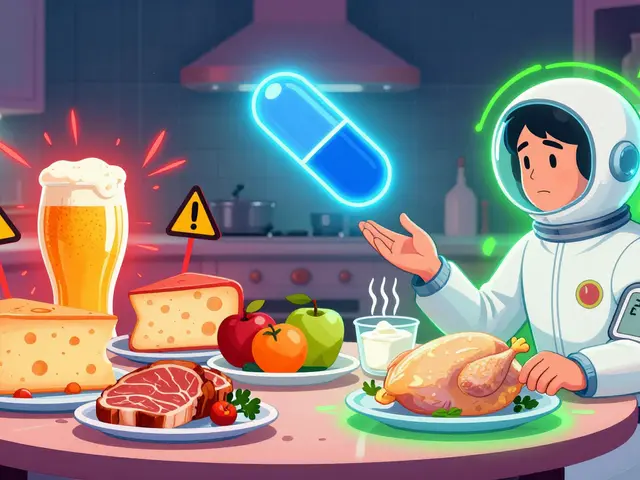
When you take gabapentin or pregabalin for nerve pain, and your doctor adds an opioid like oxycodone or hydrocodone for extra relief, you might think you’re getting better pain control. But what you’re really doing is stacking two drugs that can slow your breathing-sometimes to a deadly stop. This isn’t a rare side effect. It’s a well-documented, life-threatening interaction that’s happening more often than you realize.
What Are Gabapentinoids?
Gabapentin (Neurontin, Gralise) and pregabalin (Lyrica) are called gabapentinoids. They were originally developed for epilepsy but are now widely prescribed for neuropathic pain-like diabetic nerve pain, shingles pain, or spinal cord injuries. They’re not opioids. They don’t bind to the same brain receptors. But they still depress the central nervous system. And when paired with opioids, the effect isn’t just added-it’s amplified.
Even on their own, gabapentinoids can cause breathing problems. A 2017 study found that healthy volunteers taking a single dose of gabapentin had significantly more apnea episodes during sleep than those on placebo. That’s not a fluke. The U.S. Food and Drug Administration (FDA) reviewed over 49 cases of respiratory depression linked to gabapentinoids between 2012 and 2017. In 92% of those cases, the person was either taking another CNS depressant-like an opioid-or had a pre-existing breathing condition. And 24% of those cases ended in death.
Why Does This Combination Kill?
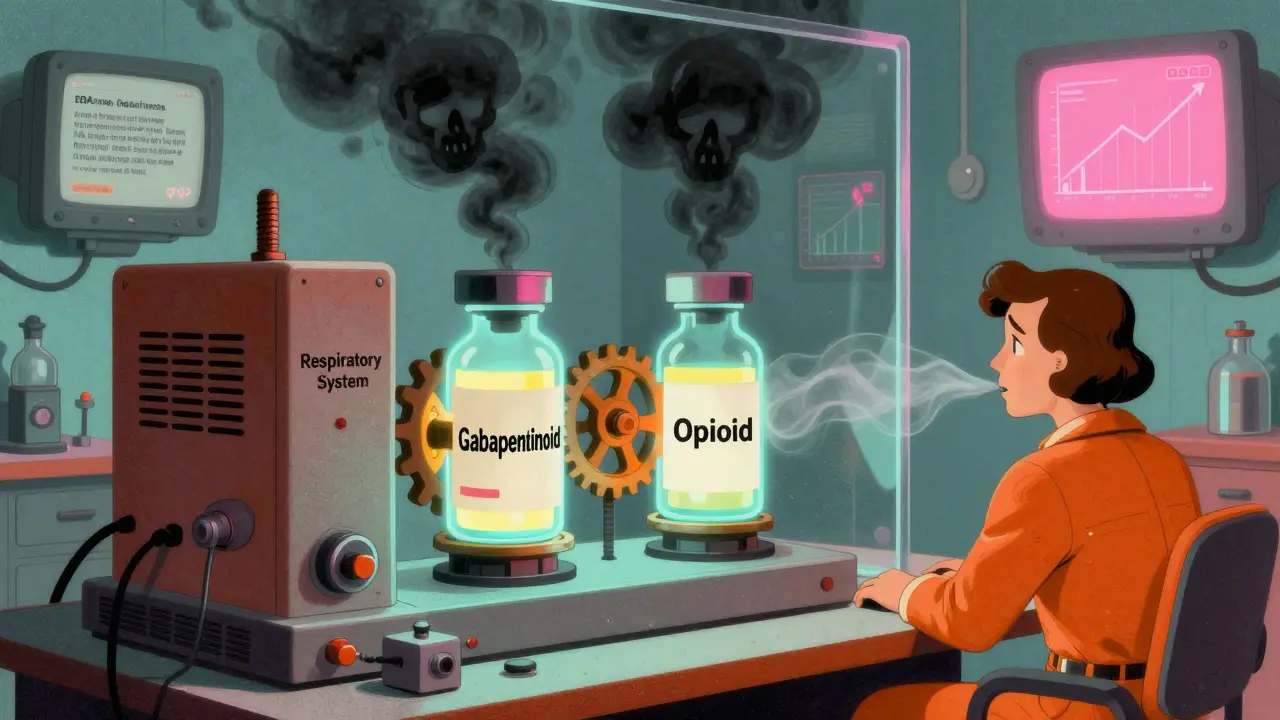
Think of your breathing as a machine with two controls: one for speed, one for depth. Opioids hit the speed control. Gabapentinoids hit the depth control. Together, they don’t just slow you down-they shut the machine off.
Research from the University of California showed that when healthy volunteers received both pregabalin and remifentanil (a powerful opioid), their end-tidal CO2 levels rose sharply. That means their lungs weren’t expelling carbon dioxide properly. Their bodies were suffocating from the inside, even while they were awake.
And here’s the scary part: gabapentinoids can reverse opioid tolerance. If someone’s been on opioids for months and built up resistance, adding gabapentin can suddenly make them sensitive again. A dose they used to handle just fine now becomes dangerous. This isn’t theoretical. It’s been seen in real patients who overdosed after starting gabapentin-even when their opioid dose hadn’t changed.
The Numbers Don’t Lie
A landmark 2017 study in PLOS Medicine tracked more than 16 years of prescription data. It found that about 8% of people on opioids were also prescribed gabapentin. And those patients had a 50% higher risk of dying from an opioid-related cause. For those on high doses of gabapentin? The risk nearly doubled-up to 98% higher.
That’s not a small number. In Australia alone, over 100,000 people are prescribed gabapentinoids each year. If even 10% of them are also on opioids, we’re talking about 10,000 people at increased risk of respiratory failure. And this isn’t just happening in hospitals. It’s happening in primary care clinics, pain management centers, and even through telehealth prescriptions.
Who’s Most at Risk?
It’s not just about the drugs. It’s about who’s taking them.
- People over 65: Aging lungs don’t work as well. The body clears these drugs slower. Even low doses can be dangerous.
- People with COPD, sleep apnea, or asthma: Their breathing is already compromised. Adding a CNS depressant is like turning off the safety valve.
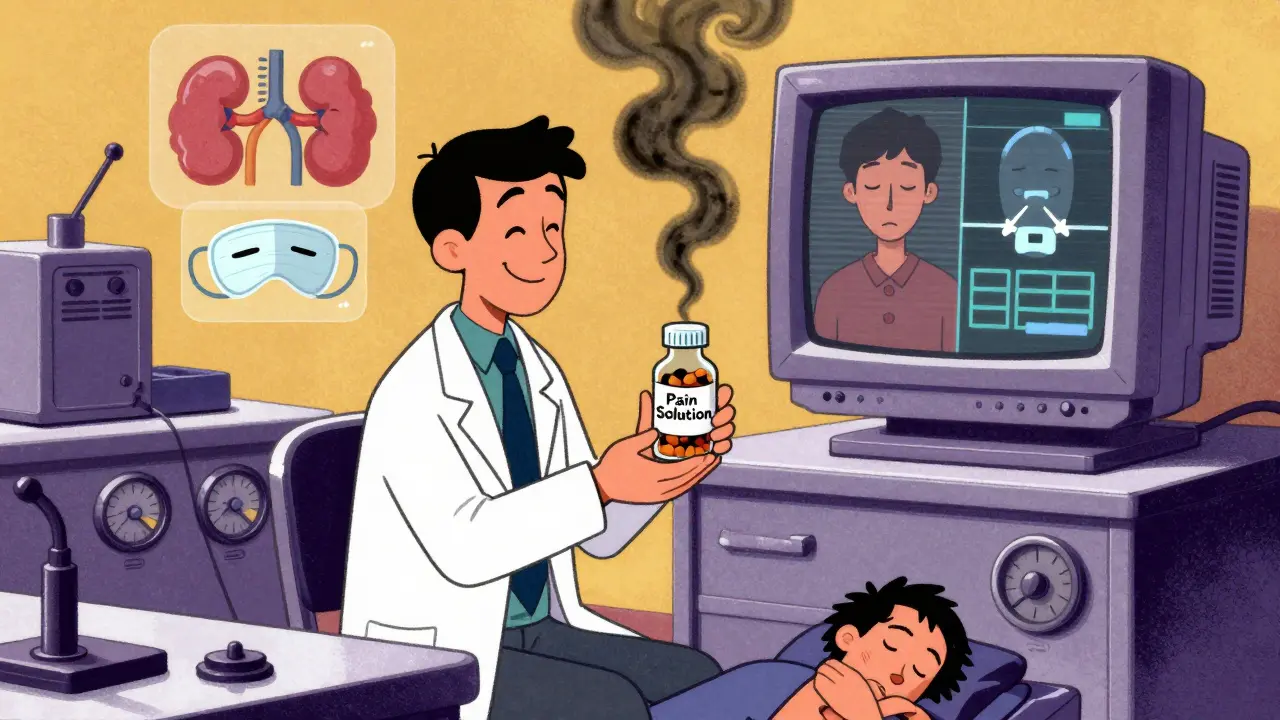
- People with kidney problems: Gabapentin and pregabalin are cleared by the kidneys. If your creatinine clearance is below 60 mL/min, you need a lower dose. Many doctors don’t check this.
- Post-surgery patients: A 2020 study of over 5.5 million surgical patients found that respiratory depression rates jumped to 72% in general surgery when gabapentinoids were added to opioids-even though the pain relief benefit was unclear.
And here’s the worst part: many patients don’t know they’re at risk. They’re told, “This will help with your pain,” and they take it. No one says, “This could stop your breathing.”
Why Are Doctors Still Prescribing This Combo?
Because they were told to avoid opioids.
In 2016, the CDC released guidelines urging doctors to reduce opioid prescriptions. Many responded by turning to gabapentinoids as “safer” alternatives. But instead of replacing opioids, they were often added on top. A 2017 review found that 24.1% of new pregabalin prescriptions came with a concurrent opioid prescription. That’s one in four.
The goal was to reduce opioid use. The result? More people on both drugs-with no real improvement in pain control. A 2020 JAMA Network Open analysis concluded there’s “no real support” that gabapentinoids improve pain relief when combined with opioids. So why do it? Because it’s easy. Because it’s familiar. Because no one stopped to ask: Is this actually helping-or just putting people in danger?
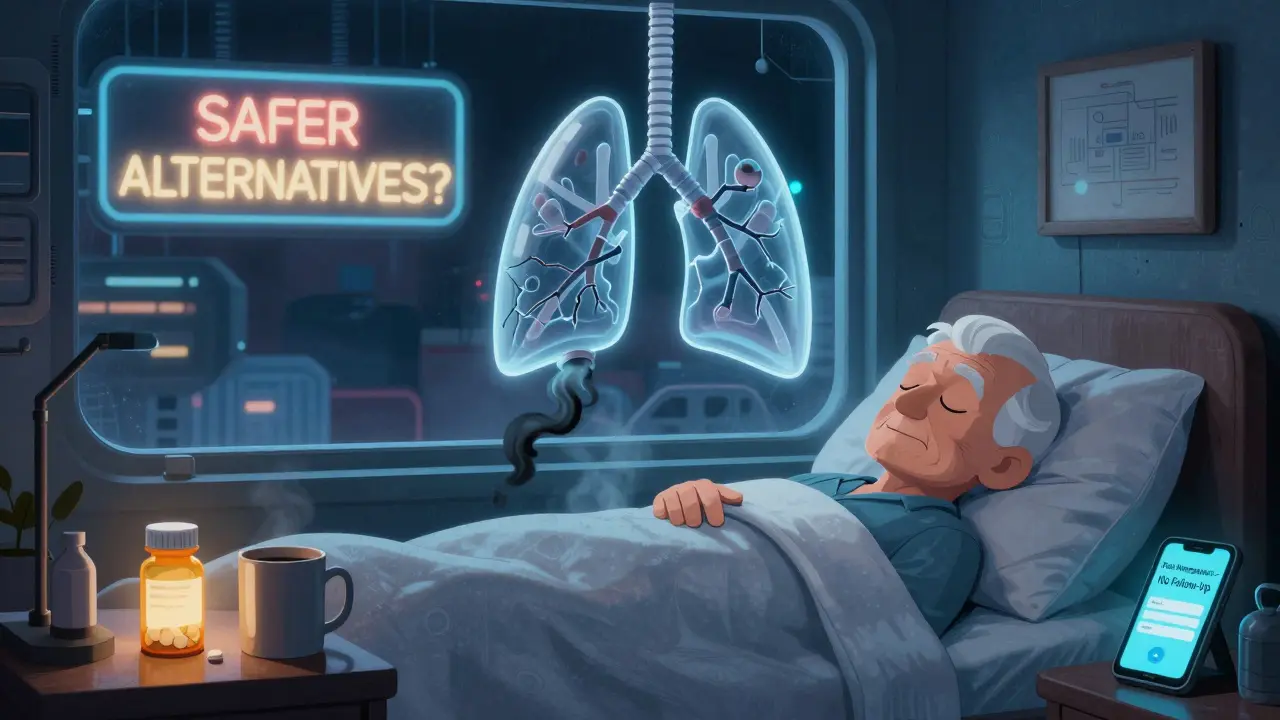
What Should You Do If You’re Taking Both?
If you’re on gabapentin or pregabalin and an opioid, don’t stop suddenly. Withdrawal can be dangerous. But do this:
- Ask your doctor: “Is this combination necessary? What’s the evidence it’s helping my pain?”
- Check your kidney function: Get a simple blood test for creatinine and estimated glomerular filtration rate (eGFR). If your eGFR is below 60, your gabapentinoid dose needs to be lowered.
- Start low, go slow: If you’re starting gabapentin, begin with the lowest dose possible. Don’t jump to 300 mg or 150 mg twice daily. Start at 100 mg or 75 mg once a day.
- Watch for signs: Dizziness, extreme drowsiness, confusion, shallow breathing, or waking up gasping for air are red flags. Call your doctor immediately if you notice these.
- Don’t mix with alcohol or benzodiazepines: These make the risk even worse. One study found that combining gabapentinoids with alcohol tripled the chance of respiratory depression.
What Are the Alternatives?
There are other ways to manage nerve pain without risking your breathing.
- Topical lidocaine patches: Effective for localized pain like postherpetic neuralgia.
- SNRIs like duloxetine or venlafaxine: Proven for diabetic neuropathy, with no respiratory risk.
- Physical therapy and nerve blocks: Often underused, but highly effective for chronic pain.
- Cognitive behavioral therapy (CBT): Helps rewire how your brain processes pain signals.
None of these are magic bullets. But they don’t carry the same risk of sudden death.
The Bottom Line
Gabapentinoids and opioids together aren’t a treatment. They’re a gamble-with your life as the stake.
The science is clear. The warnings are out. The FDA, the UK’s MHRA, and leading medical journals have all sounded the alarm. Yet, this dangerous combo is still being prescribed every day.
If you’re taking both, talk to your doctor. Ask for a full review of your medications. Ask if the benefits truly outweigh the risks. And if you’re a caregiver for someone on this combo, watch for signs of slow breathing-especially at night.
Pain matters. But so does breathing. You can’t have one without the other.
Can gabapentin or pregabalin cause respiratory depression on their own?
Yes. While the risk is higher when combined with opioids, gabapentinoids alone can cause respiratory depression. The FDA reviewed 49 cases between 2012 and 2017, and 8% of those occurred with gabapentinoid use alone-especially in older adults or those with pre-existing lung disease. Even healthy volunteers in clinical trials showed increased apnea episodes during sleep after taking a single dose.
How much does the risk increase when gabapentinoids are taken with opioids?
The risk of dying from an opioid-related cause increases by about 50% when gabapentinoids are taken together. For people on high doses of gabapentinoids, the risk nearly doubles-rising to 98% higher than those taking opioids alone. This isn’t a small increase. It’s a major public health concern backed by large population studies involving millions of patients.
Are there any safe doses of gabapentinoids when combined with opioids?
There’s no established safe dose. The risk increases with higher doses and in people with kidney problems, older age, or lung disease. The FDA and Medical Letter recommend starting at the lowest possible dose and titrating slowly. For people over 65 or with kidney impairment, doses should be reduced by 50% or more. But even low doses can be dangerous when paired with opioids. The safest approach is to avoid the combination unless absolutely necessary-and even then, only with close monitoring.
Why aren’t doctors warning patients more often?
Many doctors aren’t fully aware of the extent of the risk, or they assume patients already know. Gabapentinoids were once seen as “safe” alternatives to opioids, so warnings were minimal. Also, patients often don’t connect drowsiness or slow breathing to their medications. They blame it on aging or stress. The combination is so common-over 20% of new prescriptions include both-that it’s become normalized, even though the evidence shows it’s dangerous.
What should I do if I’m already taking both and feel sleepy or dizzy?
Don’t stop abruptly. Contact your doctor immediately. Describe your symptoms: dizziness, confusion, shallow breathing, or feeling like you can’t take a full breath. Ask for a medication review. Your doctor may suggest reducing the gabapentinoid dose, switching to a non-CNS depressant pain treatment, or adding a breathing monitor if you’re at high risk. If you’re ever in doubt, go to the emergency room-especially if you’re sleeping more than usual or waking up gasping.

Terry Free
Oh wow, another ‘wake up sheeple’ post about gabapentin. Next you’ll tell us aspirin causes bleeding. Newsflash: every drug has risks. The real danger is fearmongering without context. People on these meds are monitored. Doctors aren’t idiots.

Lindsay Hensel
This is vital. I’ve seen patients die from this combo-and no one ever warned them. It’s not fearmongering. It’s negligence dressed as care.
Every time I hear ‘it’s just a nerve pill,’ I cringe. These aren’t vitamins.

Oluwatosin Ayodele
As a Nigerian physician with 12 years in pain management, I can confirm this is global. In Lagos, we see it daily-elderly patients on gabapentin + tramadol, no labs, no follow-up. The problem isn’t just the U.S. It’s systemic undertraining worldwide.
Most clinics don’t have eGFR kits. Patients don’t know what creatinine is. And pharmacies dispense without question. This is a public health emergency in the Global South too.

Linda B.
Did you know the FDA was pressured by big pharma to downplay this? Lyrica’s manufacturer knew. They ran studies showing respiratory risk but buried them. The same companies pushing gabapentin as ‘safe’ also own opioid patents. It’s not coincidence. It’s profit.
They want you dependent on both. That’s the business model. Wake up. The system is rigged.
And yes, your doctor is probably paid to prescribe this. Check your prescribing data. You’ll see the pattern.

Jason Jasper
I’m a chronic pain patient on both meds. I didn’t know the risk until I read this. My breathing felt ‘off’ at night but I thought it was just aging. I’ve scheduled a med review with my doctor tomorrow. Thanks for the clarity.
Still scared, but informed now.

Mussin Machhour
Yo, this is the kind of post that saves lives. I’m sharing this with my whole family. My uncle’s on this combo and he’s 72 with COPD. He thinks ‘more meds = better pain.’
Time to have the talk. Thanks for being the voice no one else is.

Carlos Narvaez
Interesting. Though I find the rhetorical framing overly alarmist. The risk is statistically significant but contextually small. 98% increase sounds terrifying-until you realize baseline mortality is 0.2%. Now it’s 0.4%.
Still, I agree: caution is warranted. But let’s not turn clinical nuance into a horror story.

Winni Victor
Oh please. Another ‘your doctor is killing you’ clickbait. I’ve been on gabapentin and oxycodone for 8 years. I’m fine. I sleep like a baby. My lungs work. Your fear is not my reality.
Maybe stop scaring people who are actually managing their pain? Just a thought.

Sophie Stallkind
Thank you for this meticulously referenced and clinically grounded exposition. The integration of FDA data, population studies, and physiological mechanisms is exemplary.
It is imperative that primary care providers receive mandatory continuing education on CNS depressant synergism. The current paradigm of polypharmacy without pharmacokinetic review is indefensible.
I have forwarded this to our hospital’s pharmacy and therapeutics committee.

Ben Harris
They don’t want you to know this because if you knew you’d stop taking the pills and then you’d be in pain and then you’d be mad and then you’d sue them and then they’d lose billions and then they’d fire all the doctors and then we’d all be back in the 1800s with no pain relief at all
so they hide it and pretend it’s safe and call you crazy if you ask questions
and they’re right because you are crazy for thinking your life matters more than their quarterly earnings

Katherine Blumhardt
so i just found out my mom is on both and she’s 78 and has sleep apnea and i’m literally crying rn
why didn’t anyone tell us this
she’s been on this for 3 years
and she says she’s ‘fine’
but she naps all day and forgets her own name sometimes
what do i do??

sagar patel
Scientifically accurate. The pharmacokinetic interaction between gabapentinoids and opioids is well-documented in renal clearance pathways. The 50% increased mortality risk is corroborated by the UK’s Clinical Practice Research Datalink. No speculation. Just data.
Patients with eGFR < 60 mL/min must be dosed at 50% reduction. Period.

Christopher King
They’ve been doing this since the 90s. First it was Vioxx, then OxyContin, now gabapentin. Same playbook. Create a ‘safe’ drug. Push it like candy. Watch the deaths pile up. Then blame the patient. It’s not an accident. It’s a system designed to profit from suffering.
They don’t want you awake. They want you numb. And quiet.

Bailey Adkison
Contrarian take: gabapentinoids are overprescribed. But opioids are too. The real issue is that chronic pain medicine has become a pharmacy, not a practice. We’ve outsourced empathy to pills.
And now we’re blaming the drugs instead of the system that turned pain into a product.
Fix the model. Not just the meds.
Write a comment