Recent POST




DPP-4 Inhibitor Joint Pain Assessment
Joint Pain Assessment Tool
This tool helps you understand if your joint pain might be related to DPP-4 inhibitor diabetes medications like Januvia, Onglyza, or Tradjenta. It's based on FDA-recognized patterns but is not a diagnostic tool. Always consult your doctor for medical advice.
Results
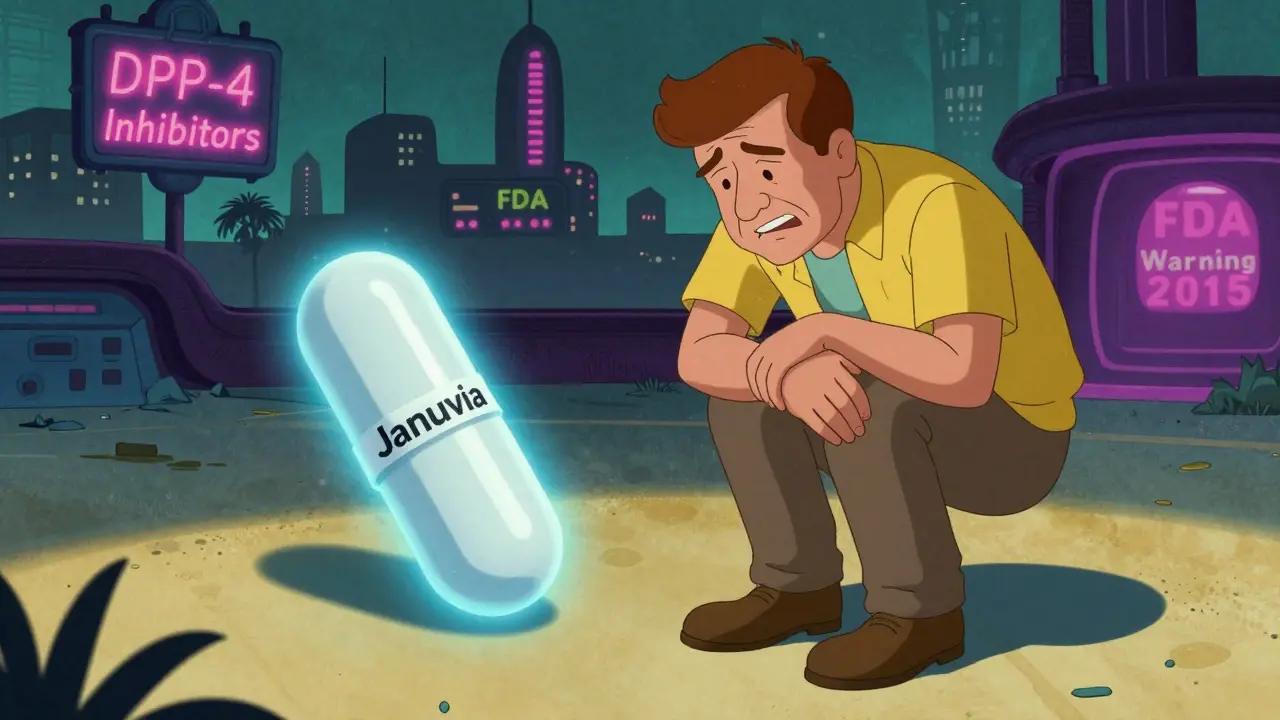
If you’re taking a DPP-4 inhibitor for type 2 diabetes and suddenly can’t walk without pain, climb stairs, or even hold a coffee cup, you’re not imagining it. This isn’t just aging or overuse-it could be a known, but often missed, side effect tied directly to your medication. The U.S. Food and Drug Administration (FDA) issued a formal warning in 2015 after reviewing hundreds of cases where people on drugs like Januvia, Onglyza, and Tradjenta developed severe, disabling joint pain. And while this doesn’t happen to everyone, it happens often enough-and with enough consistency-that it’s no longer something doctors can afford to overlook.
What Are DPP-4 Inhibitors?
DPP-4 inhibitors are oral diabetes medications designed to help lower blood sugar by boosting the body’s natural insulin response. They work by blocking the DPP-4 enzyme, which breaks down incretin hormones. These hormones tell your pancreas to release insulin after meals and stop your liver from dumping out too much glucose. Common drugs in this class include sitagliptin (Januvia), saxagliptin (Onglyza), linagliptin (Tradjenta), alogliptin (Nesina), and vildagliptin (Galvus). They’re often prescribed when metformin alone isn’t enough, especially for people who need to avoid weight gain or low blood sugar episodes.
Since their approval in 2006, DPP-4 inhibitors have become one of the most widely used classes of diabetes drugs in the U.S., with sitagliptin alone filling over 35 million prescriptions annually. That’s a lot of people taking them. But behind the numbers are real stories-people who started feeling pain in their knees, hips, or hands after just a few weeks on the drug, and didn’t realize it might be linked to their medication until it was too late.
The FDA Warning: Severe Joint Pain Is Real
In August 2015, the FDA reviewed over 7 years of adverse event reports and found 33 confirmed cases of severe, disabling joint pain directly tied to DPP-4 inhibitors. The numbers may sound small, but the pattern was unmistakable. Of those 33 cases:
- 28 involved sitagliptin (Januvia)
- 5 involved saxagliptin (Onglyza)
- 2 involved linagliptin (Tradjenta)
- 1 involved alogliptin (Nesina)
- 2 involved vildagliptin (Galvus)
Five people had the pain return when they tried the same drug again-even after stopping it for months. That’s a classic sign of a drug reaction. And in 22 of the 33 cases, the pain started within just one month of beginning the medication. But here’s what many doctors miss: some patients didn’t feel anything until after a year of use. That’s why it’s easy to blame arthritis, overtraining, or just getting older.
Twenty-three of these patients saw their pain disappear within a month of stopping the drug. Ten needed hospitalization. One woman, 58, developed sharp knee pain three weeks after starting Januvia. She couldn’t walk. Her doctor thought it was early osteoarthritis. She stopped the drug, and within two weeks, she was back to normal. Then, by accident, she restarted it-and the pain came back in 48 hours. That’s not coincidence. That’s causation.
How Common Is This?
Most clinical trials reported joint discomfort in only 5-10% of users. But those numbers usually capture mild, temporary aches-not the kind that makes you cry when you get out of bed. The FDA’s data focused on severe cases, which are rare. But rare doesn’t mean impossible. In a population of over 30 million users, even a 0.1% risk means tens of thousands of people could be affected.
Some studies back this up. A 2021 analysis using real-world health data from over 250 million Americans found that people taking DPP-4 inhibitors had a 24% higher risk of needing medical care for joint pain compared to those on other diabetes meds. Another study of older veterans showed a 17% increased risk of joint pain among users. Meanwhile, a large Taiwanese study found no link-but researchers admitted their data might have missed cases because doctors coded joint pain as general arthritis, not drug-induced.
The bottom line? The risk isn’t high, but it’s real. And because the pain can come on slowly or suddenly, and because it mimics other conditions like rheumatoid arthritis or gout, it often goes undiagnosed-for months, sometimes years.
What Does the Pain Feel Like?
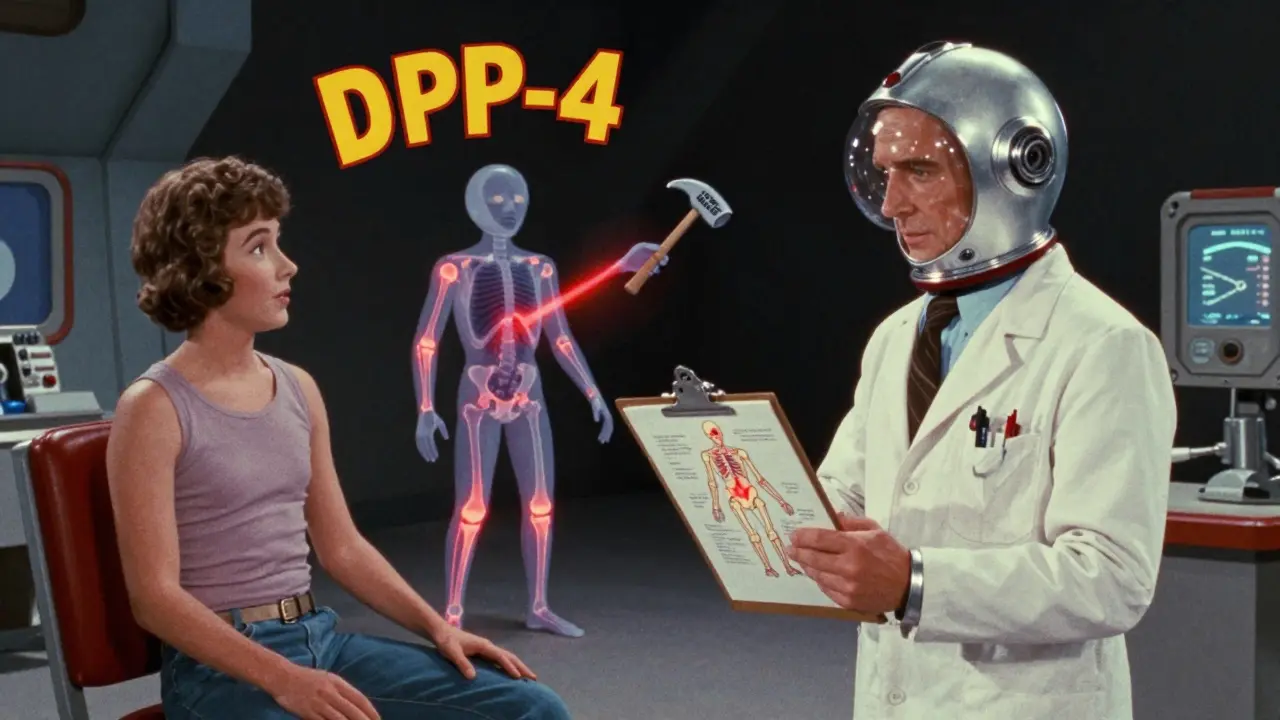
This isn’t a stiff knee after a long walk. This is pain that:
- Starts in multiple joints-knees, hips, wrists, fingers
- Is constant, not just when moving
- Worsens at night or after rest
- Doesn’t respond to ice, NSAIDs, or physical therapy
- Leaves you unable to work, drive, or care for yourself
People have described it as “burning,” “deep aching,” or like “someone is twisting my bones.” Some report swelling, but not always. No redness. No fever. Just relentless, unexplained pain. One patient told her rheumatologist she had lupus. Another was diagnosed with fibromyalgia. Both were wrong. Both stopped their DPP-4 inhibitor-and both got better.
What Should You Do If You Have Joint Pain?
Don’t panic. Don’t stop your medicine cold. But don’t ignore it either.
Call your doctor right away if you develop:
- New joint pain that doesn’t go away after a few days
- Pain in multiple joints at once
- Pain that starts after you began a new diabetes medication
- Pain that gets worse even though you haven’t changed your activity level
Your doctor should consider DPP-4 inhibitors as a possible cause-even if you’ve been on the drug for over a year. The FDA says: “Healthcare professionals should consider DPP-4 inhibitors as a potential cause of severe, persistent joint pain.” That’s not a suggestion. That’s a directive.
If your doctor agrees it might be the drug, they’ll likely suggest stopping it temporarily. Most people see improvement within days to weeks. If the pain returns after restarting the same drug, the link is confirmed. You won’t need a biopsy, a blood test, or an MRI. The reaction itself is the diagnosis.
What Are Your Alternatives?
If you need to stop a DPP-4 inhibitor, there are other options. Metformin remains first-line for most people. GLP-1 receptor agonists like semaglutide (Wegovy, Ozempic) are highly effective and don’t carry this risk. SGLT2 inhibitors like empagliflozin (Jardiance) help with blood sugar and also protect the heart and kidneys. Sulfonylureas work well but can cause low blood sugar and weight gain. Insulin is always an option if needed.
The key is to find something that works for your body-not just your numbers. Your A1C might be perfect on Januvia, but if you’re in constant pain, that’s not a win.

Other Side Effects to Watch For
Joint pain isn’t the only concern. DPP-4 inhibitors can also cause:
- Nausea and diarrhea
- Headaches
- Nasal congestion
- Pancreatitis (rare but serious)
- Severe allergic reactions (swelling, trouble breathing)
- Bullous pemphigoid (a skin condition with blisters and sores)
Januvia’s prescribing info says: “Call your doctor right away if you develop blisters or the breakdown of your skin.” That’s not a side effect to brush off. It’s a medical emergency.
What’s Being Done Now?
The FDA still monitors this issue through its Sentinel Initiative, which tracks drug safety using real-time health records. The European Medicines Agency issued a similar warning in 2015. The American Diabetes Association acknowledges the risk but says the benefits still outweigh it for most patients. That’s true-but only if you know what to look for.
Doctors are getting better at recognizing it. A draft set of diagnostic criteria from the American College of Rheumatology, expected in late 2024, will help distinguish drug-induced joint pain from autoimmune conditions. That’s progress. But until then, it’s up to you to speak up.
Bottom Line
DPP-4 inhibitors are effective for many people with type 2 diabetes. But they’re not risk-free. Severe joint pain is rare, but it’s real, documented, and reversible-if caught early. If you’ve been on one of these drugs and suddenly feel like your body is breaking down, don’t wait for your next appointment. Don’t assume it’s arthritis. Don’t think it’s just stress or aging. Call your doctor. Ask: “Could this be from my diabetes pill?”
Most people who do get answers fast. And most get their lives back.
Can DPP-4 inhibitors cause joint pain even after years of use?
Yes. While most cases of joint pain linked to DPP-4 inhibitors start within the first month, the FDA confirmed cases where symptoms appeared after up to a year of continuous use. This makes it easy to miss the connection, especially if you’ve been on the drug for a long time and assume any new pain is from aging or overuse. Always consider the medication as a possible cause, no matter how long you’ve been taking it.
Should I stop taking my DPP-4 inhibitor if I have joint pain?
No-don’t stop on your own. Contact your doctor immediately. Stopping suddenly can cause your blood sugar to rise. Your doctor will evaluate whether the pain is likely linked to the medication and guide you on whether to pause or switch. In most cases, symptoms improve within days to weeks after stopping the drug, and the pain typically doesn’t return if you avoid that class of medication going forward.
Is joint pain from DPP-4 inhibitors permanent?
No. In 23 out of 33 documented FDA cases, joint pain resolved completely within one month after stopping the drug. Only a small number of patients experienced lingering symptoms, and those were rare. Rechallenge-taking the drug again-caused the pain to return in 8 cases, proving the reaction is directly tied to the medication and not a permanent condition.
Are all DPP-4 inhibitors equally likely to cause joint pain?
The FDA’s data shows that sitagliptin (Januvia) was linked to the most cases (28), followed by saxagliptin (Onglyza, 5 cases). But because the reaction occurred with multiple drugs in the class-and returned when patients were rechallenged with different DPP-4 inhibitors-it’s considered a class-wide effect. That means switching from one DPP-4 inhibitor to another won’t necessarily avoid the risk.
How do doctors diagnose DPP-4 inhibitor-induced joint pain?
There’s no specific blood test or scan. Diagnosis is based on timing and response. If joint pain starts shortly after beginning the drug (or after a long period), doesn’t respond to standard treatments, and improves after stopping the medication, it’s likely caused by the drug. The FDA recommends doctors consider this possibility in any diabetic patient with new, unexplained joint pain-especially if multiple joints are involved.
Can I switch to another diabetes medication safely?
Yes. Many alternatives exist, including metformin, GLP-1 receptor agonists like semaglutide, SGLT2 inhibitors like empagliflozin, and insulin. Your doctor will choose based on your blood sugar control, weight, heart and kidney health, and risk of low blood sugar. Most people transition smoothly, and many report feeling better overall once the joint pain is gone.

Charles Barry
Oh here we go again - Big Pharma’s latest cover-up. Januvia? It’s not just joint pain. It’s a slow-acting poison designed to keep you dependent. You think they care about your knees? They care about your monthly co-pay. The FDA warning? A PR stunt. The real data’s buried in dark archives where whistleblowers go to die. I’ve seen it - patients switched to metformin and their pain vanished, but their insurance premiums? Still sky-high. This isn’t medicine. It’s a revenue stream wrapped in a white coat.

Rosemary O'Shea
How utterly *banal*. The FDA’s 33 cases? A statistically insignificant blip in a sea of 35 million prescriptions. You’re treating a rare, reversible side effect like it’s the second coming of thalidomide. Honestly, if you’re attributing every ache to a pill, you’ve surrendered your agency to pharmaceutical fearmongering. I’ve had osteoarthritis since 35 - I don’t blame my pills, I blame gravity and poor posture. This isn’t a medical crisis - it’s a psychological one.

Kathryn Weymouth
I appreciate the detailed breakdown of the FDA’s findings and the clinical patterns described. What’s particularly compelling is the rechallenge data - 8 out of 33 cases where symptoms returned upon reintroduction. That’s a classic diagnostic criterion for drug-induced adverse reactions. The fact that pain resolved in 23 cases within a month of discontinuation further supports causality. I’d argue this deserves more emphasis in primary care guidelines - not as a panic trigger, but as a diagnostic consideration in unexplained polyarticular pain in diabetic patients.

Nader Bsyouni
People are so quick to blame pills these days like its some kind of conspiracy. I mean really. You get a stiff knee and suddenly its Januvia. Maybe you just sat wrong. Or got old. Or ate too much sugar. The body breaks down. That's biology. Not Big Pharma. Stop looking for villains in your medicine cabinet. The real problem is you think your body is fragile when it's actually a damn tank that's been running on fumes since 2008

Julie Chavassieux
I. Was. Diagnosed. With. Fibromyalgia. For. Three. Years. Until. I. Stopped. Januvia. And. Within. Two. Weeks. I. Could. Walk. Again. No. Magic. No. Miracle. Just. A. Drug. That. Should. Have. Come. With. A. Red. Flag. On. The. Bottle.

Ajay Brahmandam
Man, I’ve been on linagliptin for 4 years now. No joint pain, but I’ve got a cousin who had the same thing - couldn’t grip his wrenches at work. Doctor dismissed it as ‘old age’. He switched to metformin and now he’s fixing cars again. Just sayin’ - if you feel weird, don’t wait. Talk to your doc. No shame. Your body talks, you just gotta listen.

Aliyu Sani
This ain't just pharmacokinetics, fam. This is a systemic failure in post-marketing surveillance. Pharma runs RCTs with cherry-picked cohorts - young, healthy, no comorbidities. But real people? They're 65, on 7 meds, sleeping on a bad mattress, and their knees creak like a rusty gate. The data’s skewed. The warning’s buried. And the doctors? They got 8 minutes per patient. So yeah - it’s not just the drug. It’s the whole damn machine that’s broken.

Herman Rousseau
Thank you for writing this. I’ve been telling my patients for years - if pain pops up after starting a new med, don’t ignore it. I had a woman last month who thought her hip pain was arthritis. She’d been on Januvia for 14 months. We stopped it. Two weeks later, she was dancing at her granddaughter’s birthday. No MRI. No steroids. Just listening. You’re not crazy. You’re not lazy. You’re not aging too fast. You’re just human. And your body’s trying to tell you something.

jenny guachamboza
OMG I KNEW IT 😱 I took Januvia for 9 months and my wrists started burning like I was holding a hot iron 😭 My dr said it was carpal tunnel... then I found this thread and BOOM - stopped it. Pain gone in 10 days. I’m now on metformin and I feel like I got my life back 🙌 I’m telling EVERYONE. Big Pharma is LYING. They don’t want you to know. I even saw a TikTok of a woman who got blisters from it 🤯 #DPP4InhibitorsAreDangerous

Kiranjit Kaur
Love that this is getting attention. I’m a nurse in Kerala and we’ve had 3 patients in the last year with this exact issue - all on DPP-4 inhibitors, all thought to have RA, all improved after switching. The problem? Many don’t even know what their med is called. They just take the blue pill. If we can teach patients to say ‘Could this be my diabetes drug?’ - we could save so many from unnecessary suffering. Simple questions, big impact.

Sai Keerthan Reddy Proddatoori
This is what happens when you let foreigners design your medicine. America thinks a pill can fix everything. In India, we know pain is a signal. You don’t pop a pill and ignore your body. You rest. You eat right. You walk. You pray. This whole system is broken. DPP-4 inhibitors? Just another Western scam. We don’t need your drugs. We need discipline.

Cara Hritz
i had this pain and i just thought it was from walking too much on my new shoes but then i read this and i stopped januvia and it went away and now i feel like an idiot for not thinking about it sooner lol

Johnnie R. Bailey
There’s a quiet dignity in how the body speaks - not with screams, but with aching joints, sleepless nights, and the slow erosion of daily joy. This isn’t about drugs or corporations. It’s about listening. In my years as a community health worker, I’ve seen patients dismissed as ‘just old’ while their pain screamed from every movement. The real tragedy isn’t the side effect - it’s the silence we’ve normalized around it. If your doctor doesn’t ask, ask them. Your pain matters more than their next appointment.
Write a comment