Recent POST


Side Effect Risk Simulator
Based on the science of drug reactions, select the patient profile characteristics below to see how they influence the likelihood and severity of side effects.
Analysis: With no risk factors selected, this represents a standard metabolic profile with high-selectivity drugs. Most side effects are mild or non-existent.
You take a pill for your headache, and suddenly you feel nauseous. You start a new antibiotic, and a rash appears on your arm. It feels personal, almost like the medication is fighting against you. But that isn’t what’s happening. Your body is simply reacting to a chemical invasion with all the tools it has available.
Medications cause side effects because they are not magic bullets that target only one specific cell in your body. They are chemicals that travel through your entire system, interacting with proteins, membranes, and genes in ways we are still learning to predict. Understanding why these reactions happen can help you manage them better and talk more effectively with your doctor.
The Core Problem: Drugs Are Not Selective
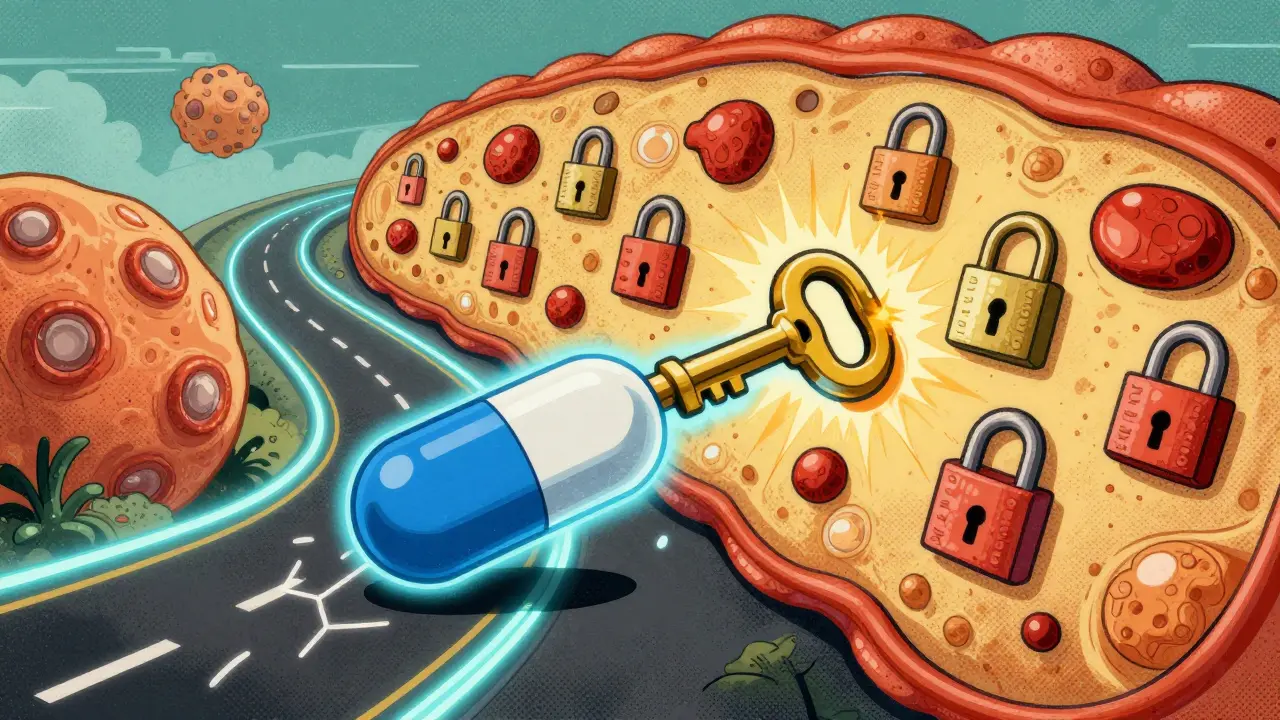
To understand side effects, you first have to understand how drugs work. A drug is a chemical substance used to treat, cure, prevent, or diagnose disease. When you swallow a tablet, that chemical dissolves, enters your bloodstream, and circulates everywhere. Its job is to bind to a specific receptor-like a key fitting into a lock-to produce a therapeutic effect.
Here is the catch: your body has billions of locks, and many of them look similar. This leads to off-target toxicity, which occurs when a drug binds to unintended biological targets, causing unwanted physiological responses. For example, nonsteroidal anti-inflammatory drugs (NSAIDs) like ibuprofen are designed to block cyclooxygenase-2 (COX-2) enzymes to reduce pain and inflammation. However, they also inhibit COX-1, an enzyme that protects your stomach lining by producing prostaglandins. Without those protective prostaglandins, acid irritates the stomach wall, leading to ulcers or bleeding in 15-30% of regular users.
This lack of selectivity is the primary reason why 75-80% of adverse drug reactions are predictable. If you know how a drug interacts with biology, you can often guess where it might go wrong.
How Your Body Processes the Drug: Pharmacokinetics
Sometimes the problem isn’t where the drug goes, but how your body handles it. This field is called pharmacokinetics, which describes how the body absorbs, distributes, metabolizes, and excretes a drug. Think of it as the journey the drug takes through your system.
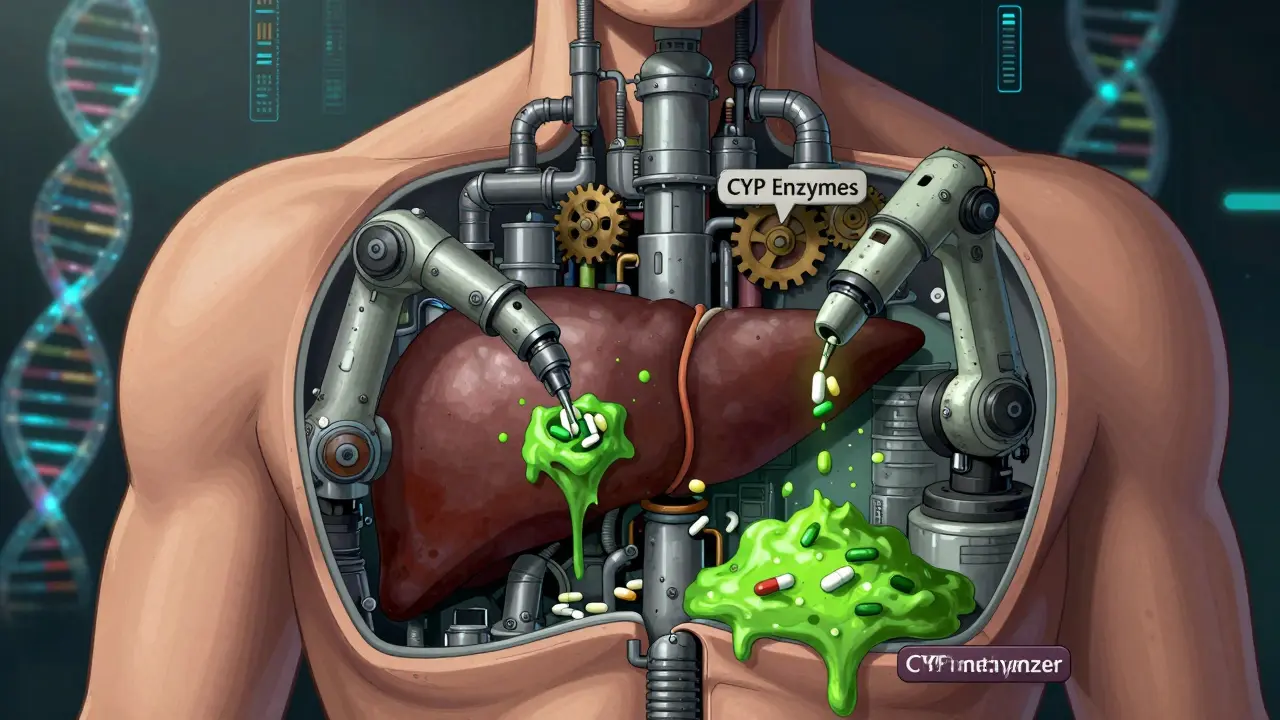
Your liver plays a starring role here, using a family of enzymes known as cytochrome P450 (CYP) to break down medications so they can be eliminated. But not everyone has the same version of these enzymes. Genetic variations, known as polymorphisms, mean some people process drugs much slower or faster than others.
- Poor Metabolizers: About 5-10% of Caucasians have a variant of the CYP2D6 enzyme that works poorly. If they take codeine, their bodies cannot convert it efficiently into its active form, morphine. Wait, doesn't that mean less effect? Actually, for some drugs, poor metabolism means the drug builds up to toxic levels in the blood before it can be cleared, increasing the risk of side effects like respiratory depression.
- Rapid Metabolizers: Others break drugs down so quickly that the medication never reaches effective levels, leading to treatment failure rather than toxicity, though this is still a negative outcome.
These differences explain why two people can take the exact same dose of the same medication and have completely different experiences. One feels relief; the other feels dizzy and nauseous.
The Immune System’s Mistake: Allergic Reactions
Not all side effects are just chemistry gone slightly off-track. Sometimes, your immune system decides the drug is an enemy. These are called adverse drug reactions (ADRs), specifically unwanted undesirable effects that are possibly related to a drug. When the immune system is involved, we call them hypersensitivity reactions.
These reactions are classified into types based on how the immune system attacks:
- Type I (IgE-mediated): This is the classic immediate allergy. Your body produces antibodies that recognize the drug as a threat. Upon re-exposure, mast cells release histamine rapidly. Penicillin causes this type of reaction, including life-threatening anaphylaxis, in 1-5 per 10,000 courses of treatment.
- Type III (Immune Complexes): Here, the drug binds to proteins in your blood, forming complexes that get stuck in tissues like joints or kidneys, causing inflammation. This often shows up 2-3 weeks after starting a drug and can look like serum sickness.
- Type IV (T-cell mediated): These are delayed reactions. T-cells attack cells that have been altered by the drug. This category includes severe skin conditions like Stevens-Johnson Syndrome (SJS), which affects 1-6 people per million annually and is often linked to drugs like allopurinol or certain anticonvulsants.
There are also pseudoallergic reactions, where a drug directly triggers histamine release without involving the immune system’s memory. Vancomycin flushing syndrome is a common example, causing redness and itching in 10-15% of patients if the IV infusion is given too quickly.
Genetic Blueprints: Why Some People Are More Susceptible
Your DNA holds clues about how you will react to medications. This is the realm of pharmacogenomics, the study of how genetic variations affect individual responses to drugs. While most side effects are due to general biology, some are strictly genetic lottery tickets.
Consider the drug abacavir, used to treat HIV. In the general population, about 5-8% of patients develop a severe, potentially fatal hypersensitivity reaction. Researchers discovered that this reaction is strongly linked to a specific genetic marker called HLA-B*57:01. Individuals with this allele have a 50-100 fold increased risk of the reaction.
Because of this discovery, testing for HLA-B*57:01 before prescribing abacavir became standard practice. This simple test reduced the rate of hypersensitivity reactions from 5-8% to less than 0.5%. It is a perfect example of how understanding the science behind side effects saves lives.
Another example is isoniazid, an antibiotic used for tuberculosis. It causes severe liver damage in about 1 in 10,000 patients. This toxicity is largely driven by slow acetylator status, determined by the NAT2 gene. People with this genetic profile cannot clear the drug fast enough, allowing toxic byproducts to accumulate in the liver.
Hidden Interactions: Membranes and Other Drugs
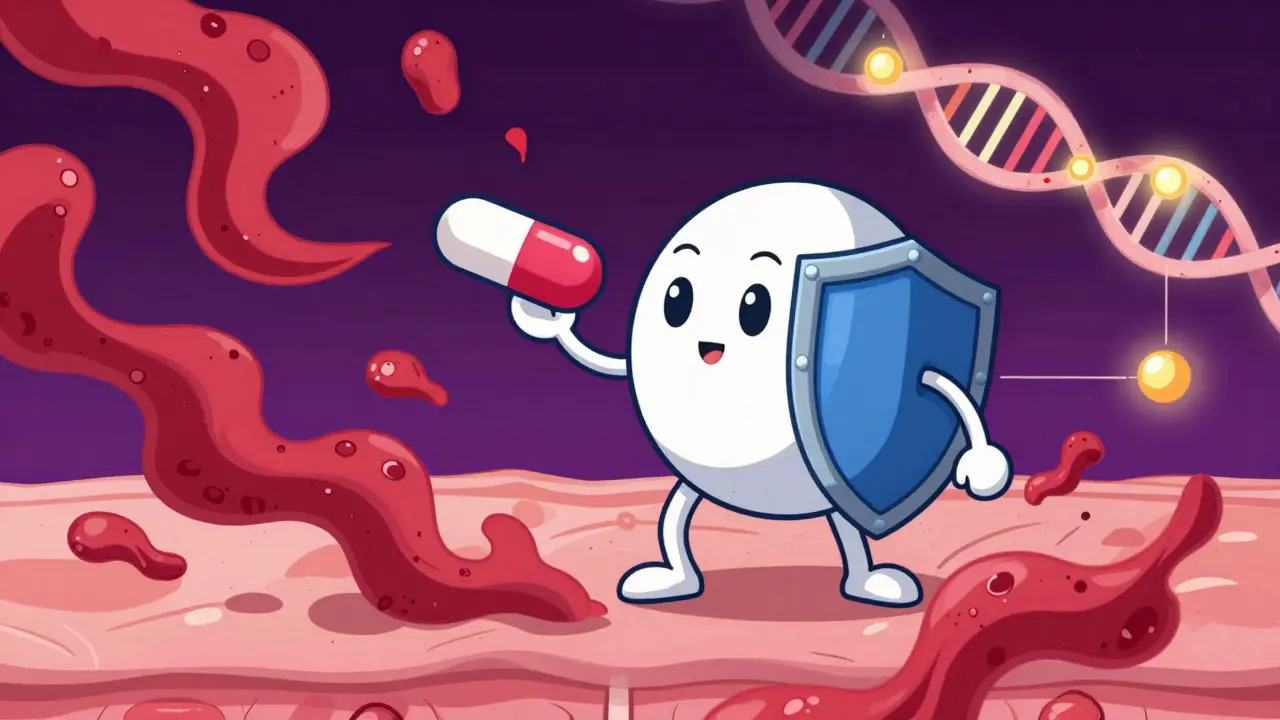
Science keeps revealing new layers to why drugs misbehave. A study published in PNAS in 2021 by researchers at Weill Cornell Medicine shed light on a subtle mechanism. They found that many drugs interact with the lipid bilayer-the fatty membrane surrounding every cell.
Drugs don’t just hit protein targets; they change the physical properties of the cell membrane itself, altering its thickness and elasticity. These changes can disrupt the function of multiple membrane-spanning proteins simultaneously. This explains why some drugs seem to have vague, widespread side effects that don’t fit a single receptor model. The drug is essentially messing with the cellular environment, causing chaos across multiple systems.
Furthermore, you rarely take just one medication. Drug interactions occur when one medication alters the activity or concentration of another. Approximately 50% of commonly prescribed medications are affected by cytochrome P450 interactions. For instance, grapefruit juice inhibits the CYP3A4 enzyme. If you take felodipine (a blood pressure med) with grapefruit juice, your blood levels of the drug can increase by 260%, potentially causing dangerous low blood pressure.
| Mechanism Type | Example Drug | Primary Cause | Typical Outcome |
|---|---|---|---|
| Off-Target Effect | Ibuprofen (NSAID) | Inhibition of COX-1 enzyme | Stomach ulcers/bleeding |
| Pharmacokinetic Variation | Codeine | CYP2D6 poor metabolizer status | Toxicity or lack of efficacy |
| Immune Reaction (Type I) | Penicillin | IgE antibody production | Anaphylaxis/rash |
| Genetic Susceptibility | Abacavir | HLA-B*57:01 allele presence | Hypersensitivity reaction |
| Membrane Interaction | Various anesthetics | Alteration of lipid bilayer properties | Non-specific protein dysfunction |
Managing Risks: What You Can Do
Knowing the science empowers you to minimize risks. Here are practical steps based on current medical guidelines:
- Dose Titration: Many side effects are dose-dependent. Doctors often start with a low dose and gradually increase it. For example, starting SSRIs at a low dose reduces initial nausea and dizziness, which affects 20-30% of patients.
- Prophylactic Protection: If you need long-term NSAIDs, ask your doctor about a proton pump inhibitor (PPI). Studies show PPIs reduce ulcer complications by 70-80% in high-risk patients.
- Avoid Triggers: Know what interacts with your meds. Avoid grapefruit juice if you take statins or certain blood pressure medications. Avoid alcohol if you take sedatives or acetaminophen.
- Report Everything: Keep a log of any new symptoms after starting a medication. Even mild issues can signal a developing problem.
The goal isn’t to avoid all medication-many save lives-but to use them intelligently. With advances in pharmacogenomics and AI-driven drug screening, the future promises fewer surprises. Until then, understanding that side effects are a natural part of biochemistry, not a personal failure, helps you stay calm and proactive.
Are side effects always dangerous?
No. Most side effects are mild and temporary, such as mild nausea or drowsiness. Only a small percentage of adverse drug reactions are severe or life-threatening. However, any unexpected symptom should be reported to a healthcare provider.
Can side effects go away over time?
Yes. Many side effects are transient as your body adjusts to the medication. For example, initial nausea from antidepressants often resolves within a few weeks. Persistent or worsening symptoms require medical attention.
Why do I get side effects when my friend doesn't?
Individual differences in genetics, age, weight, liver/kidney function, and other medications create unique metabolic profiles. What is safe for one person may cause toxicity or allergic reactions in another due to factors like CYP enzyme variations or immune system history.
What is the difference between an allergy and a side effect?
A side effect is a predictable pharmacological consequence of the drug's action (e.g., dry mouth from antihistamines). An allergy is an immune system response involving antibodies or T-cells, often causing hives, swelling, or breathing difficulties, and is unpredictable based on dose.
How can I reduce the risk of drug interactions?
Maintain an updated list of all prescriptions, over-the-counter drugs, and supplements. Share this list with every healthcare provider and pharmacist. Use a single pharmacy for all fills so their software can flag potential interactions automatically.