Recent POST





Imagine taking three different pills for your blood pressure, cholesterol, and heart health. Now imagine taking just one pill that does all of that. That is the promise of fixed-dose combination drugs, or FDCs, which are pharmaceutical products containing two or more active ingredients combined at fixed dosages within a single dosage form like a tablet or capsule. These medications are not just a convenience trick; they are a carefully engineered approach to modern medicine designed to make treatment simpler, safer, and more effective.
But why do they exist? And are they always better than taking separate pills? The answer isn't as simple as "yes" or "no." While FDCs have revolutionized how we treat conditions like HIV, tuberculosis, and hypertension, they also come with specific risks if you don't understand how they work. This guide breaks down what FDCs are, why doctors prescribe them, and what you need to watch out for.
What Exactly Is a Fixed-Dose Combination Drug?
To understand FDCs, you first need to know what they are not. They are not just two pills stuck together in a blister pack. An FDC is a single unit-a tablet, capsule, or injection-that contains two or more distinct active ingredients mixed together at a set ratio. You cannot adjust the dose of one ingredient without changing the dose of the other.
The U.S. Food and Drug Administration (FDA) defines these strictly. According to guidelines published in the Federal Register in December 2015, a fixed-combination drug must have active ingredients combined at a fixed dosage in a single dosage form. This means the manufacturer decides the exact amount of each drug inside, and you take it exactly as prescribed. If you need more of Ingredient A but the same amount of Ingredient B, an FDC might not be the right choice for you.
This structure creates a unique category in pharmacotherapy. Unlike co-packaged drugs, where you get a box with separate bottles of Medicine X and Medicine Y, an FDC is chemically unified. This unity brings both significant benefits and notable limitations, which we will explore next.
Why Do FDCs Exist? The Core Benefits
Pharmaceutical companies and regulatory bodies didn't create FDCs just to save on packaging costs. There are three primary reasons these combinations exist, backed by clinical evidence and public health strategy.
1. Improving Medication Adherence
Adherence is the biggest hurdle in chronic disease management. Studies show that patients often miss doses when their regimen is complex. By reducing the "pill burden"-the total number of pills you take daily-FDCs make it easier to stick to your treatment plan. The University of Strathclyde noted in a 2020 analysis that simplifying administration leads to improved adherence, which directly translates to better health outcomes. If you only have to remember one pill instead of three, you are far less likely to forget.
2. Synergistic Therapeutic Effects
Sometimes, two drugs work better together than apart. This is called synergy. For example, in treating bacterial infections, combining a beta-lactam antibiotic with a beta-lactamase inhibitor prevents bacteria from destroying the antibiotic. Dr. Vincent H. Tam of GARDP highlighted this in a 2020 webinar, explaining how these fixed-dose combinations overcome resistance mechanisms that single drugs cannot handle alone. The whole becomes greater than the sum of its parts.
3. Reducing Side Effects
Counterintuitively, adding a second drug can sometimes reduce side effects. Take Parkinson’s disease treatment, for instance. Levodopa converts to dopamine in the brain, but much of it breaks down before it gets there, causing nausea. Adding carbidopa blocks that breakdown in the body, allowing more levodopa to reach the brain while reducing the dose needed and minimizing nausea. This is a classic rational FDC recognized by the World Health Organization (WHO).
Rational vs. Irrational Combinations: Not All FDCs Are Created Equal
Here is where it gets tricky. Just because two drugs are combined doesn't mean it makes medical sense. The WHO has established strict criteria for what constitutes a "rational" FDC. According to a 2008 PMC article documenting WHO standards, a rational combination must meet several key requirements:
- Different Mechanisms: The drugs should act by different biological pathways to attack the disease from multiple angles.
- Compatible Pharmacokinetics: The drugs must stay in the body for similar amounts of time. If one lasts 4 hours and the other lasts 24, combining them in a once-daily pill is ineffective.
- No Supra-Additive Toxicity: The combination shouldn't create new or worse side effects than taking the drugs separately.
When these criteria are met, you get proven successes like sulfamethoxazole + trimethoprim (for urinary tract infections) or rifampicin + isoniazid (for tuberculosis). However, critics point out that many FDCs are "irrational." These are combinations created primarily for marketing or patent extension rather than patient benefit. A 2008 critical analysis argued that irrational FDCs can lead to inappropriate dosing and increased adverse effects, offering no real advantage over taking the components separately.

The Regulatory Hurdle: How FDCs Get Approved
You might think that since the individual ingredients are already approved, combining them should be easy. It’s not. The FDA requires rigorous proof that the combination works better or is safer than the parts alone.
The FDA’s "combination rule," documented by Premier Consulting in 2022, states that sponsors must demonstrate the contribution of each active component to the drug's claimed effects. Even if a company uses the 505(b)(2) approval pathway-which allows for smaller development programs by relying on existing data for known ingredients-they still often need Phase 2 and 3 studies. Data from 2010-2015 showed that 51% of FDC approvals still required these extensive clinical trials to prove efficacy and safety.
This regulatory rigor exists to protect you. It ensures that the fixed ratio chosen by the manufacturer actually meets the therapeutic needs of the target population, as specified by WHO criteria.
| Feature | Rational FDC | Irrational FDC |
|---|---|---|
| Clinical Benefit | Proven synergy or improved adherence | No clear advantage over separate pills |
| Dosing Flexibility | Fixed ratio matches standard therapeutic needs | Fixed ratio may force incorrect dosing for some patients |
| Regulatory Scrutiny | High; must prove added value | Often criticized as lifecycle management tactics |
| Example | Levodopa + Carbidopa | Some proprietary pain reliever mixes |
Who Should Be Cautious About FDCs?
While FDCs are powerful tools, they aren't for everyone. The rigid nature of fixed dosing can be a disadvantage for patients with specific needs.
If you have kidney or liver issues, you might need a lower dose of one medication but a normal dose of another. With an FDC, you can't tweak one without affecting the other. As noted in the PMC article, "dosage alteration of one drug is not possible without alteration of the other drug." This lack of flexibility can lead to under-dosing one condition or over-exposing yourself to unnecessary medication.
Additionally, differing pharmacokinetics can pose problems. If one component causes drowsiness and wears off quickly, while the other stays in your system for days, the timing of side effects might become unpredictable. Always discuss your organ function and current medication list with your doctor before starting an FDC.

The Market Reality: Innovation or Strategy?
The pharmaceutical industry has embraced FDCs heavily. IQVIA’s 2020 analysis revealed that approximately 750 branded FDCs were launched globally since 2013, with high concentrations in cardiovascular and dermatology areas. But why so many?
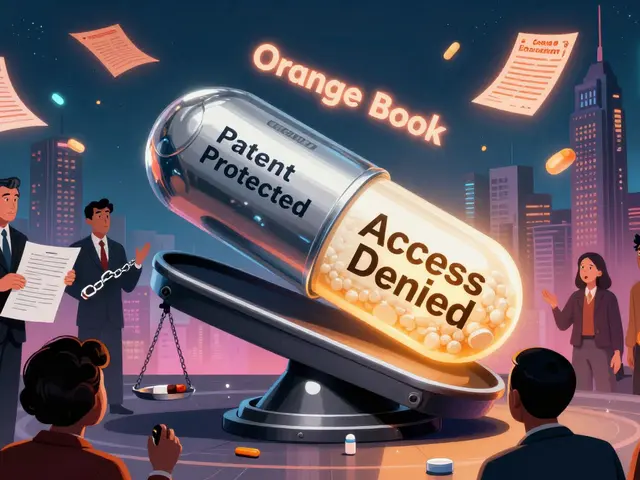
For genuine cases, it’s about patient care. But industry analysts warn that payers (insurance companies) often view FDCs as "lifecycle extension strategies." When a blockbuster drug is about to lose its patent protection and face cheap generic competition, manufacturers may combine it with another drug to create a new, patentable product. This protects profits but can confuse patients and increase costs if the combination doesn't offer real clinical benefits.
This is why transparency matters. Doctors and pharmacists play a crucial role in distinguishing between FDCs that truly improve outcomes and those that are merely marketing vehicles.
Real-World Success Stories
Despite the criticisms, FDCs have saved millions of lives. The most prominent example is in HIV/AIDS treatment. Early antiretroviral therapies required patients to swallow dozens of pills a day at precise times. The development of single-tablet regimens (STRs)-which are essentially sophisticated FDCs-transformed HIV from a fatal diagnosis into a manageable chronic condition. The WHO included 18 FDC formulations in its 2005 Model List of Essential Drugs, recognizing their critical role in global health.
Similarly, in tuberculosis treatment, FDCs containing rifampicin, isoniazid, pyrazinamide, and ethambutol have standardized care, reduced toxicity monitoring burdens, and improved completion rates for the long-term therapy required to cure the disease.
Questions to Ask Your Doctor
Before accepting an FDC prescription, consider asking these questions:
- Is there a proven clinical benefit to taking these drugs together versus separately?
- Will the fixed dose allow me to adjust treatment if my condition changes?
- Are there any known interactions between these specific ingredients that I should watch for?
- Is this FDC covered by my insurance, or would separate generics be cheaper?
FDCs represent a significant advancement in pharmacotherapy, offering simplicity and synergy when designed rationally. However, understanding their limitations ensures you use them safely and effectively.
What is the difference between an FDC and a co-packaged drug?
An FDC combines multiple active ingredients into a single physical unit, like one tablet. A co-packaged drug comes in a box or blister pack containing separate pills or capsules for each ingredient. With an FDC, you cannot adjust the dose of one ingredient independently; with co-packaged drugs, you can.
Are FDCs safer than taking separate medications?
Not necessarily. Rational FDCs can improve safety by reducing dosing errors and improving adherence. However, irrational FDCs may increase the risk of adverse effects or drug interactions. Safety depends on whether the combination is clinically justified and appropriate for your specific physiology.
Why do pharmaceutical companies create so many FDCs?
Companies create FDCs for two main reasons: genuine therapeutic benefits (like improved adherence or synergy) and strategic lifecycle management. Combining a soon-to-be-generic drug with another agent can extend patent protection and maintain market share against competitors.
Can I split an FDC tablet to adjust the dose?
Generally, no. Splitting an FDC tablet disrupts the precise ratio of ingredients, potentially leading to uneven dosing. Some tablets are scored for splitting, but this is rare for FDCs due to the complexity of maintaining balanced proportions. Always consult your pharmacist before attempting to split any medication.
Do FDCs cost more than separate generic pills?
It varies. Branded FDCs are often more expensive than buying two separate generic pills. However, some insurance plans cover FDCs preferentially because they improve adherence. Check with your pharmacy and insurer to compare the out-of-pocket costs for both options.