Recent POST





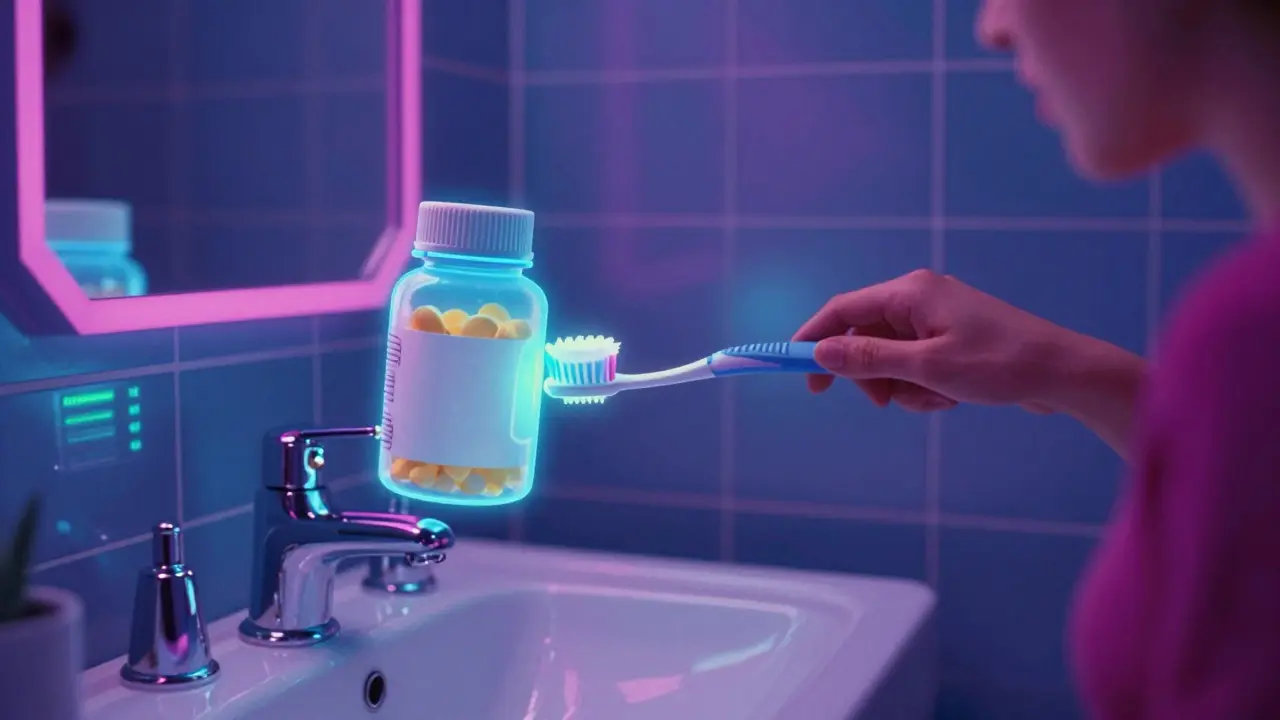
Taking your medication every day shouldn’t feel like a chore. Yet for millions of people, it is. Missed doses, skipped refills, and forgotten pills aren’t just inconvenient-they’re dangerous. About half of people with chronic conditions don’t take their meds as prescribed. That’s not laziness. It’s not lack of care. It’s a habit problem.
Why Willpower Alone Fails
You know you need to take your blood pressure pill. You even set a phone alarm. But by 3 p.m., you’re distracted, tired, or just… forgot. That’s not failure. That’s human biology. Willpower is a limited resource. Relying on it to remember meds every single day is like trying to run a marathon using only your first step. Eventually, you crash. The solution isn’t more reminders. It’s smarter habits. Behavioral science shows that when you link a new behavior to an existing routine, it sticks. Not because you’re trying hard. But because your brain starts to expect it.Anchor Your Meds to an Existing Habit
This is called habit stacking. You take your medication right after something you already do without thinking. Brushing your teeth? Showering? Pouring your morning coffee? These are perfect anchors. A 2020 study in Patient Preference and Adherence found that people who paired their meds with a daily routine improved adherence by 15.8%. Why? Because your brain starts to associate the two. After a week, you don’t need to remember to take your pill-you just do it because you brushed your teeth. Try this: Right after you brush your teeth in the morning, grab your pill bottle. Don’t think. Just do it. Do the same at night. Over time, your brain will treat it like part of the routine-just like washing your face.Simplify the System
If you’re juggling five different pills at three different times a day, you’re setting yourself up to fail. Complexity kills adherence. A 2011 meta-analysis of over 21,000 patients showed that switching to a single-pill combination increased adherence by 26%. That’s not magic. It’s physics. Fewer pills = fewer chances to mess up. Talk to your doctor or pharmacist. Ask: Can any of these be combined? Can I switch to a once-daily version? Even reducing from four doses to two can cut missed pills by 40%, according to clinical data from Robert Wood Johnson Medical School. If you can’t reduce the number of pills, use a weekly pill organizer. It’s low-tech, cheap, and proven. A 2021 study in the Journal of the American Geriatrics Society found that elderly patients using pill boxes missed 27% fewer doses. Just fill it once a week. No thinking required.Use Digital Tools That Actually Work
Not all apps are created equal. Generic alarm apps? Useless. They’re ignored after three days. The real winners are apps that do three things: send personalized reminders, track your progress visually, and sync with your health records. A 2021 meta-analysis in JMIR mHealth and uHealth found smartphone apps with these features boosted adherence by 28.7%. Look for apps that show you a streak-like a calendar with green checkmarks. Humans are wired to protect streaks. Missing one day feels bad. Two days? Even worse. That’s motivation built into the design. The American Heart Association recommends apps that let you log how you’re feeling too. Not just “took pill.” But “took pill, felt less dizzy.” That feedback loop reinforces the behavior.
Make It Rewarding-Without Money
You don’t need cash incentives to stick with meds. But you do need to feel progress. A 2022 study in Health Affairs showed financial rewards helped low-income patients-but they’re not sustainable. The real trick? Make the habit itself rewarding. After you take your pill, do something small you enjoy. Five minutes of quiet coffee. A quick stretch. Listening to your favorite song. These aren’t bribes. They’re cues that your brain starts to link with the action. Over time, taking the pill becomes the gateway to the good feeling. This is called positive reinforcement. It’s not about punishment. It’s about making the behavior feel worth it.Prepare for Slip-Ups
You’re going to miss a dose. Everyone does. The question isn’t whether you’ll slip-it’s how you respond. People who beat non-adherence don’t beat themselves up. They problem-solve. That’s called pre-commitment. Ask yourself: What’s the most likely reason I’ll forget? Travel? Busy mornings? Stress? Then build a backup. - If you travel: Keep a 7-day pill organizer in your bag. - If you’re busy in the morning: Set a second reminder for lunchtime. - If stress makes you skip: Write a sticky note: “I take this because it keeps me walking with my grandkids.” A 2022 study in Patient Education and Counseling found that patients who planned for barriers reduced missed doses by 31%.Get Support-But Make It Count
Telling your partner you’re on meds isn’t enough. You need active support. Research shows that when doctors, pharmacists, and nurses all give the same message, adherence jumps to 68%. That’s because consistency builds trust. Ask your pharmacist: Can you call me when my refill is due? Many pharmacies offer free auto-refill programs. A 2022 study found they improved continuity by 33.4%. If you’re on long-term meds for mental health, consider a support group. CBT-based programs that focus on medication attitudes improved adherence by nearly 30% in patients with bipolar disorder and schizophrenia.
For Special Cases: Aging, Mental Health, or Kids
If you’re caring for an older parent with early dementia: Pair meds with meals. Use large-print labels. Add visual cues like a red dot on the fridge. A 2022 study showed this pushed adherence from 48% to 79%. For teens with asthma: Involve the whole family. A 2022 meta-analysis found that when parents were trained to track and model adherence, kids improved by 37%. For anyone on psychiatric meds: Long-acting injectables (LAI) are a game-changer. One shot every 2-4 weeks replaces daily pills. A 2022 meta-analysis showed LAIs cut non-adherence by 57% in serious mental illness.What Doesn’t Work
Pill organizers alone? They help-but only 8.4% improvement. They’re tools, not solutions. Generic alarms? Useless after a week. Shaming yourself? Counterproductive. Guilt increases stress, which makes you more likely to skip. Waiting until you “feel ready”? You’ll wait forever. Habits don’t start with motivation. They start with action.Start Small. Stick With It.
You don’t need to fix everything at once. Pick one trick. Anchor your pill to brushing your teeth. That’s it. Do it for 10 days. Then add a pill box. Then a reminder app. Each small win builds confidence. And confidence builds consistency. Medication adherence isn’t about being perfect. It’s about building a system so reliable, you don’t have to think about it anymore. Your health isn’t a daily battle. It’s a daily habit. And habits, once formed, take care of themselves.What’s the most effective behavioral trick for medication adherence?
The most effective trick is habit stacking-linking your medication to an existing daily routine like brushing your teeth or drinking morning coffee. Studies show this improves adherence by 15.8% because it turns a conscious task into an automatic behavior. When you do it every day at the same time, your brain starts to expect it, reducing reliance on willpower.
Do pill organizers really help?
Yes, but only as part of a broader system. Pill organizers alone improve adherence by just 8.4%. But when combined with habit stacking or digital reminders, they reduce missed doses by 27% in older adults. Their real value is in visual tracking-seeing if you’ve taken your pills makes it harder to skip.
Are smartphone apps better than alarms?
Yes, if they’re designed right. Simple alarms get ignored. Apps that track your progress with visual streaks, let you log how you feel, and sync with your health records improve adherence by 28.7%. The key is feedback-seeing your own success motivates you to keep going.
What if I can’t afford my meds?
No behavioral trick works if cost is the barrier. A 2023 Health Affairs study found even perfect habits fail when patients face $500 monthly copays. Talk to your pharmacist about generic options, patient assistance programs, or mail-order services. Financial help comes first-then habits can stick.
How long does it take to form a medication habit?
It varies, but most people start to feel automatic after 10-14 days of consistent action. The key isn’t perfection-it’s repetition. Missing one day doesn’t break the habit. Missing three in a row might. Keep going, even if it’s messy. Your brain doesn’t care about perfect. It cares about patterns.
Can I use long-acting injections instead of daily pills?
For some conditions-like schizophrenia, bipolar disorder, or certain types of hormone therapy-yes. Long-acting injectables (LAI) reduce non-adherence by 57% compared to daily pills. They’re not for everyone, but if you struggle with daily routines, ask your doctor if a monthly or biweekly shot could work for you.
Why do I keep forgetting even when I set reminders?
Reminders only work if they’re tied to a context your brain already recognizes. A generic alarm at 9 a.m. gets lost in the noise. But a reminder that pops up right after you sit down for breakfast? That’s connected to a routine. Pair your reminder with an existing habit, not just a time.
What if I feel like my meds aren’t working?
That’s a common reason people skip doses. But stopping without talking to your doctor can be dangerous. Instead of quitting, track how you feel for two weeks-write down energy levels, symptoms, sleep. Then bring that to your provider. Often, it’s not the meds-it’s the timing, dosage, or another factor. Behavioral tools like self-monitoring help you speak up with data, not doubt.

Shelby Marcel
ok but like… i’ve tried anchoring my pills to brushing my teeth and still forgot twice last week. maybe i’m just broken?? 🤷♀️

blackbelt security
you’re not broken. you just haven’t found the right anchor yet. try pairing it with your first sip of coffee. it’s not about willpower-it’s about ritual. do it for 10 days straight. your brain will thank you.

Patrick Gornik
ah yes, the neoliberal myth of habit stacking-where systemic failures of healthcare infrastructure are reduced to individual behavioral tweaks. you know what’s really dangerous? $800 monthly copays and insurance denials. but sure, let’s blame the patient’s lack of discipline while the pharmaceutical industry rakes in billions. #capitalismisahabittoo
also, ‘positive reinforcement’? more like behavioral gaslighting disguised as self-help. you’re not supposed to enjoy taking pills-you’re supposed to live in a world where you don’t need them.

Tommy Sandri
While the behavioral strategies outlined are empirically supported, one must consider cultural and socioeconomic contexts in which adherence is framed. In many non-Western systems, familial oversight and community-based health structures serve as primary adherence mechanisms, rendering individual habit-stacking less relevant.

asa MNG
lol i use a pillbox and set 17 alarms and still miss them 😭 also my cat knocks them off the counter every morning. i think the universe is trying to tell me something… 🐱💊 #medicationstruggles

Sushrita Chakraborty
While I appreciate the practical advice, I must emphasize the importance of physician-patient communication in sustaining adherence. Without clinical guidance, behavioral tools may provide temporary structure but not long-term efficacy. Consistency is key, but so is professional oversight.

Dolores Rider
what if the pills are actually making you worse? what if the whole system is rigged and they want you dependent? i read this one forum post that said Big Pharma secretly adds stimulants to blood pressure meds to keep you awake so you buy more coffee…
also my neighbor’s cousin’s dog got sick after taking pills like this. coincidence? i think not.

Jenna Allison
For people on multiple meds, the pill organizer + habit stacking combo is the real MVP. I used to miss 3-4 doses a week. Now I fill my box every Sunday after laundry. Took my pill right after brushing this morning-no thought required. Game changer.

Sharon Biggins
you got this. even if you miss one day, just start again tomorrow. small steps. no guilt. you’re doing better than you think.

Darren Links
so let me get this straight-we’re supposed to trust a system that charges $500 for a pill and then tells us to ‘stack habits’? this isn’t self-help. this is victim-blaming wrapped in a wellness TikTok. America’s healthcare is broken. Fix that first.

Husain Atther
Interesting approach. In my country, elders often rely on family members to remind them. But I see value in personal routines. Perhaps a hybrid model-family + habit stacking-works best.

siva lingam
cool. so now i’m supposed to feel good about taking my pills because i did it after my coffee? next you’ll tell me to celebrate brushing my teeth with a parade.

Phil Maxwell
used the pillbox for a month. forgot to fill it once. missed two doses. then i started doing it after my shower instead of breakfast. now i haven’t missed one in 42 days. weird how the anchor matters more than the box.

Karen Conlin
Just want to say-this is the most practical, compassionate, science-backed guide I’ve ever read on this topic. I’ve been on meds for 12 years and this is the first time anyone made me feel like I wasn’t failing. Thank you. Seriously. You didn’t just give tips-you gave hope.

Sawyer Vitela
15.8% improvement? That’s statistically insignificant. And 26% with combo pills? Only if you ignore polypharmacy risks. Also, your citations are cherry-picked. This reads like a pharma-funded blog post.
Write a comment