Recent POST




Medication Switching Strategy Advisor
Select your current situation below to receive a personalized recommendation based on clinical guidelines.
Changing medications is one of the most stressful parts of managing a chronic condition. You might be doing it because your current drug isn't working well enough, or perhaps the side effects have become too much to handle. But here’s the catch: stopping one medicine and starting another doesn’t just flip a switch in your body. If you rush this process, you risk triggering a cascade of uncomfortable-or even dangerous-withdrawal symptoms.
The good news? There are proven strategies to make this transition smoother. By understanding how different drugs leave your system and coordinating with your doctor on a structured plan, you can significantly reduce the anxiety and physical discomfort that often accompany these changes. This guide breaks down exactly how medication switching works, why timing matters, and what you can do to protect yourself during the process.
Why Timing Is Everything in Medication Switching
When you take a medication daily, your body adapts to its presence. It adjusts receptor levels, enzyme activity, and neurotransmitter balances to maintain equilibrium. When you suddenly remove that medication, your body is left scrambling to readjust. This biological shock is what causes withdrawal symptoms, which can range from mild dizziness to severe "brain zaps" and intense anxiety.
The speed at which a drug leaves your body depends on its half-life. Think of half-life as the time it takes for the concentration of the drug in your blood to drop by half. For example, Fluoxetine (Prozac) has a long half-life of four to six days. This means it stays in your system for weeks, acting as its own built-in taper. In contrast, Paroxetine (Paxil) has a short half-life of about 24 hours. Because it clears out so quickly, stopping it abruptly often leads to sharper, more immediate withdrawal effects.
Understanding these pharmacokinetic differences is crucial. A strategy that works perfectly for someone switching off Prozac might cause significant distress for someone coming off Paxil. According to clinical data, discontinuation syndromes affect between 24% and 80% of patients depending on the specific medication class involved. The goal of any switching protocol is to manage this biological gap carefully.
The Four Main Strategies for Switching
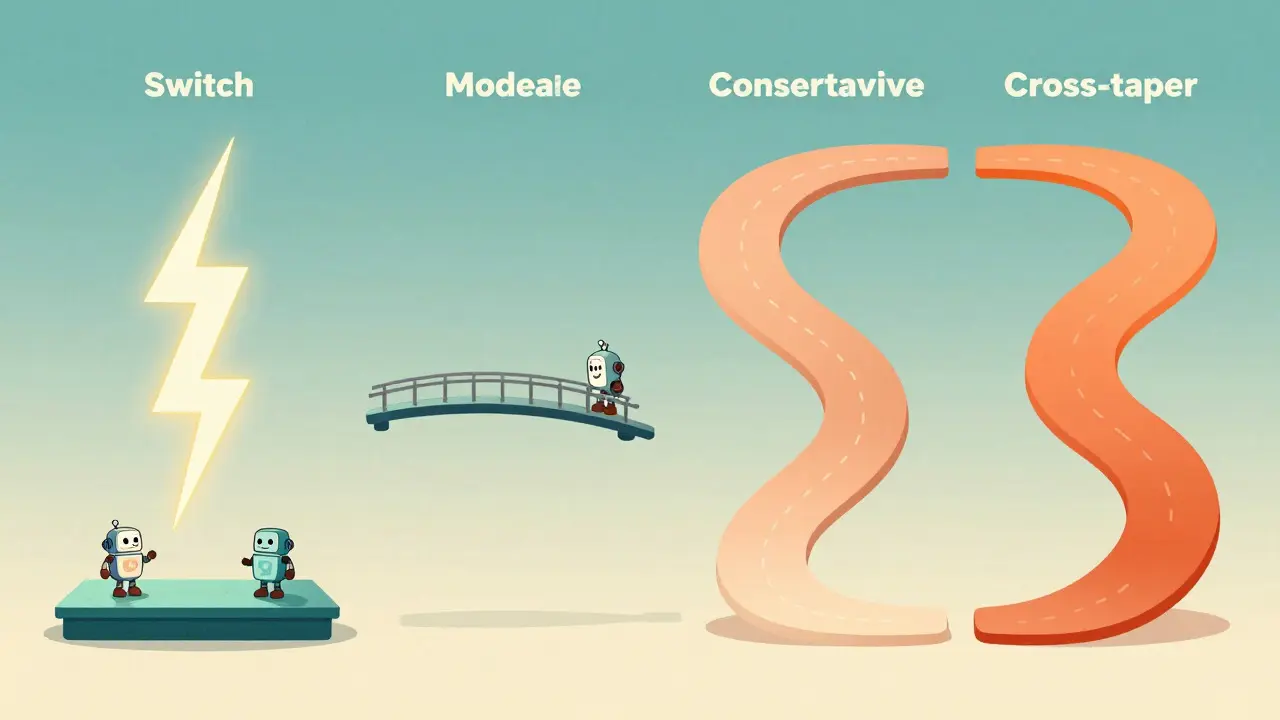
Clinicians generally use one of four methods when transitioning patients from one medication to another. Each has distinct risks and benefits, and the right choice depends heavily on the specific drugs involved and your personal health history.
| Strategy | How It Works | Best For | Risks & Considerations |
|---|---|---|---|
| Direct Switch | Stop Drug A; start Drug B the next day. | Medications within the same class with similar profiles. | Fastest method, but higher risk of serotonin syndrome if classes differ. |
| Moderate Switch | Short washout period (2-4 days) between stopping Drug A and starting Drug B. | Drugs with moderate half-lives where some clearance is needed. | Balanced approach, but may still trigger mild withdrawal. |
| Conservative Switch | Taper Drug A, wait for a full washout (3-5 half-lives), then start Drug B. | High-risk combinations or patients sensitive to interactions. | Lowest interaction risk, but highest relapse risk due to the drug-free gap. |
| Cross-Taper | Gradually decrease Drug A while simultaneously increasing Drug B over 1-2 weeks. | Most common scenario; preferred by 63% of clinicians. | Smoothest transition for most, but requires close monitoring for interactions. |
The cross-taper is currently the gold standard for many transitions, particularly among antidepressants. Studies show it yields superior outcomes for 78% of patients switching between different medication classes. However, it’s not always safe. For instance, switching from monoamine oxidase inhibitors (MAOIs) to SSRIs via cross-tapering can lead to a hypertensive crisis in 15-20% of cases without a proper washout period. Always rely on your doctor’s assessment of your specific combination.
Recognizing Withdrawal vs. Relapse
One of the biggest challenges during a medication switch is distinguishing between withdrawal symptoms and the return of your original condition. This confusion can lead to unnecessary dose adjustments or premature abandonment of a potentially effective new treatment.
Withdrawal symptoms typically appear within five days of reducing or stopping a medication. Common signs include:
- Physical sensations: Dizziness, nausea, fatigue, and the infamous "brain zaps" (electric shock-like feelings in the head).
- Sleep disturbances: Vivid dreams, insomnia, or excessive sleepiness.
- Mood changes: Irritability, anxiety, or tearfulness that feels sudden rather than gradual.
In contrast, relapse symptoms usually develop more slowly over weeks or months. They mirror the original condition’s baseline state rather than introducing new physical sensations like brain zaps. If you feel worse immediately after changing doses, it’s likely withdrawal. If you feel worse weeks later, it might be relapse. Keeping a daily symptom log can help you and your doctor identify patterns accurately.
Practical Steps to Minimize Side Effects
You play an active role in making this transition successful. Here are actionable steps to reduce discomfort and improve outcomes:
- Track Your Baseline: Before starting the switch, document your current mood, sleep quality, and any existing side effects. This gives you a reference point to measure progress against.
- Ask About Bridging Agents: In some complex cases, doctors may prescribe a short-acting medication temporarily to bridge the gap between the old and new drugs. While controversial due to polypharmacy concerns, studies suggest it can reduce withdrawal symptoms by 28% in difficult transitions.
- Stick to the Schedule: Consistency is key. Take your medications at the same time every day. Missing doses during a taper can destabilize your system further.
- Prioritize Self-Care: Your body is under stress. Ensure you’re getting adequate hydration, regular light exercise, and consistent sleep hygiene. These foundational habits buffer against physiological stress.
- Communicate Early: Don’t wait until you’re in crisis to call your doctor. Report new or worsening symptoms within the first few days. Early intervention can prevent minor issues from becoming major setbacks.

When to Seek Immediate Help
While most side effects are manageable, some signals require urgent medical attention. Be vigilant for signs of serotonin syndrome, a rare but serious condition caused by excessive serotonin activity. Symptoms include high fever, rigid muscles, rapid heart rate, confusion, and agitation. Although it occurs in only 0.5 to 1.7 cases per 1,000 patient-years during transitions, it can be life-threatening if untreated.
Also watch for severe allergic reactions, such as difficulty breathing, swelling of the face or throat, or widespread rash. If you experience these, seek emergency care immediately. For less acute but persistent symptoms like severe insomnia or unmanageable anxiety, contact your prescribing physician within 24-48 hours. They may adjust the tapering schedule or add temporary supportive medications like hydroxyzine for anxiety.
The Role of Technology and Personalized Care
The landscape of medication management is evolving rapidly. Digital therapeutic platforms now incorporate AI-driven algorithms to predict optimal switching strategies. Recent trials indicate these tools can reduce transition complications by 31%. Additionally, pharmacogenetic testing is gaining traction. By analyzing your DNA, doctors can determine how your liver metabolizes certain drugs, allowing them to choose medications that align better with your biology. One study found that genotype-guided transitions improved outcomes by 33% compared to standard approaches.
Even if you don’t have access to advanced genetic testing, you can leverage digital tools. Apps that track mood and medication adherence can provide valuable data for your doctor. Share this information during follow-up appointments to ensure your switching protocol is adjusted based on real-world evidence rather than guesswork.
How long does it take to switch medications safely?
The duration varies widely depending on the method used. A direct switch happens overnight, while a cross-taper typically lasts 1 to 2 weeks. Conservative switches with washout periods can extend the process to several weeks, especially for drugs with long half-lives like fluoxetine. On average, complete transitions require about 21 days including follow-up monitoring.
Can I stop my medication cold turkey if I’m having bad side effects?
It is generally not recommended to stop most psychiatric or chronic medications abruptly. Cold turkey cessation significantly increases the risk of severe withdrawal symptoms and relapse. Even if side effects are intolerable, consult your doctor to create a rapid but controlled tapering schedule or switch to a safer alternative immediately.
What is serotonin syndrome, and is it common during switches?
Serotonin syndrome is a potentially life-threatening reaction to excess serotonin in the brain. It is rare, occurring in less than 0.2% of patients annually, but the risk increases slightly during medication transitions, particularly when combining drugs from different classes. Symptoms include agitation, confusion, rapid heart rate, and muscle rigidity. Seek immediate medical help if suspected.
Does age affect how I should switch medications?
Yes, age plays a significant role. Patients over 65 often experience more severe withdrawal symptoms and may metabolize drugs more slowly. Clinicians typically recommend slower tapering schedules and closer monitoring for older adults to minimize adverse events and ensure safety during the transition.
How can I tell if my new medication is working?
Improvement usually occurs gradually over 4 to 6 weeks after reaching the target dose. Track specific symptoms related to your condition (e.g., mood stability, pain levels, energy). If you notice no improvement after 6 weeks, or if side effects outweigh benefits, discuss dosage adjustments or alternative options with your healthcare provider.