Recent POST





Imagine waking up with an itch that just won't quit or dealing with stomach issues that make you dread every meal. It sounds like a nightmare, but for millions of people, it's a reality caused by parasitic infections. These aren't just something you find in remote jungles; they are common in developed cities and rural towns alike. Whether it's a tiny worm causing sleepless nights for your kids or a microscopic protozoan from a "pristine" mountain stream, these hitchhikers are surprisingly resilient.
Key Takeaways
- Giardia is a protozoan causing watery diarrhea and malabsorption, often linked to contaminated water.
- Pinworms are small roundworms causing intense perianal itching, primarily in children.
- Treatment for both is highly effective but requires strict adherence to medication and hygiene to prevent reinfection.
- Household-wide treatment is essential for pinworms because they spread so easily between family members.
- Water filtration (pore size < 1 µm) or boiling is the best way to kill Giardia cysts.
The Unseen Guests: What are Parasitic Infections?
At their core, Parasitic Infections is a condition where an organism lives on or inside a host, consuming the host's nutrients to survive . While some parasites stay on the skin, the ones we're talking about today target the gut. They are masters of survival, often existing in two forms: a hardy "resting" stage (like a cyst) that can survive freezing water, and an "active" stage that causes the actual illness.
In the U.S., protozoan infections like giardiasis are incredibly frequent, but pinworms take the crown as the most common intestinal worm. While we often associate these with poor sanitation, travelers and campers are frequently blindsided by them because these organisms can hide in water that looks crystal clear.
Giardia: The Water-Borne Troublemaker
Giardia lamblia is a pear-shaped, flagellated protozoan that infects the small intestine . It doesn't just sit there; it attaches to the lining of your gut, damaging the brush border epithelium. Think of your intestinal lining like a shag carpet that absorbs nutrients; Giardia essentially flattens that carpet, making it hard for your body to take in fats and vitamins.
You'll usually know you have it within a week, though it can take up to 14 days. The hallmark symptoms are voluminous, watery diarrhea, nausea, and a level of fatigue that makes you feel like you've run a marathon. Because it disrupts nutrient absorption, some people experience weight loss even if they are eating normally. A particularly nasty side effect for some is chronic malabsorption, where the gut doesn't bounce back immediately after the parasite is gone.
How does it get in? You only need to swallow about 10 to 25 cysts. These cysts are tough. They can survive for months in cold water and are famously resistant to chlorine, which is why city water treatments sometimes fail to stop them. If you're hiking and drinking from a stream, you're essentially gambling with your gut health.

Pinworms: The Midnight Itch
Unlike the microscopic Giardia, Enterobius vermicularis (the pinworm) is a small, white roundworm about 1 cm long that lives in the human colon . These are the ultimate domestic pests. They are most common in children aged 5 to 10, but they don't discriminate-they'll move into any household where a child is infected.
The most distinct symptom is intense perianal itching, which almost always gets worse at night. This happens because the female worm migrates from the colon to the anus to lay thousands of eggs. When a child scratches in their sleep, the eggs get under their fingernails. From there, the eggs travel to toys, bedding, and door handles. If someone touches those surfaces and then touches their mouth, the cycle starts all over again.
| Feature | Giardia lamblia | Enterobius vermicularis (Pinworm) |
|---|---|---|
| Organism Type | Protozoan (Single-celled) | Helminth (Multicellular Worm) |
| Primary Symptom | Watery diarrhea & bloating | Perianal itching (especially at night) |
| Transmission | Contaminated water/food | Fecal-oral / Contaminated surfaces |
| Key Target | Small intestine lining | Colon / Anal region |
| Diagnostic Method | Stool antigen test | Scotch tape test |
Getting Rid of Them: Treatment Basics
The good news is that both of these are treatable, but you can't just take one pill and hope for the best. You have to attack both the parasite and the environment.
Tackling Giardiasis
Doctors typically reach for Metronidazole is an antibiotic and antiprotozoal medication used to treat anaerobic bacteria and certain parasites . While effective, it's notorious for leaving a metallic taste in the mouth-something nearly 80% of patients report. Other options include Tinidazole, which often requires only a single high dose, or Nitazoxanide, which is safer for very young children.
If you work in childcare or handle food, be careful. The CDC recommends staying away from these jobs for two weeks after your symptoms disappear to ensure you aren't shedding cysts into the community.
Eradicating Pinworms
For pinworms, the strategy is a "scorched earth" approach. Medications like Mebendazole or Albendazole are highly effective, but here is the catch: everyone in the house must be treated. Even if your partner or child doesn't have an itch, they could be carrying eggs. Data shows that 75% of household members are often infected when one person tests positive.
Medication alone often fails because the eggs can survive for 2 to 3 weeks on bedsheets and towels. To stop the recurrence, you need to wash all bedding and clothing in hot water and scrub the surfaces where children play. Without this environmental cleanup, you'll likely be treating the infection again in a month.
Preventing Future Infestations
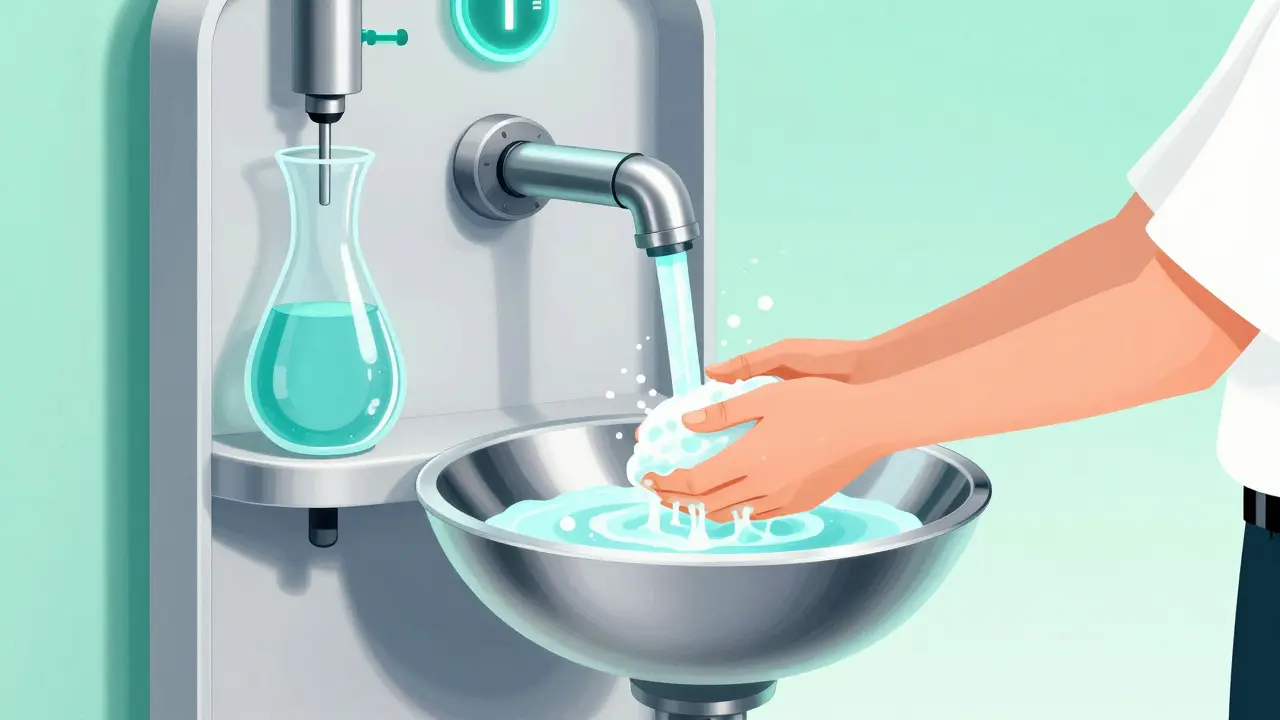
Prevention is mostly about breaking the fecal-oral route. Handwashing with soap is the simplest but most effective tool, potentially cutting transmission by up to 50%. But when it comes to water, you have to be more technical.
If you're traveling to an area with poor sanitation or camping in the wild, don't trust a simple cloth filter. To effectively kill Giardia, you should either boil your water for at least one minute or use a professional filter with a pore size of less than 1 micron. Standard chlorine tablets aren't always enough because the cysts have a protective outer shell that mocks the chemical.
The Road to Recovery: Common Pitfalls
One of the biggest mistakes people make is stopping their medication the moment they feel better. This is especially true for pinworms. Because the medication kills the adult worms but not always the eggs, a second dose is usually required two weeks later to kill any larvae that hatched in the interim.
For those with weakened immune systems, such as people living with HIV/AIDS, these infections can be much more stubborn. While a healthy adult might clear Giardia in a few weeks, immunocompromised individuals can suffer for months, requiring longer courses of medication and closer monitoring by a specialist.
How do I know if my child has pinworms or just a regular itch?
The most telling sign is the timing. Pinworm itching is almost always most intense at night because that's when the female worms leave the colon to lay eggs near the anus. You can also check your child's stool or the anal area with a flashlight shortly after they wake up; you might see tiny, white, thread-like worms moving. If you suspect pinworms, the "scotch tape test" (pressing adhesive tape to the skin and examining it under a microscope) is the best way to confirm.
Can I get Giardia from a swimming pool?
Yes, it's possible. While chlorine is used to disinfect pools, Giardia cysts are remarkably resistant to it. If an infected person has an accident in the pool and the chlorine levels aren't high enough to neutralize the cysts quickly, others can swallow the contaminated water. This is why it's so important to avoid swallowing pool water and to shower immediately after swimming.
Is it normal to feel sick after taking Metronidazole?
Yes, many people experience side effects. The most common are a metallic taste in the mouth, nausea, and a general feeling of malaise. It is critical that you avoid all alcohol consumption while taking this medication and for at least 48 to 72 hours after the last dose, as the combination can cause a severe reaction including vomiting and rapid heartbeat.
How long do pinworm eggs survive on clothes and bedding?
Pinworm eggs can survive for about 2 to 3 weeks on surfaces like bedsheets, towels, pajamas, and upholstered furniture. Because they are lightweight, they can even become airborne and be swallowed. This is why thorough cleaning and laundering of all household linens are necessary during the treatment process.
What is the best way to filter water for Giardia?
The gold standard for removing Giardia is using a filter with a pore size of less than 1 micron, as the cysts are generally larger than this. Alternatively, bringing water to a rolling boil for at least one minute (three minutes at high altitudes) is the most reliable way to kill the organisms. Basic chemical tablets may not be sufficient for heavy infestations.
Next Steps and Troubleshooting
If you've completed your treatment but symptoms return, don't panic. This is often a sign of reinfection rather than treatment failure. Check your environment: Are there shared towels in the house? Is someone still using a contaminated water source? In some cases, especially in Southeast Asia, drug-resistant strains of Giardia are becoming more common, so if you don't see results, ask your doctor about switching to a different class of antiparasitic.
For parents, the best move is to establish a strict hand-washing routine before every meal and after every bathroom visit. Trim your children's fingernails short to prevent eggs from lodging under the nails, and encourage them to avoid thumb-sucking or nail-biting during the recovery period.

Sam Hayes
The boiling point advice is solid but remember that if you are at high altitude you really need to keep that water bubbling for a few extra minutes since the boiling point is lower there

Mark Zhang
Dealing with these things can be so overwhelming for parents. Just remember to be patient with your kids while you're scrubbing the whole house. It's a lot of work but totally worth it for their comfort

simran kaur
Typical mainstream narrative pushing pharmaceutical 'cures' for things that the water companies probably put there in the first place. Have you ever considered why these 'outbreaks' always happen right when they want to push new meds? The whole 'pore size' thing is just a way to get us to buy more expensive filters from companies owned by the same people making the drugs. It's all a closed loop of profit. Wake up and stop trusting the CDC blindly because they're just the mouthpiece for Big Pharma. The real solutions are usually suppressed because they are too cheap and effective to be profitable. Just follow the money and you will see the truth about these parasites

Joseph Rutakangwa
wash hands often

Will Baker
Oh sure, just wash your hands and everything will be magically fine. I love how we pretend a bit of soap solves the existential dread of having worms in your colon. Truly inspiring

Brian Shiroma
Wow, another person pretending the world is a sparkling clean paradise until they actually have to deal with a parasite. It's almost cute how naive some of you are about basic hygiene

sophia alex
The level of filth some people live in is honestly appalling 🙄 I can't even imagine the horror of a pinworm infestation in a modern home. Absolutely disgusting! 💅

Aysha Hind
Absolute trash tier advice. Using chemicals to kill a parasite just destroys your gut biome, which is exactly what the 'elites' want. You're basically trading a few worms for a lifelong dependency on synthetic probiotics and gut-healing supplements. It's a scam designed to keep us weak and sick. Just use natural cleanses and stop being a sheep for the medical industrial complex

Hope Azzaratta-Rubyhawk
You must maintain an absolute standard of cleanliness in your home! It is non-negotiable! Anyone who lets their children slide on handwashing is simply failing in their duty as a parent!

Jenna Carpenter
i tried some naturopathic oils and they worked way bettr than the meds... the doctors just want to over-prescribe everything these days. its all about the money not the healing

Vicki Marinker
The prose here is dreadfully utilitarian. I find it quite tedious that we must discuss bowel worms in such a clinical, uninspired manner. It's all so terribly mundane

Joey Petelle
Imagine being so pathetic that you get a worm from a stream in the great American wilderness. Honestly, it's a failure of the spirit to be outsmarted by a microscopic blob. Pure comedy

Rachelle Z
Everything is just so dramatic here!!! 🌈 Let's just all be kind to our guts and wash our sheets, okay??? ✨ No need for all the fighting!!!! 💖

Branden Prunica
The second dose is the real kicker. I remember the panic when the itching came back and I thought the medicine failed, but it was just the eggs hatching. Absolute nightmare fuel!

Dee McDonald
Let's get proactive people! If you've been hiking, get tested now! Don't wait for the fatigue to hit you like a truck! We can beat these parasites if we just stay on top of our health and keep pushing for better water standards!
Write a comment