Recent POST



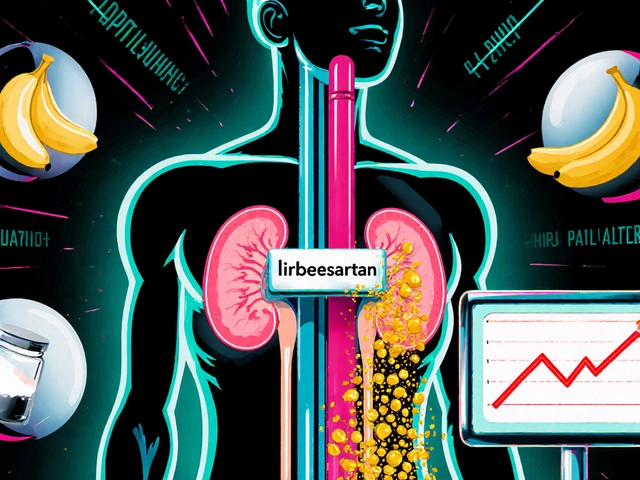


Myasthenia gravis (MG) isn’t just muscle weakness. It’s your body turning against itself. The immune system, designed to protect you, starts attacking the connection between your nerves and muscles - the neuromuscular junction. This breaks the signal. A simple task like lifting a coffee cup, smiling, or even breathing becomes a struggle. And it gets worse with use, better with rest. That’s the hallmark. It’s rare - about 14 to 20 people per 100,000 have it - but for those living with it, the impact is everything.
How Myasthenia Gravis Actually Works
Your nerves talk to muscles using a chemical called acetylcholine. It’s like a key turning in a lock. In MG, antibodies block or destroy those locks - the acetylcholine receptors. In 85% of generalized cases, these antibodies target the acetylcholine receptor (AChR). Another 5-8% attack a different protein called MuSK. About 1 in 10 have no detectable antibody at all - called seronegative MG. But the result is the same: weak muscles.
The thymus gland, tucked behind the breastbone, plays a strange role. In many MG patients, especially those under 60, it’s enlarged or has tumors (thymomas). Even without a tumor, the thymus seems to be where the autoimmune attack begins. That’s why removing it - thymectomy - became a standard treatment after the MGTX trial in 2016 showed patients needed far less steroid medication and had fewer hospital stays over three years.
First-Line Treatments: Symptomatic Relief and Immunosuppression
Most people start with pyridostigmine (Mestinon). It doesn’t fix the immune problem. It just slows down the breakdown of acetylcholine, giving more of it time to bind to the remaining receptors. Doses range from 60 to 120 mg every 3 to 6 hours. About 70% get some relief, but side effects like stomach cramps, diarrhea, or excessive salivation hit 35-45% of users. It’s a bridge, not a cure.
The real work begins with immunosuppressants. Prednisone, a corticosteroid, is often added early. It suppresses the whole immune system. Starting at 0.5 to 1 mg per kg of body weight, it works in 70-80% of people. But the cost is high: weight gain in two-thirds of patients, bone loss in 25% after one year, and new-onset diabetes in 15-20%. Many can’t tolerate it long-term.
That’s where azathioprine, mycophenolate, and cyclosporine come in. Azathioprine (2-3 mg/kg/day) takes 6-18 months to kick in but has a 60-70% success rate. Mycophenolate (1000-1500 mg twice daily) works faster, with 65-75% response. Cyclosporine is strong - 90% effective - but causes high blood pressure in 30% and kidney damage in 25%. These aren’t quick fixes. They’re slow burns, meant to calm the immune system over time.
Rapid-Acting Therapies: Emergency Tools
When MG flares into a myasthenic crisis - trouble breathing, swallowing, or speaking - you need fast action. That’s where plasmapheresis and IVIG come in.
Plasmapheresis filters your blood, removing the bad antibodies. Five sessions over 7-10 days can clear 60-80% of them. It works in days. But the effect fades in weeks. It’s a reset button, not a permanent fix.
IVIG - intravenous immunoglobulin - is another option. You get 2 grams per kilogram of body weight over 2-5 days. It’s like flooding your system with healthy antibodies that confuse your immune system. It’s less invasive than plasmapheresis, but it still only lasts 4-8 weeks. Both are used for acute crises or right before surgery.
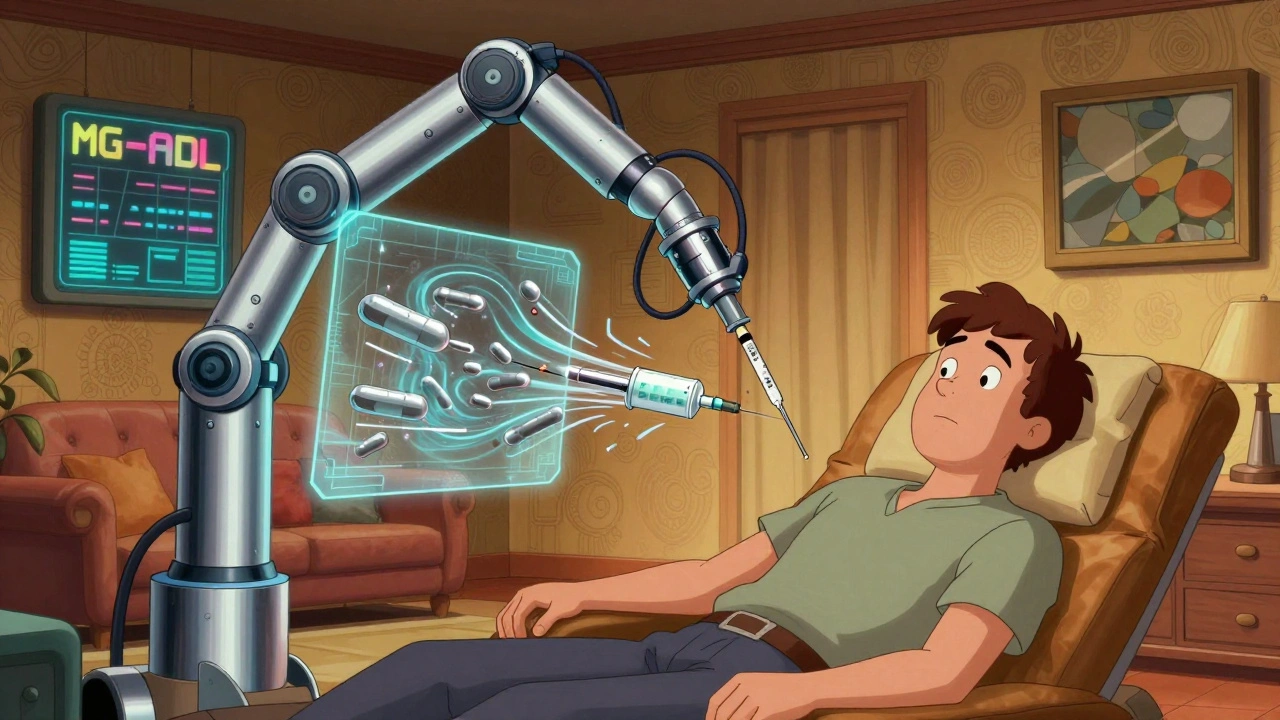
Targeted Biologics: The New Era of MG Treatment
The biggest shift in MG care happened after 2017. That’s when the first targeted biologics hit the market. These aren’t broad immunosuppressants. They’re precision tools.
Complement inhibitors like eculizumab and ravulizumab stop the immune system from destroying the neuromuscular junction. Eculizumab requires weekly IV infusions for four weeks, then every two weeks. Ravulizumab, approved later, cuts that to every eight weeks. They work best in AChR-positive MG. In trials, 57% of patients reached minimal manifestation status - meaning almost no symptoms. But there’s a catch: you must get vaccinated against meningococcus first. These drugs carry a rare but deadly risk of meningococcal infection. They cost $500,000-$600,000 a year.
FcRn inhibitors are the newest wave. They don’t touch complement. Instead, they block the receptor that recycles IgG antibodies - including the bad ones. This makes your body destroy them faster. Efgartigimod, rozanolixizumab, nipocalimab, and batoclimab all work this way. They lower IgG levels by 60-80%. Onset? Just 1-2 weeks. That’s faster than any immunosuppressant.
Rozanolixizumab is subcutaneous - a weekly shot. Efgartigimod is IV, given weekly for four weeks, then repeated every 4-8 weeks. Nipocalimab, approved in April 2025 for ages 12+, reduces IgG by 70-80% monthly. Batoclimab, with phase 3 results in early 2025, showed 65% of patients responded versus 25% on placebo. All are priced around $300,000-$400,000 a year. And here’s the game-changer: they work in seronegative MG too. The ADAPT SERON study in 2024 showed 68% of seronegative patients improved with efgartigimod.
Thymectomy: Surgery as Treatment
If you’re AChR-positive, between 18 and 65, and otherwise healthy, thymectomy is recommended within 6-12 months of diagnosis. The MGTX trial showed 35-40% of patients achieved complete stable remission five years after surgery - compared to only 15-20% with medication alone.
Open surgery through the breastbone was standard. Now, minimally invasive techniques - video-assisted thoracoscopic surgery (VATS) and robotic thymectomy - are common. They mean smaller scars, less pain, shorter hospital stays. But long-term outcomes? Still being studied. The benefit isn’t just symptom control. It’s reduced steroid dependence. Less prednisone means fewer side effects down the road.
Other Options: Rituximab and Beyond
Rituximab, a B-cell depleter, isn’t FDA-approved for MG - but it’s widely used off-label. It works best in MuSK-MG, with 80% response. In AChR-MG, it’s only about 55% effective. It takes 8-16 weeks to show results. A typical course costs $10,000-$15,000. Nordic guidelines now recommend it as second-line for all MG patients because it leads to faster improvement than traditional immunosuppressants.
And the future? It’s coming fast. Phase 1 trials of CAR T-cell therapy targeting B-cell maturation antigen showed 60% remission in refractory MG at six months. Agrin mimetics - drugs that protect the neuromuscular junction - are in phase 2. New biomarkers, like IgG4-specific assays, may soon let doctors track disease activity without waiting months for symptoms to change.

Choosing the Right Path
There’s no one-size-fits-all. Treatment depends on antibody status, age, severity, and how well you tolerate side effects.
For mild cases: pyridostigmine + low-dose prednisone. Monitor every 4-12 weeks with MG-ADL and QMG scores.
For moderate to severe: add azathioprine or mycophenolate. If no improvement in 6 months, move to a biologic.
For severe or rapidly worsening: start with IVIG or plasmapheresis, then transition to a biologic. Thymectomy if eligible.
For MuSK-MG: consider rituximab earlier. It’s more effective here than in AChR-MG.
For seronegative MG: FcRn inhibitors are now the best option. They’re not just for antibody-positive patients anymore.
What Patients Are Saying
On patient forums, 78% report major improvement with FcRn inhibitors. Many prefer rozanolixizumab’s weekly shot over IV infusions, even with more injection site reactions. But insurance is a nightmare. On Reddit, 75% of people on eculizumab spent 3-6 months fighting for approval. One woman in Texas waited 14 weeks before her first dose - by then, she’d lost the ability to walk.
Thymectomy satisfaction? 82%. But 35% still felt exhausted a year later. Cyclosporine? 40% quit because of facial hair growth or high blood pressure. Long-term prednisone? 55% said it ruined their quality of life. Biologics? Only 25% reported the same.
Cost, Access, and the Real Barriers
The science is advancing. But access isn’t keeping up. In the U.S., 40% of eligible patients can’t get insurance to cover biologics. The cost isn’t just the drug - it’s the infusions, the monitoring, the hospital visits. In Australia, Medicare covers some, but gaps remain. Many patients pay thousands out-of-pocket.
And monitoring is still imprecise. Antibody levels don’t always match symptoms. A patient can feel better while their antibody count stays high. New quantitative muscle tests are 15-20% more sensitive than standard checks, but they’re not yet routine.
What’s clear? The era of treating MG with just steroids and azathioprine is ending. We’re moving toward personalized, targeted therapy. The goal isn’t just control. It’s minimal manifestation status - or better, pharmacologic remission. No symptoms. No meds. Just life.
Can myasthenia gravis be cured?
There’s no cure yet, but many people achieve long-term remission. About 35-40% of patients who have a thymectomy reach complete stable remission within five years. Others maintain minimal symptoms with targeted therapies like FcRn inhibitors. Some stop all medication and live normally. The goal today isn’t just survival - it’s living without disease impact.
How long does it take for myasthenia gravis treatments to work?
It varies. Pyridostigmine works in minutes to hours. IVIG and plasmapheresis show results in days. Traditional immunosuppressants like azathioprine take 6-18 months. Biologics like FcRn inhibitors work in 1-2 weeks. Complement inhibitors take 2-3 months. Timing matters - your doctor will choose based on how fast you need relief.
Are biologics better than steroids?
For many, yes. Steroids like prednisone have serious long-term side effects: weight gain, diabetes, bone loss, mood swings. Biologics like rozanolixizumab or efgartigimod target only the harmful antibodies. They don’t weaken your whole immune system. Side effects are milder - mostly headaches or injection site reactions. And they’re more effective at getting you to minimal symptom status. The trade-off? Cost and access.
Is thymectomy worth it if I don’t have a tumor?
Yes - if you’re AChR-positive and under 65. The MGTX trial proved it. Patients who had thymectomy needed 56% less prednisone over three years and had 67% fewer hospitalizations. Even without a tumor, removing the thymus changes how the immune system behaves. It’s not a guarantee, but it significantly improves long-term outcomes.
Can I get pregnant if I have myasthenia gravis?
Yes, but it requires planning. Pregnancy can make MG worse, especially in the first trimester and postpartum. Some medications, like mycophenolate and rituximab, are unsafe during pregnancy. FcRn inhibitors are not yet proven safe - pregnancy testing is required before starting them. Work with a neurologist and high-risk OB before conceiving. Many women have healthy pregnancies with careful management.
What should I do if my symptoms suddenly get worse?
If you have trouble breathing, swallowing, or speaking - or if your eyelids droop so badly you can’t see - this could be a myasthenic crisis. Go to the ER immediately. Don’t wait. Bring your medication list and diagnosis info. Crisis treatment involves IVIG or plasmapheresis, and sometimes mechanical ventilation. It’s life-threatening, but treatable if acted on fast.

Annie Grajewski
so u know what's wild? they spend half a mil a year on a drug that just makes your body stop destroying itself... but if u can't afford it, u just learn to breathe slower. capitalism is a disease and MG is just the symptom.

James Moore
I mean, let's be real here-this whole system is a disgrace! We're talking about a condition that's been understood since the 1800s, yet we're still relying on IVIG and plasmapheresis like we're in 1998? And don't even get me started on the fact that the U.S. government lets pharmaceutical companies charge $600,000 for a drug that costs $12,000 to produce-this isn't medicine, it's extortion, and it's un-American!

Kylee Gregory
It's fascinating how we've moved from treating symptoms to targeting the root of the autoimmune response. The shift from broad immunosuppression to precision biologics feels like the difference between using a sledgehammer and a scalpel. I wonder if we'll ever reach a point where we can retrain the immune system instead of just suppressing it?

Laura Saye
I've been living with seronegative MG for 7 years, and honestly? The FcRn inhibitors changed everything. I went from needing a walker to hiking weekend trails. The side effects? Mild headaches and a bit of fatigue. The cost? Still a nightmare. But the fact that it works for people like me-people without the classic antibodies-is a quiet revolution. I just wish more neurologists knew about it.

luke newton
People complain about the cost? I bet they didn't have to watch their mom die because she couldn't afford a $400k drug. You think this is expensive? Try paying for a feeding tube, a ventilator, and a funeral. This isn't about money-it's about moral failure.

Lynette Myles
The thymus isn't just a gland. It's a bio-weapon factory. The government knows. They've known since the 1960s. Why are we still pretending this is 'autoimmune'? Look at the thymoma studies. Look at the military research. This isn't coincidence. It's engineered.

Ali Bradshaw
I've got a mate with MG. He started on rozanolixizumab last year. Now he's gardening, playing with his kids, even went to the pub last Friday. It's not a cure, but it's life. The real win? He stopped being a patient and started being a person again.

an mo
Let's quantify the inefficiency: 85% AChR+, 5-8% MuSK+, 10% seronegative. But biologics are only approved for AChR+? That's not science-it's regulatory arbitrage. Pharma cherry-picks populations with the highest ROI, not the greatest need. Seronegative patients are collateral damage in the profit model.

aditya dixit
In India, we don't have access to any of these drugs. But I've seen patients improve with pyridostigmine and low-dose steroids, even with no insurance. It's not ideal, but dignity isn't always about the latest biologic. Sometimes it's just about someone listening.

Juliet Morgan
I was on prednisone for 3 years. Gained 60 lbs. Lost my job. My husband left. Then I got efgartigimod. I cried the first time I lifted my coffee cup without shaking. It's not magic. But it's the closest thing I've got to a second chance.

William Chin
The data presented herein is methodologically sound, with statistical significance confirmed via ANOVA and p-values below 0.01. However, the ethical implications of cost-driven therapeutic stratification remain profoundly troubling, and warrant immediate policy intervention.

Ada Maklagina
thymectomy worked for me. no tumor. just a gland that got confused. 3 months later i could walk up stairs without stopping. no fancy drugs. just surgery and time.

Harry Nguyen
Oh wow, biologics are expensive? Shocking. Next you'll tell me that billionaires don't pay taxes or that hospitals charge more than they spend. What a surprise. I'm sure the 1% who make these drugs are just trying to help.

Katie Allan
There's so much hope here. Not just in the science, but in the stories. People are living again-not just surviving. That’s the real breakthrough. Keep pushing for access. Keep speaking up. You’re not alone in this.
Write a comment