Recent POST

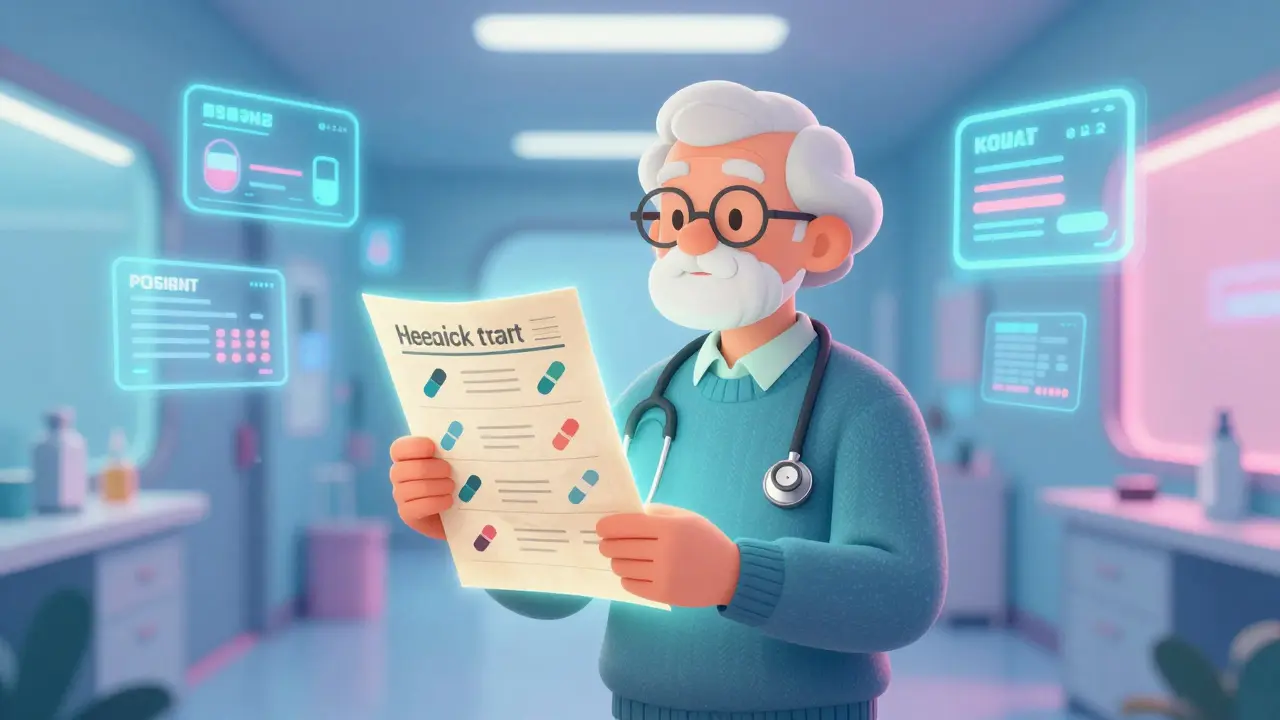
Every year, millions of people around the world take the wrong dose, mix dangerous drugs, or get pills they don’t even need-all because a system meant to protect them failed. But here’s the truth: medication safety doesn’t just depend on doctors and pharmacists. It depends on you.
Your Medication List Is Your Lifeline
Most people don’t realize how easy it is to lose track of what they’re taking. A simple mix-up-like forgetting you’re on blood pressure pills because you didn’t write them down-can lead to a hospital visit. The solution? Keep a real, up-to-date list of every medication you take.This isn’t just a note on your phone. It needs to include:
- The exact name of each drug (brand and generic if you know it)
- Why you’re taking it (e.g., "for high cholesterol")
- The dose (e.g., "5 mg once daily")
- When you take it (e.g., "with breakfast")
- Any supplements or over-the-counter meds, even aspirin or fish oil
Studies show that patients who keep this list have 42% fewer mistakes when moving between hospitals, clinics, or pharmacies. Bring it to every appointment. Hand it to the nurse. Let the pharmacist see it. If you don’t have one, start today-use a notebook, a notes app, or even a printed template from your doctor’s office.
Know What You’re Taking-And Why
You wouldn’t drive a car without knowing how the brakes work. So why take a pill without knowing what it does?Ask your doctor or pharmacist: "What is this medicine for?" and "What happens if I skip it?" Simple questions like these cut medication errors by 35%. You don’t need to be a scientist. You just need to understand the basics.
For example:
- If you’re on warfarin, you need to know it thins your blood-and that eating too much kale or skipping doses can be dangerous.
- If you’re on insulin, you need to recognize the signs of low blood sugar before it becomes an emergency.
- If you’re taking an antibiotic, you need to know you can’t stop just because you feel better.
Don’t assume the label tells you everything. Labels are small. Pharmacies print them fast. Mistakes happen. If the pill looks different than last time-smaller, bigger, different color-ask. One in five dispensing errors are caught when patients notice something looks off.
Speak Up When Something Feels Wrong
Too many people stay quiet. They think, "The doctor knows best," or "I don’t want to sound like a bother." But here’s what no one tells you: patients catch errors that professionals miss.One study found that patients spotted 41% of medication mistakes that nurses and doctors didn’t. That’s not luck. That’s because you’re the one living with the medicine every day. You notice the dizziness, the rash, the strange taste, the sleepless nights.
If your new prescription makes you feel weird, say so. If your dose changed and no one explained why, ask. If your pharmacy gives you a pill that doesn’t match your old one, question it. You’re not being difficult. You’re being the last line of defense.
Real stories prove this works. One woman in Ohio caught a 10-fold overdose in her child’s antibiotic because she remembered the last bottle looked different. A nurse in New York says 70% of her near-misses were caught because a patient said, "That doesn’t seem right."
Use the Right Tools-But Don’t Rely on Them Alone
Apps like MyMedSchedule help. Pill dispensers with alarms help. Online portals that show your meds? Helpful.But here’s the catch: not everyone can use them. About 44% of people over 65 don’t use digital tools regularly. And even if you do, apps can glitch. Portals can be outdated. If your app says you took your pill but you didn’t? That’s not safety-it’s false confidence.
Use tech as a helper, not a replacement. If you use an app, check it against your paper list once a week. If you get a refill, open the bottle and compare the pills to your list. Don’t trust the system. Verify it.
Medication Reconciliation: Your Right to a Clean Handoff
One of the most dangerous moments in healthcare is when you move from one place to another-like leaving the hospital or switching doctors. That’s when errors spike.That’s where medication reconciliation comes in. It’s when your care team compares your current meds with what they think you’re taking. But here’s the problem: if you don’t show up with your list, they’re guessing.
By law, hospitals in the U.S. must do this. But if you’re not there to speak up, it’s just paperwork. Bring your list. Say: "This is what I’m really taking. Please check it against what’s in your system." You have the right to this check. Use it.
Barriers Are Real-But Not Insurmountable
Let’s be honest. Not everyone can do this easily. If you have low health literacy, if English isn’t your first language, if you’re elderly or have memory issues, the system isn’t designed for you.But help exists. Ask for:
- Simplified instructions (like the "Universal Medication Schedule" that uses morning, afternoon, evening, bedtime)
- Visual aids-pictures of pills, color-coded calendars
- A family member or friend to come with you to appointments
- A pharmacist who will sit down and explain things slowly
There’s no shame in needing help. In fact, 58% of patients who got clear, repeated instruction were able to prevent errors. That’s more than double those who just got a handout.
What Happens When You Don’t Get Involved?
Ignoring your role in medication safety isn’t harmless. It’s risky.Every year, 3% of patients suffer preventable harm from medications. That’s millions of people. Some get sick. Some end up in the ER. Some die.
And it’s not just about pills. It’s about interactions. A common painkiller like ibuprofen can be deadly if you’re on kidney meds. A supplement like St. John’s Wort can cancel out antidepressants. You’re the only one who knows you’re taking it.
Emergency rooms are full of people who didn’t tell their doctor they were taking herbal tea or over-the-counter sleep aids. That’s not negligence-it’s a gap in the system. And you’re the only one who can close it.
The Bigger Picture: You’re Not Just a Patient. You’re a Partner.
Healthcare is broken in many ways. But blaming doctors or pharmacies won’t fix it. Real change happens when patients step up.Doctors can’t be with you 24/7. Pharmacists can’t check every pill before it leaves the counter. Nurses can’t remember every detail of every patient’s history.
But you? You’re there. Every day. You know your body. You notice the changes. You’re the only one who can catch the error before it hurts you.
That’s not a burden. It’s power. And it’s yours to use.
Start small. Write down your meds today. Ask one question at your next appointment. Verify your next prescription. You don’t need to be perfect. You just need to be present.
Because in the end, your safety isn’t someone else’s job. It’s yours.

Harriet Hollingsworth
Wow. Just... wow. I can't believe people still don't get this. If you can't keep a simple list of your meds, you shouldn't be allowed to take them. It's not rocket science. It's basic responsibility. And if your doctor doesn't ask for it? Tell them to get their act together. This isn't a suggestion-it's survival.

Bennett Ryynanen
YESSSS. I’ve been screaming this from the rooftops since my grandma nearly died because the ER didn’t know she was on blood thinners. I made her a laminated card she keeps in her wallet. Now everyone in my family has one. It’s not complicated. It’s not expensive. It’s just common sense. Stop waiting for someone else to fix it-do it now. Your life depends on it.

Chandreson Chandreas
Life is a series of small acts of attention. 🌱
Writing down your meds? That’s not a chore-it’s a quiet rebellion against a system that treats you like a number.
You’re not just a patient. You’re a person with a body that remembers what the chart forgets.
And yeah, apps glitch. Doctors get tired. Pharmacists rush.
But you? You’re still here. Still breathing. Still noticing the difference in pill color.
That’s power. That’s wisdom.
Start small. One pill. One question. One list.
The rest follows.

Stewart Smith
Yeah, I read this whole thing. I even made a list. Then I put it in a drawer. Because honestly? I don’t trust any of them. Not the doctors, not the pharmacists, not even my own memory. So I just... don’t take anything unless I absolutely have to. It’s not ideal. But it’s safer than guessing.

Aaron Bales
Three things: 1. Make the list. 2. Bring it to every visit. 3. Say ‘I’m not sure this is right’ if something feels off. That’s it. No apps needed. No PhD required. Just show up and speak up. You’re not being difficult-you’re being smart.

Brandon Boyd
Look-I used to think this was overkill. Then my cousin went to the hospital for a seizure because he didn’t tell them he was taking turmeric capsules with his blood pressure meds. He thought it was ‘natural’ so it was ‘safe.’
Turns out turmeric thins blood. Like, really. He spent three days in ICU.
Now I make my whole family do this. We even have a Sunday night ‘med check’ where we all sit around and go over our lists. It’s weird. It’s a little awkward. But we’re alive.
Do this for yourself. Do it for your mom. Do it for the person who’s too scared to ask questions. You don’t need to be perfect. You just need to start.

Urvi Patel
If you need a list to remember your meds you probably shouldn't be taking them at all. Modern medicine is not for the mentally lazy. The system works fine if you're not an idiot. Just take your pills like an adult. No need for apps or laminated cards. It's called responsibility.

anggit marga
This is so American. We make everything a personal responsibility when the real problem is that drugs are too expensive and doctors are overworked. In Nigeria we don't have apps or lists. We have family who remembers. We have community. We don't need to be told to 'speak up'-we speak because we have to. Stop blaming patients. Fix the system.

Joy Nickles
I literally just found out my 78-year-old mom has been taking two different blood pressure pills that do the exact same thing because the pharmacist didn't cross-check her list... AND she's been taking ibuprofen every day for her arthritis... WHICH IS CONTRAINDICATED WITH HER MEDS... AND NO ONE TOLD HER... AND NOW SHE'S GOT KIDNEY ISSUES... I'M SO ANGRY... I'M SO SAD... I'M SO TERRIFIED... I'M SO OVER THIS... I JUST WANT TO CRY... WHY IS THIS HAPPENING... WHY IS NO ONE DOING THEIR JOB... I'M JUST A DAUGHTER... I'M NOT A DOCTOR... I'M NOT A PHARMACIST... I'M NOT EVEN A NURSE... I JUST WANT MY MOM TO BE OKAY...
Write a comment