Recent POST
When a brand-name drug loses patent protection, you might expect a flood of cheap generics to hit the market. But sometimes, something else shows up: a pill that looks, tastes, and works exactly like the brand - but with a different label. That’s an authorized generic. And right now, they’re becoming rarer - not because they’re ineffective, but because the rules are changing.
What Exactly Is an Authorized Generic?
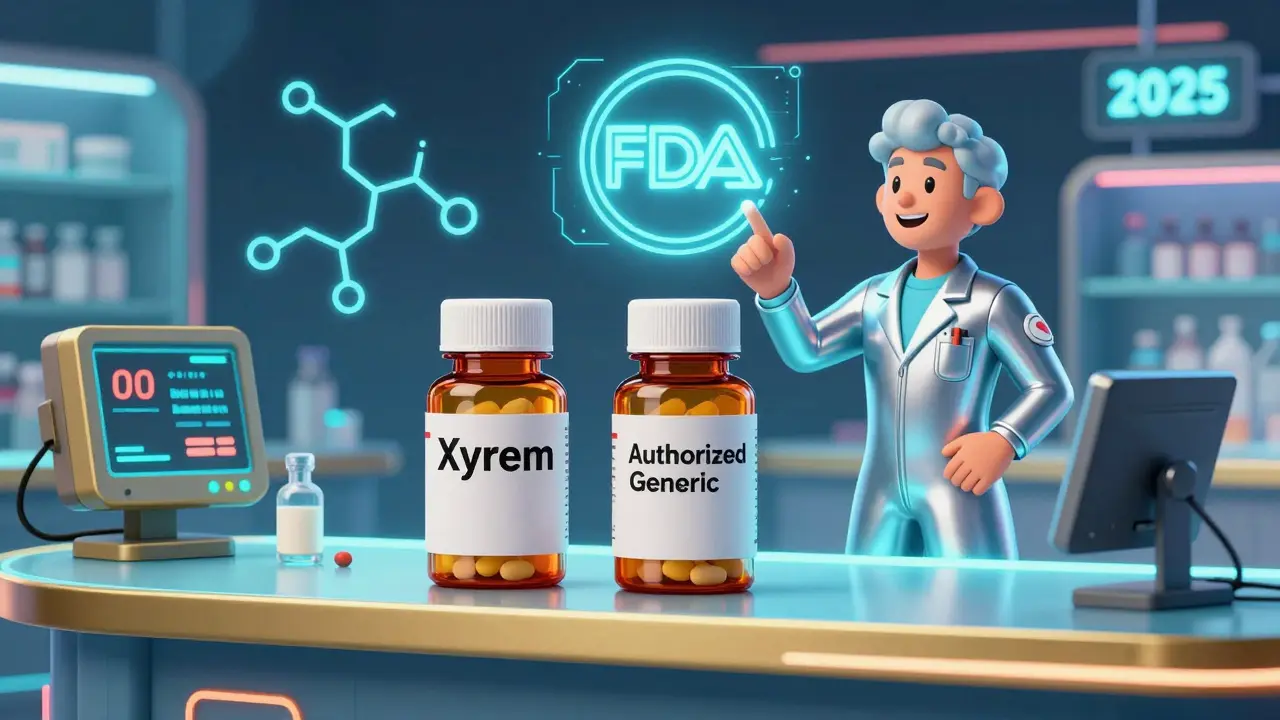
An authorized generic isn’t just another generic. It’s the exact same drug made by the original brand company, sold under a different label. Think of it like a car manufacturer selling the same model under a budget brand name. The active ingredients, the fillers, the coating - everything matches the brand. The only difference? The box, the name, and the price. The FDA defines it clearly: it’s a drug approved under the original New Drug Application (NDA), but marketed with different labeling. No new clinical trials. No bioequivalence studies. Just the same formula, repackaged. That’s why pharmacists and doctors trust them. If your patient was stable on the brand, switching to an authorized generic won’t cause a hiccup.Why They Used to Be Common - And Why They’re Disappearing
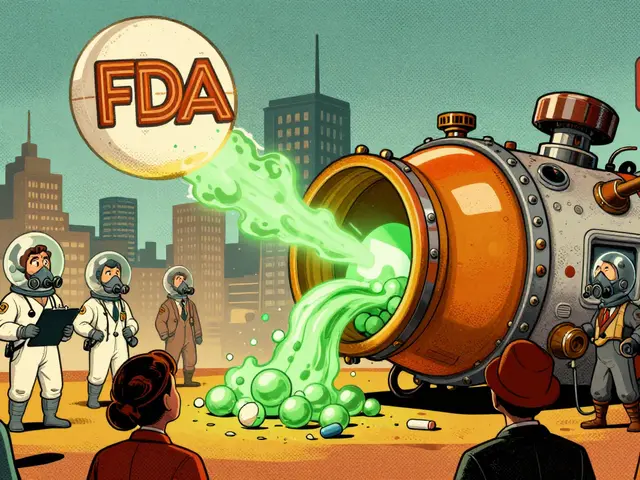
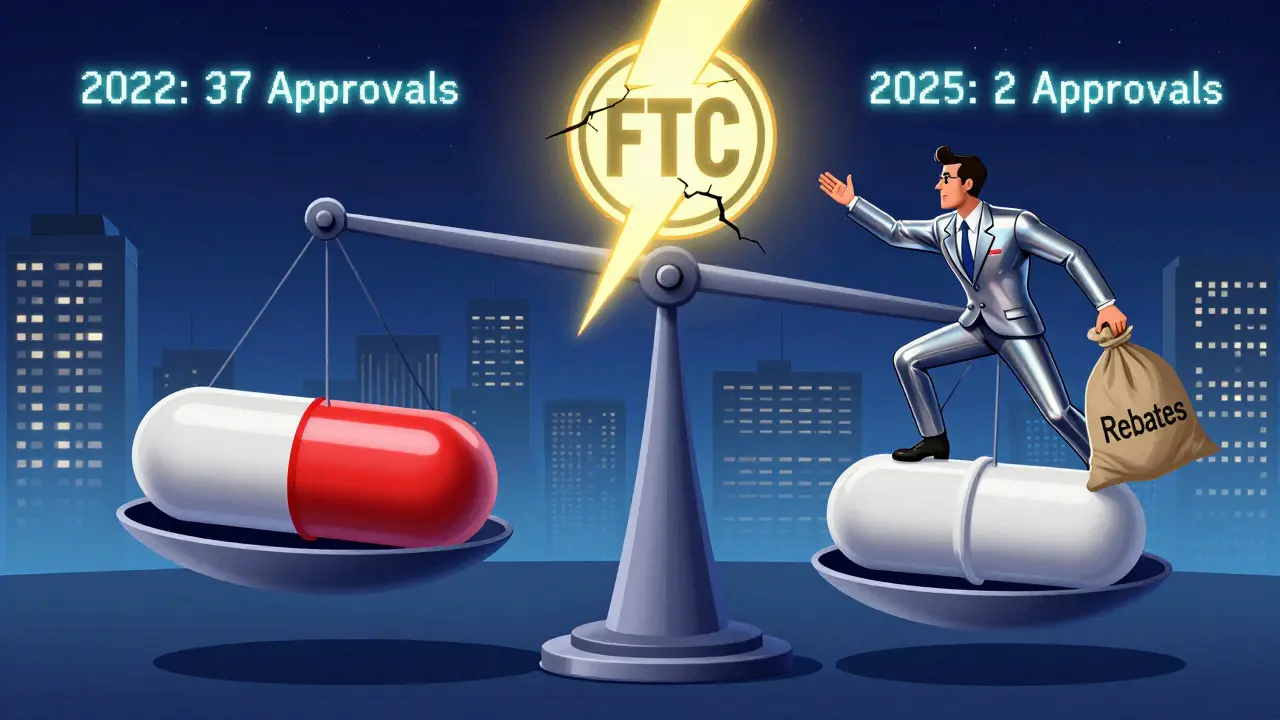
Back in 2022, there were 37 new authorized generics approved in the U.S. By 2025, that number dropped to just 12. Why? Two big reasons: regulators and money. The Federal Trade Commission (FTC) started cracking down on what’s called “pay-for-delay” deals. That’s when a brand company pays a generic maker to delay launching a cheaper version - and instead, launches its own authorized generic to undercut the competition. The FTC called it anti-competitive. In 2023, Teva paid $1.2 billion to settle allegations tied to this tactic for Copaxone. Since then, brand companies have been wary. At the same time, the real savings from authorized generics aren’t that big. While traditional generics can cost 80% less than the brand, authorized generics usually run only 10-15% cheaper. Why? Because the brand company still controls the price. They’re not trying to win a race to the bottom - they’re trying to keep customers from switching to someone else’s generic.What’s New in 2025? Only Two Additions
The FDA’s latest authorized generic list, updated October 10, 2025, added just two drugs:- Sodium oxybate (marketed as Xyrem) - now available as an authorized generic from Jazz Pharmaceuticals
- Plecanatide (Trulance) - distributed by Ironwood Pharmaceuticals under a new label
Who Benefits? And Who Gets Left Out?
Patients on narrow therapeutic index drugs - like seizure meds, blood thinners, or thyroid hormones - benefit most. Even tiny changes in inactive ingredients can throw off dosing. A 2024 JAMA study found patients on authorized generics had fewer side effects and better adherence than those switched to traditional generics. One pharmacist on Reddit shared that patients on sertraline (Zoloft) had stomach upset with the generic, but none with Pfizer’s authorized version. Same pill. Different filler. But here’s the catch: insurance doesn’t always care. Blue Cross Blue Shield recently dropped coverage for the authorized generic of Jardiance - not because it’s different, but because their pharmacy benefit manager (PBM) got a better rebate from the traditional generic maker. So even if your doctor prescribes the authorized version, your pharmacy might give you the cheaper one - and you won’t know the difference.The Real Problem: No One Knows What They’re Getting
A 2025 survey of over 2,300 pharmacists found 63% couldn’t tell an authorized generic from a regular generic just by looking at the bottle. That’s a problem. Patients are being counseled about “switching” to a generic - when they’re actually getting the exact same drug they were on. That creates confusion. And unnecessary anxiety. The FDA’s authorized generic list exists, but it’s not easy to use. It’s not printed on the box. It’s not in the pharmacy app. And most doctors don’t know to ask for it. Even the name “authorized generic” doesn’t appear on most labels. You have to dig into the Orange Book or call the manufacturer.
What’s Next? The Law Might Change Everything
A bill called the RELIEF Act (H.R. 4086), introduced in May 2025, could force brand companies to price their authorized generics at the same level as traditional generics. If it passes, there’s no financial incentive for them to make these products anymore. That could mean the end of authorized generics as we know them. Industry analysts predict authorized generics will make up less than 5% of all generic drug entries by 2027. The future is biosimilars - complex, expensive, but legally protected. And traditional generics - cheaper, more numerous, but with more variability.What Should You Do?
If you’re a patient on a critical medication - especially one with a narrow therapeutic window - ask your doctor or pharmacist: Is there an authorized generic available? Don’t assume the generic you’re given is the same as your brand. Ask for the manufacturer name. Check the FDA’s list. If your insurance won’t cover it, ask why. If you’re a prescriber, consider prescribing by brand name with “dispense as written” if the authorized generic is available. It’s not about cost - it’s about consistency. And if you’re a pharmacist? Learn how to spot them. The FDA’s list is your best tool. Don’t rely on the label. Don’t guess. Verify.Authorized Generics Are Not the Future - But They’re Still Vital Today
They’re not the cheapest option. They’re not the most common. But for patients who need absolute consistency, they’re often the safest. The system is shifting away from them. That doesn’t mean they’re obsolete. It means we need to protect them - not by lobbying, but by knowing what they are, and demanding them when they matter most.Are authorized generics the same as brand-name drugs?
Yes. Authorized generics contain the exact same active and inactive ingredients as the brand-name drug. They’re made by the same manufacturer, in the same facility, on the same生产线. The only differences are the packaging, the label, and the price.
Why are authorized generics more expensive than regular generics?
Because the brand company still controls the price. They’re not trying to undercut the market - they’re trying to keep customers from switching to a competitor’s generic. So while traditional generics can be 80% cheaper, authorized generics usually cost only 10-15% less than the brand.
How do I know if my prescription is an authorized generic?
Check the label for the manufacturer name. If it’s the same company that makes the brand-name version, it’s likely an authorized generic. You can also look up the drug on the FDA’s Authorized Generics list. If you’re unsure, ask your pharmacist to verify using the Orange Book.
Can insurance deny coverage for an authorized generic?
Yes. Insurance companies and pharmacy benefit managers (PBMs) often prefer traditional generics because they get larger rebates. Even if the authorized generic is identical, your plan might only cover the cheaper version - forcing you to switch, even if it’s not ideal for your health.
Are authorized generics better than biosimilars?
For small-molecule drugs, yes - because authorized generics are chemically identical. Biosimilars are for biologic drugs, which are complex proteins. They’re similar, not identical. Authorized generics don’t apply to biologics. So for drugs like insulin, seizure meds, or blood thinners, authorized generics are the gold standard for consistency.
Why are so few authorized generics being approved now?
Regulators like the FTC are cracking down on anti-competitive practices. Brand companies used to launch authorized generics to block cheaper competitors - now that’s risky. Plus, the financial incentive is shrinking. With the RELIEF Act potentially forcing price parity, there’s little reason for companies to keep making them.

Fabio Raphael
I’ve been on an authorized generic for my blood pressure med for two years now. My doctor never mentioned it was one, but I noticed the pill looked different. Called my pharmacy, asked about the manufacturer - turns out it’s the exact same as the brand. No side effects, no issues. I wish more people knew this stuff.
It’s wild how insurance doesn’t care if it’s identical. They just chase rebates. Patients end up confused, and sometimes worse off.
Pharmacists need to be trained to flag these. Not everyone has time to dig into the Orange Book.

Sophia Daniels
Oh wow, so now we’re romanticizing Big Pharma’s little side hustle? 😂
Let me get this straight - the same company that jacked prices up for 15 years now wants us to cheer because they’re selling the same pill under a cheaper label? That’s not a win, that’s a magic trick.
And don’t even get me started on the FTC. Yeah, they shut down pay-for-delay - but now they’re letting the brand guys play whack-a-mole with generics by just slapping a new label on their own product. Genius.
Meanwhile, real generics? The ones made by companies that don’t own the patent? They’re getting squeezed out. This isn’t patient care - it’s corporate theater with a white coat.
Also, ‘authorized generic’ sounds like a marketing term invented by a focus group after too much coffee. It’s just the brand in a t-shirt. Stop pretending it’s revolutionary.

Steven Destiny
Stop letting the system beat you. If your med is life-critical - seizure, thyroid, blood thinner - don’t settle for whatever the pharmacy throws at you.
I fought my PBM for three months to get my authorized generic for levothyroxine. They kept switching me. I printed the FDA list. I showed my doctor. I called my senator’s office. I won.
It’s not about being difficult. It’s about survival. Your body doesn’t care about rebates. It cares about consistency.
If you’re reading this and you’re on a narrow-window drug - go check your bottle right now. Look up the manufacturer. If it’s the same as the brand, you’re golden. If not - push back. Hard.

Sandeep Jain
man i just got my script filled and i didnt even know what an authorized generic was. i thought all generics were the same. my doc just said ‘generic’ and i was like cool.
now i’m gonna check my bottle next time. thanks for this post. i never thought about fillers or whatever. but now i get it - if you got anxiety or seizures, even a tiny change can mess you up.
also why does insurance hate us so much??

roger dalomba
Wow. A 1,200-word essay on a pill that looks different.
Next up: ‘The Hidden Politics of Aspirin Packaging.’
Also, ‘authorized generic’ - what a mouthful. Just call it the brand. With a discount. And stop pretending this is some noble public health initiative.
It’s not. It’s capitalism with a smiley face.

Brittany Fuhs
It’s alarming how many Americans are unaware that pharmaceutical companies are manipulating the system - and worse, they’re accepting it as normal. The FDA’s list is publicly available. Yet, 63% of pharmacists can’t identify an authorized generic? That’s not incompetence - it’s negligence.
And to those who say ‘it’s the same drug’ - yes. But that’s precisely why it’s dangerous. Patients assume equivalence, but the system is rigged to obscure truth. This isn’t healthcare. It’s a labyrinth designed to profit from confusion.

Nikki Brown
My mom switched to the generic for Zoloft and had panic attacks for two weeks. We called the pharmacy - they said it was ‘the same.’ But it wasn’t. She went back to the authorized version and was fine.
Why is this so hard? Why do we have to fight for the same damn pill?
I’m so tired of being told ‘it’s just a pill’ like it’s a candy bar. It’s not. It’s my mom’s mental health. And now I have to be a detective just to keep her stable.
💔

Peter sullen
It is imperative to recognize that the structural disincentives embedded within the current pharmaceutical reimbursement architecture - particularly the rebate-driven model employed by Pharmacy Benefit Managers - fundamentally undermine therapeutic continuity for patients reliant on medications with narrow therapeutic indices.
Furthermore, the absence of standardized, interoperable labeling protocols across dispensing systems precludes accurate patient-level pharmacovigilance. The FDA’s Orange Book, while authoritative, remains underutilized due to its non-integrated, non-user-centric interface design.
Policy interventions such as the RELIEF Act, if enacted, may catalyze a paradigm shift toward equitable pricing structures - but only if coupled with mandatory prescriber education and real-time dispensing transparency.

Amy Lesleighter (Wales)
if your med keeps you alive, ask for the brand maker’s version. doesn’t matter what it’s called. just ask: ‘is this the same pill as the brand?’
pharmacists know. they just don’t always tell you.
you don’t need to be a doctor. just be loud.
and if they say no - ask why. then ask again.

Becky Baker
USA: where you pay more for the same damn pill, then get mad when it’s not ‘generic enough.’
Also, ‘authorized generic’? That’s not a thing. That’s a loophole with a fancy name.
And now we’re supposed to be grateful? Nah. Let’s just fix the system. Not play guessing games with our health.

Rajni Jain
thank you for sharing this. i work in a clinic in india and we dont have authorized generics here - only real generics or brand. but i see patients struggle with side effects after switching.
now i know why. its not the drug - its the fillers. the little things.
i’m going to start asking my patients: ‘who made this?’
small thing. big difference.
Write a comment