Recent POST

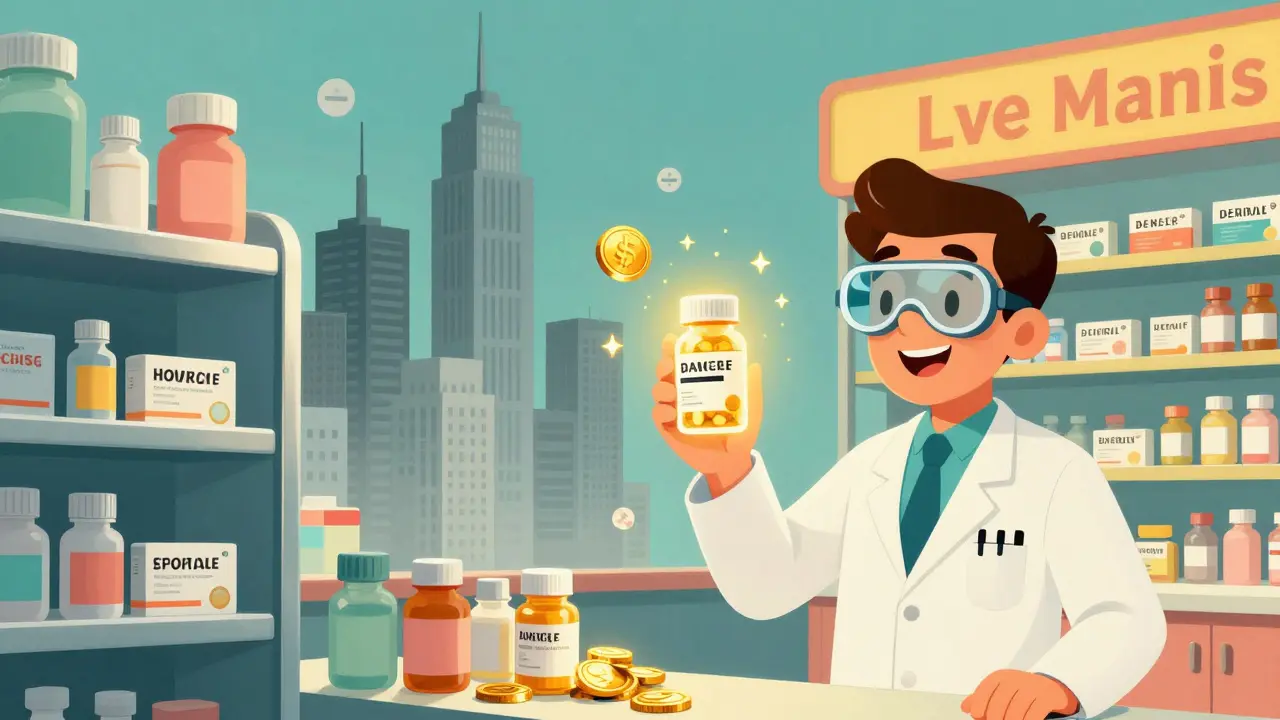
Walk into any local pharmacy, and you see a paradox. The shelves are stocked with brand-name drugs that cost hundreds of dollars, yet the business survives on the pennies made from generic pills. It feels counterintuitive. If a patient buys a $500 brand-name medication, shouldn’t that generate more profit than a $4 generic? In the world of pharmacy margin economics, the study of how pharmacies generate revenue through the pharmaceutical supply chain, focusing on the disparity between gross margins on generic versus brand-name medications, the answer is a hard no. In fact, relying on brand-name drugs for profit would bankrupt most independent pharmacies.
The reality is stark: while brand-name drugs account for roughly 75% of total prescription spending in the United States, they contribute less than 4% of a pharmacy’s estimated retail margin. Generic drugs, which make up only about 25% of spending, provide nearly 96% of that margin. This economic structure dictates everything from store layout to staff training. Understanding why this happens requires looking past the price tag and examining the complex web of manufacturers, wholesalers, Pharmacy Benefit Managers (PBMs), and regulators.
The Gross Margin Paradox
To understand why generics are the lifeblood of pharmacy operations, we have to look at gross margins-the difference between what a pharmacy pays for a drug and what it gets reimbursed for dispensing it. According to a comprehensive analysis by the Commonwealth Fund published in August 2021, the average gross margin for generic drugs sits at approximately 42.7%. Compare that to brand-name drugs, where the gross margin averages a meager 3.5%.
This discrepancy exists because of how prices are set. Brand-name drugs have high list prices, but PBMs negotiate massive rebates and discounts off those lists before the pharmacy ever sees the money. By the time the reimbursement hits the pharmacy’s bank account, the 'profit' space has been squeezed out. Generics, however, start with low acquisition costs. Even though the absolute dollar amount per pill is small, the percentage markup allowed by insurers and PBMs remains significantly higher relative to the cost.
Consider a real-world scenario. A pharmacy might pay $2 for a box of generic metformin and get reimbursed $3. That’s a $1 gain, or a 50% markup. Conversely, for a brand-name specialty drug costing $1,000, the pharmacy might be reimbursed $1,035. That’s a $35 gain, but only a 3.5% margin. When you factor in the operational overhead-staff salaries, rent, electricity, and insurance-that 3.5% often doesn’t cover the cost of the pharmacist’s time spent counseling the patient. The generic transaction, despite the lower dollar volume, covers the overhead and contributes to net profit.
Who Actually Makes Money? Supply Chain Breakdown
The flow of money in the pharmaceutical distribution system is not linear; it’s layered. A 2022 analysis by the USC Schaeffer Center mapped these flows, revealing that value shifts dramatically depending on whether the drug is branded or generic.
| Supply Chain Sector | Gross Margin (Brand Drugs) | Gross Margin (Generic Drugs) |
|---|---|---|
| Manufacturers produce the actual medication Manufacturers | 76.3% | 49.8% |
| Pharmacies dispense medication to patients Pharmacies | 3.5% | 42.7% |
| Wholesalers distribute drugs to pharmacies Wholesalers | Low single digits | Higher relative to cost |
| PBMs manage benefits and reimbursements PBMs | Moderate | High (4x brand margins) |
Notice the inversion. Manufacturers capture the lion's share of value in the brand market, keeping 76.3% of the gross margin. But in the generic market, the value shifts downstream. Pharmacies, PBMs, and wholesalers capture a much larger slice of the pie. Specifically, pharmacies make almost twelve times as much money per prescription on generics ($32) compared to brands ($3), according to Schaeffer Center data. This explains the strategic push by insurers to steer patients toward generics-it protects their own bottom line by reducing overall spending, even if it means paying slightly higher percentages to pharmacies on low-cost items.
The Squeeze on Independent Pharmacies
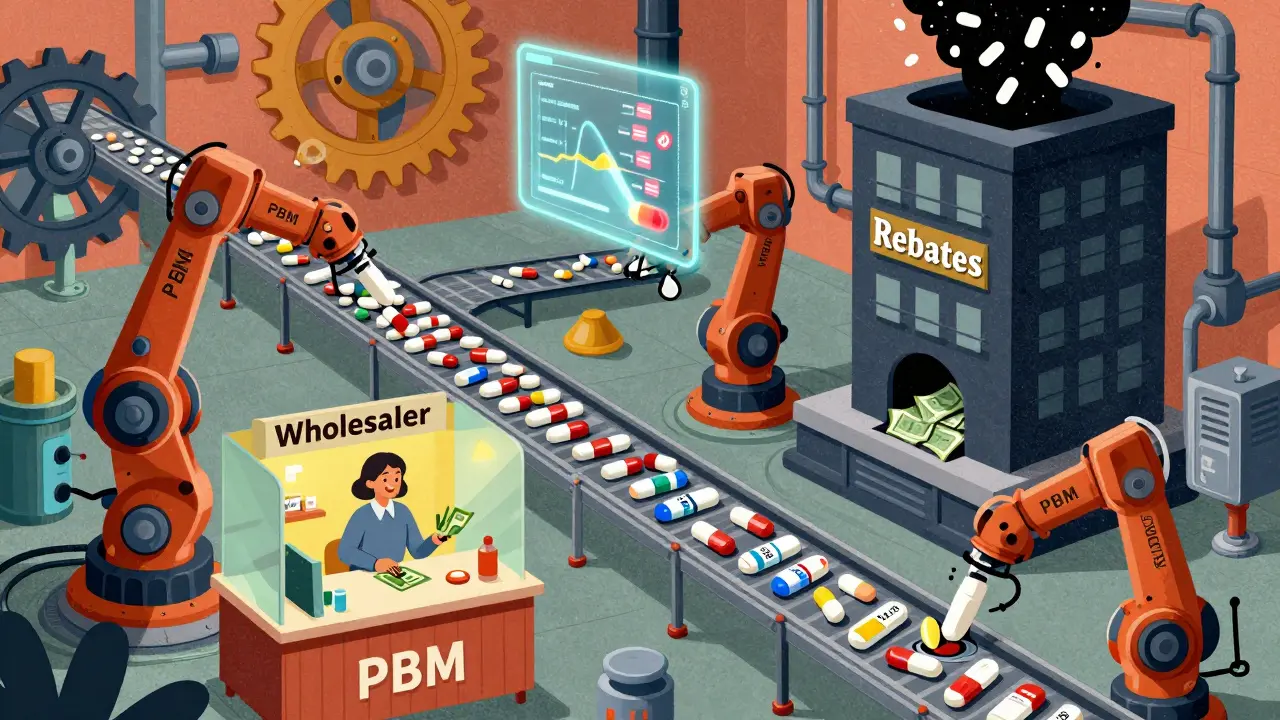
If generics offer 42% gross margins, why are thousands of independent pharmacies closing? The issue lies in the difference between gross margin and net profit. Gross margin is just the starting point. From there, pharmacies must pay for labor, inventory holding costs, technology fees, and regulatory compliance. More importantly, they must navigate the opaque practices of PBMs.
PBMs like CVS Caremark, Express Scripts, and OptumRx control about 80% of prescription transactions. They act as middlemen, negotiating rates between drug manufacturers and health plans. However, their business model often includes 'spread pricing,' where they charge health plans more for a drug than they reimburse the pharmacy, keeping the difference. For independent pharmacies, this creates a volatile environment. A National Community Pharmacists Association (NCPA) survey from 2022 found that 68% of owners identified declining generic reimbursement as their top threat. One Ohio-based owner noted that net profit on generics had dropped from 8-10% five years prior to barely 2%, despite overhead increasing by 35%.
The consolidation of the industry exacerbates this. Between 2018 and 2023, approximately 3,000 independent pharmacies closed. Large chains benefit from vertical integration-they own the PBM, the wholesale distribution arm, and the retail stores. This allows them to internalize the margins that independents lose to middlemen. An independent pharmacy cannot negotiate the same terms as a chain with 10,000 locations, leaving them vulnerable to arbitrary reimbursement cuts or 'clawbacks,' where PBMs demand refunds after the fact.
Market Consolidation and Single-Source Risks
The generic market itself is changing, threatening the very margins pharmacies rely on. Historically, generic competition drove prices down. The FDA reported that having three competitors in a generic market typically lowers prices by 20% over three years. However, since 2014, nearly 100 mergers in generic manufacturing have consolidated the market. Today, the top five generic manufacturers control 45% of the market, up from 32% in 2015.
This consolidation leads to 'single-source generics,' where only one company produces a specific generic drug. Without competition, that manufacturer can raise prices arbitrarily. SureCost’s 2024 white paper highlighted cases where generic prices exceeded brand prices due to supply constraints. When a generic drug becomes expensive to acquire, the pharmacy’s margin evaporates. If the PBM doesn’t adjust the reimbursement rate quickly-which they rarely do-the pharmacy loses money on every dispensed unit. This phenomenon undermines the traditional economic safety net of generic dispensing.
Strategies for Survival and Profitability
Facing these pressures, successful pharmacies are adapting. They are moving away from a pure 'dispensing' model toward a service-oriented model. Medication Therapy Management (MTM) services allow pharmacists to bill for clinical consultations rather than just pills. Specialty pharmacy designations enable handling complex, high-cost drugs with more stable reimbursement structures.
Some independents are bypassing PBMs entirely by adopting direct-pay models. Initiatives like Mark Cuban’s Cost Plus Drug Company, which charges a transparent fee plus a $3 dispensing fee, highlight consumer demand for clarity. While large-scale adoption is still emerging, smaller pharmacies are experimenting with cash-pay programs for select medications to avoid PBM spread pricing. According to Pharmaceutical Executive’s 2023 analysis, pharmacies implementing direct contracting or cash models reported 3-5% higher net margins.
Additionally, tools like the NCPA’s Rebuttal Academy, launched in 2019, have trained over 8,500 staff members to challenge unfair PBM reimbursement decisions. Documentation and persistence matter. Pharmacies that actively audit their claims and appeal denied reimbursements recover significant revenue. Transparency laws passed in states like California, Texas, and Illinois between 2022 and 2023 are also forcing PBMs to disclose more data, giving pharmacies leverage in negotiations.
Future Outlook: Regulation and Disruption
The landscape will continue to shift. The Inflation Reduction Act’s Medicare drug price negotiation provisions, effective in 2026, may indirectly affect generic margins by altering overall spending dynamics. Meanwhile, the Federal Trade Commission (FTC) is scrutinizing PBM practices, including a 2023 workshop focused on pharmacy reimbursement. Antitrust lawsuits against generic manufacturers for alleged price-fixing suggest that regulatory bodies are aware of the consolidation risks.
Innovative models like Amazon Pharmacy, offering $5 generics with clear cost breakdowns, signal potential disruption. As transparency increases, the era of hidden spreads and opaque margins may fade. For now, however, the core principle remains: generics drive pharmacy profits. But maintaining those profits requires vigilance, strategic diversification, and a deep understanding of the economic forces at play.
Why do pharmacies make more money on cheap generics than expensive brand-name drugs?
Pharmacies make more money on generics because the gross margin percentage is significantly higher (around 42.7%) compared to brand-name drugs (around 3.5%). While brand drugs have high list prices, PBMs negotiate massive rebates that reduce the reimbursement amount pharmacies receive. Generics have low acquisition costs, allowing pharmacies to retain a larger percentage of the reimbursement as profit, which helps cover operational overhead.
What is spread pricing in pharmacy economics?
Spread pricing occurs when a Pharmacy Benefit Manager (PBM) charges a health plan or employer more for a prescription drug than it reimburses the pharmacy. The PBM keeps the difference as profit. This practice reduces the amount pharmacies receive, squeezing their margins, particularly for independent pharmacies that lack the negotiating power of large chains.
How does market consolidation affect generic drug prices?
Market consolidation among generic manufacturers reduces competition. With fewer companies producing a drug, especially in 'single-source' scenarios, manufacturers can raise prices without fear of losing customers to cheaper alternatives. This increases the acquisition cost for pharmacies, potentially eliminating their profit margin if PBMs do not adjust reimbursement rates accordingly.
Are independent pharmacies closing due to low margins?
Yes. Approximately 3,000 independent pharmacies closed between 2018 and 2023. They face intense pressure from thin net margins, rising overhead costs, and unfavorable reimbursement terms from dominant PBMs. Large chains survive better due to vertical integration, owning their own PBMs and distribution networks, which allows them to internalize profits that independents lose.
What strategies can pharmacies use to improve profitability?
Pharmacies can improve profitability by diversifying revenue streams through Medication Therapy Management (MTM) services, specializing in complex drugs via specialty pharmacy designations, and adopting direct-pay or cash models to bypass PBM spread pricing. Additionally, actively auditing claims and appealing unfair reimbursements using resources like the NCPA’s Rebuttal Academy can help recover lost revenue.