Recent POST




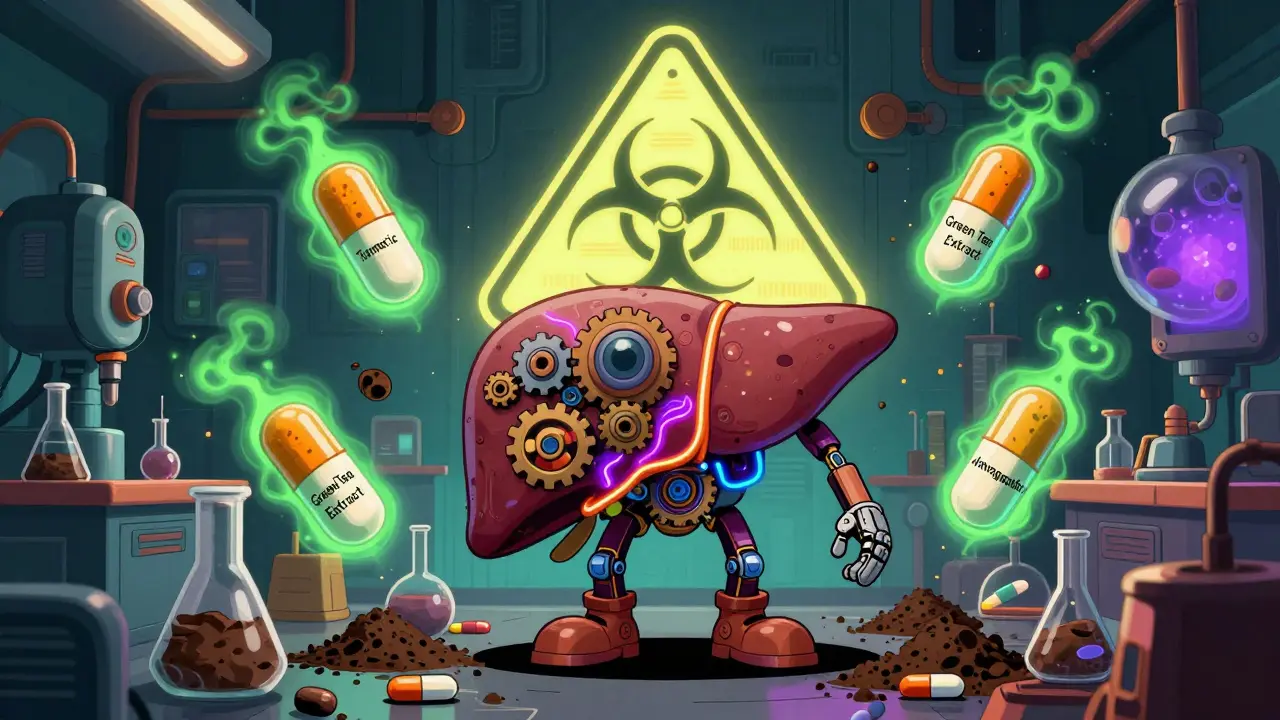
More people than ever are popping herbal supplements like candy-turmeric for inflammation, green tea extract for weight loss, ashwagandha for stress. But what if these "natural" fixes are quietly harming your liver? The truth is, your liver doesn’t care if something is labeled "organic," "plant-based," or "traditional." If it’s toxic, your liver will still have to process it. And for some people, even a small daily dose can lead to serious damage.
These Six Supplements Are the Biggest Risks
A 2024 study published in JAMA Network Open analyzed national data and pinpointed six herbal and supplement ingredients linked to the most liver injuries in the U.S.:
- Turmeric or curcumin - Often taken for joint pain or anti-inflammatory benefits, high-dose turmeric supplements have caused hospitalizations. Consumer Reports found 30% of turmeric supplements contained lead above safe limits.
- Green tea extract - Not the tea you drink, but concentrated capsules. These can deliver 10-20 times more EGCG (epigallocatechin gallate) than a cup of tea. Excess EGCG overwhelms liver enzymes, leading to cell death.
- Garcinia cambogia - Marketed for weight loss, this supplement has been tied to acute hepatitis. Some products also contain hidden stimulants or pharmaceuticals.
- Black cohosh - Used for menopause symptoms, it’s been linked to liver failure in multiple cases. The exact mechanism is unclear, but it’s consistently flagged in liver injury databases.
- Red yeast rice - Sold as a natural alternative to statins, it contains monacolin K, the same compound as the prescription drug lovastatin. Without dosage control, it can cause liver enzyme spikes.
- Ashwagandha - Popular for reducing stress and boosting energy, it’s now showing up in liver injury reports. The risk seems higher with long-term use or in people with pre-existing liver conditions.
These aren’t outliers. They’re the most common culprits. The NIH’s LiverTox database lists hundreds of cases where people ended up in the hospital after taking these supplements-even when they followed the label instructions.
Why Your Liver Can’t Handle These "Natural" Products
Your liver is your body’s main detox filter. It breaks down everything you take in-food, medicine, alcohol, supplements. But unlike pharmaceuticals, herbal supplements don’t go through safety testing before hitting shelves. There’s no requirement for clinical trials, no mandatory dosage limits, and no oversight on what’s actually inside the bottle.
Here’s what’s often missing from the label:
- Heavy metals - Lead, mercury, and arsenic are found in 12-18% of herbal products. Turmeric, especially, absorbs lead from contaminated soil.
- Hidden drugs - A 2017 study found 22% of sexual enhancement supplements contained sildenafil (Viagra), 15% of pain relievers had NSAIDs, and 8% of "natural" anti-inflammatories included corticosteroids.
- Mislabeling - Up to 60% of herbal products don’t match their ingredient list. What’s supposed to be ashwagandha might be a different plant entirely-or a mix of several.
- Pesticides - Found in 23% of tested herbal products. These chemicals are designed to kill insects, not be consumed daily by humans.
And it’s not just what’s in there-it’s what’s not controlled. The FDA doesn’t require manufacturers to prove safety before selling. Once a supplement causes harm, the FDA can only act after the fact. By then, dozens or hundreds of people may already be injured.

Who’s Most at Risk?
Not everyone who takes these supplements gets sick. But some people are far more vulnerable. The liver damage isn’t random-it’s often tied to individual biology.
Dr. Robert S. Brown from Weill Cornell Medicine compares it to allergies: "In a small group of susceptible people, even a tiny amount of a toxin can trigger a massive reaction."
Factors that increase risk:
- Pre-existing liver disease - Even mild fatty liver makes your liver more sensitive to toxins.
- Long-term use - Taking turmeric or ashwagandha daily for months or years increases cumulative damage.
- High doses - More isn’t better. Many supplements recommend 1,000-2,000 mg per day, far beyond what’s used in traditional medicine.
- Genetic factors - Early research suggests certain gene variants (like HLA-B*35:01) make some people more prone to herbal liver injury.
- Combining supplements - Taking five different herbs at once? That’s a recipe for overload. Your liver can’t tell them apart-it just sees a flood of unknown chemicals.
People over 50, those on multiple medications, and anyone with a history of alcohol use are also at higher risk. But even healthy 20-somethings who follow TikTok trends are showing up in emergency rooms with liver failure.
How to Spot Liver Damage Early
Herbal liver injury doesn’t always cause jaundice (yellow skin). In fact, most cases start quietly.
The most common symptoms, according to the NIH LiverTox database, are:
- Fatigue - 87% of patients report this. It’s not just tiredness-it’s a deep, unrelenting exhaustion that doesn’t improve with sleep.
- Abdominal pain - Usually in the upper right side, under the ribs. Often mistaken for indigestion.
- Nausea and loss of appetite - 68% of cases. You might feel full after eating a small bite.
- Dark urine - Like cola or tea. This means bilirubin is building up because your liver can’t process it.
- Light-colored stools - Pale, clay-colored bowel movements signal bile flow is blocked.
If you’re taking any of these supplements and notice even one of these symptoms, stop immediately and get your liver checked. A simple blood test for ALT and AST (liver enzymes) can catch damage before it becomes serious.

What to Do Instead
You don’t need to avoid all supplements. But you need to be smarter about them.
- Ask your doctor - Especially if you have liver issues, take other meds, or are over 50. The American College of Gastroenterology recommends doctors screen all patients with unexplained liver enzyme elevations for supplement use.
- Choose third-party tested brands - Look for seals from USP, NSF, or ConsumerLab. These organizations test for purity and potency. It’s not perfect, but it’s better than nothing.
- Start low and go slow - If you’re trying something new, take half the recommended dose for a week. Watch for symptoms.
- Take breaks - Don’t take supplements every day, year-round. Give your liver time to reset.
- Stick to whole foods - Turmeric in curry? Fine. Green tea? Fine. But concentrated extracts? High risk.
And if you’re taking supplements because of a TikTok trend-pause. Social media influencers aren’t doctors. What’s trending isn’t always safe.
The Bottom Line
Herbal supplements aren’t harmless. They’re unregulated, often contaminated, and can cause the same liver damage as prescription drugs. The number of cases is rising-fast. And the people getting hurt aren’t just elderly or unhealthy. They’re young, active, and trusting what they see online.
Your liver is a hardworking organ. But it’s not invincible. If you’re taking any of the six high-risk supplements listed here, consider stopping. Talk to your doctor. Get a liver enzyme test. And remember: just because something is natural doesn’t mean it’s safe.
Can herbal supplements cause liver failure?
Yes. Multiple cases of acute liver failure have been directly linked to herbal supplements like green tea extract, black cohosh, and OxyELITE Pro®. The NIH’s LiverTox database documents dozens of such cases. In some, patients required emergency liver transplants.
Is turmeric safe for the liver?
Turmeric as a spice in food is generally safe. But turmeric supplements-especially high-dose capsules-have been linked to liver injury. Some products contain lead, and the curcumin compound can stress liver enzymes. People with existing liver conditions should avoid them.
Do green tea supplements damage the liver?
Yes. Concentrated green tea extract, especially in doses over 800 mg per day, has caused severe liver damage in multiple studies. The compound EGCG, while beneficial in tea, becomes toxic in high doses. Consumer Reports found 25% of these supplements exceeded safe EGCG limits.
Are supplements regulated like medicine?
No. Unlike prescription drugs, herbal supplements don’t need FDA approval before being sold. Manufacturers aren’t required to prove safety, purity, or effectiveness. The FDA can only act after harm is reported-often too late.
What should I do if I think a supplement hurt my liver?
Stop taking the supplement immediately. See your doctor and request a liver function test (ALT, AST, bilirubin). Tell them exactly what you’ve been taking-including brand names and doses. Bring the bottle with you. Report the reaction to the FDA’s MedWatch program.

Erika Putri Aldana
This is wild lol I took green tea extract for 3 months thinking it was magic juice and now I'm scared to even drink tea. My liver probably hates me. 😅

Meina Taiwo
Turmeric supplements are a scam. Whole food turmeric in curry? Safe. Powdered capsules? Often contaminated. Stick to food.

Jon Paramore
EGCG hepatotoxicity is dose-dependent and mediated by mitochondrial stress. Studies show CYP3A4 and UGT2B7 polymorphisms increase susceptibility. Most users don't realize they're ingesting 500-1000mg of isolated polyphenols - equivalent to drinking 20+ cups of tea daily. The liver isn't designed for that kind of pharmacological assault.

Dan Adkins
It is imperative to underscore that the absence of regulatory oversight in the dietary supplement industry constitutes a profound public health failure. The FDA's reactive posture, rather than proactive pre-market evaluation, permits the dissemination of substances with demonstrable hepatotoxic potential. This is not merely negligence - it is institutional abandonment of the citizenry.

Jackie Be
I thought ashwagandha was my new bestie until I started feeling like a zombie who forgot how to breathe 😭 STOP TAKING SUPPS FROM TIKTOK LOL

Swapneel Mehta
Good post. I’ve been taking red yeast rice for cholesterol since my dad had a heart attack. But now I’m going to get my enzymes checked. Better safe than sorry.

Southern NH Pagan Pride
Did you know the FDA is in bed with Big Pharma? They let these supplements fly under the radar so they can sell you statins later. Black cohosh? It's a plant that fights estrogen - they hate that. The real story? The government wants you dependent on pills. Read the fine print - every bottle has a hidden code.

Teya Derksen Friesen
As someone who works in integrative medicine, I’ve seen too many patients with elevated transaminases from ‘natural’ regimens. The irony is that many of these supplements are used to avoid pharmaceuticals - yet they’re often more dangerous. Education is the only real intervention.

Orlando Marquez Jr
While the data presented is compelling, one must also consider cultural context. In many traditional systems - Ayurveda, TCM, African herbalism - these substances have been used for centuries with careful preparation and dosage control. Modern isolation, concentration, and commercialization have stripped away the wisdom that once mitigated risk.

John Hay
My cousin had acute hepatitis after taking Garcinia cambogia. She didn’t even know it was in the product. Just thought it was a ‘fat burner.’ Got a liver transplant. Don’t be her. Get tested.

Cameron Hoover
Just stopped all my supplements after reading this. I was taking four of them daily. Feels weird not popping pills like candy - but my liver deserves better. Thanks for the wake-up call.
Write a comment