Recent POST
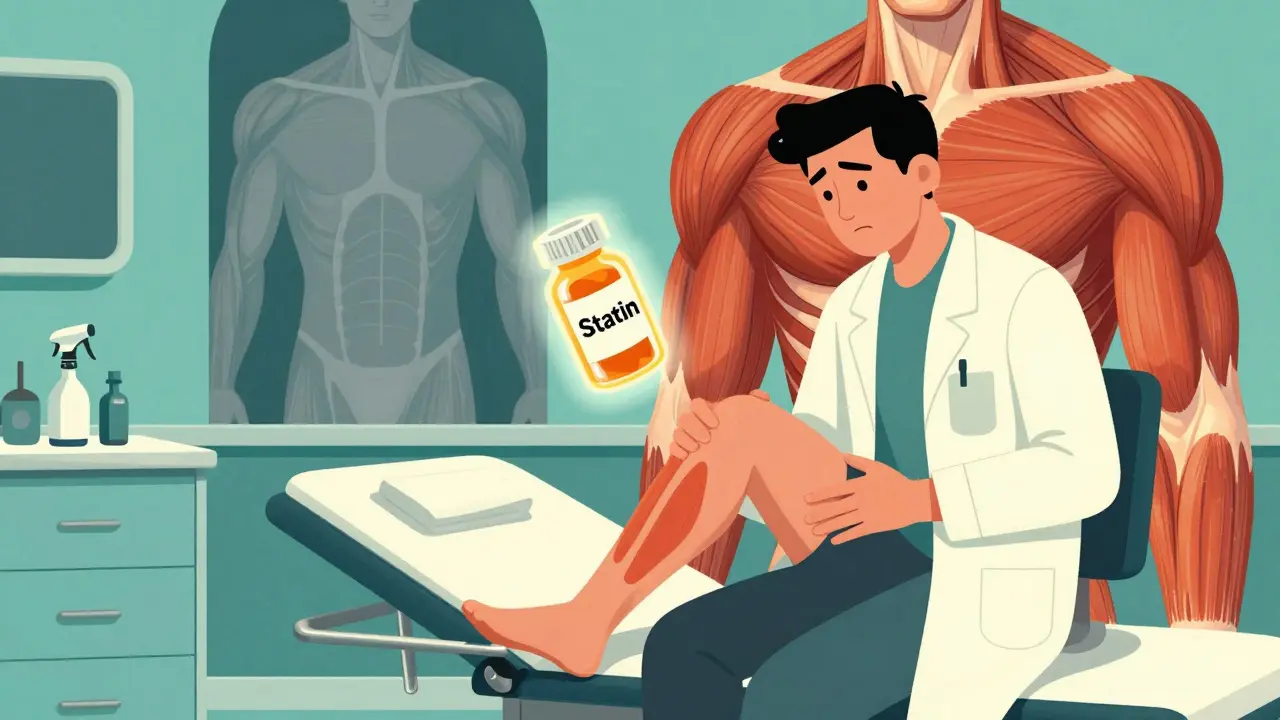
You take your pill. You feel the ache in your thighs a week later. You blame the medication. This is the most common story behind statin intolerance, defined by the National Lipid Association as the inability to tolerate at least two statins due to objectionable symptoms that resolve upon discontinuation. But here is the twist: for many people, those aches aren’t caused by the drug at all. They are real pain, yes, but the source is often something else entirely-arthritis, vitamin deficiency, or even the power of expectation known as the nocebo effect.
If you have stopped taking your cholesterol medication because of muscle pain, you are not alone. Millions do. Yet, stopping treatment without understanding why can leave your heart vulnerable. The good news? We now have better ways to diagnose the problem and effective alternatives that actually work.
Is It Really the Statin?
Before looking for an alternative, we need to be sure the statin is the culprit. This is where most diagnoses go wrong. The National Lipid Association (NLA) updated its definition in 2022 to be stricter. True intolerance isn't just feeling bad after one dose. It requires failing to tolerate at least two different statins. Why? Because 65% of patients who cannot tolerate one statin can successfully use another.
The biggest hurdle is the "nocebo" effect. In the landmark SAMSON trial, researchers gave participants either a statin or a placebo. Here is what they found: 90% of reported side effects during statin therapy were also experienced during the placebo period. If you expect pain, your brain can create it. This doesn't mean your pain is fake-it means the cause might not be the chemical structure of the drug.
To separate fact from fiction, look at these diagnostic markers:
- Timing: Symptoms usually start within 30 days of starting the drug or increasing the dose. If you had back pain before taking the statin, it’s likely not the statin.
- Location: Statin-associated muscle symptoms (SAMS) typically affect large, proximal muscles. Think thighs (78% of cases), buttocks (65%), and shoulders (47%).
- Sensation: Patients describe heaviness (62%), stiffness (57%), or cramps (49%) rather than sharp, acute pain.
- Blood Work: In 89% of SAMS cases, creatine kinase (CK) levels are normal or only mildly elevated. High CK levels suggest more serious conditions like myositis.
If your doctor hasn’t tried a "re-challenge"-stopping the drug until symptoms fade, then restarting it-they haven’t confirmed the diagnosis. Only 34% of suspected SAMS cases show symptom recurrence during this test.
Why Do Muscles Hurt?
When you rule out the statin, what’s left? Often, it’s a hidden health issue masquerading as a drug side effect. The Cleveland Clinic notes that 72-85% of patients diagnosed with SAMS actually have nonspecific musculoskeletal pain unrelated to their medication.
Here are the usual suspects hiding in plain sight:
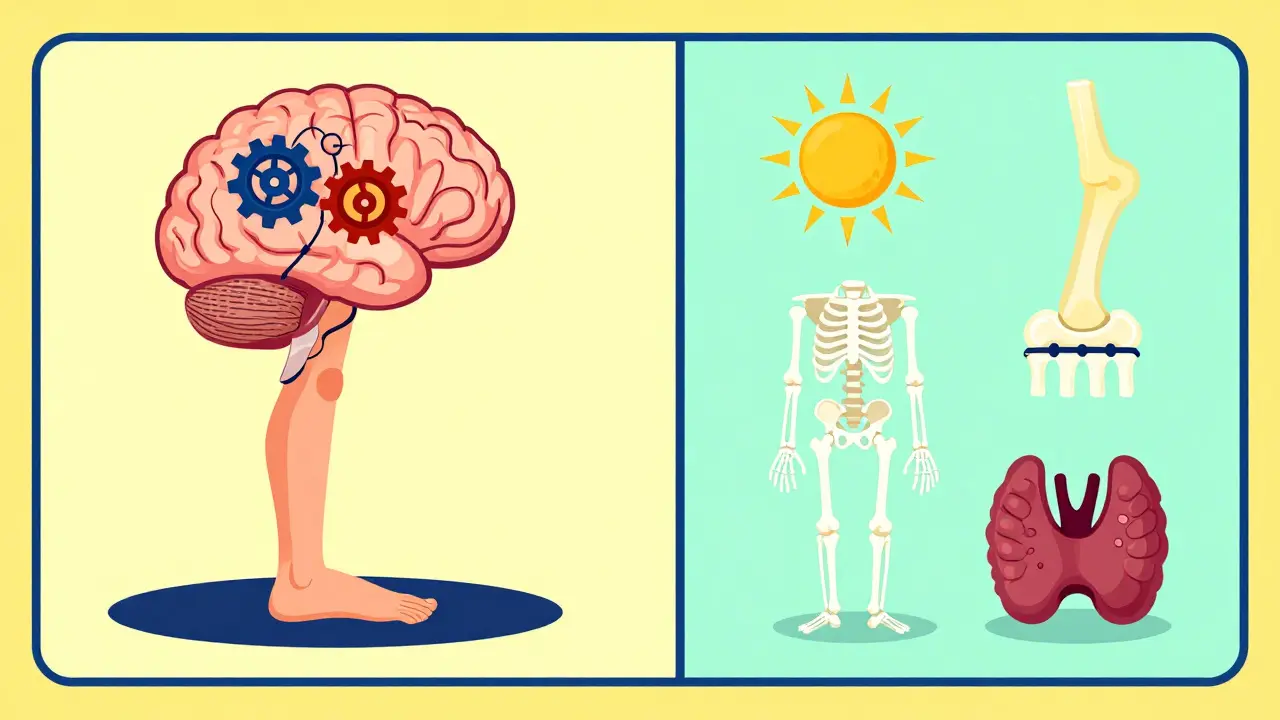
- Vitamin D Deficiency: Found in 29% of patients labeled as statin-intolerant. Low Vitamin D causes bone and muscle pain. Supplementing can resolve the issue without changing heart meds.
- Osteoarthritis: Present in 41% of these patients. Age-related joint wear and tear often coincides with the age when statins are prescribed.
- Hypothyroidism: An underactive thyroid affects 12% of cases and slows metabolism, leading to muscle weakness and fatigue.
- Fibromyalgia: A chronic condition causing widespread pain, present in 18% of misdiagnosed cases.
There is also a genetic component. Variants in the SLCO1B1 gene (specifically alleles *5 and *15) increase the risk of myopathy by 4.5 times. These genes control how much statin enters your liver cells. If the transport is slow, the drug builds up in your blood and muscles, causing toxicity. Genetic testing can identify this risk before you ever take a pill.
Strategies to Stay on Statins
Statins remain the gold standard for lowering LDL cholesterol because they reduce cardiovascular events significantly. Before abandoning them, try these evidence-based adjustments:
| Type | Examples | Tolerability Profile | Mechanism Note |
|---|---|---|---|
| Lipophilic | Simvastatin, Atorvastatin | Higher risk of muscle symptoms | Enters muscle cells easily; higher local concentration |
| Hydrophilic | Pravastatin, Rosuvastatin | 28% lower intolerance rates | Stays in bloodstream/liver; less muscle penetration |
Switch to Hydrophilic Statins: If you react badly to atorvastatin, ask about rosuvastatin or pravastatin. They don’t penetrate muscle tissue as deeply, reducing the chance of side effects.
Lower the Dose: Low-dose atorvastatin (10mg) achieves a 32% LDL reduction with 89% tolerability. It’s not all-or-nothing.
Intermittent Dosing: For some, taking rosuvastatin once or twice a week works. Studies show weekly dosing can still achieve 48% LDL reduction in adherent patients. This gives your body a break while maintaining benefits.
Alternative Therapies That Work
If you truly cannot tolerate any statin, do not just stop treating your cholesterol. There are powerful non-statin options. The goal is to get your LDL down to protect your arteries.
Ezetimibe: This oral medication blocks cholesterol absorption in the gut. It lowers LDL by 18% and has a 94% adherence rate because it rarely causes side effects. It is often the first line of defense after statins fail.
Bempedoic Acid: Approved recently, this drug works similarly to statins but is activated only in the liver, not in muscles. This means it provides 17% LDL reduction with 88% tolerability, bypassing the muscle pain issue entirely.
PCSK9 Inhibitors: These are injectable drugs (like evolocumab) given every two weeks. They are incredibly potent, lowering LDL by 59%. While expensive (around $5,800 annually vs. $4-$100 for generics), they are highly effective for high-risk patients who cannot take other meds. Adherence is 91% in clinical trials.
Inclisiran: A newer option requiring only two injections per year. It uses siRNA technology to silence the PCSK9 gene, achieving 50% LDL reduction with 93% adherence. This could be a game-changer for long-term compliance.
What About Supplements?
You will hear a lot about Coenzyme Q10 (CoQ10). Statins deplete natural CoQ10 levels, which some believe causes muscle pain. However, double-blind trials show limited benefit, with only 34% of users reporting improvement. It is safe to try, but don’t count on it as a cure-all.
Dietary changes remain foundational. Increasing soluble fiber (oats, beans) and healthy fats (olive oil, avocados) supports lipid management regardless of medication status.
Next Steps for Patients
If you are experiencing muscle pain:
- Don’t quit cold turkey. Talk to your doctor immediately.
- Request blood work. Check CK levels, Vitamin D, and thyroid function (TSH).
- Ask for a re-challenge. Stop the statin for a few weeks, see if pain stops, then restart. If pain returns, it’s likely the drug.
- Try a hydrophilic statin. Switch classes before giving up entirely.
- Consider non-statins. Ezetimibe or bempedoic acid are excellent next steps.
The landscape of cholesterol treatment is evolving. With proper diagnosis, over 90% of patients previously labeled as "intolerant" can find a regimen that protects their heart without compromising their quality of life.
How long does it take for statin muscle pain to go away after stopping?
For most patients, symptoms resolve within a few weeks to three months after discontinuing the medication. If pain persists longer than this, it is likely caused by another condition such as arthritis or neuropathy, not the statin.
Can I take CoQ10 with my statin to prevent muscle pain?
Yes, it is generally safe. However, scientific evidence is mixed. Only about 34% of patients report benefit in double-blind studies. It may help some individuals, but it is not a guaranteed solution for statin-associated muscle symptoms.
What is the difference between lipophilic and hydrophilic statins?
Lipophilic statins (like atorvastatin) dissolve in fat and enter muscle cells easily, which can increase the risk of muscle side effects. Hydrophilic statins (like rosuvastatin) dissolve in water and stay primarily in the liver and bloodstream, resulting in lower muscle penetration and fewer side effects.
Are PCSK9 inhibitors covered by insurance?
Coverage varies widely. Prior authorization is required for 89% of prescriptions, and denial rates are around 37%. Insurance companies typically require proof that you have failed or cannot tolerate both statins and ezetimibe before approving these expensive injectables.
Is bempedoic acid safer than statins for muscle health?
Yes, for muscle-specific issues. Bempedoic acid is inactive in skeletal muscle because the enzyme needed to activate it is not present there. It works only in the liver, providing LDL reduction similar to low-dose statins without the associated muscle toxicity risks.

Hailey Dunston
Oh, how delightful. Another article telling us that our pain is merely a figment of our 'expectations' and that we should just try harder to tolerate the chemical sludge. It is truly fascinating how the medical industrial complex prefers to pathologize patient discomfort rather than admit their drugs are blunt instruments. The nocebo effect? Please. My body knows what it is rejecting, thank you very much. I do not require a lecture on Vitamin D from someone who has likely never felt true myopathy. 😉

Glenn Davis
Stop whining about side effects. Americans need to take responsibility for their own health instead of blaming big pharma. If your muscles hurt, you are weak. Get over it.

Cici arya Arya
I have to ask, why are you all so obsessed with this medication? Is it really worth the suffering? My cousin took it and she said her legs felt like lead weights every single day for months. She stopped taking it after three weeks because she could barely walk up the stairs to her bedroom. Now she eats more fish and takes omega-3s and her cholesterol is fine. Why would anyone want to poison themselves when nature provides better solutions? It makes me wonder if doctors are just paid to push these pills regardless of how they make people feel. Have you considered that maybe the problem is the drug itself and not your imagination? I think you should listen to your body more than some clinical trial data.

rebecca torres
look i know everything about statins so let me tell you something real quick. everyone here is wrong. the issue is not the statin its your liver function. if your liver cant process it you get pain. simple as that. stop complaining and fix your diet. also ezetimibe is trash dont use it.

Erin Livengood
The interplay between pharmacology and physiology is a tapestry woven with threads of both science and subjective experience. When we consider the hydrophilic versus lipophilic nature of these compounds, we are essentially discussing the permeability of cellular membranes and the subsequent dance of molecules within the aqueous humor of our tissues. It is a delicate ballet. One must appreciate the nuance of genetic polymorphisms, such as those in the SLCO1B1 transporter, which act as gatekeepers to hepatic uptake. To dismiss the patient's narrative as mere 'nocebo' is to ignore the profound complexity of human biochemistry. We must look at the whole person, not just the lipid panel. The soul of medicine lies in this holistic understanding, where the rigid structures of clinical trials meet the fluid reality of individual lived experience. It is a beautiful, albeit frustrating, paradox.

Daniella Renzon
Hey there! Just wanted to say that it sounds like you're dealing with a lot right now. It's totally understandable to feel frustrated when your body isn't cooperating. Maybe try talking to your doctor about switching to rosuvastatin? It helped my mom out a lot. Hang in there!

Cecilia McGuinness
hey guys just wanted to chime in cause i was having teh same issues last year. my thighs were killing me literally couldnt sit down. turned out i was low on vit d and thyroid stuff. doc put me on coq10 and switched me to pravastatin. feels way better now. dont give up on it tho u got this!!

Talilla Bailey
It is imperative that we address the matter of compliance with the utmost seriousness. Patients who discontinue therapy without consulting their physician are acting with reckless disregard for their cardiovascular health. The evidence supporting statin efficacy is overwhelming and unequivocal. Those who claim intolerance often fail to undergo proper diagnostic protocols, such as the re-challenge procedure mentioned herein. We must demand accountability from patients to adhere to prescribed regimens. Furthermore, the cost-benefit analysis of PCSK9 inhibitors, while high, is justified by the reduction in major adverse cardiac events. Let us not succumb to anecdotal fallacies. Science demands precision and adherence. Your life depends on it. Do not be frivolous with your health.

Aditya Singh
Absolutely brilliant breakdown of the pharmacokinetic profiles! As someone deeply involved in the healthcare sector back home in India, I can attest to the rising prevalence of SAMS (Statin-Associated Muscle Symptoms) among our demographic too. The mention of the SLCO1B1 gene variant is crucial; we see this quite frequently in South Asian populations. Bempedoic acid is a fantastic alternative, leveraging the ACL enzyme inhibition specifically in the hepatocytes, thereby sparing the skeletal muscle tissue from the toxicological burden. It is indeed a paradigm shift in lipid management algorithms. Keep spreading this knowledge!

Brett Webster
Great points raised here. I work in cardiology and see this daily. The key takeaway for most patients is the distinction between lipophilic and hydrophilic statins. If you are on Atorvastatin or Simvastatin and experiencing pain, ask your doctor about Rosuvastatin or Pravastatin. They stay in the blood and liver more, so less gets into your muscles. Also, don't forget to check your Vitamin D levels. It’s a common oversight. If you still can’t tolerate any statin, Ezetimibe is a solid next step. Don’t just stop taking your meds without a plan. Let me know if you have specific questions about dosing strategies.

Sherry Wheeler
Oh my gosh, reading this made my heart race! 😱 I remember when I first started feeling that ache in my shoulders, I thought I was dying! It was terrifying. But then I realized it was just the statin, or maybe it was the stress, who knows? Life is so fragile and unpredictable. We are but vessels for our experiences. This article is a beacon of hope in the dark storm of medical uncertainty. Thank you for sharing this light. We must embrace the journey, even when it hurts. 🌟💖

shreya sinha
It is profoundly disappointing to observe the continued dissemination of information that fails to adequately address the ethical implications of pharmaceutical marketing strategies. One cannot help but wonder if the authors of such articles are complicit in a broader systemic failure to prioritize patient autonomy over corporate profits. The reliance on statistical aggregates obscures the individual suffering endured by countless patients who are dismissed as having 'nocebo' effects, a term that serves primarily to invalidate legitimate physiological responses. Furthermore, the suggestion that patients should simply 'try another statin' ignores the cumulative toxicity associated with long-term polypharmacy. We must demand a more rigorous examination of the long-term consequences of these interventions, particularly in vulnerable populations who may lack the resources to access alternative therapies. The current paradigm is fundamentally flawed and morally bankrupt.

Lee Coates
Haha, yeah sure, blame the 'nocebo effect' because clearly American healthcare is perfect and nothing is ever the drug's fault. Typical government propaganda. You guys love your little pills. Meanwhile, the rest of the world is laughing at you. 😂✌️
Write a comment