Recent POST





Medication Weight Change Calculator
How Medications Affect Your Weight
Enter the name of your medication to see its potential impact on weight. Based on clinical data from the article, this calculator shows average weight changes, timeframe, and management strategies.
Results:
It’s not uncommon to hear someone say, "I started this medication and suddenly I couldn’t stop gaining weight," or "I lost 15 pounds without even trying after switching pills." These aren’t just anecdotes-they’re well-documented side effects tied to how certain drugs interact with your body’s hunger signals, metabolism, and fat storage systems. Whether you’re on antidepressants, antipsychotics, diabetes meds, or even steroids, your weight might be changing more because of what’s in your pill bottle than what’s on your plate.
Why Do Medications Make You Gain or Lose Weight?
Medications don’t just target your symptoms-they also affect your hormones, appetite, and energy use. There are five main ways they mess with your weight, and knowing which one applies to your drug can help you take control.
- Appetite stimulation: Some drugs, especially older antidepressants like mirtazapine and antipsychotics like olanzapine, activate brain receptors (like 5-HT2C and H1) that make you feel hungrier. In fact, 78% of people on long-term SSRIs report increased cravings, especially for carbs.
- Slowed metabolism: Beta-blockers like propranolol lower your resting metabolic rate by 8-10%. That means your body burns fewer calories just sitting still. It’s like your internal furnace got turned down.
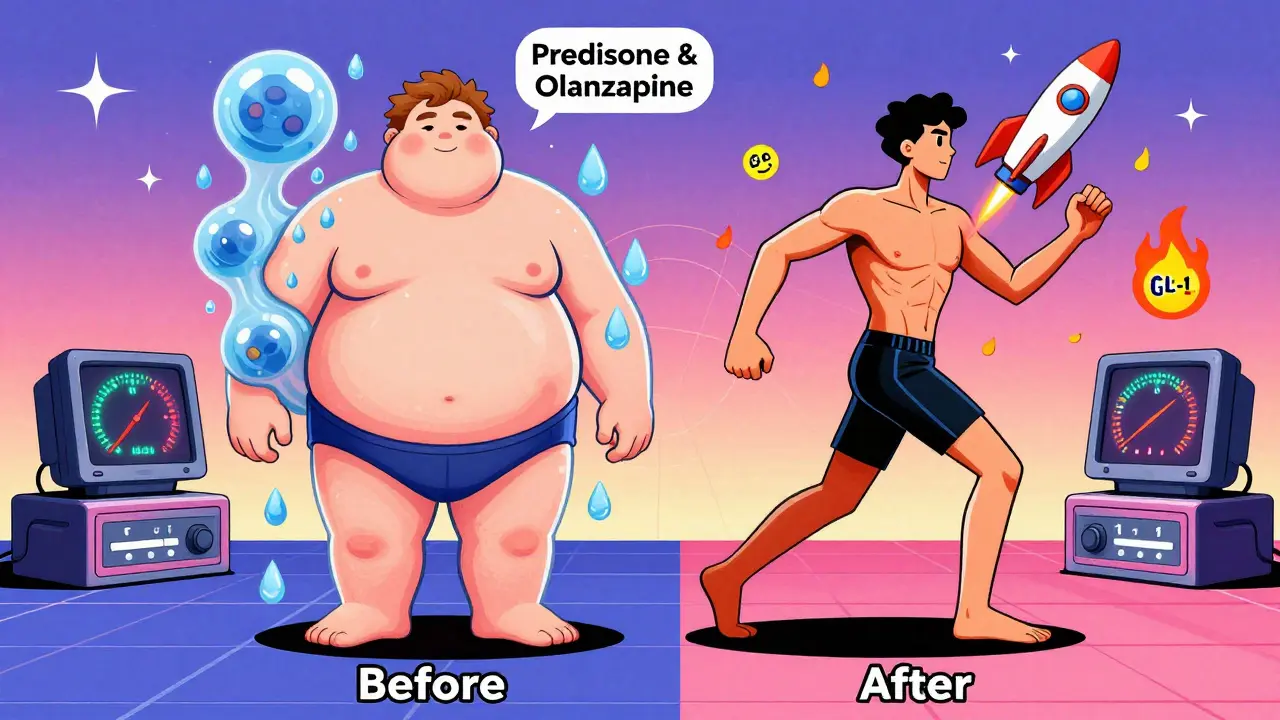
- Fluid retention: Steroids such as prednisone cause your body to hold onto water. It’s not fat-it’s extra fluid-but it can add 2-5 kg in the first month. You might feel puffy, your rings might not fit, and the scale climbs fast.
- Increased fat storage: Diabetes drugs like pioglitazone activate PPAR-γ receptors, turning your body into a fat-storage machine. Studies show this increases fat cell growth by 40-60%.
- Reduced movement: Antipsychotics and some sedatives make you tired. A 2022 Mayo Clinic study found patients on these meds took 1,200-2,500 fewer steps per day. Less movement = fewer calories burned.
On the flip side, newer diabetes drugs like semaglutide and liraglutide (GLP-1 receptor agonists) do the opposite. They reduce appetite, slow stomach emptying, and help your body burn fat. In clinical trials, users lost 5-15% of their body weight over 68 weeks-sometimes 10-15 kg.
Which Medications Are Most Likely to Cause Weight Gain?
Not all drugs in a class act the same. Here’s what the data shows:
| Medication Class | Drug Example | Average Weight Change | Timeframe |
|---|---|---|---|
| Antidepressants | Mirtazapine | +2 to +5 kg | 6 months |
| Antidepressants | Paroxetine (SSRI) | +2.5 to +3.5 kg | 12 months |
| Antidepressants | Bupropion | -1.5 to -2.5 kg | 12 months |
| Antipsychotics | Olanzapine | +4.5 to +6.0 kg | 10 weeks |
| Antipsychotics | Aripiprazole | +0.2 to +0.8 kg | 10 weeks |
| Diabetes (Insulin) | Insulin | +2 to +4 kg | 1 year |
| Diabetes (Sulfonylureas) | Glyburide | +3 to +4 kg | 1 year |
| Diabetes (GLP-1) | Semaglutide | -6 to -10 kg | 68 weeks |
| Steroids | Prednisone | +2 to +5 kg (fluid) | 1 month |
What’s striking is how different two drugs in the same class can be. For example, while paroxetine often leads to weight gain, bupropion helps you lose weight. Olanzapine can cause major weight gain, but aripiprazole barely moves the needle. This isn’t random-it’s about the specific receptors each drug targets.
Real Stories: What Patients Are Saying
Behind every statistic is a person struggling with body image, confidence, or even treatment adherence.
On Reddit, one user wrote: "I was on sertraline for anxiety. Gained 18 pounds in six months. I didn’t change a thing. My doctor said it was "just water weight." But my clothes didn’t fit, and I felt ashamed. I switched to bupropion-and lost it all."
Another shared on HealthUnlocked: "I was on insulin for 8 years. Gained 22 kg. My A1c was fine, but I couldn’t walk up stairs. Switched to semaglutide. Lost 22 pounds. My blood sugar is better, and I can finally wear jeans again."
A 2024 Drugs.com analysis of 1,247 reviews found:
- 68% of olanzapine users reported "significant weight gain" (over 10 pounds)
- 82% of liraglutide users reported "meaningful weight loss" (over 5% body weight)
And here’s the kicker: only 38% of patients say their doctor ever mentioned weight changes before prescribing. That’s not just a gap in communication-it’s a missed chance to prevent harm.
How to Manage Weight Changes on Medication
You don’t have to accept weight gain as inevitable. Here’s what works:
- Start with a baseline: Before starting a new medication, get your weight, BMI, and waist measurement recorded. This gives you a reference point.
- Know your drug’s risk: Use tools like the Liverpool University Drug Interaction Group’s weight gain predictor (validated in 2022 with 87% accuracy). Ask your pharmacist or doctor if it’s available.
- Set a monitoring plan: Weigh yourself weekly for the first 6 months. If you gain more than 2.5 kg (5.5 lbs), it’s time to talk. The Endocrine Society recommends this threshold as a trigger for intervention.
- Consider alternatives: If you’re on a weight-gain drug and it’s not working well, ask: Is there a similar drug with less metabolic impact? For example, switching from olanzapine to aripiprazole, or from insulin to a GLP-1 agonist.
- Don’t stop cold turkey: Never quit a medication without medical supervision. Instead, work with your provider to switch gradually or add a weight-neutral option.
Some clinics now offer metabolic monitoring as part of routine care. Academic hospitals have specialized teams-doctors, dietitians, and behavioral therapists-who help patients manage these side effects. Community practices are catching up too, with telehealth partnerships now available in 41% of U.S. clinics (up from 12% in 2020).
What’s Changing in 2026?
The field is evolving fast. In January 2024, the FDA updated labeling rules to require drug manufacturers to report weight change in milligrams of drug per kilogram of body weight. This means dosing will soon be more precise, reducing unnecessary side effects.
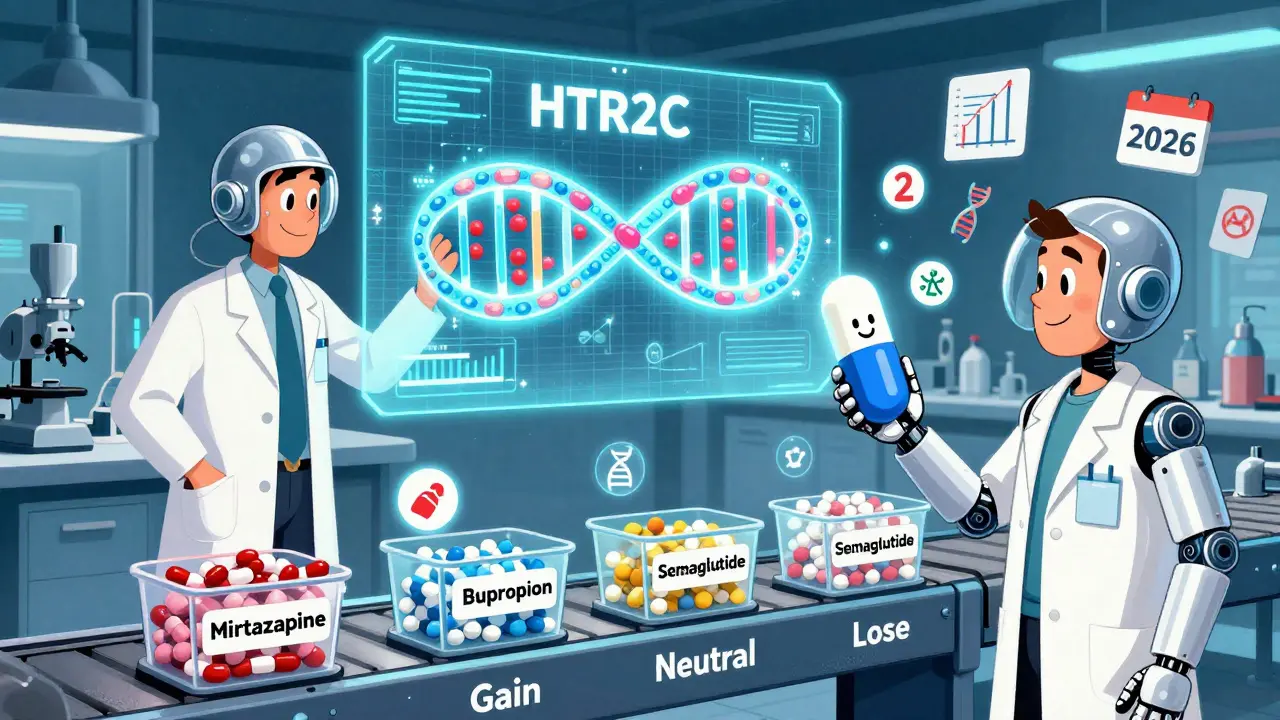
The biggest shift? Pharmacogenomics. In March 2024, the Clinical Pharmacogenetics Implementation Consortium (CPIC) released Level A guidelines for testing the HTR2C gene. If you have certain variants, you’re far more likely to gain weight on antipsychotics. Testing isn’t routine yet-but it’s coming.
And there’s new hope on the horizon. The NIH launched a $150 million initiative in February 2024 called the Medication-Weight Initiative (MWI), aiming to develop 10 weight-neutral alternatives for common drugs by 2029. Companies are already testing combo drugs like Xultophy (insulin + GLP-1), which cuts diabetes-related weight gain by 4.2 kg compared to insulin alone.
By 2025, 87% of academic medical centers plan to screen for metabolic risk before prescribing psychotropic drugs. This isn’t science fiction-it’s the new standard.
What You Should Do Today
If you’re on medication and noticing weight changes:
- Write down your weight history. When did it start changing?
- Check your drug’s side effects. Look up the brand name + "weight gain" on the FDA website or your pharmacy’s app.
- Ask your doctor: "Is there a similar medication with less risk of weight gain?"
- Request a referral to a dietitian or metabolic specialist if your clinic doesn’t offer one.
- Don’t blame yourself. Weight changes from meds aren’t about willpower-they’re about biology.
And if you’re a provider? Start the conversation early. Show patients a chart of expected weight changes. Use visual aids. Make it part of the consent process. Because when people understand the risk, they’re more likely to stick with treatment-and stay healthy.
Can I lose weight while taking antidepressants?
Yes, but it depends on the drug. Some antidepressants like bupropion and sertraline are more weight-neutral or even cause mild weight loss. Others, like mirtazapine and paroxetine, are strongly linked to weight gain. If weight is a concern, talk to your doctor about switching. You don’t have to choose between mental health and your body.
Why do steroids cause weight gain so quickly?
Steroids like prednisone trigger fluid retention and increase appetite. They also alter how your body stores fat, especially around the abdomen. The weight gain often shows up within weeks-not months. It’s mostly water and fat, not muscle. Reducing salt intake and staying active can help minimize the effect, but the weight usually drops once the steroid is stopped.
Are there any medications that help you lose weight on purpose?
Yes. GLP-1 receptor agonists like semaglutide (Wegovy, Ozempic) and liraglutide (Saxenda) are approved for weight loss. They work by reducing hunger and slowing digestion. They’re not magic pills-they require lifestyle changes too-but for many, they’re the most effective tool available. They’re now being studied for use in people on weight-gain medications to offset the side effects.
Is weight gain from medication permanent?
Not necessarily. If you stop the medication or switch to a weight-neutral alternative, many people lose the extra weight-especially if they combine it with diet and movement. But if weight gain continues for years without intervention, it can become harder to reverse. Early action is key.
Should I avoid medication if it causes weight gain?
No-not unless you have a safer alternative. For many conditions, like depression or schizophrenia, the benefits of treatment far outweigh the risks of weight gain. The goal isn’t to avoid meds-it’s to choose the right one and manage the side effect. Talk to your provider about prevention strategies before you start.
If you’re managing a chronic condition and worried about weight, you’re not alone. And you don’t have to just live with it. With better tools, better data, and better conversations, medication-related weight changes are becoming something we can predict, prevent, and reverse-not just endure.

Jeff Mirisola
I’ve been on olanzapine for 3 years. Gained 30 lbs. My doctor said "it’s just the meds" and moved on. No one mentioned bupropion as an alternative until I dug into Reddit threads myself. Why isn’t this info standard? You’d think if we’re prescribing these, we’d have a cheat sheet for side effects. I’m lucky I didn’t give up on treatment entirely.

Susan Purney Mark
I’m a nurse and I see this every day. 🥺 One patient switched from mirtazapine to sertraline and lost 14 lbs in 4 months. She cried because she could finally wear her wedding dress again. This isn’t just about numbers-it’s dignity. Please, if you’re a provider: talk about weight BEFORE prescribing. It changes everything.

Amina Aminkhuslen
So let me get this straight-you’re telling me my 18 lb gain on paroxetine wasn’t because I "ate too much" but because my brain’s serotonin receptors got hijacked? And my doc never mentioned it? Classic. I’m not lazy. I’m pharmacologically manipulated. 😑

Joe Prism
Weight isn’t the issue. Control is.

phyllis bourassa
I love how people act like this is some groundbreaking revelation. I’ve been on antipsychotics since 2015. Every single one of my doctors said "it’s normal". No one ever said "here’s a better option". I switched to aripiprazole after 8 years and lost 22 lbs. My life didn’t change because I lost weight. It changed because someone finally listened.

amber carrillo
This is so important. I work with seniors on insulin and they gain weight and feel guilty. But it’s not their fault. We need to normalize talking about this. No shame. Just science.

Weston Potgieter
Funny how we call it "medication-related weight change" like it’s some neutral term. It’s not. It’s a side effect that ruins lives. And yet no one in pharma wants to fix it because fat people keep buying meds. Capitalism is a drug too.

Vikas Verma
In India, we rarely discuss metabolic side effects of psychotropics. Patients assume weight gain is inevitable. We need structured protocols. HTR2C testing should be mandatory before prescribing olanzapine. Prevention > reaction

Ferdinand Aton
Wait, so semaglutide helps you lose weight… but it’s $1000/month? Meanwhile, olanzapine costs $4. So you’re telling me the solution to drug-induced weight gain is… a more expensive drug? Brilliant.

Sean Callahan
i had to switch from abilify to seroquel and gained 40 lbs in 6 months. my doc said "it’s just water" but i felt like a balloon. then i found out aripiprazole was an option. i switched. lost it all. no one told me. why is this so secret?

Ian Kiplagat
The fact that we’re only now seeing FDA labeling changes is ridiculous. This has been known since the 90s. We’re decades behind. 🤦♂️

Bridget Verwey
So let me get this straight: we have a $150M NIH initiative to develop weight-neutral meds… but we still don’t have a single provider who tells you this stuff BEFORE they write the script? 🙄 I’m not mad. I’m just disappointed.

Andrew Poulin
I stopped taking my antidepressant because I gained 20 lbs and my knees gave out. I didn’t go back. My anxiety is worse. So now I’m stuck between a rock and a hard place. No one helps you weigh the trade-offs. Just hand you the pill and say "take it"

William Minks
This is the kind of info we need in every pharmacy pamphlet. I showed my mom this article and she finally understood why her insulin made her gain weight. She’s been on it for 12 years and never knew. 🙏

Tim Hnatko
I’m a therapist. I’ve had clients cry because they couldn’t fit into their clothes after starting meds. We treat the mind but ignore the body. It’s not holistic care if we only fix half the person.
Write a comment