Recent POST



SSRI Sexual Dysfunction Treatment Calculator
Calculate the most effective approach for managing sexual side effects from your SSRI medication. Select your current medication and symptoms to see personalized recommendations with success rates and safety considerations.
Your Medication
Your Symptoms
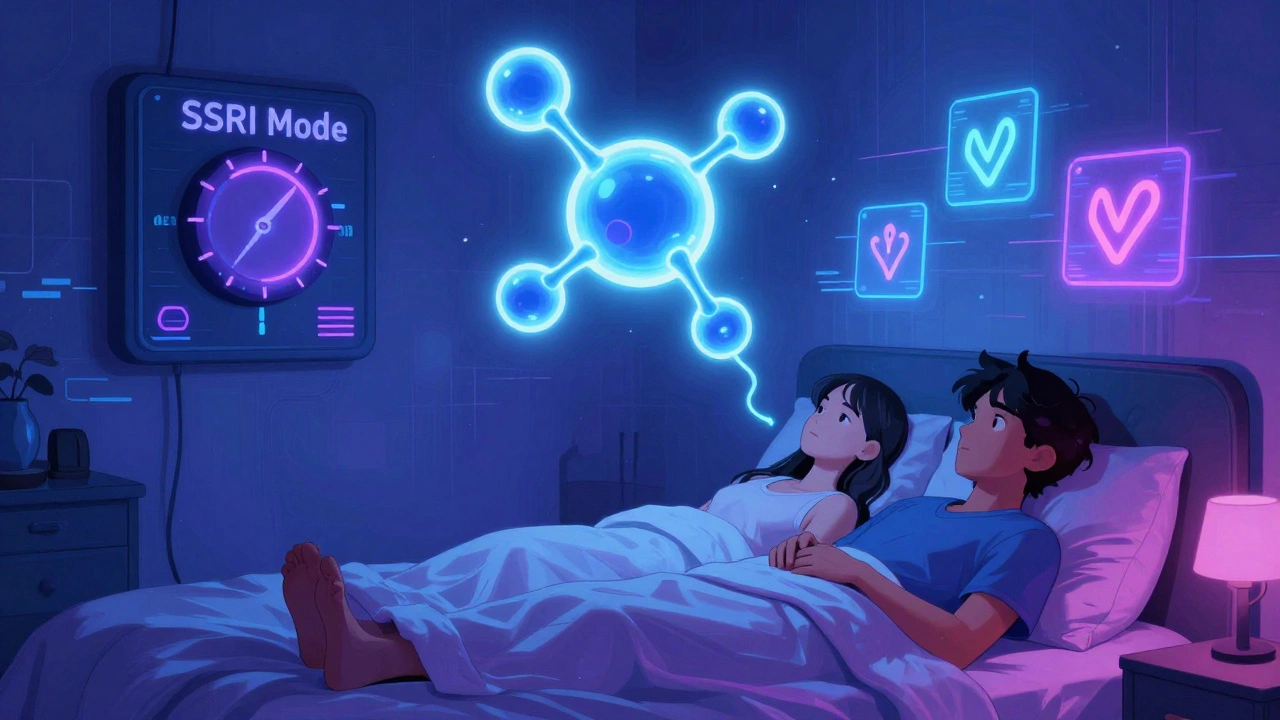
Sexual side effects from SSRIs aren’t rare-they’re common. Up to 70% of people taking these antidepressants report problems like low desire, trouble reaching orgasm, or erectile issues. And yet, most doctors don’t bring it up first. If you’re on an SSRI and your sex life has changed, you’re not alone. You’re also not broken. This isn’t a personal failure. It’s a known biological effect of increased serotonin, and there are real, evidence-backed ways to fix it without giving up your antidepressant.
Why SSRIs Affect Sex
SSRIs work by boosting serotonin in the brain, which helps lift mood. But serotonin also shuts down sexual response pathways. It’s like turning down the volume on arousal, desire, and climax. The most common problems? Reduced libido (40-50% of users), delayed or absent orgasm (60-70%), and trouble getting or keeping an erection (20-30%). For women, lubrication often drops too. These effects usually show up within the first few weeks of starting the medication.Here’s the tricky part: about 35-50% of people with depression already have sexual issues before they even start an SSRI. That means sometimes, what feels like a new side effect is just the depression showing up in a different way. That’s why tracking symptoms before and after starting treatment matters. Use a simple scale like the Arizona Sexual Experience Scale (ASEX) to rate your desire, arousal, orgasm, and satisfaction on a scale of 1 to 5. Write it down. Compare it after four weeks. That’s your baseline.
Dose Reduction: Less Drug, Same Mood?
Many people assume if a little SSRI helps, more must help better. That’s not always true. For mild to moderate depression, lowering the dose by 25-50% often still controls symptoms while improving sexual function. One study found 40-60% of patients saw better sex lives after cutting their dose, with no return of depression.Try this: if you’re on 40mg of sertraline, talk to your doctor about dropping to 25mg for 2-4 weeks. Monitor your mood and sexual function. If your depression stays stable and your libido returns, you may have found your sweet spot. Don’t cut too fast-go slow. Some people even do a “weekend off” plan: take half your daily dose Monday through Friday, skip Saturday and Sunday. This works best with SSRIs that clear quickly from your system, like sertraline or citalopram.
But avoid this with fluoxetine. It sticks around for weeks. A weekend break won’t help. You’ll still feel the full effect.
Drug Holidays: Timing It Right
A drug holiday means stopping your SSRI for 48-72 hours before planned sexual activity. It’s not for everyone. It works best with short-acting SSRIs: sertraline, escitalopram, citalopram, and fluvoxamine. These clear out in a day or two, so stopping briefly doesn’t wreck your mood.Studies show 60-70% of people with anorgasmia saw improvement using this method. But there’s a catch: 15-20% get withdrawal symptoms-dizziness, nausea, anxiety-when they stop. If you’ve ever felt “brain zaps” when missing a dose, this isn’t for you. And never try this without your doctor’s approval. Abruptly stopping SSRIs can trigger rebound depression or panic attacks.
Fluoxetine? Forget it. Its half-life is over two weeks. You’d need to stop for 10 days to get any benefit, and that’s too risky for your mental health.
Switching Antidepressants: A Strategic Move
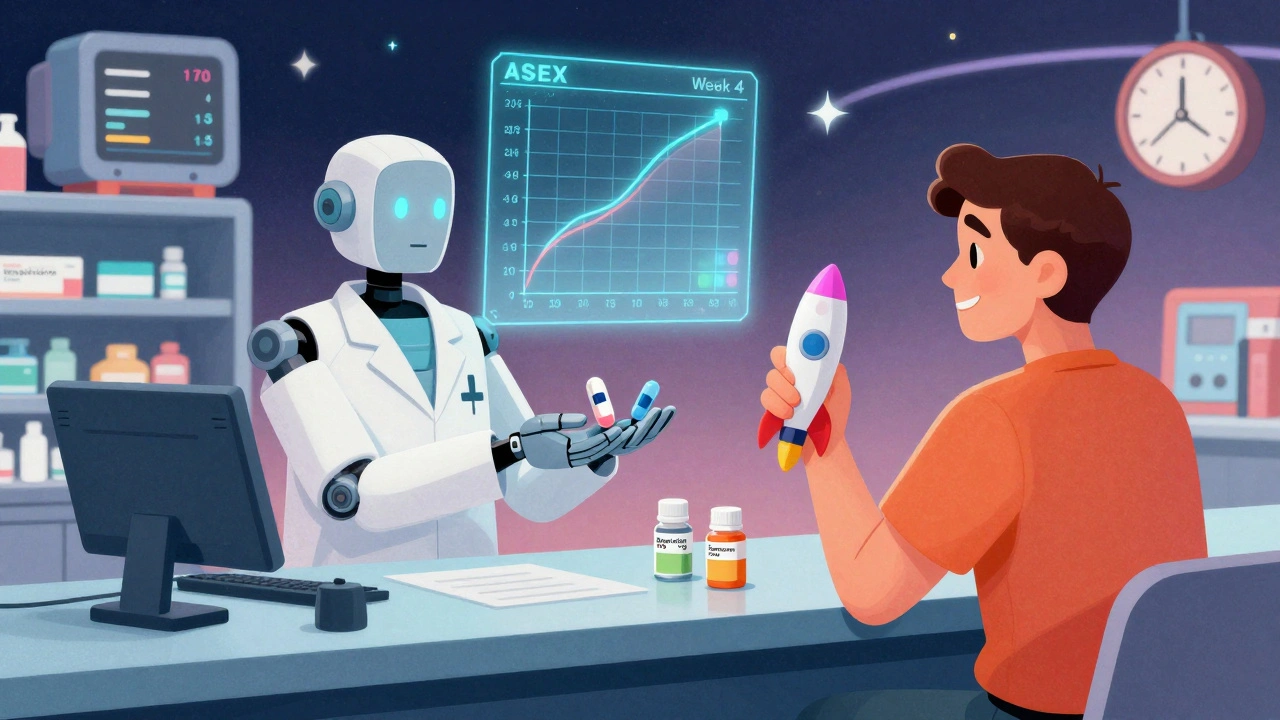
Not all SSRIs are equal when it comes to sex. Paroxetine is the worst offender-up to 75% of users report sexual side effects. Sertraline and escitalopram are better. Fluoxetine sits in the middle. But you don’t have to stay in the SSRI family.Switching to bupropion (Wellbutrin) is one of the most effective moves. It doesn’t boost serotonin-it boosts dopamine and norepinephrine. That’s the opposite of what SSRIs do. Studies show 60-70% of people who switch to bupropion see major improvement in libido and orgasm. The catch? It takes 2-4 weeks to kick in. You’ll need to overlap the two meds for a week or two while tapering off the SSRI to avoid withdrawal or mood crashes.
Another option: mirtazapine or nefazodone. These block serotonin receptors instead of blocking reuptake. They help sex in 50-60% of cases. But they make you sleepy. If you already struggle with fatigue from depression, this might not be worth it.
There’s also vilazodone and vortioxetine-newer antidepressants with lower sexual side effect rates. But they cost 40 times more than generic sertraline. For most people, that’s not realistic.
Adding Bupropion: The Most Proven Adjunct
You don’t have to ditch your SSRI. You can add something on top. Bupropion as an add-on is the best-studied fix. In a double-blind trial of 55 people on SSRIs, those who added 150mg of sustained-release bupropion twice daily saw a 66% improvement in sexual function. As-needed bupropion (75mg taken 1-2 hours before sex) helped 38%. Daily dosing wins.How to start: Begin with 75mg once daily for 3 days. Then go to 75mg twice daily. Wait 4 weeks. If your mood stays stable and your sex life improves, you’ve found your solution. If you feel jittery or anxious, cut back. Bupropion can increase anxiety, especially when mixed with fluoxetine. That combo is risky. Stick to sertraline or escitalopram if you’re going this route.
Real people report success: One Reddit user on r/antidepressants said, “75mg bupropion XL 4 hours before sex fixed my paroxetine-induced anorgasmia after 3 months of trying.” That’s not luck. That’s science.
Other Adjuncts: What Else Works?
If bupropion doesn’t work or causes too much anxiety, other options exist:- Buspirone (5-15mg daily): A serotonin partial agonist. Helps 45-55% of users. Takes 2-3 weeks. Low risk of side effects. Good for those who can’t tolerate bupropion.
- Cyproheptadine (2-4mg as needed): Blocks serotonin receptors. Works in about half of users. But it makes you drowsy. Use it only before planned intimacy.
- Ropinirole or amantadine: Dopamine boosters. Start low-0.25mg of ropinirole daily. Works in 40-50% of cases. But they can cause tremors or anxiety, especially with SSRIs. Not first-line.
None of these are perfect. But they’re options. And they’re better than quitting your antidepressant.
Behavioral Fixes: It’s Not Just About Pills
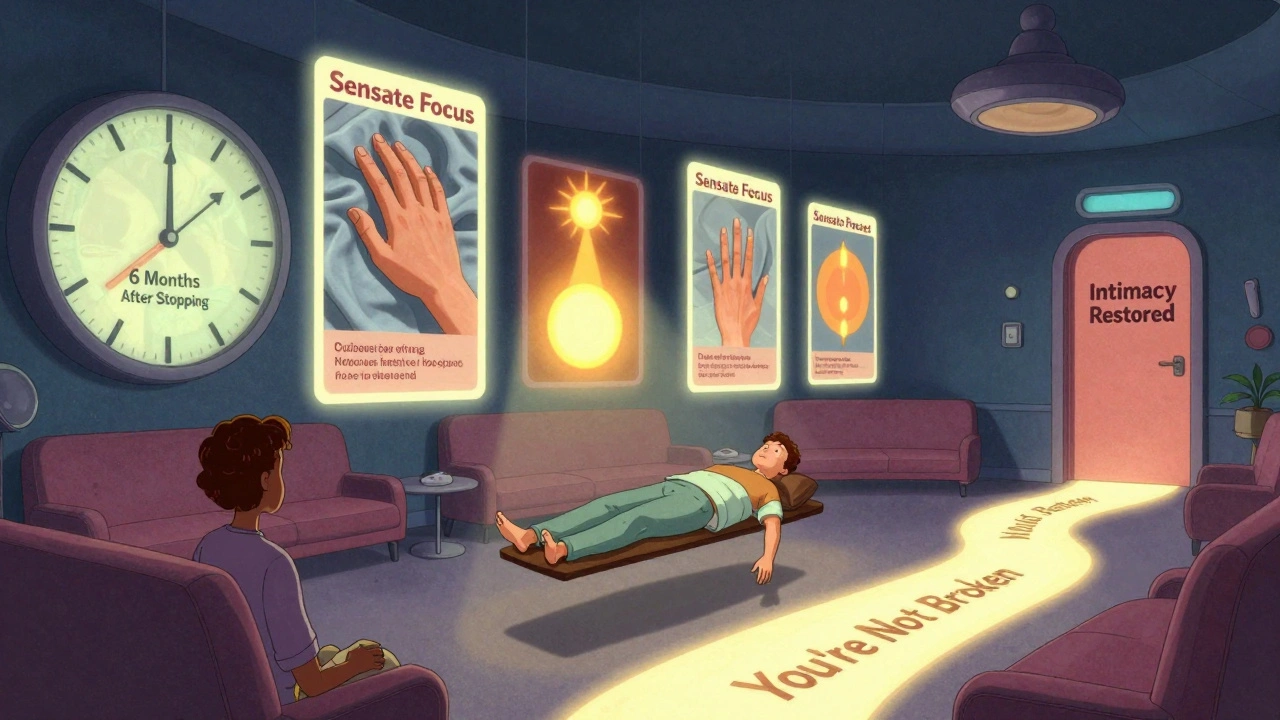
Medication isn’t the whole story. Sometimes, the problem isn’t just biology-it’s habit. Depression dulls sensation. SSRIs dull it more. But your brain can relearn.“Sensate focus” is a technique from sex therapy. It means touching without pressure to perform. No penetration. No orgasm goal. Just exploring touch, warmth, texture. Couples who did this 2-3 times a week for a month reported 50% improvement in satisfaction-even while staying on SSRIs.
Also, try novelty. If your routine sex feels flat, change the setting, time of day, or type of stimulation. Use lube. Try a vibrator. Watch something arousing together. Dr. Levine says most patients under 60 don’t have zero desire-they have a dampened response. Stronger stimulation can override that.
What About Persistent Sexual Dysfunction After Stopping?
There’s growing concern about sexual side effects that linger after stopping SSRIs. The TGA in Australia issued a warning in June 2023 about cases where symptoms lasted months-or years-after discontinuation. Some reports go back to single-dose use.But here’s the nuance: a 2023 review of 19 studies found it’s hard to prove SSRIs caused these long-term issues. Depression itself, stress, aging, and other meds can all play a role. Still, if you’ve had symptoms for over 6 months after stopping, you’re not imagining it. Talk to a specialist. There’s no standard treatment yet, but some patients respond to low-dose dopamine agonists or cognitive behavioral therapy.
What to Do Next
Start here:- Track your sexual function now. Use a simple scale: desire, arousal, orgasm, satisfaction (1-5 each).
- Talk to your doctor. Ask: “Is this a known side effect? What are my options?” If they say, “It’ll pass,” push back. It doesn’t always.
- Try dose reduction first-if your depression is mild to moderate.
- If that doesn’t work, ask about adding bupropion. Start at 75mg daily.
- Don’t try drug holidays with fluoxetine.
- Consider behavioral strategies. They cost nothing and help even when meds don’t fully fix it.
You don’t have to choose between being well and being intimate. You can have both. It just takes the right plan. And you deserve that.
When to Seek Help Beyond Your Doctor
If your doctor doesn’t know how to help, or dismisses your concerns, you’re not wrong. Only 42% of primary care doctors can correctly name effective treatments for SSRI sexual dysfunction. That’s not your fault.Look for a psychiatrist who specializes in sexual medicine or psychopharmacology. The Sexual Health Network has a directory of over 1,200 specialists. Or join SSRI Stories-a community of 15,000+ people sharing real experiences. You’ll find people who’ve tried everything and lived to tell the story.
And if you’re feeling hopeless-like your sex life is gone forever-remember this: every person who says “I got my desire back” started exactly where you are now. Not perfect. Not fixed. Just willing to try.
Can I just stop my SSRI to fix my sex life?
Stopping your SSRI abruptly can trigger withdrawal symptoms like dizziness, nausea, brain zaps, or even a return of depression. For some, sexual side effects may improve after stopping-but for others, they persist for months or longer. Never stop without medical supervision. Safer options like dose reduction, switching meds, or adding bupropion exist and are far more reliable.
Does bupropion interfere with my SSRI’s effectiveness?
In controlled studies, adding bupropion to an SSRI didn’t reduce antidepressant effectiveness in 92-95% of cases. The risk of relapse is low when done properly-with gradual titration and overlap. However, combining bupropion with fluoxetine increases anxiety risk. Stick to sertraline, escitalopram, or citalopram if you’re adding bupropion.
How long until bupropion helps with sexual side effects?
It takes time. Most people start noticing improvements in 2-3 weeks, with full effects by week 4. Daily dosing (150mg twice daily) works better than taking it only before sex. Don’t give up after a week. Give it 30 days.
Are there natural supplements that help?
No supplement has strong clinical proof for SSRI-induced sexual dysfunction. Maca root, ginseng, and L-arginine are often marketed-but studies are small, poorly designed, or funded by supplement companies. Stick to evidence-based options: dose changes, bupropion, buspirone, or behavioral therapy. Supplements won’t hurt, but they won’t fix it either.
Why don’t doctors talk about this?
A 2023 Harvard Health poll found 73% of patients said their doctor never discussed sexual side effects before prescribing SSRIs. Many doctors assume patients won’t bring it up, or they think it’s too uncomfortable. But it’s one of the top reasons people quit their meds. You have every right to ask. If your doctor brushes you off, find someone who listens.
Can I still have a healthy sex life on SSRIs?
Absolutely. Many people manage this successfully. It’s not about eliminating the SSRI-it’s about adjusting how you use it. Dose tweaks, adding bupropion, behavioral techniques, and open communication with your partner can restore intimacy. You’re not stuck. You just need the right tools.

Casey Mellish
Just wanted to say this is one of the clearest, most actionable guides I’ve read on SSRI sexual side effects. I’m in Australia and my psychiatrist never mentioned any of this-just said ‘give it time.’ Took me six months to find this info on my own. Dose reduction from 50mg to 30mg sertraline? Game changer. Libido came back in 3 weeks. No brain zaps. No depression return. Seriously, if you’re struggling-this is your roadmap.

Tyrone Marshall
There’s something deeply human about this conversation. We’re told to ‘just take the pill’ and ignore the parts of ourselves that feel numb-but intimacy isn’t a side effect to tolerate. It’s a core part of being alive. The fact that we can tweak, switch, or add without abandoning our mental health recovery? That’s not just medical-it’s dignified. You’re not broken. You’re adapting. And that takes courage.

Emily Haworth
WAIT. 😳 Did you know the pharmaceutical companies KNOW this happens and DON’T tell you? I read a whistleblower report from 2021-big pharma hides sexual side effect data because patients drop meds and they lose money. 🤯 They’d rather you quit antidepressants than fix the problem. This isn’t medicine. It’s profit-driven neglect. 🚨 #PharmaCoverUp

Tom Zerkoff
While the information presented is largely accurate and clinically sound, it is imperative to underscore that any pharmacological intervention, including dose reduction or adjunctive therapy, must be undertaken under the direct supervision of a licensed physician. The potential for withdrawal syndromes, serotonin discontinuation syndrome, and pharmacodynamic interactions-particularly with bupropion and fluoxetine-demands rigorous clinical oversight. Self-adjustment, however well-intentioned, constitutes a significant risk to patient safety.

kevin moranga
Man, I wish I’d read this two years ago. I was on 40mg of escitalopram and felt like a zombie in the bedroom-no spark, no joy, just… nothing. Tried the weekend off thing (only worked because I wasn’t on fluoxetine, phew) and then added 75mg bupropion daily. Took about 28 days, but holy crap-my wife said I was ‘back.’ Not just physically-emotionally too. We started cuddling again, watching movies, laughing. It wasn’t just sex-it was connection. Don’t give up. You can get your spark back. It’s not magic, it’s medicine. And you deserve both.

Alvin Montanez
Let’s be real-this whole ‘fix your sex life while staying on SSRIs’ thing is just another form of pharmaceutical manipulation. You’re being sold a false choice: ‘You can have both!’ But the truth? SSRIs are designed to numb emotional intensity-including desire. The fact that people are being told to ‘add bupropion’ instead of just switching to something that doesn’t destroy libido is a sign of a broken system. Why not just prescribe Wellbutrin from the start? Because it’s cheaper to keep you on the SSRI and patch it with another drug. They make more money that way. Stop being a guinea pig. Quit the SSRI. Let your brain reset. It’s not weakness-it’s self-respect.

Lara Tobin
I just wanted to say thank you for writing this. I’ve been on sertraline for 4 years and thought I was the only one who felt this way. I cried reading the part about ‘you’re not broken.’ I felt so alone. I tried the bupropion add-on and it helped-slowly. My partner and I started sensate focus and it changed everything. We don’t even have sex anymore, not really. But we touch. And that’s enough. I’m not fixed, but I’m not lost anymore. Thank you.

Jamie Clark
This post is dangerously oversimplified. You’re telling people to ‘try dose reduction’ like it’s a snack. SSRIs aren’t coffee-you can’t just cut back and expect your brain to recalibrate. And bupropion? It’s a stimulant. It’s not a magic bullet-it’s another drug with side effects, including seizures and psychosis in vulnerable people. You’re normalizing self-experimentation. This isn’t advice-it’s a risk manifesto. If you’re having side effects, see a psychopharmacologist. Not Reddit. Not some blog. A professional who’s seen 1000 cases. Your life isn’t a Reddit thread.

Keasha Trawick
Okay, but let’s talk about the serotonin-sex axis like it’s a goddamn symphony 🎻-SSRIs mute the strings, but the rhythm’s still there. Bupropion? That’s the bass drum kicking back in. 🥁 And sensate focus? That’s the conductor whispering, ‘Feel the silence between the notes.’ I went from zero libido to ‘hey, can we do that again?’ in 6 weeks. No magic. No miracle. Just science + patience + a vibrator I bought on Amazon labeled ‘For Research Purposes Only.’ 😏 The point? Your brain didn’t die. It just got fogged. And fog lifts. Slowly. But it lifts.
Write a comment