Recent POST





PAMORA Comparison & Selection Tool
Select the medication you are considering or want to learn more about:
Methylnaltrexone
Brand: RelistorSubcutaneous Injection or Oral
Naloxegol
Brand: MovantikOral Tablet (Daily)
Naldemedine
Brand: SymproicOral Tablet (Daily)
Clinical Response Rate
Why Standard Laxatives Fail When You Take Opioids
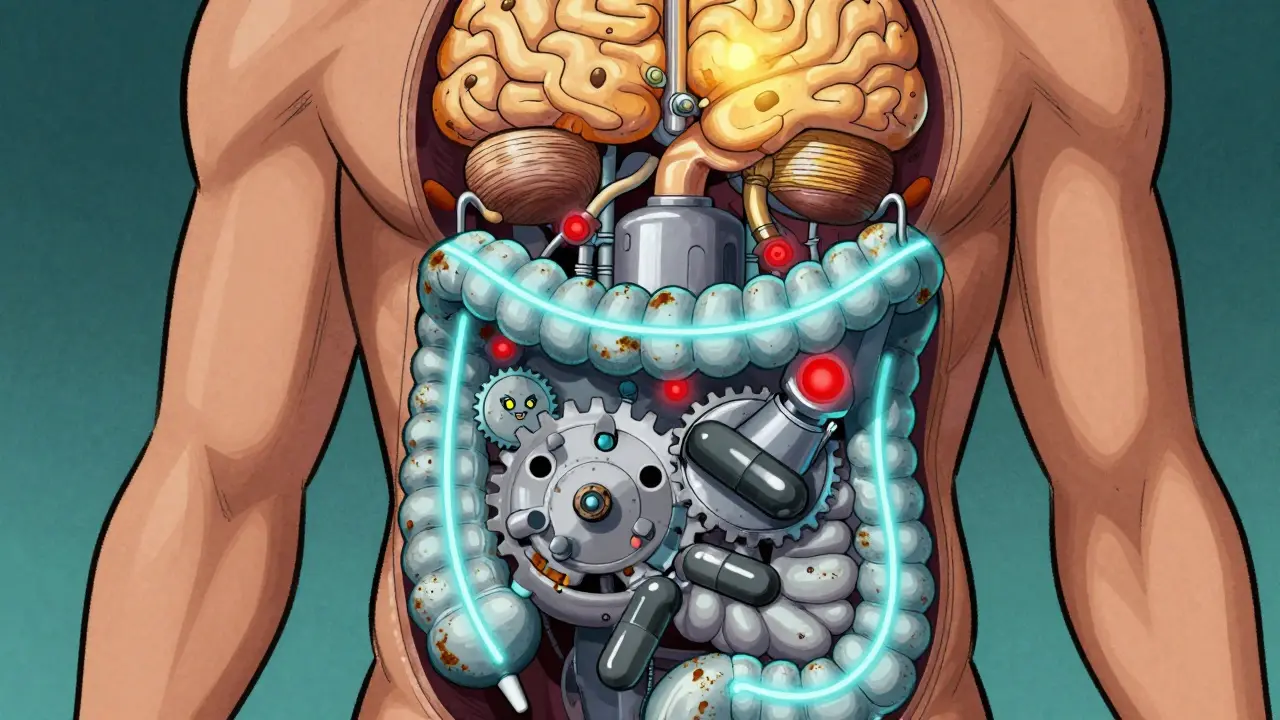
If you take opioids for chronic pain or cancer care, you likely know the frustrating cycle: the medication helps your pain, but it shuts down your digestive system. This isn't just "constipation" in the ordinary sense. It is a specific medical condition called opioid-induced constipation, or OIC. Unlike regular constipation caused by diet or lack of exercise, OIC happens because opioids bind to mu-opioid receptors in your gut wall. These receptors slow down intestinal motility, increase fluid absorption from the stool, and tighten the sphincter muscles. The result is hard, difficult-to-pass stools that standard over-the-counter laxatives often cannot fix.
Studies show that traditional laxatives have less than 30% efficacy in maintaining regular bowel function for chronic opioid users. That means for most people, daily doses of fiber or stimulant laxatives are not enough. This leads many patients to reduce their pain medication, which causes a return of severe pain, creating a lose-lose situation. To break this cycle, doctors now turn to a specialized class of drugs known as peripherally acting mu-opioid receptor antagonists, or PAMORAs.
What Are PAMORAs and How Do They Work?
PAMORAs are designed with a very specific job: block the opioid effects in your gut without blocking the pain-relieving effects in your brain. Opioids work by binding to mu-receptors throughout the body. In the central nervous system (brain and spinal cord), this binding stops pain signals. In the gastrointestinal tract, it stops movement. PAMORAs are engineered so they do not cross the blood-brain barrier in significant amounts. They stay in the periphery-your stomach and intestines-and competitively displace the opioid molecules from the mu-receptors there.
This mechanism allows you to keep taking your necessary pain medication while restoring normal bowel function. Think of it like removing a key from a lock in your gut, while leaving the keys in the locks in your brain untouched. This targeted approach addresses the root cause of OIC rather than just treating the symptoms with bulk or stimulation.
The Three Main PAMORA Medications
There are three primary PAMORAs currently available on the market, each with distinct chemical structures, administration methods, and clinical profiles. Understanding the differences can help you discuss the best option with your healthcare provider.
| Drug Name (Brand) | Administration | Key Feature | Response Rate (Clinical Trials) |
|---|---|---|---|
| Methylnaltrexone (Relistor) | Subcutaneous injection or Oral tablet | Quaternary amine structure prevents crossing blood-brain barrier; no CYP450 metabolism | 52.4% achieved bowel movement within 4 hours vs 30.2% placebo |
| Naloxegol (Movantik) | Oral tablet (daily) | Pegylated derivative of naloxone; requires dose adjustment in moderate hepatic impairment | 44.4% spontaneous bowel movement rate at 12 weeks |
| Naldemedine (Symproic) | Oral tablet (daily) | Polyethylene glycol chain enhances peripheral selectivity; approved in 2017 | 47.6% response rate vs 34.6% placebo |
Methylnaltrexone (Relistor)
Methylnaltrexone was one of the first PAMORAs approved by the FDA. Its molecular structure includes a quaternary amine group, which gives it a positive charge. This charge makes it difficult for the molecule to pass through the lipid-rich blood-brain barrier, ensuring it stays in the gut. It is unique among PAMORAs because it is not metabolized by the cytochrome P450 enzyme system (specifically CYP3A4). This means it has fewer drug-drug interactions compared to other medications. It is available as a subcutaneous injection, which works quickly, and as an oral tablet. Clinical trials showed that 52.4% of patients had a bowel movement within four hours of taking the subcutaneous form, compared to 30.2% on placebo.
Naloxegol (Movantik)
Naloxegol is an oral-only medication taken once daily. It is a pegylated derivative of naloxone, meaning polyethylene glycol chains are attached to the molecule to increase its size and polarity, further restricting entry into the brain. It reaches peak plasma concentration in about 2.5 hours and has a half-life of 8 to 13 hours. While effective, it requires caution in patients with kidney issues. It is contraindicated in severe renal impairment (CrCl <30 mL/min) and requires dose adjustment in moderate hepatic impairment.
Naldemedine (Symproic)
Naldemedine is also an oral daily tablet. Like naloxegol, it uses a polyethylene glycol chain to enhance peripheral selectivity. It was approved by the FDA in March 2017. In large phase 3 trials (COMPOSE-3), it demonstrated a 47.6% response rate versus 34.6% for placebo. It is generally well-tolerated but shares the same risk profile regarding gastrointestinal perforation if used incorrectly.

Who Should Avoid PAMORAs? Critical Safety Warnings
While PAMORAs are highly effective, they are not safe for everyone. The most critical contraindication across all PAMORAs is mechanical gastrointestinal obstruction. If your constipation is caused by a physical blockage in the intestine (such as a tumor, stricture, or adhesions), taking a PAMORA can be dangerous. Because these drugs stimulate bowel motility, they can cause the bowel to rupture (perforation) if there is a blockage downstream. Symptoms of obstruction include severe abdominal pain, vomiting, and inability to pass gas. If you experience these, seek immediate medical attention.
Another consideration is recent bowel surgery. Patients who have undergone recent resection should avoid PAMORAs unless specifically directed by a surgeon, due to the risk of anastomotic leak (a hole forming where the bowel was stitched together).
Renal and hepatic function must also be evaluated. As noted, naloxegol is risky in severe kidney disease. Methylnaltrexone requires a 50% dose reduction in severe renal impairment. Always provide your doctor with a complete list of your current medications and health conditions before starting treatment.
Real-World Experience: Efficacy, Side Effects, and Cost
Clinical trial data looks good on paper, but how do these drugs perform in daily life? Patient feedback reveals a mixed but generally positive picture, particularly regarding quality of life.
On patient review platforms, methylnaltrexone holds a rating of roughly 5.8 out of 10, with 38% of reviewers reporting effectiveness. Naloxegol scores slightly higher at 6.2 out of 10, with 45% reporting effectiveness. Many patients praise these drugs for allowing them to resume normal activities without stopping their pain management. One common sentiment from online forums is relief from the anxiety of unpredictable bowel movements.
However, side effects are real. The most common complaint is abdominal cramping or pain, reported by about 32% of negative reviews. This occurs because the drug is suddenly restarting bowel motility that has been suppressed for a long time. Nausea and diarrhea are also possible, though usually mild. Some patients report that the drug works well initially but loses effectiveness over time, a phenomenon sometimes referred to as tachyphylaxis, though this is less common than simple variability in individual response.
Cost is a major barrier. Without insurance coverage or manufacturer coupons, PAMORAs can cost between $5,000 and $6,000 annually. For example, one patient reported paying $450 monthly for naloxegol only to find it stopped working after two weeks. Access remains limited to approximately 35-40% of eligible patients due to these financial constraints, according to gastroenterological associations.
Practical Tips for Taking PAMORAs
To get the best results from PAMORA therapy, timing and consistency matter. Here are some practical guidelines based on clinical recommendations:
- Timing is key: For oral PAMORAs like naloxegol and naldemedine, take the medication at the same time every day. Some experts recommend dosing one hour before the peak effect of your opioid medication to maximize the blocking action in the gut.
- Hydration: Since PAMORAs restore fluid balance in the stool, staying well-hydrated helps prevent dehydration and supports healthy bowel movements.
- Dietary adjustments: While PAMORAs address the opioid blockade, maintaining a balanced diet with adequate fiber (if tolerated) and fluids supports overall gut health.
- Monitor for changes: Keep a log of your bowel movements. If you do not see improvement within 2-3 weeks, consult your prescriber. Dose titration may be necessary, especially for methylnaltrexone injections.
- Watch for red flags: Stop the medication and seek medical help if you experience severe, persistent abdominal pain, vomiting, or rectal bleeding.
Future Developments and Alternatives
The landscape of OIC treatment is evolving. New formulations are emerging, including higher-dose methylnaltrexone tablets for severe cases unresponsive to standard doses. Researchers are also investigating combination therapies, such as dual-action agents that combine PAMORA activity with serotonin (5-HT4) agonism, showing promising early response rates of 68% in phase 2 trials.
For patients who cannot afford or tolerate PAMORAs, alternatives exist but are generally less effective. These include:
- Lubiprostone: A chloride channel activator that increases fluid secretion in the intestine.
- Linaclotide: A guanylate cyclase-C agonist that also increases intestinal fluid.
- Osmotic laxatives: Such as polyethylene glycol, which draw water into the bowel.
While these options are cheaper, they do not target the mu-opioid receptor directly, so they often require higher doses and may cause more bloating or diarrhea without fully resolving the underlying motility issue.
Can PAMORAs reverse the effects of my pain medication?
No, PAMORAs are designed not to cross the blood-brain barrier. They block opioid receptors in the gut but leave the receptors in the brain and spinal cord unaffected. Therefore, they should not reduce your pain relief. However, in rare cases, if high doses are used or if the drug does accumulate centrally, some patients might notice a slight decrease in analgesia. Always monitor your pain levels when starting a new medication.
How long does it take for PAMORAs to start working?
The onset of action varies by formulation. Subcutaneous methylnaltrexone can produce a bowel movement within 30 minutes to 4 hours. Oral medications like naloxegol and naldemedine typically take longer, with many patients experiencing relief within the first few days of consistent daily use. Full stabilization of bowel habits may take 2-3 weeks.
Are PAMORAs safe for long-term use?
Yes, PAMORAs are generally considered safe for long-term use in patients with chronic opioid-induced constipation. Clinical trials have followed patients for up to 12 weeks or more with no significant safety concerns beyond gastrointestinal side effects. However, ongoing monitoring by your healthcare provider is recommended to assess efficacy and adjust dosing as needed.
What should I do if I miss a dose of my PAMORA?
If you miss a dose of an oral PAMORA, take it as soon as you remember on the same day. If it is almost time for your next dose, skip the missed dose and resume your regular schedule. Do not double the dose to make up for a missed one. Consistency is important for maintaining steady drug levels in your system.
Can I take PAMORAs with other laxatives?
It is generally not recommended to combine PAMORAs with stimulant laxatives without medical supervision, as this can increase the risk of diarrhea and abdominal cramping. However, osmotic laxatives or stool softeners may be used concurrently if advised by your doctor. Always consult your healthcare provider before adding any new over-the-counter medications to your regimen.

Paul Diamond
The dichotomy presented here between the relief of physical agony and the preservation of bodily autonomy through natural function reveals a deeper existential tension within modern medicine. We seek to silence the screaming nerves of the body while demanding that the gut continue its rhythmic dance of digestion, yet the very agent that grants peace to the mind shackles the intestines in a silent, painful rebellion. This is not merely a pharmacological issue but a philosophical one: how much of our biological integrity are we willing to sacrifice for comfort? The PAMORA represents a technological compromise, a clever hack that allows us to have our cake and eat it too, blocking the key in the gut lock while leaving the brain lock untouched. But one must wonder if this separation of self-the mind at rest while the body struggles-is sustainable in the long term. Are we creating a fragmented existence where different parts of our being are managed by different chemical regimens? The article speaks of efficacy rates, but it does not speak to the soul of the patient who feels betrayed by their own body's refusal to cooperate despite the best intentions of science. Perhaps the true solution lies not in more sophisticated blockers, but in rethinking our relationship with pain itself, accepting it as a signal rather than an enemy to be eradicated at all costs. Until then, we remain dependent on these molecular keys, turning them in locks we barely understand, hoping that the door opens without breaking the frame.

Peter Sverla
I've been reading up on this because my dad has been struggling with OIC for years after his back surgery, and it’s crazy how many options there actually are now compared to five years ago. He was just taking Miralax and Senna until he was basically miserable, so knowing about these PAMORAs is kind of a game changer for our family discussions with his doctor. I’m curious if anyone has tried Relistor specifically? The injection part sounds intimidating, but if it works faster than the pills, maybe it’s worth the hassle for someone who needs immediate relief. Also, does anyone know if Medicare covers these easily? My dad’s insurance has been a nightmare lately, so even if the drug is perfect, if we can’t afford it, it doesn’t matter. Just looking for real world experiences here, not just the clinical trial stats.

Sydney Jarrett
Let’s get one thing straight: if you’re still relying on bulk-forming laxatives for opioid-induced constipation, you are fundamentally misunderstanding the pathophysiology of the condition. Opioids don’t just slow things down; they alter fluid absorption and sphincter tone via mu-receptor binding, rendering simple fiber interventions largely ineffective and potentially exacerbating bloating and discomfort. The data clearly shows that PAMORAs like naloxegol and naldemedine offer a superior mechanistic approach by competitively displacing opioids at the peripheral level without compromising central analgesia. Ignoring this evidence-based hierarchy of treatment is not just poor practice; it’s negligent. Patients deserve therapies that target the root cause, not symptomatic band-aids that fail to address the underlying receptor dynamics. If your provider isn’t discussing PAMORAs for refractory OIC, question their competence. We need to stop normalizing suboptimal care and start demanding precision medicine that respects the complexity of the human body. Stop settling for mediocrity when effective, targeted solutions exist right at your fingertips.

Lorena Suarez
hey guys just wanted to say this info is super helpful i think a lot of people dont realize how bad oic can get until they experience it themselves. its really nice to see a clear breakdown of the different meds because my friend was confused about why her regular laxatives werent working anymore. hopefully this helps some people feel better and talk to their doctors about other options. take care of yourselves out there

Isis Fleming
It is essential to note that while PAMORAs represent a significant advancement in the management of opioid-induced constipation, they are not without contraindications and require careful patient selection. Specifically, patients with known or suspected mechanical gastrointestinal obstruction, perforation, or recent gastrointestinal surgery should not receive these medications due to the risk of serious adverse events. Additionally, clinicians must monitor for signs of abdominal distension and pain, which may indicate impending obstruction. It is also crucial to educate patients that PAMORAs do not reverse the respiratory depressant effects of opioids, as they do not cross the blood-brain barrier in significant amounts. Therefore, they should not be used as a substitute for naloxone in cases of acute opioid overdose. A multidisciplinary approach involving pain specialists, gastroenterologists, and pharmacists is often beneficial in optimizing therapy. Regular assessment of bowel function and adjustment of concomitant laxative therapy may be necessary to achieve optimal outcomes. Patient adherence is another critical factor, as missing doses can lead to a recurrence of symptoms. Overall, PAMORAs are a valuable tool in the armamentarium against OIC, but they must be used judiciously and with full awareness of their limitations and risks.

Ben Murphy
The moral decay of society is evident in our increasing reliance on synthetic interventions to manage the consequences of our own dependency on painkillers. Instead of addressing the root causes of chronic pain through holistic, non-pharmacological means, we resort to ever-more-complex chemical cocktails that further disconnect us from our natural bodily functions. This is a symptom of a culture that prioritizes convenience over integrity, seeking to numb ourselves to the realities of existence rather than confronting them with courage and resilience. The use of PAMORAs, while technically effective, perpetuates this cycle of avoidance and artificiality. We are trading one form of bondage for another, substituting the physical shackles of constipation for the psychological chains of pharmaceutical dependence. True healing comes from within, from a commitment to living authentically and embracing the full spectrum of human experience, including pain. To outsource our well-being to Big Pharma is to abdicate our responsibility as individuals to cultivate strength and self-reliance. We must reject this paradigm of medicalization and return to principles of natural health and personal accountability. Anything less is a betrayal of our highest potential.

Fred Stone
hey im a nurse and i see this all the time on the floor. most patients dont know about these meds till its too late. just remember if u have kidney problems u gotta be careful with movantik. relistor shots work fast but yeah needles suck lol. good info tho thanks for posting
Write a comment