Recent POST


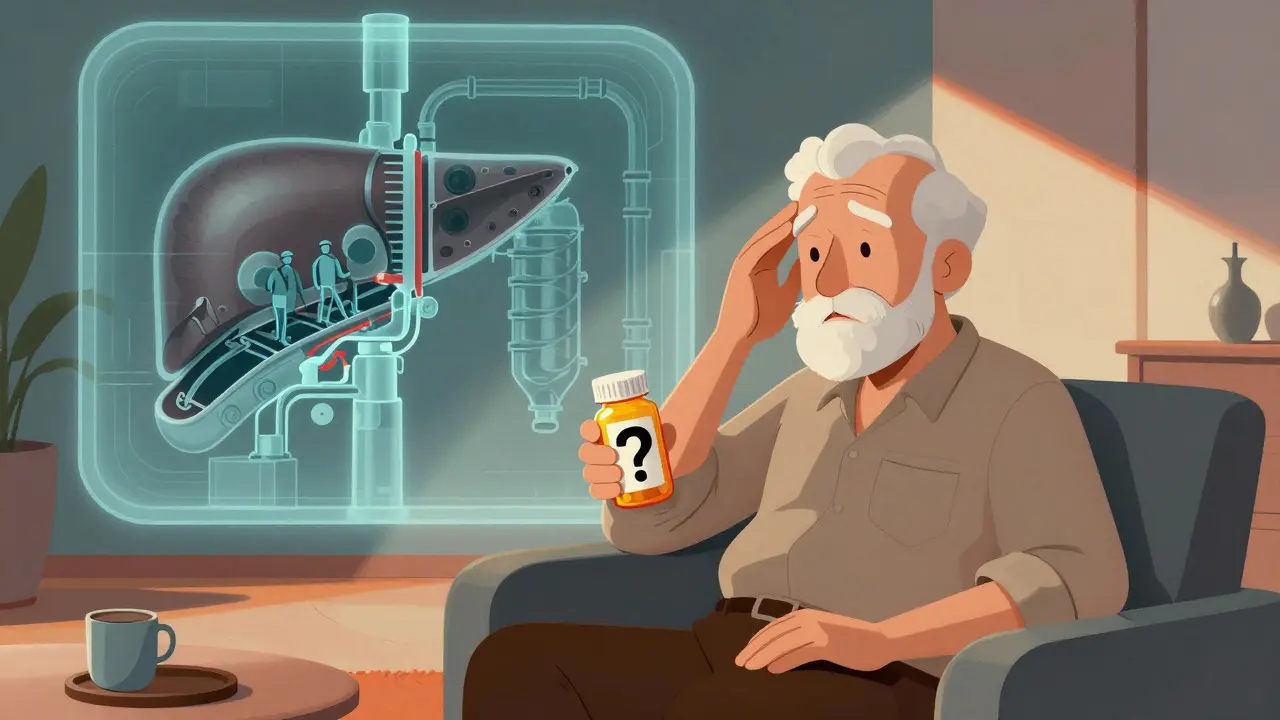
Imagine you’ve taken the same blood pressure pill for ten years. It works fine. Then, on your 75th birthday, you feel dizzy, confused, or unusually tired after taking that exact same dose. Did the drug change? No. Your body did.
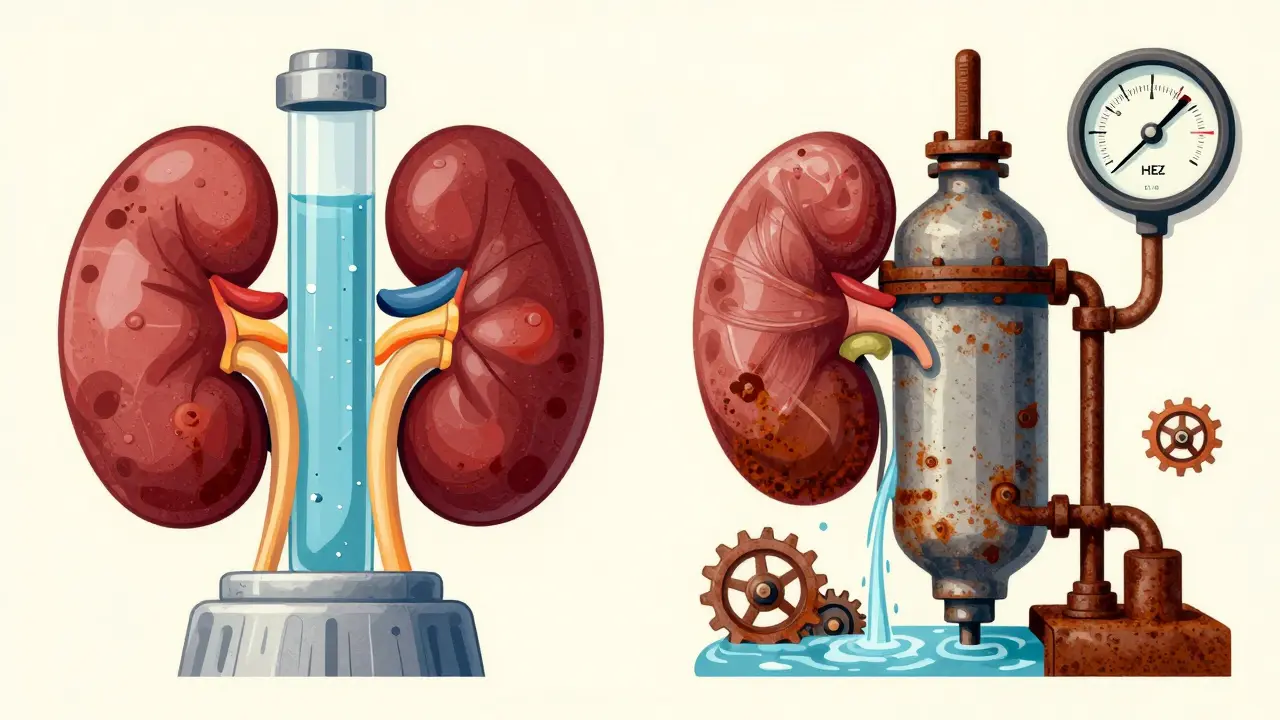
As we age, our internal machinery slows down. Specifically, the liver and kidneys, which act as the body’s filtration and processing plants for medications, undergo significant structural and functional changes. These changes alter how drugs are absorbed, distributed, metabolized, and eliminated-a process known as pharmacokinetics. For older adults, this means a standard dose can easily become a toxic one.
This isn't just theoretical. Approximately 10% of hospital admissions among older adults are directly linked to adverse drug reactions. With the global population aging rapidly, understanding these physiological shifts is no longer optional-it's a matter of safety.
The Aging Liver: Less Flow, Same Enzymes?
The liver is responsible for breaking down many medications through a process called metabolism. In younger adults, the liver receives a robust supply of blood, allowing it to efficiently filter out drugs. However, in older adults, hepatic blood flow decreases by approximately 40% compared to young adults. Additionally, total liver mass reduces by about 30%. Think of it like a factory with fewer workers and slower delivery trucks bringing raw materials.
But here is where it gets tricky. The liver uses two main phases to break down drugs:
- Phase I Metabolism: This involves enzymes like cytochrome P450 (CYP). Research suggests that activity in this phase generally decreases by 37-60% in senescence, though human studies show more modest declines. This means drugs relying heavily on Phase I may stay in the body longer.
- Phase II Metabolism: Surprisingly, this phase remains relatively preserved in humans even as we age. Drugs processed primarily through Phase II pathways may not require significant dose adjustments solely based on liver aging.
A critical concept here is the difference between flow-limited and capacity-limited drugs. Flow-limited drugs (like propranolol or morphine) depend heavily on blood flow to reach the liver. Since blood flow drops by 40%, the clearance of these drugs also drops significantly. Capacity-limited drugs (like diazepam or phenytoin) depend more on enzyme availability. Since enzyme capacity is somewhat preserved, their metabolism doesn't slow down as drastically.
The Aging Kidney: The Silent Decline
If the liver is the chemical processor, the kidneys are the waste disposal system. They filter blood and excrete toxins and drug metabolites through urine. The key metric here is the Glomerular Filtration Rate (GFR).
Between ages 30 and 80, GFR typically declines by 30-50%. This reduction happens gradually and silently. Here is the danger: serum creatinine, a common marker used to check kidney health, often stays stable in older adults despite this decline. Why? Because creatinine is produced by muscle tissue, and older adults naturally lose muscle mass (sarcopenia). So, you have less muscle making creatinine, but also less kidney power filtering it out. The numbers balance out on paper, hiding the reality of reduced function.
This hidden decline means drugs that are excreted unchanged by the kidneys-such as certain antibiotics, digoxin, and lithium-can accumulate to dangerous levels if doses aren't adjusted based on estimated GFR rather than chronological age alone.
| Organ | Key Change | Impact on Drug Clearance | Example Drugs Affected |
|---|---|---|---|
| Liver | Blood flow ↓ 40%; Mass ↓ 30% | Reduced clearance for flow-limited drugs | Morphine, Propranolol, Lidocaine |
| Kidney | GFR ↓ 30-50% | Accumulation of renally excreted drugs | Digoxin, Vancomycin, Lithium |
Why "One Size Fits All" Dosing Fails
Most clinical trials for new drugs historically excluded older adults. An FDA report noted that only 38% of participants in recent drug trials were aged 65 or older. This creates a massive knowledge gap. When a drug is approved, the recommended dose is often based on data from healthy, younger individuals.
When older adults take these "standard" doses, several things can go wrong:
- Increased Bioavailability: Due to reduced first-pass metabolism in the liver, drugs like verapamil or propranolol may enter the bloodstream at 25-50% higher concentrations than expected.
- Prodrug Activation Issues: Some drugs, like perindopril (an ACE inhibitor), are inactive until the liver converts them. If liver conversion slows, the drug might not work effectively, leading to uncontrolled blood pressure.
- Polypharmacy Risks: About 41% of adults over 65 use five or more prescription medications. Each additional drug increases the risk of interactions. If the liver and kidneys are already struggling to clear one drug, adding another overwhelms the system.
Consider the case of amitriptyline, an antidepressant sometimes used for nerve pain. A standard dose for a 40-year-old might cause severe dizziness and falls in an 82-year-old due to reduced hepatic clearance. This isn't an anomaly; it's a predictable physiological outcome.
Practical Steps for Safer Medication Management
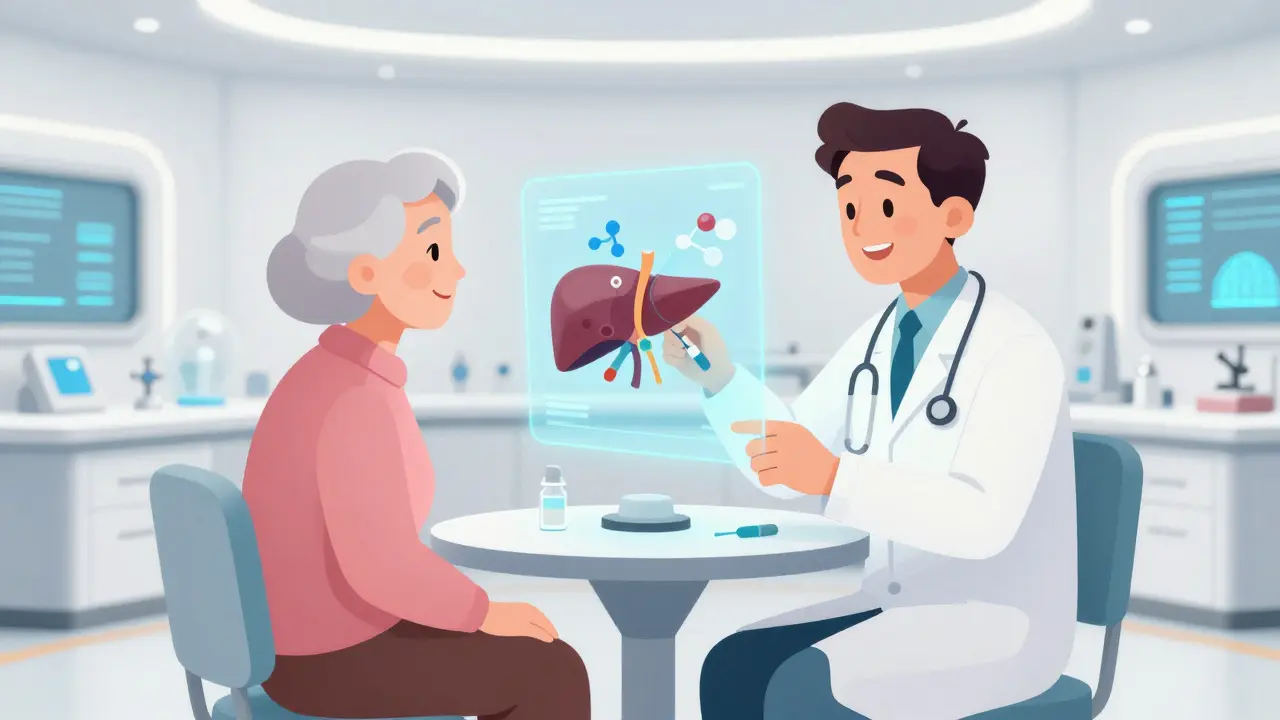
You don't need to be a pharmacist to navigate this, but you do need to be proactive. Here is how to protect yourself or an older loved one:
1. Use Evidence-Based Screening Tools
Healthcare providers should utilize tools like the Beers Criteria and STOPP/START criteria. The Beers Criteria identifies potentially inappropriate medications for older adults. For instance, it recommends avoiding strong anticholinergics or benzodiazepines with long half-lives (like diazepam) because they accumulate in the brain, causing confusion and falls. Implementing these guidelines has been shown to reduce adverse drug events by up to 22%.
2. Calculate Renal Function Accurately
Don't rely on serum creatinine alone. Ask your doctor to calculate your eGFR using the CKD-EPI equation (which is now preferred over the older Cockcroft-Gault method for its accuracy without race adjustment). This provides a clearer picture of how well the kidneys are filtering drugs.
3. Start Low, Go Slow
The golden rule of geriatric prescribing is "start low and go slow." For drugs metabolized by the liver, initial doses are often reduced by 20-40% for patients over 65. This allows the body to adjust and helps identify side effects before they become severe.
4. Monitor for "Silent" Side Effects
In older adults, toxicity doesn't always look like nausea or rash. It often presents as:
- Sudden confusion or delirium
- Unexplained falls or dizziness
- Loss of appetite
- Increased sleepiness
If any of these occur after starting a new medication or changing a dose, contact a healthcare provider immediately. It could be a sign of drug accumulation.
The Future of Personalized Dosing
We are moving toward a future where dosing is based on individual biology, not just age. New technologies, such as geriatric-specific pharmacokinetic modeling software, allow clinicians to simulate how a specific patient’s liver and kidney function will handle a drug. Additionally, research into epigenetic factors-changes in gene expression caused by aging-is helping explain why two 80-year-olds might metabolize the same drug differently.
While we wait for widespread adoption of these advanced tools, the best defense remains vigilance. Regular medication reviews, accurate assessment of organ function, and open communication with healthcare providers can prevent many adverse outcomes.
Do all drugs need dose adjustments for older adults?
No. Drugs that are primarily metabolized via Phase II pathways or have wide therapeutic indices may not require significant adjustments. However, drugs with narrow therapeutic windows (like warfarin or digoxin) or those heavily dependent on renal/hepatic clearance almost always do.
Why does my kidney function test look normal if my GFR is low?
Serum creatinine levels depend on muscle mass. Older adults often have less muscle, so they produce less creatinine. This can mask a declining GFR. Always ask for an eGFR calculation, which accounts for age and weight, rather than looking at creatinine alone.
What is polypharmacy and why is it dangerous?
Polypharmacy refers to taking multiple medications simultaneously (usually defined as five or more). It increases the risk of drug-drug interactions and places a heavier burden on the liver and kidneys, raising the likelihood of adverse drug reactions by up to 88%.
Can lifestyle changes improve drug metabolism?
While you cannot reverse age-related organ decline, maintaining muscle mass through resistance exercise can help preserve creatinine production markers. Staying hydrated supports kidney function, and avoiding alcohol reduces stress on the liver, ensuring it operates at its maximum remaining capacity.
What should I do if I experience confusion after starting a new med?
Contact your doctor immediately. Sudden confusion or delirium in older adults is a common sign of drug toxicity or accumulation due to reduced metabolic clearance. Do not stop the medication abruptly without medical advice, as some drugs require tapering.

Brett Webster
The distinction between flow-limited and capacity-limited drugs is a critical nuance that often gets lost in general health advice. It is fascinating how hepatic blood flow reduction impacts propranolol clearance so drastically while diazepam remains relatively stable due to preserved enzyme capacity. This pharmacokinetic reality underscores why blanket dosing guidelines are dangerous for the geriatric population.

Miranda River
its so obvious that big pharma doesnt care about old people because they dont buy as many pills lol. the whole system is rigged against us anyway. i mean sure maybe your liver slows down but its probably just the toxins in the water or whatever. typical scare tactic article to sell more supplements or something. anyway, great read if you like being scared of your own body.

shreya sinha
It is truly disheartening to observe the profound lack of ethical consideration inherent in modern pharmaceutical practices, wherein the elderly are subjected to experimental dosages derived from trials that systematically exclude their demographic. The fact that serum creatinine masks renal decline is not merely a physiological curiosity but a moral failing of a medical establishment that prioritizes convenience over patient safety, thereby condemning vulnerable seniors to silent toxicity and unnecessary suffering through negligence rather than malice.

Ganesh Honikol
I must emphasize that the integration of the CKD-EPI equation into routine clinical practice is paramount for accurate assessment of renal function in our aging populace, as it mitigates the misleading stability of serum creatinine levels caused by sarcopenia. Furthermore, the adoption of Beers Criteria should be mandatory to prevent the prescription of potentially inappropriate medications such as long-acting benzodiazepines, which significantly elevate the risk of falls and cognitive impairment in older adults, thus ensuring a higher standard of care and safety for this vulnerable group :)

Lee Coates
Haha yeah sure, blame the liver instead of the weak constitution of modern man. In my day we didn't need eGFR calculations, we just took the pill and got back to work building America. Now everyone is too soft to handle a standard dose. Typical liberal science nonsense trying to coddle the elderly. -_-

Callie Skipper
i never realized that muscle loss could actually hide kidney problems on paper. that sounds really scary honestly. makes me want to check my meds with my doctor soon since im getting older too

Aditya Singh
This elucidation on the bioavailability disparities necessitates a paradigm shift towards personalized pharmacogenomic profiling. The attenuation of first-pass metabolism leading to elevated systemic concentrations of verapamil exemplifies the urgent requirement for dynamic therapeutic drug monitoring protocols tailored to senescent physiology, thereby optimizing therapeutic efficacy while minimizing adverse event probabilities through evidence-based precision medicine frameworks.

Brandon Brodsky
Oh wow, who would have thought that organs might slow down as you get older? Groundbreaking stuff. I bet the FDA has never made a mistake excluding seniors from trials before. Just kidding, obviously they do, but good luck getting them to admit it. Meanwhile, here we are, reading articles about how we're all walking time bombs waiting to drop because of a pill meant for a twenty-year-old athlete. Thrilling.

Sherry Wheeler
It is absolutely heartbreaking to think about the silent confusion and dizziness that so many of our elders endure simply because their bodies can no longer process medications the way they once did. We must view this not just as a medical statistic but as a profound human crisis where dignity is eroded by systemic oversight. Imagine the fear of losing one's mind to a simple blood pressure pill; it demands our immediate compassion and action to protect those who have given us so much.

AnneKatherine Stiekes
i think its important to remember that not every drug needs adjustment though. phase ii metabolism stays pretty strong. so maybe its not all doom and gloom. just good to know what to look out for really

Emily Barnhill
We need to stop treating polypharmacy as an inevitable consequence of aging and start holding prescribers accountable for medication reconciliation. If a patient is on five or more drugs, there must be a rigorous review of necessity and interaction risks, especially given the compounded strain on hepatic and renal clearance pathways. Ignoring these interactions is negligent and directly contributes to the high rates of hospitalization cited in the post.
Write a comment