Recent POST





Birth Control & Antibiotic Interaction Checker
Select the antibiotic you are taking to see the scientifically proven risk level and recommended action.
The core of the issue is that for years, medical guidelines were based on a few isolated case reports from the 1970s rather than rigorous studies. Today, we have a much clearer picture of which drugs actually interfere with oral contraceptive pills hormonal medications used to prevent pregnancy by suppressing ovulation and which ones simply don't. If you're worried about an unplanned pregnancy while fighting an infection, here is what the data actually proves.
The One Real Culprit: Rifampin
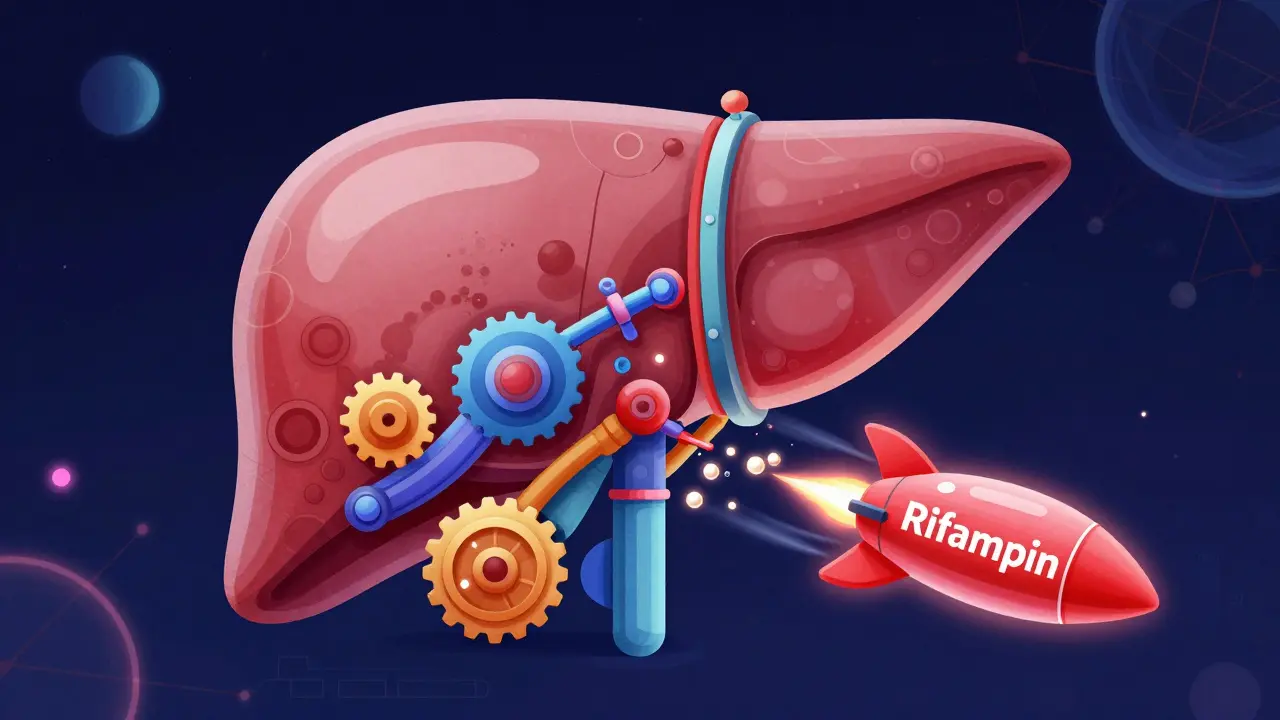
Let's get the most important fact out of the way: almost every antibiotic is safe to use with birth control, except for one specific family of drugs. Rifampin a powerful antibiotic primarily used to treat tuberculosis and certain other bacterial infections (also known as rifampicin) is the only antibiotic with unequivocal evidence of reducing the effectiveness of the pill.
Rifampin doesn't just "mess with your system"; it specifically targets the CYP3A4 enzyme a critical enzyme in the liver responsible for metabolizing many medications, including estrogen in your liver. By ramping up the activity of this enzyme, rifampin causes your body to break down the estrogen in your birth control much faster than usual. Research shows that rifampin can slash the concentration of ethinylestradiol in your blood by 40% to 60%. Because the hormone levels drop so significantly, the pill can no longer reliably prevent ovulation.
There is a close relative called Rifabutin that also affects the liver, though it's not as aggressive as rifampin. It still reduces hormone levels by about 25%, so it's generally recommended to use a backup method when taking this as well. However, these two drugs are used for very specific, serious infections-not the common strep throat or ear infection treatments you'd typically get at a local clinic.
The Myth of Common Antibiotics
Now, let's talk about the antibiotics you actually encounter. Amoxicillin, azithromycin, doxycycline, and penicillin are the "usual suspects" that pharmacists often warn about. But here is the surprise: there is virtually no scientific evidence that these drugs reduce the effectiveness of modern birth control.
A massive systematic review in 2018 looked at 17 different studies involving over 1,800 women. They compared pregnancy rates between women taking non-rifamycin antibiotics and those who weren't. The result? There was no statistically significant difference. In fact, the pregnancy rate for antibiotic users was 0.69 per 100 woman-years, compared to 0.54 for non-users. This tiny difference is considered statistically irrelevant.
Why the confusion? Back in the day, birth control pills had much higher doses of estrogen (50-100 mcg). Modern pills are low-dose (20-35 mcg), and our understanding of how the body processes them has evolved. While some old theories suggested that antibiotics kill the "good" gut bacteria needed to absorb the pill, clinical studies have debunked this. For example, a study on Amoxicillin found no change in how the body absorbed estrogen or progestin, even at high doses.
| Antibiotic Type | Effect on Birth Control | Proven Risk Level | Recommended Action |
|---|---|---|---|
| Rifampin / Rifampicin | Strongly induces liver enzymes | High | Use backup method (condoms) |
| Rifabutin | Mildly induces liver enzymes | Moderate | Use backup method (condoms) |
| Penicillins (e.g., Amoxicillin) | None proven | Very Low/None | Continue pill as normal |
| Tetracyclines (e.g., Doxycycline) | None proven | Very Low/None | Continue pill as normal |
| Macrolides (e.g., Azithromycin) | None proven | Very Low/None | Continue pill as normal |
Why Your Pharmacist Might Still Be Telling You to Use Condoms
If the science is so clear, why are you still getting told to use backup contraception? It comes down to "defensive medicine" and outdated training. Many healthcare providers were taught the "antibiotic warning" decades ago, and it has become a reflex. It's safer for a pharmacist to tell you to use a condom and be "wrong" than to tell you it's fine and have a rare, unexplained failure occur.
This creates a lot of unnecessary anxiety. A survey of community pharmacists found that 68% still routinely recommend backup birth control for amoxicillin, despite the lack of evidence. This leads to a ripple effect: women panic, buy emergency contraception they don't need, or experience stress that can actually cause irregular periods, which they then mistake for contraceptive failure.
Even the FDA-approved package inserts for many pills still list "antibiotics" as a general risk without specifying which ones. However, the tide is turning. The European Medicines Agency recently updated its labels to clarify that non-rifamycin antibiotics don't cause clinically relevant interactions. The US is slowly moving in the same direction as medical associations push for labels based on evidence rather than theory.

Practical Steps for Peace of Mind
If you're currently taking an antibiotic and feeling nervous, don't panic. Here is a practical way to handle it based on the actual risk levels.
- Check the name: Is it Rifampin or Rifabutin? If yes, definitely use condoms or another barrier method until you've been off the antibiotic for a few days.
- Evaluate your symptoms: If you have severe diarrhea or vomiting due to the antibiotic (which can happen with some strong meds), that will affect your birth control because your body isn't absorbing the pill. In this case, use backup protection.
- Ask for specifics: Instead of asking "Will this affect my pill?", ask your doctor, "Does this specific antibiotic induce the CYP3A4 enzyme?" This forces them to think about the pharmacology rather than reciting a general rule.
- Consider your options: If you are frequently on antibiotics for chronic issues and want zero stress, non-hormonal options like the copper IUD aren't affected by any medications.
It's also worth noting that if you're using a progestin-only pill (the "mini-pill"), the margin for error is smaller overall, but the specific interaction with antibiotics remains largely limited to the rifampin family.
Does amoxicillin make birth control pills stop working?
No. There is no high-quality scientific evidence to suggest that amoxicillin or other common penicillins interfere with the effectiveness of combined oral contraceptives. Large-scale reviews have shown no significant increase in pregnancy rates for women taking these antibiotics.
Which antibiotics actually interfere with the pill?
Rifampin (rifampicin) is the only antibiotic proven to significantly lower the concentration of contraceptive hormones in the blood. Rifabutin also has an effect, though it is less potent. Most other broad-spectrum antibiotics do not have this effect.
Why do some doctors still recommend backup birth control?
Many providers rely on outdated guidelines from the 1970s and 80s or use a "better safe than sorry" approach. Because a few rare cases were reported decades ago, the advice became standardized even though modern research doesn't support it for most antibiotics.
What should I do if I have diarrhea while taking antibiotics?
If you experience severe diarrhea or vomiting, your body may not be absorbing the birth control pill properly regardless of the antibiotic. In this specific scenario, you should use a backup method like condoms until your digestion returns to normal.
Do I need emergency contraception if I took a common antibiotic?
If you took a common antibiotic (like amoxicillin or doxycycline) and didn't use backup protection, there is no evidence that you need emergency contraception. The risk of failure is not increased by these medications.
Next Steps and Troubleshooting
If you've already finished your course of antibiotics and are wondering if you're at risk, take a deep breath. Unless you were taking rifampin, the biological mechanism for contraceptive failure simply isn't there. If you're feeling anxious, the best thing to do is take a pregnancy test 21 days after the suspected "risk" period for a definitive answer.
For those who struggle with recurring infections (like chronic UTIs) and are tired of the pharmacy warnings, it might be worth discussing a long-acting reversible contraceptive (LARC) with a provider. IUDs and implants remove the daily pill-taking requirement and the worry over drug interactions entirely, providing a more "set it and forget it" peace of mind.

Steve Grayson
I agree with the points made here. It's a good reminder to double check the actual medication name.

Abhishek Charan
Wait... so we are just ignoring the anecdotal evidence now??? 🙄 I know like three people who got pregnant while on antibiotics!!! The "science" is always shifting anyway!!! 🚩🚩🚩

Betty Kawira
As someone who works in the field, just keep in mind that the diarrhea part is the real kicker. If you're running to the bathroom every ten minutes, that pill is not staying in your system long enough to do its job. Don't just look at the drug name, look at how your body is reacting to it.

Ryan Wilson
It's just typical apathetic negligence from the pharmacy side. They'd rather feed you some half-baked scare tactic than actually spend two minutes explaining the pharmacology. Absolute clown show.

Trish Perry
It's wild how much of our lives are governed by "that's how we've always done it" instead of actual truth. Makes you wonder what else we're just blindly following because a professional said so.

Kevin Taggart
so basically just rifampin is the bad one? idk i always just used condoms anyway just in case :)

Stephen Johnson
It's a gentle reminder to be our own advocates in the healthcare system. The system is designed for efficiency, not necessarily for the most updated individual education.

Kat G
Thank you for clarifying this information. It is very helpful.
Write a comment