Recent POST



Polypharmacy Risk Assessment Tool
This tool helps you understand your risk of polypharmacy and frailty based on the number of medications you take. According to the article, taking 5 or more medications daily puts you in the polypharmacy category, which increases your risk of becoming frail.
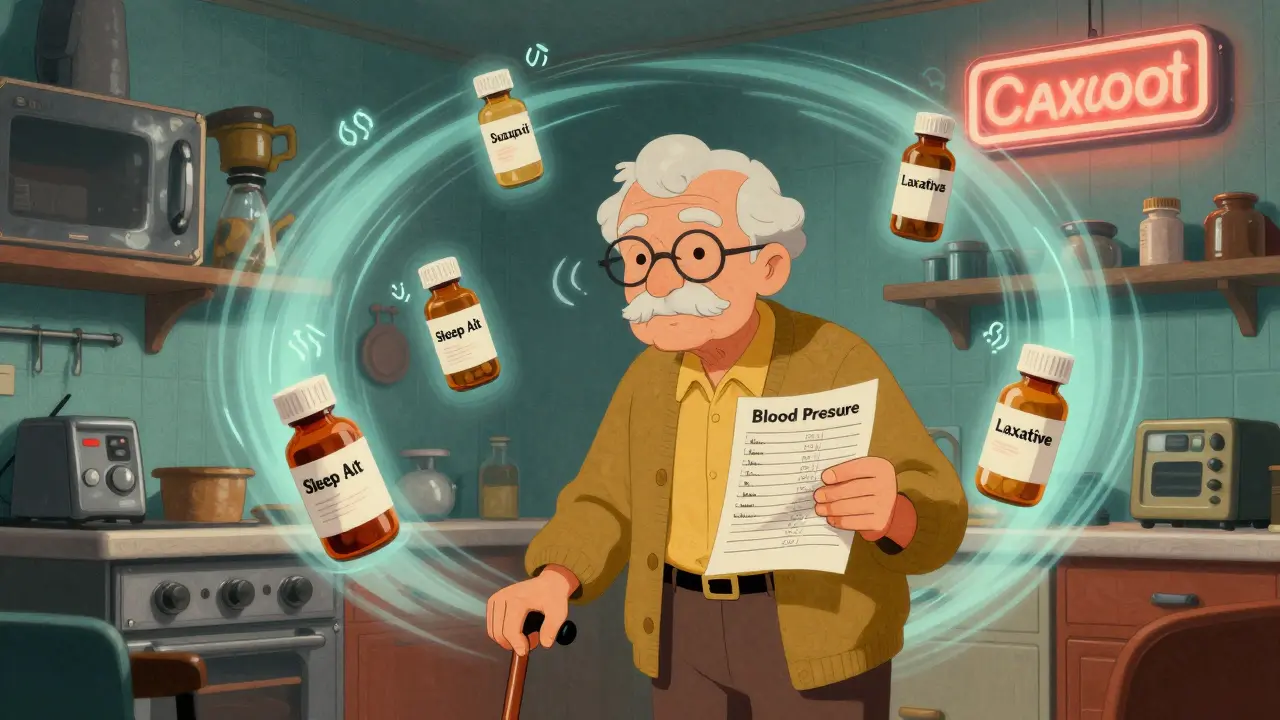
Imagine taking eight different pills every day-some for blood pressure, others for arthritis, sleep, diabetes, and heartburn. Now imagine feeling dizzy, weak, and constantly constipated. You’re not sure if these symptoms are from aging… or from the pills themselves. This isn’t rare. It’s the daily reality for millions of older adults caught in the cycle of frailty and polypharmacy.
What Frailty and Polypharmacy Really Mean
Frailty isn’t just being old or slow. It’s a measurable medical condition. The Fried frailty phenotype defines it by five signs: unintentional weight loss, constant exhaustion, weak grip strength, slow walking pace, and low physical activity. If you have three or more, you’re frail. One or two? You’re prefrail-on the edge. And if you’re taking five or more medications daily, you’re in polypharmacy territory. Ten or more? That’s hyper-polypharmacy. The numbers don’t lie. In the U.S., nearly half of older adults take five or more medications. Among those with heart disease, it’s over 60%. But here’s the twist: 75% of people on five or more meds are already prefrail or frail. And it’s not just correlation. Each extra pill increases your odds of becoming frail by 12%. That’s not coincidence-it’s a feedback loop.The Dangerous Cycle
Frailty makes you more sensitive to drugs. Your kidneys and liver don’t clear medications like they used to. Your brain reacts more strongly to sedatives. Your muscles weaken faster from side effects like dizziness or low blood pressure. So doctors add more pills-to treat the side effects. A fall? Add a bone density drug. Constipation? Add a laxative. Dizziness? Add a blood pressure pill to counter the first one. Before long, you’re on a dozen meds, each trying to fix the damage from the others. A 2024 study of over 3,600 older adults found that polypharmacy and frailty didn’t just coexist-they fed each other. Frailty worsened quality of life, but only because of the meds. The meds made frailty worse, but only because of how they affected daily function. It’s a loop. And it’s expensive. Medication-related problems cost the U.S. healthcare system $30 billion a year. They cause 30% of hospital stays in seniors. And they contribute to up to 300,000 preventable deaths annually.Who’s Most at Risk?
It’s not random. Women are more likely to be on multiple meds than men. Non-Hispanic White seniors have higher rates than Black or Hispanic seniors. People with less education are more likely to be overwhelmed by their pill bottles. But the biggest risk factor? Seeing multiple specialists. A 78-year-old with heart failure, arthritis, diabetes, and depression might see a cardiologist, a rheumatologist, an endocrinologist, and a psychiatrist. Each one prescribes what they think is best. No one looks at the whole picture. One doctor prescribes a sleeping pill. Another adds a painkiller. A third gives a stomach acid reducer. None of them know the others’ prescriptions. The result? A medication pileup. Studies show 67% of polypharmacy cases involve fragmented care like this.What’s Being Done About It?
There are tools-proven ones. The Beers Criteria lists drugs that are risky for older adults, like benzodiazepines for sleep or certain anticholinergics for overactive bladder. The START/STOPP criteria do more: they tell doctors what to stop AND what to start. For example, if you’re on a blood thinner but not on a bone-protecting drug, START/STOPP says you’re missing something important. When used right, these tools cut inappropriate prescribing by 30-50%. But they’re not magic. They need time. A proper review takes 15-20 minutes per patient. Most primary care doctors don’t have that time. Only 38% of U.S. hospitals have electronic alerts built into their systems to flag risky prescriptions. And even when tools are available, doctors often don’t use them-because they’re not trained, or they’re afraid of upsetting patients.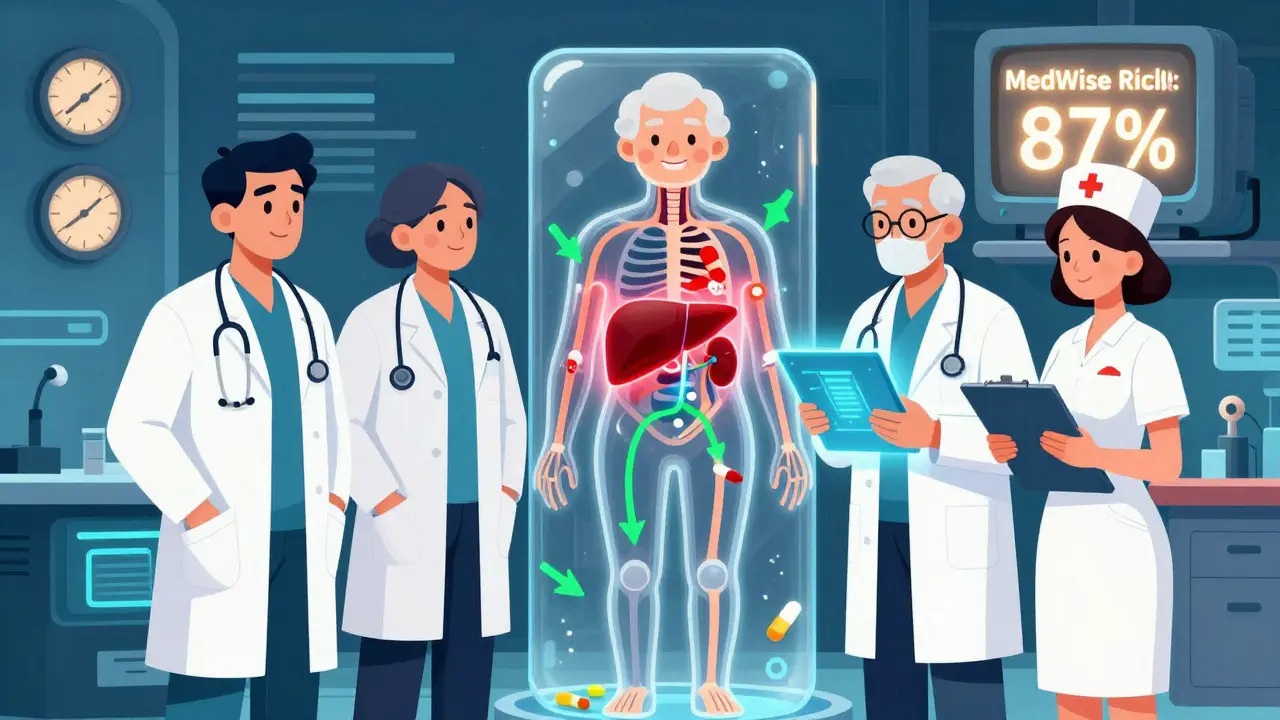
Deprescribing Works-If Done Right
The good news? Stopping unnecessary meds is safe-and life-changing. The EMPOWER trial in 2022 showed that 76% of older adults could safely stop at least one medication without harm. Many reported better sleep, more energy, and fewer falls. One woman stopped her sleep aid and her dizziness vanished. A man quit his laxative and found his constipation improved once his other meds were trimmed. The key is the 3-Step Method developed by Dr. Cynthia Boyd at Johns Hopkins:- Review the full list-every pill, patch, and supplement. Look for duplicates, outdated prescriptions, and drugs with no clear purpose.
- Talk with the patient. Ask: "What’s your biggest concern right now?" "Do you feel better or worse since you started this pill?" Don’t assume they want to keep everything.
- Monitor after stopping. Check in at two weeks, then four. Watch for rebound symptoms or withdrawal. Most side effects fade within days.
What’s Holding Us Back?
Fear. Patients are terrified of stopping meds. "What if I have a stroke?" "What if I get worse?" They’ve been told for years that these pills are life-saving. Even if they’re not. Doctors are scared too. They worry about liability. About being blamed if something goes wrong. And they’re overwhelmed. A 2023 survey found 61% of primary care physicians rarely review medication lists for deprescribing. Time is the enemy. Then there’s the system. Most EHRs don’t talk to each other. A patient’s meds in the hospital don’t sync with their pharmacy records. Their specialist’s notes aren’t visible to their primary doctor. No one has a full view.Real Solutions in Action
The best results come from teams-not just doctors. Pharmacist-led medication reviews reduce adverse events by 34%. Comprehensive geriatric assessment clinics cut polypharmacy by 22% in a year. These clinics bring together doctors, nurses, pharmacists, and social workers to look at the whole person: mobility, cognition, nutrition, and meds. Patient education helps too. The Medication Check-Up program teaches seniors to ask three simple questions: Why am I taking this? What does it do? What happens if I stop? After the program, 47% of participants understood their meds better-and 68% felt more in control. And now, tech is catching up. In January 2024, the FDA approved the first AI-powered deprescribing tool: MedWise Risk Score. It analyzes all your meds and predicts your risk of side effects. In trials, it cut adverse events by 37%. Companies like Tabula Rasa HealthCare and SinfoniaRx are building software that flags dangerous combinations before they’re prescribed.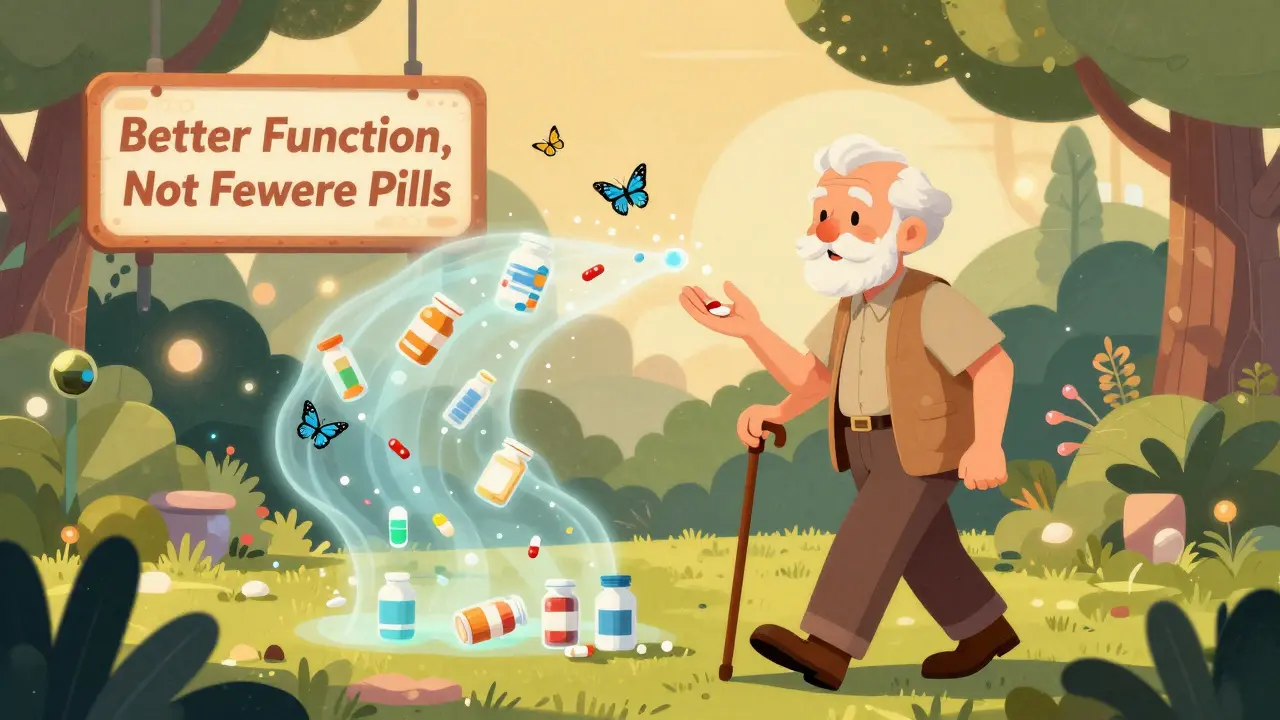
What You Can Do Today
If you or someone you care for is on five or more medications:- Make a complete list-include vitamins, supplements, and over-the-counter drugs. Don’t leave anything out.
- Ask the doctor: "Is every medication still needed? Are any here just to treat side effects of another drug?"
- Request a pharmacist consult. Most insurance plans cover it.
- Ask about deprescribing. Say: "I’m worried about side effects. Can we try cutting one?"
- Track changes. Note energy levels, dizziness, sleep, bowel habits. Bring this to the next appointment.
The Bigger Picture
The American Geriatrics Society’s Age-Friendly Health Systems initiative is rolling out across 2,850 hospitals and clinics. It’s built on the 4Ms: What Matters, Medication, Mentation, Mobility. It’s not about treating diseases-it’s about treating people. And it’s working. In places using this model, inappropriate polypharmacy dropped by 24% in just one year. The WHO is pushing for a 50% reduction in severe medication harm by 2030. The NIH is funding a $15 million trial to test pharmacist-led deprescribing in frail seniors. This isn’t just a clinical issue-it’s a public health crisis. And it’s solvable. It’s not about cutting pills. It’s about reclaiming life. Less clutter. Fewer side effects. More time for walks, meals with family, quiet mornings. That’s the real goal.Is polypharmacy always harmful?
No. Some older adults need multiple medications to manage serious conditions like heart failure, diabetes, or epilepsy. The problem isn’t the number of pills-it’s whether each one is necessary, appropriate, and still helping. A person on four essential meds may be better off than someone on eight, where half are outdated or just treating side effects of others.
Can stopping medications make me sicker?
It’s possible-but only if done without planning. Abruptly stopping a blood pressure or antidepressant drug can cause rebound effects. That’s why deprescribing must be slow and monitored. Most side effects from stopping unnecessary meds improve within days. Studies show that when done correctly, patients feel better, not worse.
What’s the difference between Beers Criteria and START/STOPP?
Beers Criteria focuses on drugs that should be avoided in older adults because they’re risky. START/STOPP goes further: STOPP identifies harmful prescriptions, while START identifies missing but needed treatments-like a bone drug for someone on long-term steroids. START/STOPP is more comprehensive and helps avoid both over- and under-treatment.
Why do doctors keep prescribing so many meds?
Many doctors are trained to treat each condition in isolation. A cardiologist treats the heart, a neurologist treats tremors, a gastroenterologist treats reflux. No one looks at the whole list. Also, doctors fear missing something or being sued. And they’re rushed-average visit time is under 15 minutes. Deprescribing takes time, conversation, and follow-up, which most systems don’t support.
How do I know if a medication is no longer needed?
Ask: "Why was this prescribed?" "Is it still treating the same problem?" "Has the condition improved or gone away?" If it was for a short-term issue like a past infection or temporary pain, it may no longer be needed. Also, if you’re taking it for a side effect of another drug (like a laxative for constipation caused by a painkiller), that’s a red flag.
Are there tools I can use at home to track my meds?
Yes. Apps like Medisafe and Round Health help you track pills, set reminders, and share lists with your doctor. Some even flag potential interactions. But the best tool is still a printed list-updated every visit-and a conversation with your pharmacist. Don’t rely on memory.
Can frailty be reversed by reducing medications?
It can improve. Reducing unnecessary meds often leads to less dizziness, more energy, and fewer falls. These changes can help restore mobility and strength, which are key to reversing frailty. One study found that seniors who stopped four or more inappropriate meds improved their walking speed and grip strength within six months. It’s not a cure-but it’s a powerful step.
Next Steps
If you’re managing meds for an older adult:- Start with a full medication list-include everything, even herbal supplements.
- Call the pharmacy. Ask if they have a medication therapy management service.
- Request a geriatric assessment if you’re seeing multiple specialists.
- Bring up deprescribing at the next visit. Say: "I’d like to reduce side effects. Can we look at what’s really needed?"
- Track changes in energy, balance, sleep, and digestion. Write them down.

Allie Lehto
I just stopped my grandma's 12 meds last month. She was on a laxative for constipation from a painkiller, which was for arthritis from a beta-blocker that was for a blood pressure issue that was caused by the diuretic she didn't even need anymore. Now she walks to the mailbox again. 🙌 I swear, half these pills are just band-aids on bullet wounds.

Henry Jenkins
This is such a critical issue that’s been ignored for decades. The medical system is designed around siloed specialties, not holistic care. Every specialist sees one organ, one disease, one symptom-and prescribes accordingly. No one’s looking at the cumulative effect on the whole person. The 3-step method from Dr. Boyd is brilliant because it forces the human element back into the equation. It’s not about reducing pills-it’s about restoring function. And the fact that 76% of people in the EMPOWER trial could safely deprescribe? That’s not a fluke. That’s a systemic failure we’ve been normalizing. We’ve turned aging into a pharmacological problem instead of a lived experience. We need to retrain doctors, incentivize time with patients, and build integrated care teams. This isn’t just medical-it’s ethical.

Dan Nichols
People think deprescribing is dangerous but the real danger is continuing meds that do nothing but cause harm. Beers Criteria has been around since 1991 and still most docs don’t use it. Why? Because they’re lazy or scared. Also why do you think so many seniors are on anticholinergics? Because someone wrote a script 10 years ago and no one ever checked. You don’t need AI to tell you that a 78-year-old on 8 drugs including benzos and NSAIDs is a walking disaster. You just need to open your eyes

Renia Pyles
I’ve seen this firsthand. My mom was on 11 meds. They gave her a sleeping pill for insomnia caused by the blood pressure med. Then a laxative for the constipation from the sleeping pill. Then a heart drug for the low BP from the laxative. Then a mood stabilizer because she started crying all the time. She was 82. Not broken. Just medicated into a zombie. I cried when she finally stopped the last one. She remembered my birthday again. That’s not medicine. That’s torture with a prescription pad.

Rakesh Kakkad
In India, we have a different challenge. Many elderly take Ayurvedic supplements alongside allopathic drugs without disclosure. This creates dangerous interactions. The problem is not just polypharmacy-it is lack of communication between traditional and modern medicine systems. We need national guidelines that integrate both. Also, most elders are illiterate. They cannot read labels. They take what the pharmacist says. This is a public health emergency.

Nicholas Miter
I work in a nursing home. I’ve seen people on 15+ meds who can’t even stand up. Then we cut 4 unnecessary ones-mostly for "preventative" stuff or side effects of other meds-and suddenly they’re asking for ice cream and watching baseball. It’s not magic. It’s just removing the fog. The hardest part? Getting families on board. They think "more meds = better care." But more meds just means more side effects, more falls, more ER trips. Sometimes less really is more.

Suresh Kumar Govindan
The FDA approved AI deprescribing tool? Of course. Because profit-driven tech corporations see a billion-dollar market in elderly polypharmacy. Real solutions? Community pharmacists. Geriatric teams. Time. But those cost money. AI doesn’t. So we’ll automate the crisis instead of fixing the system. Typical.

TONY ADAMS
my uncle died after they gave him 3 new pills for dizziness. turns out the dizziness was from the blood pressure pill they gave him last year. nobody checked. just kept adding. now he’s gone. this is murder by prescription.

Karen Droege
I’m a geriatric nurse practitioner. I’ve done over 300 medication reviews. Here’s the truth: 80% of the time, the patient doesn’t even know why they’re on half the pills. They just say "the doctor said so." And the doctors? They’re drowning. But here’s the beautiful part-when you sit down with someone, ask them what matters most to them, and then trim the clutter? Their eyes light up. They start telling stories. They hug you. They take walks. They cook again. One woman stopped her anticholinergic and remembered her husband’s name after 7 years. That’s not medicine. That’s resurrection. We’re not just reducing pills-we’re returning people to themselves. And if that’s not worth fighting for, I don’t know what is.
Write a comment