Recent POST



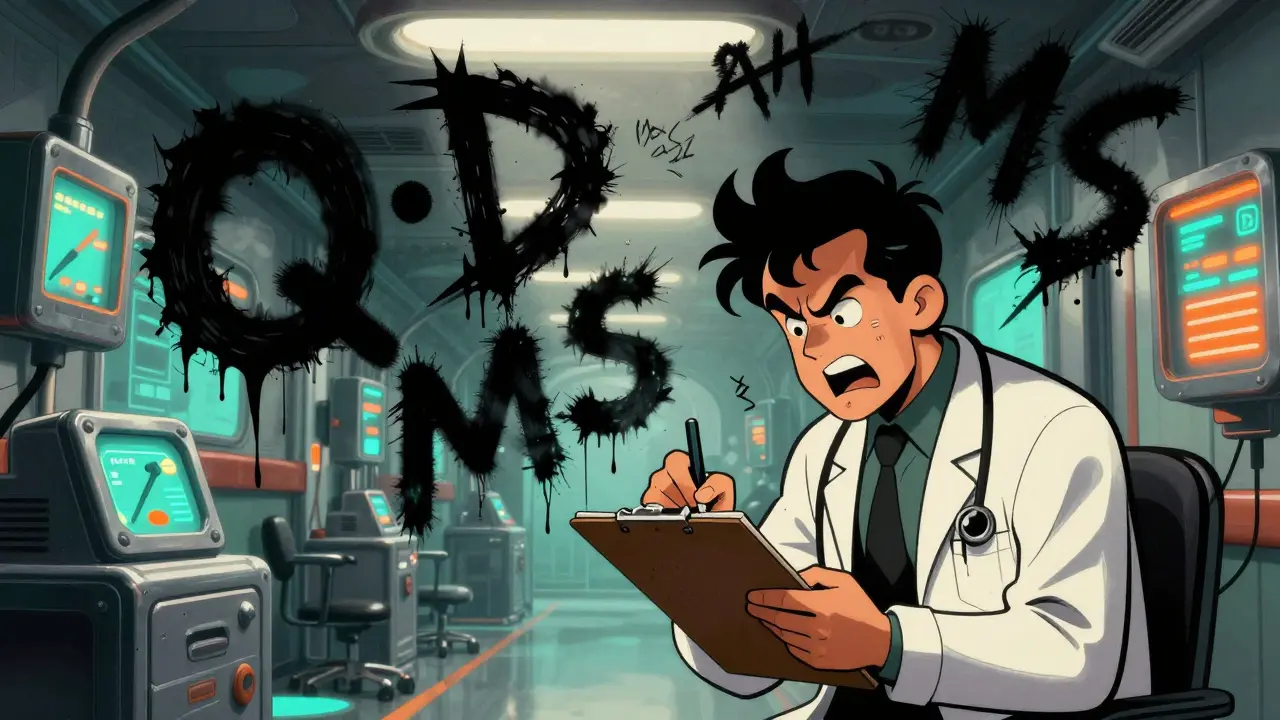
Imagine you are in pain. You have a prescription for Morphine Sulfate. The doctor writes "MS 10 mg." It looks harmless enough. But what if the pharmacist reads that as Magnesium Sulfate? Or worse, what if they interpret it as something entirely different due to a smudge or hurried handwriting? This isn't a hypothetical nightmare scenario; it is a documented reality that has led to serious harm and even death.
We often assume that medical professionals speak a universal language of precision. Yet, the shorthand we use in healthcare-abbreviations-is one of the biggest sources of preventable errors. Today, I want to talk about the specific abbreviations you need to avoid on prescriptions, why they are so dangerous, and how we can fix this systemic issue. If you are a healthcare provider, a student, or just someone who wants to understand their own medical records better, this guide breaks down the risks clearly and practically.
The Core Problem: Why Shorthand Fails
Let's get straight to the point. Ambiguity kills. In the fast-paced environment of hospitals and clinics, speed is essential. Doctors and nurses naturally gravitate toward shortcuts. However, when those shortcuts lack standardization, disaster strikes. The primary culprit here is not malice or incompetence; it is human perception combined with poor handwriting or unclear digital entry.
The Joint Commission, a major accrediting body for healthcare organizations, established the 'Do Not Use' List to address this. First published in 2001, this list identifies abbreviations, symbols, and dose designations that are prone to misinterpretation. According to data from the Institute for Safe Medication Practices (ISMP), ambiguous abbreviations contribute significantly to adverse drug events. In fact, standardized communication practices could prevent roughly 37% of all medication errors.
Why does this happen? Our brains try to fill in gaps. If a letter looks like another, our brain guesses based on context. If the context is weak-or if the guess is wrong-the patient gets the wrong drug, the wrong dose, or the wrong route of administration. Let's look at the specific offenders.
Dangerous Dose Frequency Abbreviations
One of the most common categories of error involves how often a medication should be taken. These Latin-derived abbreviations are notorious for being misread.
- QD (Once Daily): This is arguably the most dangerous abbreviation on any list. In a 2018 analysis by ISMP, 'QD' accounted for over 43% of all abbreviation-related errors. Why? Because the 'Q' can easily look like an 'I' or a 'U.' If 'QD' is misread as 'ID' (intradermal) or 'OD' (once daily, but potentially confused with other frequencies), the dosing schedule falls apart. More critically, if it is misread as 'qid' (four times daily), the patient receives four times the intended dose. That is a massive overdose risk.
- QOD (Every Other Day): Similar to QD, 'QOD' is frequently mistaken for 'QD' (daily) or 'qid' (four times daily). Imagine a chemotherapy drug prescribed every other day being given daily. The toxicity levels would skyrocket.
- BIW (Twice Weekly): This abbreviation has caused real-world harm. In a case reported by Pharmacy Times, 'BIW' was transcribed as 'twice daily' instead of twice weekly for a drug called chlorambucil. The difference between two doses a week and fourteen doses a week is catastrophic.
The solution is simple but requires discipline: write out the words. Use "once daily," "every other day," or "twice weekly." It takes three extra seconds to type or write, but it saves lives.
Route of Administration Risks
How a drug enters the body changes its effect entirely. An injection under the skin is not the same as swallowing a pill. Here are the abbreviations that cause confusion regarding routes:
- SC, SQ, SubQ (Subcutaneous): These are often used interchangeably, which is part of the problem. 'SC' can be mistaken for 'SL' (sublingual-under the tongue). 'SQ' can look like '5 q' (five times a day) if the handwriting is messy. The safest bet? Write "subcutaneous" in full.
- NMT (No More Than): This seems clear, right? Wrong. In a near-miss incident, 'NMT' was interpreted as 'nebulizer mist treatment' rather than 'no more than' for a hypertonic saline order. The result? A patient received a treatment they weren't supposed to get, or missed a critical limit on dosage.
When prescribing, always specify the route fully. Instead of 'SC,' write "subcutaneous." Clarity is king.
Drug Name Abbreviations: The Silent Killers
Perhaps the most alarming category involves abbreviations for drug names themselves. When two different drugs share similar initials, the stakes are incredibly high.
| Abbreviation | Intended Drug | Common Misinterpretation | Risk Level |
|---|---|---|---|
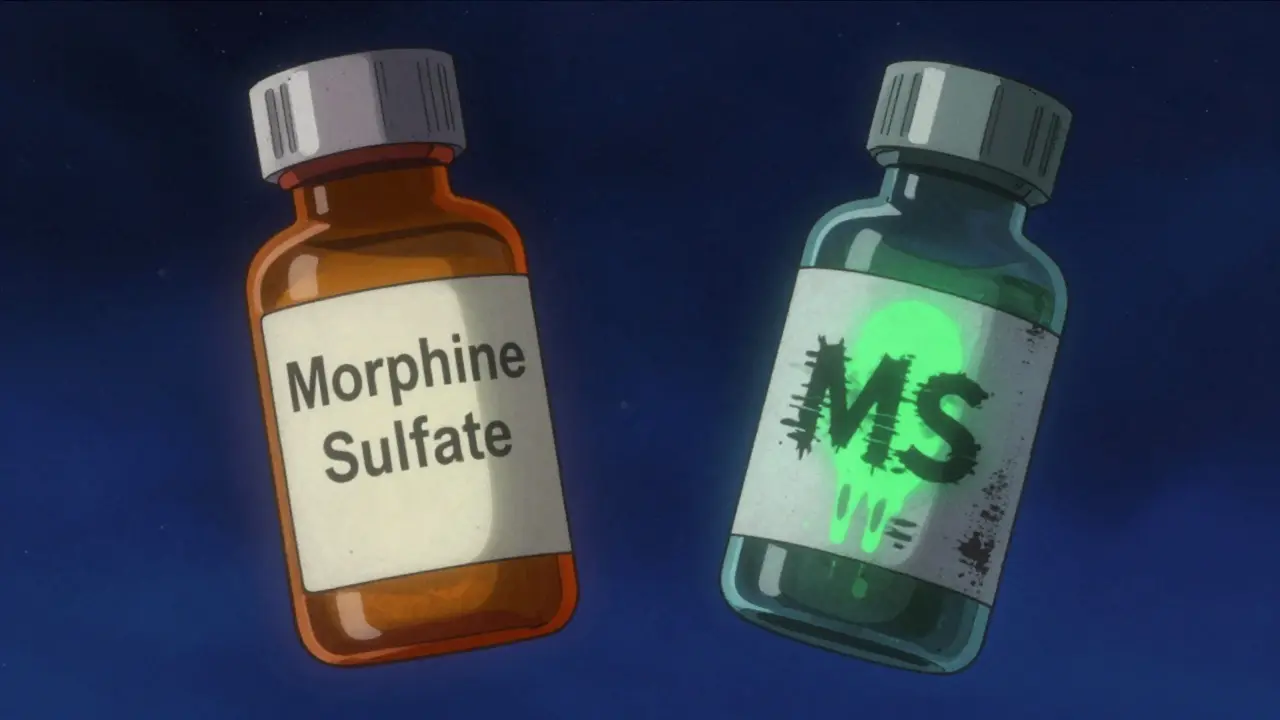
| MS / MSO4 | Morphine Sulfate | Magnesium Sulfate (MgSO4) | Critical |
| AZT | Zidovudine (HIV med) | Azathioprine (immunosuppressant) or Aztreonam (antibiotic) | High |
| TAC | Triamcinolone (steroid) | Tazorac (tazarotene, acne med) | Medium-High |
| DTO | Diluted Tincture of Opium | Morphine Sulfate | High |
Take Morphine Sulfate versus Magnesium Sulfate. One is a potent opioid painkiller; the other is used for conditions like eclampsia or magnesium deficiency. If a nurse administers magnesium sulfate to a patient expecting morphine for severe pain, the patient suffers unnecessarily. Conversely, giving morphine to a patient needing magnesium can lead to respiratory depression and death. The NCBI StatPearls review identified 'MS' as the most common drug abbreviation error.
Then there is Azathioprine vs. Aztreonam. One suppresses the immune system; the other fights bacterial infections. Confusing these could leave an infection untreated or dangerously weaken a patient's immune defense. Always write the full generic name.
Unit and Quantity Confusion
It’s not just about the drug or the frequency; it’s about the amount. Small symbols can mean big differences.
- U (Unit): This single letter is a hazard. 'U' can be mistaken for '0' (zero), '4' (four), or 'cc' (cubic centimeter). If a prescription says "10 U" and the 'U' is read as '0', the patient might receive nothing. If it's read as '4', they get 40 units instead of 10. The ISMP Canada guidelines highlight this frequent mix-up. Always write "unit" in full.
- IU (International Unit): 'IU' can look like 'IV' (intravenous) or '10' (ten). Again, writing "international unit" eliminates the guesswork.
- cc (Cubic Centimeters): While 'cc' is widely understood, it is still prohibited on the 'Do Not Use' list because it can be mistaken for 'u' (units). The preferred term is "mL" (milliliters). This shift helps standardize volume measurements globally.

Electronic Health Records: A Double-Edged Sword
You might think, "We don't handwrite prescriptions anymore. We use Electronic Health Records (EHRs)." True, technology has helped. A 2021 study in the Journal of the American Medical Informatics Association found that EHRs reduced abbreviation-related errors by nearly 68%. That’s great news.
However, the problem isn't gone. About 12.7% of medication errors in EHR environments still involve abbreviation misinterpretation. Why? Because many systems allow free-text entry fields where doctors can type whatever they want. If a doctor types "MS" into a free-text box, the system doesn't always catch it. Furthermore, copy-and-paste culture means old, erroneous orders can be replicated indefinitely.
The best EHR systems now include "hard stops"-alerts that block submission if a prohibited abbreviation is detected. As of 2023, Epic Systems Corporation rolled out AI tools to detect these errors in real-time for a majority of their hospital clients. But until every system has this feature, human vigilance remains crucial.
How to Implement Change in Your Practice
If you work in healthcare, changing habits is hard. A 2022 survey by the American Medical Association revealed that nearly 44% of physicians over age 50 continued using prohibited abbreviations despite institutional policies. This isn't stubbornness; it's muscle memory.
Here is a practical approach to fixing this:
- Educate, Don't Shame: Mandatory education sessions work best when they focus on patient stories rather than rules. Show the near-miss cases. Make it personal.
- Modify the EHR: Work with your IT department to remove free-text options for doses and frequencies. Use drop-down menus. Force the system to require "once daily" instead of allowing "QD".
- Provide Feedback: Real-time feedback is powerful. If a prescriber uses a banned abbreviation, the system should flag it immediately and suggest the correct term.
- Lead by Example: Senior staff must adhere to the rules strictly. If residents see attending physicians using "QD," they will too.
Implementation takes time-typically 6 to 8 weeks for a full cycle including policy updates and training. But the payoff is significant. Facilities with robust enforcement programs saw an 89.4% reduction in abbreviation-related errors within 18 months, according to ISMP data.
Global Standards and Future Directions
This isn't just a US issue. The movement has gone global. In Australia, the Australian Commission on Safety and Quality in Health Care updated its guidelines in 2022. In the UK, NHS England issued Safer Practice Notices in 2021. Canada has its own ISMP Canada list. The core message is universal: clarity saves lives.
Looking ahead, voice recognition technology promises to help further. By 2026, it is projected that 85% of major EHR systems will include automatic correction of prohibited abbreviations during voice dictation. Imagine dictating "morphine sulfate" and having the system automatically reject "MS" if you slip up. That’s the future we are building toward.
But until then, we rely on each other. Whether you are a doctor, a nurse, a pharmacist, or a patient reviewing your script, ask questions. If something looks unclear, clarify it. Never assume.
What is the Joint Commission 'Do Not Use' List?
The Joint Commission 'Do Not Use' List is a standardized set of prohibited abbreviations, acronyms, and symbols established to prevent medication errors. It includes items like 'QD' (once daily), 'U' (unit), and 'MS' (morphine sulfate). Healthcare organizations accredited by The Joint Commission must implement this list to maintain their status. Non-compliance can lead to citations during survey visits.
Why is 'QD' considered so dangerous?
'QD' stands for 'quaque die' (once daily). It is dangerous because the 'Q' can be misread as an 'I' or 'U'. More critically, it can be confused with 'qid' (quater in die, or four times daily). If a patient receives a medication four times a day instead of once, it can lead to severe overdose. Data shows 'QD' accounts for over 43% of abbreviation-related errors.
Can electronic health records (EHRs) completely prevent these errors?
While EHRs have reduced abbreviation-related errors by approximately 68%, they do not eliminate them entirely. About 12.7% of errors in EHR environments still occur due to free-text entry fields or copy-and-paste issues. Advanced systems with AI-driven 'hard stops' and real-time detection are more effective, but human vigilance and proper system configuration remain essential.
What should I write instead of 'U' for units?
You should write the word "unit" in full. The abbreviation 'U' is frequently mistaken for '0' (zero), '4' (four), or 'cc' (cubic centimeter). Similarly, 'IU' (international unit) should be written out as "international unit" to avoid confusion with 'IV' (intravenous) or '10' (ten).
Is this a problem only in hospitals?
No, it affects all settings. While hospital adoption of safety lists is high (over 98%), outpatient settings face challenges. A 2023 FDA safety communication noted that nearly 64% of outpatient medication errors still involve dangerous abbreviations. Community pharmacies, long-term care facilities, and private clinics must also enforce strict abbreviation policies.
How can patients protect themselves from prescription errors?
Patients should always verify their prescriptions. Ask your pharmacist to explain the medication name, dose, and frequency. If you see an abbreviation you don't understand, ask for clarification. Additionally, keep an updated list of your medications and share it with all healthcare providers to reduce reliance on potentially unclear notes.