Recent POST





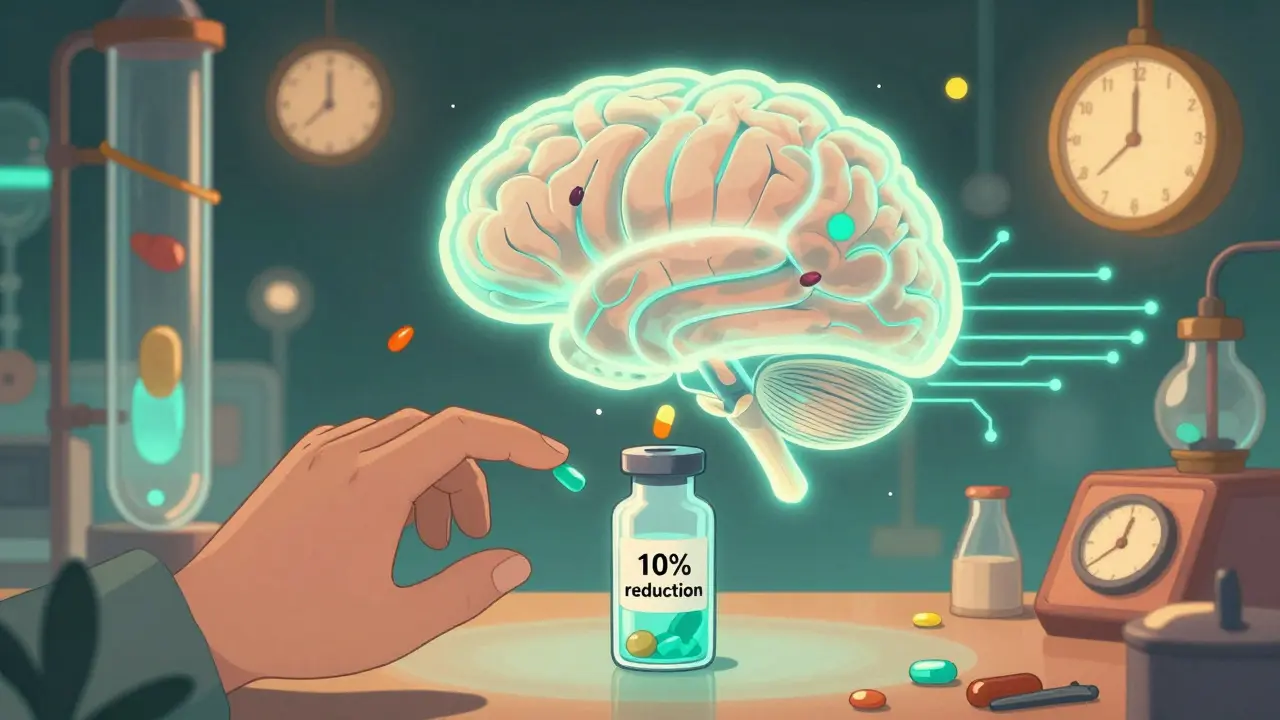
Antidepressant Tapering Calculator
Personalized Tapering Schedule
Calculate your safe tapering schedule based on your current medication and dose. This tool follows clinical guidelines for gradual dose reduction to minimize withdrawal symptoms.
Your Personalized Tapering Schedule
Important: The final 10% of your dose (typically the last 2-5mg) is where most withdrawal symptoms occur. Consider micro-tapering for this stage with liquid formulations or pill splitting for better control.
| Week | Target Dose (mg) | Notes |
|---|
Disclaimer: This calculator provides general guidance based on clinical guidelines. Always consult with your prescriber before making any changes to your medication regimen. Individual needs may vary based on medical history and specific circumstances.
Stopping antidepressants isn’t as simple as taking your last pill and calling it a day. For many people, the body doesn’t adjust instantly. Withdrawal symptoms can hit hard-dizziness, brain zaps, nausea, sleep problems, even anxiety that feels worse than before. And too often, people mistake these symptoms for a return of depression, leading them to restart medication unnecessarily. The truth? With the right tapering plan, most of these symptoms can be avoided or greatly reduced.
Why Tapering Matters More Than You Think
Antidepressants change how your brain handles neurotransmitters like serotonin and norepinephrine. When you take them long-term, your brain adapts. Suddenly stopping means your brain is left scrambling to readjust. That’s when withdrawal kicks in. This isn’t addiction-it’s a physiological response. But it’s real, and it’s common. Studies show between 27% and 86% of people experience some form of antidepressant discontinuation syndrome, depending on the drug and how fast they stop. The biggest risk isn’t just discomfort. Stopping too quickly doubles your chance of depression coming back within six months. One Harvard study found that people who quit over just a few days had a 32% relapse rate. Those who tapered over two weeks or longer? Only 19%. That’s a 40% drop in relapse risk.Not All Antidepressants Are the Same
The key to a safe taper? It depends on your medication. Some drugs leave your system fast. Others stick around longer, giving your brain more time to adjust.- Short half-life drugs (leave your body quickly): paroxetine, sertraline, venlafaxine. These cause the worst withdrawal symptoms if stopped abruptly. You need the slowest tapers.
- Long half-life drugs (stick around longer): fluoxetine. Its active metabolite stays in your system for days, so withdrawal is usually milder-even if you stop suddenly.
- MAO inhibitors: These require special care. You need a 14- to 21-day washout period before starting any other antidepressant. Jumping straight from an MAOI to an SSRI can trigger serotonin syndrome-a dangerous, potentially life-threatening reaction.
Standard Tapering Rules That Actually Work
There’s no one-size-fits-all schedule, but clinical guidelines agree on a few core principles:- Reduce your dose by 10% to 25% every 1 to 4 weeks.
- Wait at least 2 weeks between reductions-longer if you feel symptoms.
- Never rush the final 10% of your dose. That’s where most withdrawal symptoms show up.
- Weeks 1-2: Reduce to 15mg
- Weeks 3-4: Reduce to 10mg
- Weeks 5-6: Reduce to 5mg
- Weeks 7-8: Take 5mg every other day
- Week 9: Stop completely
The Final 10% Is the Hardest Part
Dr. David Healy, a leading psychiatrist, put it bluntly: “The last 10% of dose reduction causes 50% of withdrawal symptoms.” Why? Because as your dose gets lower, your brain’s serotonin receptors become hypersensitive. Even tiny drops trigger big reactions. That’s why experts now recommend “micro-tapering” for the final stretch. Instead of cutting 5mg at a time, go smaller: 1mg, 2mg, even 0.5mg reductions. How? Liquid formulations help. Some pharmacies can compound antidepressants into liquid form, allowing you to measure exact drops. A 2023 King’s College London study found this cut severe withdrawal symptoms by 62% compared to tablet tapering. If you can’t get liquid, here’s a trick: use a pill splitter to cut tablets into quarters. Or, take your daily dose every other day, then every third day. It’s not perfect, but it’s better than jumping from 5mg to zero.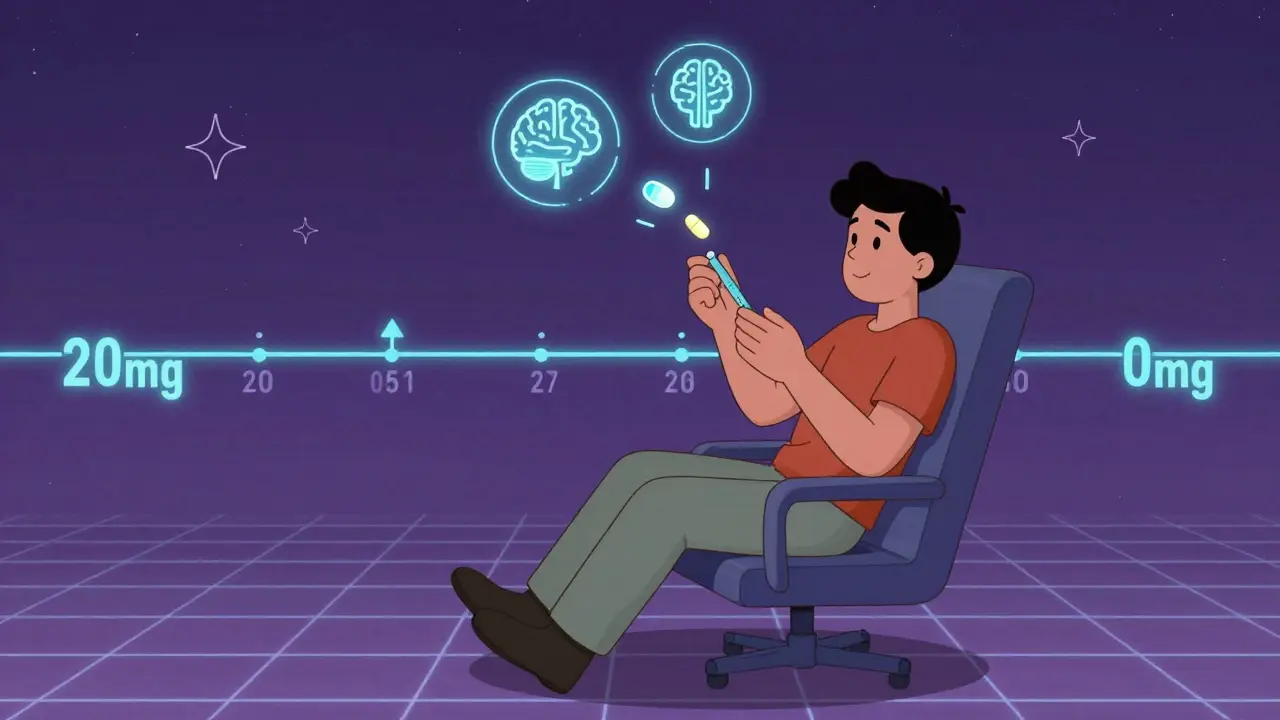
Switching Antidepressants? Here’s How to Do It Safely
Sometimes, you don’t want to stop entirely-you want to switch to a different drug. This is trickier than tapering alone. There are three main approaches:- Taper & switch immediately: Reduce your current med while starting the new one. Works well for most SSRIs.
- Taper & wait: Stop the old drug completely, wait 1-3 weeks, then start the new one. Best for long half-life drugs or if you had bad withdrawal before.
- Cross-taper: Slowly reduce the old drug while slowly increasing the new one. Used when switching between different classes, like from venlafaxine to sertraline.
- Week 1: Reduce venlafaxine by 37.5mg (to 37.5mg), start sertraline at 25mg
- Week 2: Stop venlafaxine, increase sertraline to 50mg
- Week 3-4: Stay at 50mg sertraline, monitor for side effects
What to Watch For (and When to Pause)
Symptoms of antidepressant withdrawal usually start within a few days of reducing your dose. Common ones include:- Dizziness or lightheadedness (63% of cases)
- Electric shock sensations in the head (“brain zaps”)
- Nausea, vomiting, or diarrhea (45%)
- Insomnia or vivid dreams
- Anxiety, irritability, or mood swings
- Sensory changes: ringing in ears, sensitivity to light or sound
Long-Term Users Face Bigger Challenges
If you’ve been on antidepressants for five years or more, your brain has adapted deeply. Withdrawal can last weeks or even months. The NIH analysis found these users are more likely to have severe, prolonged symptoms. For them, the rule is simple: slower is better. Tapers of 6 to 12 months aren’t unusual. Some people need to reduce by just 1mg every 2-4 weeks. That’s frustrating, but it works. The goal isn’t speed-it’s stability.
What’s New in Tapering? (2025 Update)
The field is changing. In 2023, research showed your genes can predict how you’ll respond to tapering. If you’re a slow metabolizer of CYP2D6 or CYP2C19 enzymes, you’re more likely to have strong withdrawal symptoms. Genetic testing isn’t routine yet-but it’s coming. Also, the American Psychiatric Association and other major groups are updating their guidelines in 2024 to include micro-tapering and liquid formulations as standard options. That’s a big deal. For years, doctors told patients to “just taper slowly.” Now, they’re finally giving real tools.What Not to Do
Avoid these common mistakes:- Don’t stop cold turkey-even if you feel fine. Symptoms can show up days later.
- Don’t use alcohol or benzodiazepines to manage withdrawal. They mask symptoms but don’t fix the root issue.
- Don’t rely on online forums for tapering advice. Someone’s anecdote isn’t a plan.
- Don’t assume your doctor knows the latest protocols. Many still give vague advice like “go slow.” Ask for specifics.
Your Action Plan
1. Know your drug. Look up its half-life. Is it short or long? 2. Plan your taper. Use the 10-25% rule. Aim for 2-6 weeks between reductions. 3. Use liquid or split pills for the final 10%. Precision matters. 4. Track symptoms. Keep a simple journal: date, dose, symptoms, severity (1-10). 5. Pause if needed. Withdrawal isn’t a race. Slow down, wait, then try again. 6. Get support. Talk to your prescriber. Consider therapy to manage emotional ups and downs.When to Call Your Doctor
Contact your provider if you experience:- Severe dizziness or fainting
- Thoughts of self-harm or suicide
- Heart palpitations or chest pain
- High fever, confusion, or muscle rigidity (signs of serotonin syndrome)
How long does antidepressant withdrawal last?
For most people, withdrawal symptoms last 1 to 4 weeks. But if you’ve been on antidepressants for years, they can linger for months. Symptoms usually peak in the first 1-2 weeks after a dose reduction and then slowly fade. Ultra-slow tapers can reduce this timeline by preventing severe reactions.
Can I stop antidepressants without tapering?
Only fluoxetine (Prozac) is safe to stop abruptly in most cases, thanks to its long half-life. For all other antidepressants-especially paroxetine, sertraline, and venlafaxine-stopping suddenly risks severe withdrawal symptoms and higher relapse rates. Never stop without a plan.
Do I need to taper if I’ve only been on antidepressants for a few months?
Yes. Even short-term use can cause your brain to adapt. Studies show withdrawal symptoms occur in people who’ve taken antidepressants for as little as 4-6 weeks. The longer you’ve been on them, the slower the taper should be-but even brief use requires caution.
What if my doctor won’t help me taper?
Ask for a referral to a psychiatrist or psychopharmacologist. Many general practitioners aren’t trained in modern tapering protocols. You can also request a copy of the Maudsley Prescribing Guidelines or the Australian Prescriber tapering tables. Bring them to your appointment. Knowledge empowers you to advocate for the right plan.
Are there natural ways to ease withdrawal symptoms?
No supplement or herb can replace a proper taper. But good sleep, gentle exercise, hydration, and stress management can help your body cope. Omega-3s and magnesium may support brain health, but they don’t prevent withdrawal. The only proven method is a slow, controlled reduction of your medication.

Bradford Beardall
I’ve been through this twice now and honestly? The brain zaps are worse than the depression itself. I thought I was relapsing when I started getting those electric shocks-turned out it was just my nervous system freaking out from stopping sertraline too fast. Learned the hard way. Now I tell everyone: if you’re on anything short-half-life, don’t even think about cutting more than 10% at a time.
Also, liquid formulations are a game changer. My pharmacy compounding service made me a 1mg/mL solution. Took me 5 months to get off 20mg, but I felt like I was walking through a fog instead of getting hit by a truck.

McCarthy Halverson
Slow taper works. No exceptions.

Michael Marchio
Look, I get that people want to make this sound like a science experiment, but the truth is most of you are just scared to face life without a chemical crutch. You talk about brain zaps like they’re some mystical phenomenon, but really you’re just uncomfortable with the idea of being responsible for your own emotional state.
And don’t get me started on the liquid taper cult. You’re spending hundreds of dollars on compounded meds because you can’t handle a 5mg reduction? That’s not wisdom, that’s avoidance dressed up as precision. The body adapts. It’s not a delicate china set you’re trying to move piece by piece.
And yes, I’ve been on every SSRI under the sun. I quit paroxetine cold turkey in 2018. Took me three days to feel normal. Three days. Not three months. Your brain isn’t broken. You’re just not used to being off the juice.

Aurora Memo
I appreciate how detailed this is. I’ve been tapering off citalopram for 7 months now, and honestly, the hardest part was realizing I wasn’t ‘failing’ when symptoms came back. I thought I had to push through, but pausing and staying steady for 3 weeks at 2.5mg made all the difference.
Also, keeping a journal helped me see patterns-like how my anxiety spiked every time I skipped a meal. Turns out, low blood sugar made brain zaps worse. Small things matter.
To anyone reading this: you’re not weak for needing time. You’re wise for listening to your body.

chandra tan
Bro in India we just stop and drink kadha and do yoga. No fancy liquids. No splitting pills. My cousin quit venlafaxine in 2 weeks. Now he runs marathons. Maybe you guys overthink too much?

Christine Milne
While I appreciate the effort to provide clinical information, this article fundamentally misrepresents the nature of antidepressant discontinuation. The term 'withdrawal' is a misnomer perpetuated by pharmaceutical advocacy groups to pathologize normal neuroadaptation. The DSM-5 does not recognize 'antidepressant withdrawal syndrome' as a distinct diagnostic entity-only 'antidepressant discontinuation syndrome,' which is transient and self-limiting.
Furthermore, the cited 86% statistic is drawn from a non-peer-reviewed survey of online forums, not a controlled clinical trial. The Harvard study referenced? It was a retrospective analysis with significant recall bias. And the King’s College study? Their sample size was 37 participants, with no placebo control.
These recommendations, while well-intentioned, risk reinforcing patient dependency and medicalizing natural neuroplasticity. If one is truly ready to discontinue, a gradual reduction over 4–6 weeks is sufficient for the vast majority. The rest is fear-mongering dressed as science.

Jake Kelly
Just wanted to say thanks for laying this out so clearly. I’ve been on fluoxetine for 3 years and was planning to quit cold turkey because I thought it was ‘safe.’ Now I’m going to do a 3-month taper. I didn’t realize the metabolite lasts so long but still needs a slow drop.
Also, the part about the final 10%? That’s wild. I’m going to try splitting my pills. I’ve got a pill splitter from my grandma’s arthritis meds-never thought I’d use it for this.

Ashlee Montgomery
There’s a deeper layer here that no one talks about-tapering isn’t just about neurochemistry. It’s about identity. For years, your brain has been wired to equate stability with the pill. When you remove it, you’re not just adjusting serotonin levels-you’re facing the question: who am I without this?
The anxiety, the brain zaps, the insomnia-they’re not just biological. They’re existential. That’s why rushing it fails. It’s not the dose you’re reducing. It’s the safety net you’re dismantling.
And that’s why the slowest tapers work. Not because of pharmacokinetics alone. Because they give you time to rebuild yourself, one quiet morning at a time.
Write a comment