Recent POST



Sleep Apnea & Opioid Risk Evaluator
Patient Profile
Enter patient data and click "Analyze" to evaluate the risk of nighttime hypoxia.
Imagine waking up in the middle of the night gasping for air, your heart racing, and a feeling of panic surging through your chest. For many people managing chronic pain with prescription medications, this isn't just a bad dream-it's a physiological reality. When you combine sleep apnea is a sleep disorder where breathing repeatedly stops and starts during slumber with the use of opioid painkillers, you create a dangerous synergy that can lead to severe oxygen drops, known as nighttime hypoxia. This combination doesn't just make you tired; it puts a massive strain on your heart and brain.
The Dangerous Connection Between Opioids and Breathing
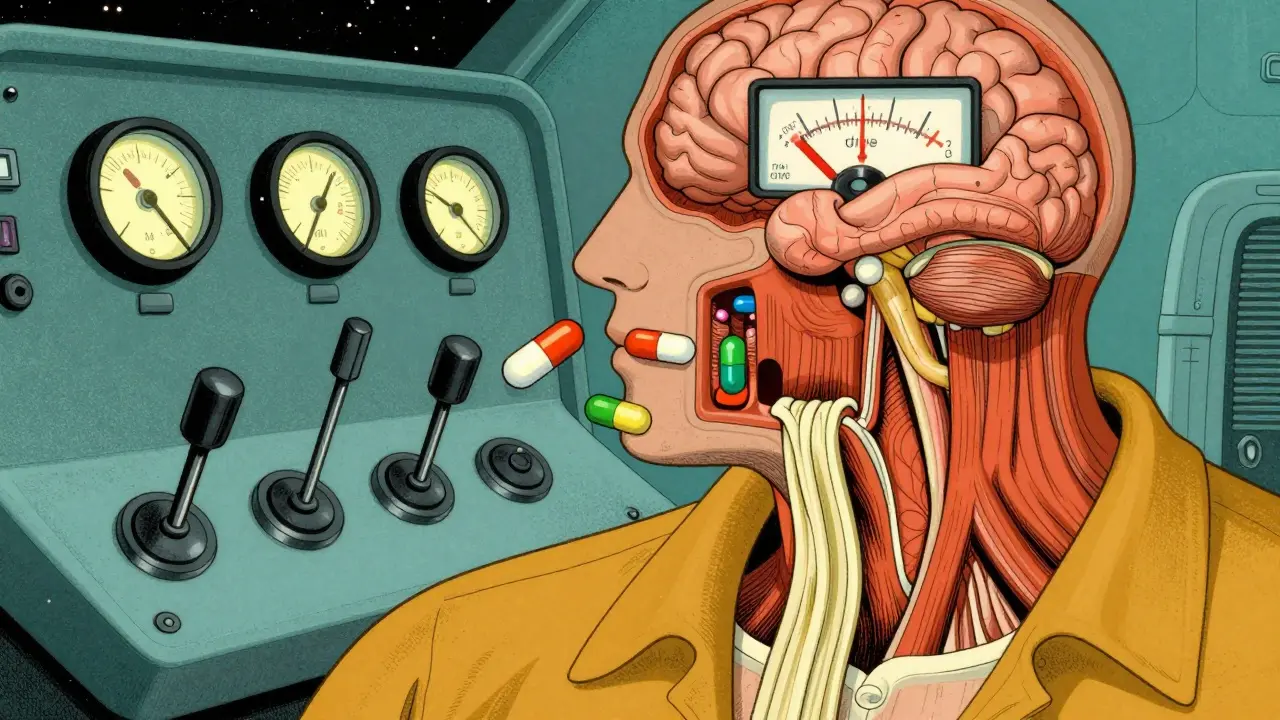
To understand why this happens, we have to look at how opioids interact with your brain. Opioids are medications used to treat severe pain by binding to opioid receptors in the brain and spinal cord. While they are great for blocking pain, they also target the brainstem-specifically the area that tells your body to breathe. When these drugs bind to the $\mu$-opioid receptors, they essentially turn down the volume on your respiratory drive.
Normally, if your carbon dioxide levels rise or oxygen levels drop, your brain triggers an immediate reflex to take a breath. Opioids dampen this reflex. Research shows they can reduce your response to low oxygen by 25% to 50% and your response to high carbon dioxide by up to 60%. When you fall asleep, your natural respiratory drive already dips; add opioids to the mix, and your body might simply "forget" to breathe for long stretches of time.
Obstructive vs. Central Sleep Apnea: A Double Threat
Opioids don't just attack the brain's signal to breathe; they also affect the physical structure of your throat. This leads to two different, but equally dangerous, types of breathing failures.
First, there is the Obstructive side. Opioids relax the muscles in your upper airway, including the genioglossus muscle (the main muscle that keeps your tongue from falling back). This reduces the "closing pressure" of your throat, making it much easier for your airway to collapse. If you already have Obstructive Sleep Apnea (OSA), opioids act like fuel on a fire, making the blockages more frequent and severe.
Second, there is the Central side. Central Sleep Apnea (CSA) is a condition where the brain fails to send the correct signals to the muscles that control breathing. Unlike OSA, where the path is blocked, in CSA, the "engine" just stops running. High-dose opioid use is strongly linked to this. In fact, some studies suggest that up to 80% of chronic opioid users experience central sleep apnea, with the risk spiking significantly when doses exceed 100 mg of morphine equivalents daily.
| Metric | Non-Opioid Users (Similar BMI) | Chronic Opioid Users | Impact Factor |
|---|---|---|---|
| Avg. Apnea-Hypopnea Index (AHI) | 15-20 events/hour | 25-35 events/hour | Increased frequency of pauses |
| Central Apnea Index (CAI) | 2-5 events/hour | 10-15 events/hour | Brain-signal failure |
| Severe Hypoxia (O2 < 88%) | ~22% of patients | ~68% of patients | Significant oxygen drop |
What is Nighttime Hypoxia and Why Does It Matter?
Nighttime hypoxia happens when your blood oxygen saturation drops to dangerous levels while you sleep. For a healthy person, oxygen saturation stays around 95-100%. When it dips below 88% for extended periods, your organs start to suffer. In patients using opioids who also have sleep apnea, the risk of oxygen dropping below 80% is nearly four times higher than in those with sleep apnea alone.
Why is this a big deal? Because your heart has to work overtime to compensate for the lack of oxygen. Over time, this leads to pulmonary hypertension and an increased risk of heart failure or stroke. Furthermore, the brain doesn't get the recovery it needs, which explains why opioid patients often report crushing fatigue, brain fog, and a lack of focus during the day, even if they "slept" for eight hours.
Managing the Risk: Screening and Treatment
The good news is that this risk can be managed, but it requires a proactive approach from both the patient and the doctor. The CDC and other medical bodies now suggest that anyone starting long-term opioid therapy-especially at doses above 50 morphine milligram equivalents (MME)-should be screened for sleep-disordered breathing.
If you are diagnosed, the first line of defense is usually CPAP (Continuous Positive Airway Pressure), which is a machine that delivers air pressure through a mask to keep the upper airway open. While CPAP is highly effective, opioid users sometimes struggle with it due to cognitive clouding or discomfort. This is where clinical persistence becomes vital.
Beyond CPAP, doctors may consider:
- Opioid Rotation: Switching to different formulations that have a lower impact on respiratory drive.
- Dose Reduction: Carefully lowering the dose to the minimum effective level to reduce CNS depression.
- Positional Therapy: Using devices to prevent sleeping on the back, which often worsens airway collapse.
- New Medications: Some emerging research is looking at drugs like acetazolamide to help stabilize breathing patterns in opioid users.
Practical Tips for Patients and Caregivers
If you or a loved one are taking opioids for chronic pain, don't ignore the signs of sleep apnea. Keep an eye out for these red flags: loud snoring, waking up gasping, morning headaches, or extreme daytime sleepiness.
Since some patients may be too sedated to realize they are stopping breathing, a bedside partner is the best diagnostic tool. If a partner notices "pauses" in breathing or choking sounds, it's time to request a sleep study. Modern home sleep apnea tests (HSAT) are now available and highly accurate for opioid patients, meaning you don't always have to spend a night in a clinical lab to get answers.
Can opioids actually cause sleep apnea if I didn't have it before?
Yes. Opioids can trigger Central Sleep Apnea by suppressing the brain's drive to breathe, even in people who have no physical airway obstructions. They can also worsen Obstructive Sleep Apnea by overly relaxing the throat muscles.
Is the risk the same for all types of opioids?
No. Some medications carry a higher risk than others. For example, methadone is associated with a significantly higher risk of increased apnea events compared to some other opioids, largely due to its long half-life and potent effect on the central nervous system.
Will my sleep apnea go away if I stop taking opioids?
In many cases, yes-the respiratory depression clears as the drug leaves your system. However, some clinical reports suggest that long-term use may lead to permanent neural adaptations in some patients, meaning the breathing instability could persist for a while after discontinuation.
What is the safest way to treat this while still managing pain?
The safest approach is a multidisciplinary one. This involves using CPAP for airway stability while a pain specialist manages your opioid dosage to the lowest effective level, potentially rotating to less respiratory-depressant options.
Are there any new tests specifically for opioid users?
Yes, the FDA has cleared specific home sleep apnea testing devices (like the Nox T3 Pro) that have shown high sensitivity in detecting sleep apnea specifically within the population of patients treated with opioids.