Recent POST





Opioid-Induced Adrenal Insufficiency Risk Estimator
Patient Parameters
Enter your details to check for potential OIAI risk factors.
Most people know that long-term use of opioids is a class of powerful pain-relieving medications derived from opium or synthesized in a lab can cause constipation, drowsiness, or dependency. But there is a quieter, more dangerous side effect hiding in plain sight: opioid-induced adrenal insufficiency (OIAI), which is a condition where chronic opioid use suppresses the body's natural production of stress hormones. This rare but serious complication affects your ability to handle physical stress, potentially leading to life-threatening situations if left undiagnosed.
You might be taking medication for chronic back pain, arthritis, or post-surgical recovery. You feel better because the pain is manageable. But your body’s internal alarm system-the hypothalamic-pituitary-adrenal (HPA) axis-is being muted by these drugs. Without realizing it, you could be walking around with low cortisol levels, leaving you vulnerable during illness, surgery, or even minor injuries. This isn’t just theoretical; recent studies suggest that up to 5% of adults on long-term opioid therapy may have this condition, yet many clinicians overlook it.
How Opioids Silence Your Stress Response
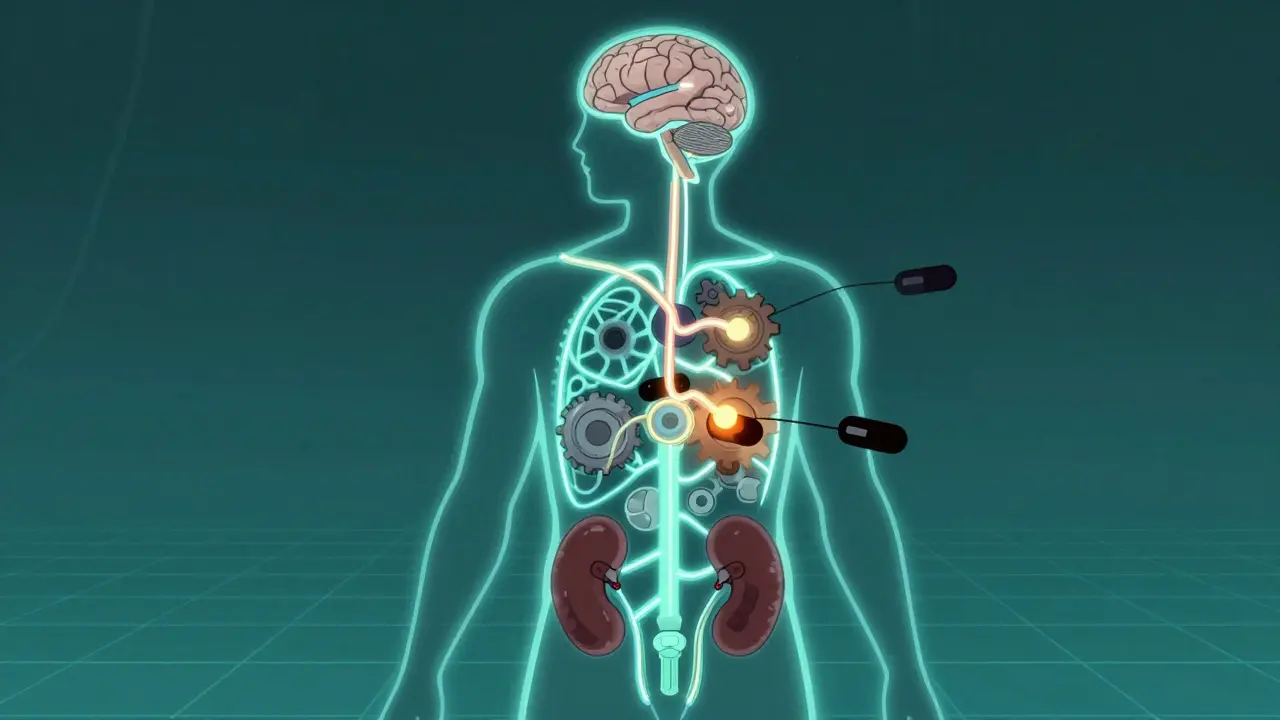
To understand why this happens, we need to look at how your body normally handles stress. When you face a threat-whether it’s an infection, an accident, or intense emotional distress-your brain sends signals through the hypothalamus to the pituitary gland, which then tells your adrenal glands to release cortisol. Cortisol is often called the “stress hormone,” but it does much more than make you feel anxious. It helps regulate blood sugar, reduce inflammation, and maintain blood pressure. It keeps you alive during crises.
Opioids interfere with this chain of communication. They bind to receptors in the brain-specifically mu, kappa, and delta receptors-and dampen the signals from the hypothalamus and pituitary gland. The result? Less adrenocorticotropic hormone (ACTH) is released, which means your adrenal glands don’t get the message to produce enough cortisol. This is known as secondary or tertiary adrenal insufficiency, depending on where in the pathway the blockage occurs. Importantly, the adrenal glands themselves are not damaged-they’re just being ignored.
This mechanism was first documented decades ago, but it remains under-recognized today. A 2024 review published in *Frontiers in Endocrinology* by Patel et al. highlights that despite clear evidence, many doctors still miss this diagnosis. Why? Because the symptoms overlap so closely with other conditions like fatigue, depression, or chronic fatigue syndrome. And because opioids are so widely prescribed-over 5% of the U.S. population takes them chronically-the sheer number of affected individuals is likely higher than we think.
Who Is at Risk?
Not everyone who takes opioids will develop adrenal insufficiency. The risk depends heavily on dosage, duration, and individual physiology. According to guidelines from the American Medical Association (AMA Ed Hub, 2024), concern should rise when a patient is receiving more than 20 morphine milligram equivalents (MME) per day. MME is a standardized way to compare different opioids based on their potency relative to morphine. For example, 10 mg of oxycodone equals about 15 MME, while 30 mg of hydrocodone equals roughly 30 MME.
- Dosage: Higher daily doses increase the likelihood of HPA axis suppression.
- Duration: Chronic use over 90 days or longer significantly raises risk.
- Type of opioid: Some opioids may have stronger suppressive effects than others, though data is limited.
- Individual factors: Age, sex, pre-existing endocrine disorders, and concurrent use of other medications (like antidepressants or steroids) can influence susceptibility.
A prospective study conducted at a pain center evaluated 162 adults taking opioids for at least 90 days. Five percent of them had confirmed opioid-induced adrenal insufficiency. Those patients were also taking significantly higher MME doses than those without the condition. Another systematic review by de Vries et al. (2020) analyzed 27 studies involving over 16,000 patients and found that 22.5% of long-term opioid users failed standard ACTH stimulation tests compared to zero percent in matched controls. These numbers suggest that while OIAI may seem rare, it’s far more common than most practitioners realize.
Recognizing the Symptoms
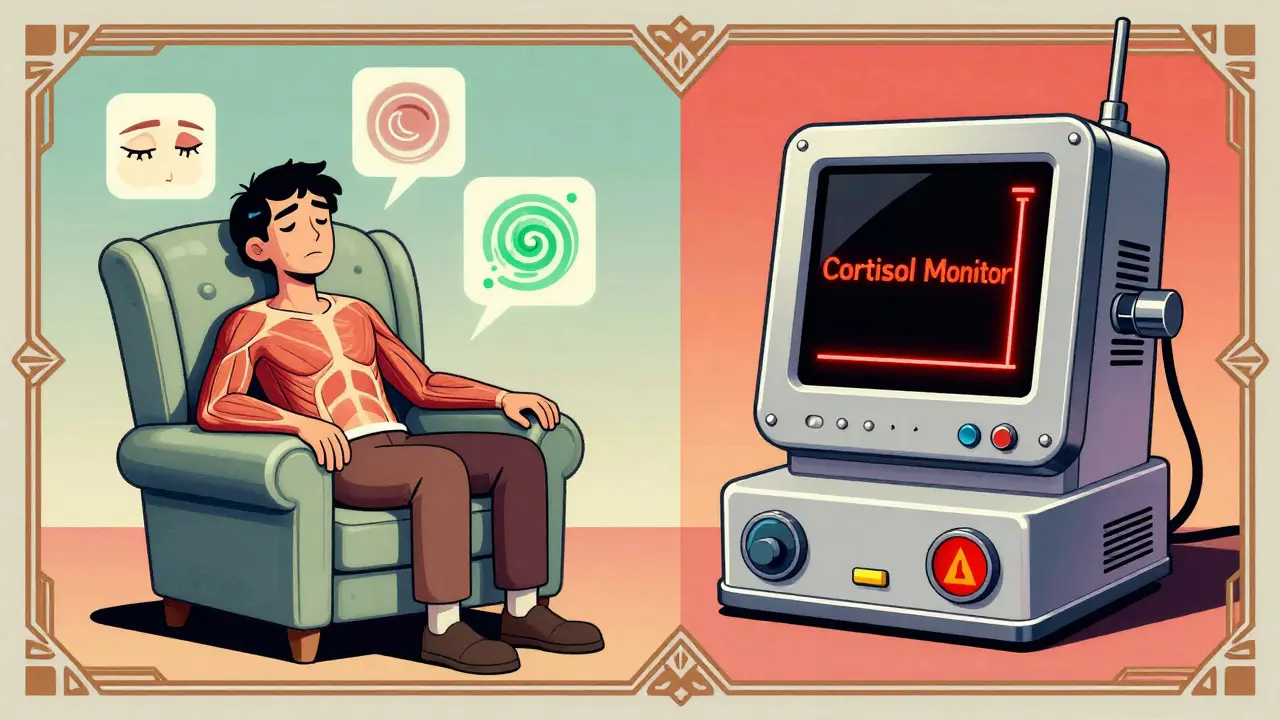
The tricky part about OIAI is that its symptoms mimic many other illnesses. Fatigue, weakness, nausea, loss of appetite, and weight loss are all red flags-but they’re also typical complaints among people with chronic pain. That’s why diagnosis often gets delayed until something triggers a crisis.
Here’s what to watch for:
- Persistent tiredness that doesn’t improve with rest
- Muscle weakness, especially in the legs
- Nausea, vomiting, or abdominal pain
- Low blood pressure, especially when standing up
- Unexplained weight loss
- Irritability, confusion, or mood changes
- Sensitivity to cold temperatures
If you experience any combination of these symptoms while on long-term opioids, don’t dismiss them as “just part of having chronic pain.” They could signal that your body isn’t producing enough cortisol to cope with everyday demands.
Diagnosis: Testing for Adrenal Insufficiency
Diagnosing OIAI requires specific blood tests. The gold standard is the ACTH stimulation test, which measures how well your adrenal glands respond to synthetic ACTH. Here’s how it works:
- Your doctor draws a baseline blood sample to measure your current cortisol level.
- You receive an injection of synthetic ACTH.
- Blood samples are taken again at 30 and 60 minutes after the injection.
In a healthy person, cortisol levels should spike significantly. In someone with adrenal insufficiency, the rise is blunted or absent. Current clinical guidelines define abnormal results as:
- Morning cortisol < 3 mcg/dL (100 nmol/L)
- Peak cortisol ≤ 18 mcg/dL (500 nmol/L) at 30 or 60 minutes post-injection
However, some recent studies suggest even lower thresholds might be appropriate, especially for patients on high-dose opioids. If your morning cortisol is between 3-15 mcg/dL, further testing may be needed, including measurement of ACTH levels and possibly a metyrapone test, which assesses the entire HPA axis response.
It’s important to note that aldosterone production-which regulates sodium and potassium balance-is usually unaffected in OIAI. This distinguishes it from primary adrenal insufficiency (Addison’s disease), where both cortisol and aldosterone are deficient. So electrolyte imbalances aren’t typically seen unless another condition is present.

Treatment and Management
The good news? OIAI is reversible. Once opioids are reduced or stopped, cortisol production usually returns to normal within weeks to months. But here’s the catch: you can’t just stop opioids abruptly. Doing so can trigger withdrawal symptoms and worsen your condition. Instead, tapering must be done carefully under medical supervision.
In the meantime, treatment involves replacing missing cortisol with glucocorticoid medications like hydrocortisone or prednisone. Dosages are adjusted to mimic natural cortisol rhythms-higher in the morning, lower in the evening. During times of physical stress-such as surgery, infection, or injury-you’ll need temporary dose increases to prevent an Addisonian crisis, which is a life-threatening emergency caused by severe cortisol deficiency.
An Addisonian crisis can cause shock, coma, and death if untreated. Symptoms include sudden vomiting, diarrhea, extreme weakness, confusion, and rapid drop in blood pressure. If you suspect one, seek emergency care immediately. Carrying a steroid emergency card and wearing a medical alert bracelet can save lives.
| Feature | Primary (Addison’s Disease) | Secondary/Opioid-Induced |
|---|---|---|
| Cause | Adrenal gland damage | Suppressed HPA axis signaling |
| Cortisol Level | Low | Low |
| ACTH Level | High (body tries to compensate) | Low or normal (signal blocked) |
| Aldosterone | Deficient → electrolyte imbalance | Normal → no salt wasting |
| Reversibility | Rarely reversible | Often reversible after stopping opioids |
What Should You Do Next?
If you’ve been taking opioids for more than three months and notice unusual fatigue, weakness, or digestive issues, talk to your doctor. Ask specifically about checking your cortisol levels. Don’t assume your symptoms are just part of living with chronic pain. Early detection makes all the difference.
For healthcare providers, consider screening patients on long-term, high-dose opioids (>20 MME/day) for adrenal insufficiency. Incorporate simple questions into routine visits: “Do you feel unusually tired?” “Have you lost weight without trying?” “Do you get dizzy when standing up?” These small steps can prevent major complications.
And remember: managing pain and protecting your hormonal health aren’t mutually exclusive goals. With proper monitoring and adjustment, you can stay comfortable while keeping your body functioning safely.
Is opioid-induced adrenal insufficiency permanent?
No, it is usually reversible. Most patients regain normal cortisol production within weeks to months after reducing or stopping opioid therapy. However, during active treatment, replacement hormones are necessary to avoid dangerous drops in cortisol.
Can I take opioids safely if I already have adrenal insufficiency?
Yes, but only under strict medical supervision. Your doctor will adjust your glucocorticoid doses accordingly and monitor you closely. Never self-adjust either medication without professional guidance.
What happens if I suddenly stop taking opioids?
Abrupt cessation can cause withdrawal symptoms and temporarily worsen adrenal insufficiency due to cortisol fluctuations. Always taper gradually under medical supervision to ensure safety and comfort.
Are certain opioids worse than others for causing adrenal insufficiency?
Research suggests that higher doses and longer durations matter more than specific drug types. However, methadone has been frequently cited in case reports. More research is needed to determine if some opioids carry greater risk.
How do I prepare for surgery if I’m on opioids and have adrenal insufficiency?
Inform your surgical team ahead of time. You’ll likely need supplemental IV steroids before, during, and after the procedure to prevent an Addisonian crisis. Carry your steroid emergency card and wear a medical alert bracelet.