Recent POST






ACTH Stimulation Test Result Interpreter
Step 1: Patient Background
Stopping steroids after months or years of use is not like quitting a coffee habit. It is a physiological minefield. Your body has been relying on external medication to manage inflammation or immune responses, and in the process, your own natural hormone production has hit the brakes. This condition, known as hypothalamic-pituitary-adrenal (HPA) axis suppression, occurs when long-term exposure to synthetic glucocorticoids signals your adrenal glands to stop producing cortisol. If you pull the plug too quickly, your body cannot catch up, leading to an adrenal crisis-a potentially life-threatening emergency characterized by severe fatigue, low blood pressure, and shock.
The solution isn't just "going slow." It requires a precise, medically supervised strategy that combines structured dose reductions with objective testing. The gold standard for this assessment is the ACTH stimulation test, which measures your adrenal glands' ability to produce cortisol in response to synthetic ACTH. Recent guidelines, particularly the joint clinical recommendation from the European Society of Endocrinology and the Endocrine Society published in mid-2024, have refined how we approach this delicate balance. They emphasize that while some patients can taper relatively quickly, others need months of careful monitoring. Understanding these protocols is the difference between a safe recovery and a hospital admission.
Why Your Body Forgets How to Make Cortisol
To understand why tapering is necessary, you first need to grasp the feedback loop that controls stress hormones. Under normal conditions, your brain (specifically the pituitary gland) releases adrenocorticotropic hormone (ACTH), which tells your adrenal glands to make cortisol. When you take high-dose steroids like prednisone or dexamethasone, those synthetic molecules flood your system. Your brain senses plenty of cortisol-like activity and stops sending ACTH signals. Without those signals, your adrenal glands shrink-a process called atrophy-and lose their ability to respond when needed.
This suppression was systematically documented decades ago, but the modern understanding of recovery timelines has evolved. Research led by experts such as Felix Beuschlein and Tobias Else highlights that the duration of therapy dictates the complexity of the exit strategy. If you’ve been on steroids for less than three weeks, your HPA axis usually recovers on its own without special intervention. However, once you cross that three-to-four-week threshold, the risk of insufficiency rises sharply. For therapies lasting over a year, the rule of thumb cited by the Adrenal Insufficiency Coalition is stark: it takes approximately one month of recovery for every month of suppression, often totaling nine to twelve months for full independence.
The ACTH Stimulation Test: The Gold Standard Check
You cannot rely on how you feel alone. Symptoms of adrenal insufficiency-like fatigue, nausea, and joint pain-overlap significantly with general illness or even withdrawal syndrome. This is why objective data matters. The ACTH stimulation test provides a clear pass/fail metric for your adrenal function.
Here is how the test works in practice:
- Preparation: You are typically tested when your steroid dose has been tapered down to a physiologic replacement level (roughly 4-6 mg of prednisone equivalent daily). Testing earlier can yield false negatives because the residual steroid in your system masks the results.
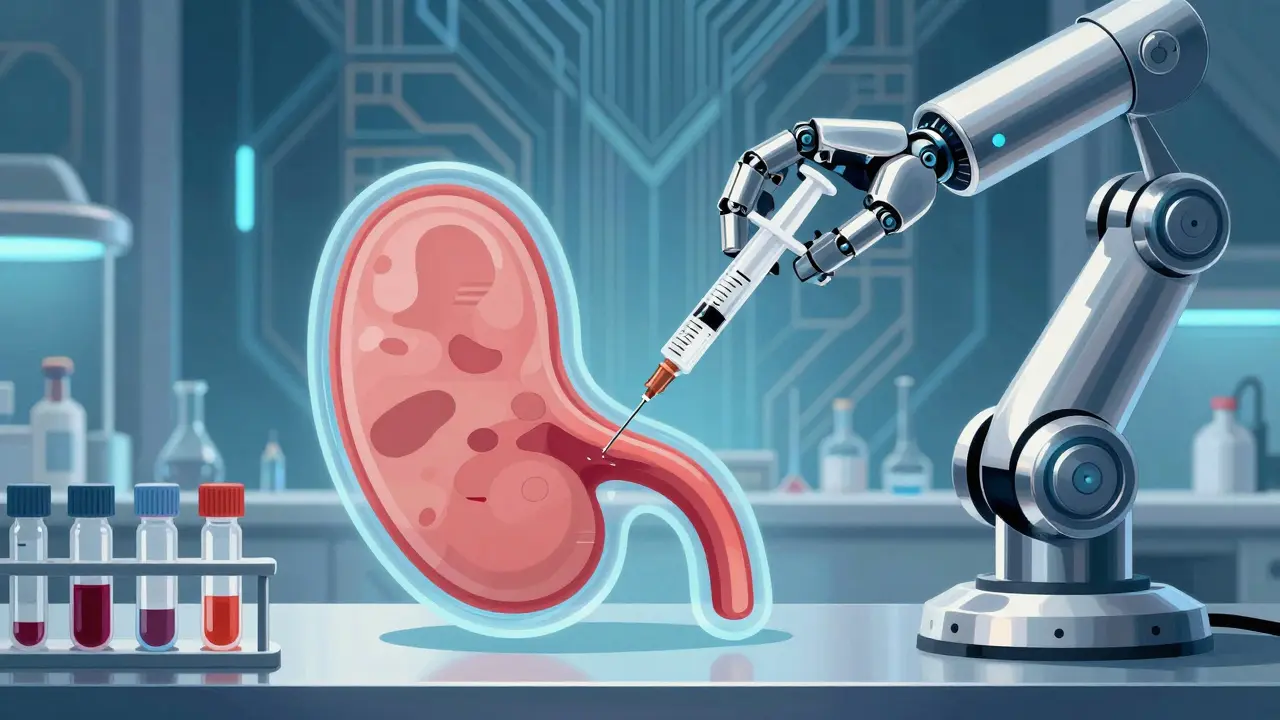
- Administration: A healthcare provider injects 250 mcg of synthetic ACTH (cosyntropin) either intravenously or intramuscularly.
- Measurement: Blood samples are taken before the injection (baseline), then again at 30 minutes and 60 minutes post-injection.
The Endocrine Society defines adrenal sufficiency as a peak cortisol level of at least 18-20 mcg/dL (500-550 nmol/L). If your levels stay below 14 mcg/dL (386 nmol/L), your adrenal glands are still insufficient, and you must continue replacement therapy. Levels between 14 and 18 mcg/dL fall into a gray zone where clinical judgment and repeat testing may be required. This test is not just a formality; longitudinal studies from the Mayo Clinic showed that incorporating formal ACTH testing reduced adrenal crisis incidence from 8.5% to just 1.2%.
Tapering Protocols: One Size Does Not Fit All
There is no single universal taper schedule. The speed of reduction depends heavily on your underlying condition, the type of steroid used, and how long you’ve been taking it. Two major frameworks dominate current medical practice: the Endocrine Society’s broad clinical guidelines and the specialized PJ Nicholoff Protocol.
| Feature | Endocrine Society / ESE (2024) | PJ Nicholoff Protocol (2018 Update) |
|---|---|---|
| Primary Focus | Broad endocrine disorders, autoimmune diseases | Duchenne Muscular Dystrophy (neuromuscular) |
| Testing Approach | Selective: Only if symptoms appear or high risk | Routine: Structured timing integrated into taper steps |
| Taper Speed | Rapid to near-physiologic doses, then slower | Gradual reductions (2.5-5 mg) every 1-2 weeks |
| Stress Dosing | General advice to increase during illness/surgery | Specific tables for exact dosages during stress events |
For patients on therapy for 3-12 months, a common approach involves reducing the dose by 2.5-5 mg every one to two weeks until reaching a "maintenance" dose. Once you hit that lower threshold, reductions become smaller-often 20-25% weekly-to allow the HPA axis time to wake up. Dr. Olaf M. Dekkers, the methodologist behind the 2024 guidelines, notes that while you can taper rapidly down to near-physiological levels, the final stretch requires patience. Rushing the last few milligrams is where most relapses occur.
Navigating Withdrawal vs. True Insufficiency
One of the biggest hurdles during tapering is distinguishing between glucocorticoid withdrawal syndrome and true adrenal insufficiency. Withdrawal syndrome affects 35-45% of patients tapering off steroids. It causes flu-like symptoms, muscle aches, and irritability, but it is not life-threatening and resolves on its own. True adrenal insufficiency, however, compromises your body’s ability to handle stress.
If you experience severe symptoms during a taper, do not panic and restart your previous high dose immediately. Instead, consult your doctor. The 2024 guidelines suggest temporarily increasing the dose only to the last level that was tolerated, rather than jumping back to the start. This distinction is critical because over-treating withdrawal symptoms leads to prolonged steroid exposure, which further delays HPA axis recovery. Dr. Irina Bancos emphasizes that clinical experience is paramount here; your physician must monitor both your physical symptoms and your disease markers to ensure the underlying condition isn’t flaring up due to the lower steroid levels.
Practical Steps for Patients and Providers
Implementing these protocols requires coordination. Here is what you should expect and prepare for:
- Establish a Baseline: Before starting the taper, ensure your underlying disease is stable. Aggressive taping during an active flare-up will likely fail.
- Schedule Regular Check-ins: Monitoring every 2-4 weeks is standard during active tapering. Do not wait for symptoms to worsen before contacting your care team.
- Carry Medical Alert Identification: Until your ACTH test confirms recovery, you are at risk for adrenal crisis during unexpected stressors like surgery or severe infection. Carry a steroid alert card or wear a medical ID bracelet stating you are on glucocorticoids and may require stress-dose steroids.
- Plan for Stress Events: Know your "stress dose" regimen. For minor illnesses, you might double your usual dose. For major surgery, you may need IV hydrocortisone. These details should be written down and accessible.
- Access Testing Early: If you live in a rural area, note that access to ACTH testing can be limited. Some primary care physicians report long wait times for endocrinology consultations. Discuss this barrier early so you can plan travel or remote monitoring strategies.
Technology is also catching up. The Endocrine Society announced a mobile app for tapering guidance scheduled for late 2024, and electronic health record systems like Epic are integrating HPA axis tracking modules. These tools aim to reduce the cognitive load on both patients and providers, ensuring that tapering schedules are followed precisely.
When Things Go Wrong: Red Flags
Even with perfect adherence, complications can arise. Be vigilant for signs of adrenal crisis, which constitute a medical emergency. These include sudden, severe abdominal pain, vomiting, confusion, and a rapid drop in blood pressure. If you experience these, seek immediate emergency care and inform staff about your steroid history.
Conversely, if you taper too slowly, you expose yourself to unnecessary side effects of steroids, including weight gain, bone density loss, and increased infection risk. The goal is the sweet spot: moving fast enough to minimize side effects but slow enough to prevent crisis. The 2024 guidelines reinforce that there is no shame in pausing a taper if symptoms emerge. Stability is more important than speed.
How long does it take for the HPA axis to recover after stopping steroids?
Recovery time varies significantly based on the duration of steroid use. For short courses (less than 3-4 weeks), recovery is often spontaneous and quick. For longer durations, the Adrenal Insufficiency Coalition suggests a rough guideline of one month of recovery for every month of suppression. In cases of therapy exceeding one year, full recovery can take 9 to 12 months. Individual factors like age and underlying health conditions also play a role.
What is the difference between adrenal insufficiency and steroid withdrawal syndrome?
Adrenal insufficiency is a physiological failure where the adrenal glands cannot produce enough cortisol to maintain homeostasis, posing a risk of life-threatening crisis. Steroid withdrawal syndrome, on the other hand, is a set of temporary symptoms (fatigue, joint pain, mood changes) caused by the body adjusting to lower drug levels. While uncomfortable, withdrawal syndrome is not life-threatening and resolves with time, whereas adrenal insufficiency requires medical intervention and possibly continued hormone replacement.
When should I get an ACTH stimulation test?
The 2024 Endocrine Society guidelines recommend ACTH testing when you have reached a physiologic replacement dose (approximately 4-6 mg prednisone equivalent) and before complete discontinuation. It is also recommended if you exhibit symptoms of adrenal insufficiency or are considered high-risk. Testing too early, while still on higher doses, can result in false-negative results because the exogenous steroids suppress the adrenal response artificially.
Can I taper steroids on my own without a doctor?
No, you should never taper steroids independently. Improper tapering can lead to adrenal crisis, which is a medical emergency requiring immediate hospitalization. Additionally, reducing steroids too quickly can cause your underlying inflammatory or autoimmune disease to flare up severely. A healthcare provider must monitor your progress, adjust doses based on your response, and perform necessary testing like the ACTH stimulation test to ensure safety.
What happens if I miss a dose during my taper?
If you miss a single dose, take it as soon as you remember unless it is close to the time of your next scheduled dose. Do not double up on doses. If you miss multiple doses or feel unwell (experiencing nausea, extreme fatigue, or dizziness), contact your healthcare provider immediately. Missing doses can destabilize your HPA axis recovery and potentially trigger symptoms of insufficiency.
Do I need to carry a steroid alert card forever?
You should carry a steroid alert card or wear a medical ID bracelet until your HPA axis has fully recovered and confirmed by an ACTH stimulation test. Once your adrenal glands are functioning normally and you are off all glucocorticoids, you generally no longer need the alert card. However, if you have permanent secondary adrenal insufficiency, you will need to carry it indefinitely.

Nilesh Mandani
It is fascinating how the body's feedback loops are so precise yet so easily disrupted by external interventions. The concept of HPA axis suppression really highlights the complexity of human physiology, doesn't it? We often take for granted that our bodies will simply 'bounce back' after a treatment course, but this article makes it clear that recovery is not automatic. It requires patience and medical supervision. I think many people underestimate the time needed for adrenal glands to recover their function. The distinction between withdrawal syndrome and true insufficiency is crucial here because mistaking one for the other can lead to dangerous decisions. Some might feel better quickly and assume they are cured, while others might suffer unnecessarily from prolonged steroid use due to fear of symptoms. This balance is delicate. The ACTH test seems like a necessary evil in this process, providing objective data when subjective feelings are misleading. It reminds me of how we need tools to measure things we cannot see with the naked eye. Our internal chemistry is invisible until we test for it. This post brings clarity to a very confusing topic.

Abhimanyu Pandey
They want you to believe the tests are accurate!! But who controls the labs?? The pharmaceutical companies have a vested interest in keeping you on medication!!! If your cortisol is low, they sell you more drugs!!! It is a conspiracy to keep us dependent!!! Do not trust the doctors!!! They are part of the system!!! The guidelines are just propaganda!!! Wake up people!!!

Dat Alexander
i think its important to listen to your body but also respect the science. the guidelines exist for a reason. dont let fear drive your decisions. trust the process but stay informed. communication with your doctor is key. do not isolate yourself in doubt.

Jake Williams
This is absolute garbage advice for anyone who values their independence. You are supposed to be tough enough to handle your own health without needing a babysitter every two weeks. The government wants you weak and dependent on their healthcare system. Real Americans don't wait nine months to recover; they get back to work. This culture of fragility is destroying our nation. If you can't handle a taper, you're just soft. Stop whining about fatigue and pull yourself up by your bootstraps. The endocrine society is full of bureaucrats who have never worked a day in their lives. They profit from your sickness. Don't fall for it. Be strong. Ignore the testing nonsense and push through. That is what real men do. Weakness is a choice. And these guidelines are encouraging that choice.

Amelia Vaughan
You are wrong. Ignoring medical advice is stupid. People die from adrenal crisis. It is not a joke. Follow the rules or die. Simple as that.

Raymond Roberts
I totally get where everyone is coming from but I think there is a middle ground here that we are missing out on. When I was dealing with my own issues I found that listening to the doctors was helpful but also trusting my gut feeling about how I felt each day was super important too. It is not black and white you know. Sometimes the tests say one thing but your body says another. I had a friend who followed the protocol exactly and still felt terrible for months. She ended up having to go back to higher doses because her life quality was so bad. So maybe the guidelines are good for some people but not all. We need to remember that every person is different and what works for one might not work for another. Also the waiting times for appointments can be really long which adds stress. I wish there was a faster way to get tested but I guess we have to deal with the system we have. It is frustrating but we have to keep going. Hope this helps someone out there who is struggling.

Madison Jones
This is such an incredibly helpful breakdown!! Thank you for sharing this information!! I have been so scared about starting my taper!! The part about the gray zone in cortisol levels really helped me understand why my doctor wanted to wait!! Please remember to always consult your healthcare provider!! Do not make changes on your own!! You are not alone in this journey!! Many people have successfully tapered!! Stay positive and keep tracking your symptoms!!

Sarah Grenberg
The resilience required to navigate this process is truly remarkable. It is not just about biology; it is about mental fortitude. We must support each other through these transitions. The data provided here is essential for making informed choices. Let us continue to share our experiences and uplift one another.

Brian Lee
Good info. I hope people read this carefully. It is important to be safe. My uncle had a bad experience when he stopped too fast. He got very sick. Now he takes his time. Doctors are smart. Listen to them. Good luck to everyone trying to taper. It is hard but you can do it. Stay healthy.

Brian Fibelkorn
The epistemological framework underlying these clinical recommendations is fundamentally flawed if it ignores the phenomenological experience of the patient. The reductionist approach to HPA axis recovery fails to account for the holistic bio-psycho-social determinants of health outcomes. Furthermore, the reliance on synthetic ACTH as a proxy for endogenous response introduces significant confounding variables in the diagnostic algorithm. One must question the ontological status of 'recovery' when defined solely by laboratory metrics. Is it not possible that the adrenal glands may exhibit functional adequacy in isolation while failing in integrated systemic contexts? The moral imperative here demands a critique of the iatrogenic harm caused by rigid adherence to protocols that prioritize statistical significance over individual well-being. We are witnessing the commodification of physiological processes, where the body becomes a machine to be calibrated rather than a living entity to be nurtured. This paradigm shift is necessary to address the root causes of chronic illness management failures. The current model is unsustainable and ethically questionable.
Write a comment