Recent POST
Every year, over 100,000 people in the U.S. die from drug overdoses-and a huge portion of those deaths are tied to opioids that never should have been in circulation in the first place. Many of these drugs come from medicine cabinets, left over after surgery, injury, or chronic pain treatment. The truth is simple: unused opioids are dangerous opioids. If they’re not disposed of properly, they can end up in the hands of teens, relatives, or strangers who don’t have a prescription-and that’s how overdoses start.
Why Safe Disposal Matters More Than You Think
The CDC reports that about 70% of people who misuse prescription opioids get them from friends or family. That means the drug that was meant to help your back pain after surgery could be the same one that ends up in your teenager’s backpack or your neighbor’s purse. And it’s not just about theft. Accidental ingestion is a major issue too-children, pets, and even elderly adults with memory problems have overdosed after finding leftover pills. In 2021 alone, 107,622 people died from drug overdoses in the U.S. The National Survey on Drug Use and Health found that nearly 20% of all opioid prescriptions go unused. That’s millions of pills sitting in drawers, bathrooms, and kitchen cabinets. These aren’t just old pills-they’re potential triggers for addiction, overdose, and death.Four Safe Ways to Dispose of Unused Opioids
There are four proven, safe methods to get rid of unused opioids. Not all are equally accessible, but one of them will work for almost everyone.1. Use a Drug Take-Back Program
This is the gold standard. Take-back programs collect unused medications and destroy them safely through high-temperature incineration. These programs are run by the DEA and available at over 16,979 locations across the country, including pharmacies, hospitals, and police stations. You don’t need an appointment. Just bring your unused opioids in their original container (no need to remove labels) to any registered site. Walgreens and Walmart alone have over 13,000 kiosks where you can drop off pills 24/7. The DEA also hosts National Prescription Drug Take Back Days twice a year-usually in April and October-but you don’t have to wait. Most sites are open year-round. If you’re not sure where to go, use the DEA’s online locator tool. Just enter your ZIP code, and it shows you the closest drop-off points within seconds. In 2022, this tool was used over 2.3 million times.2. Use a Deactivation Pouch
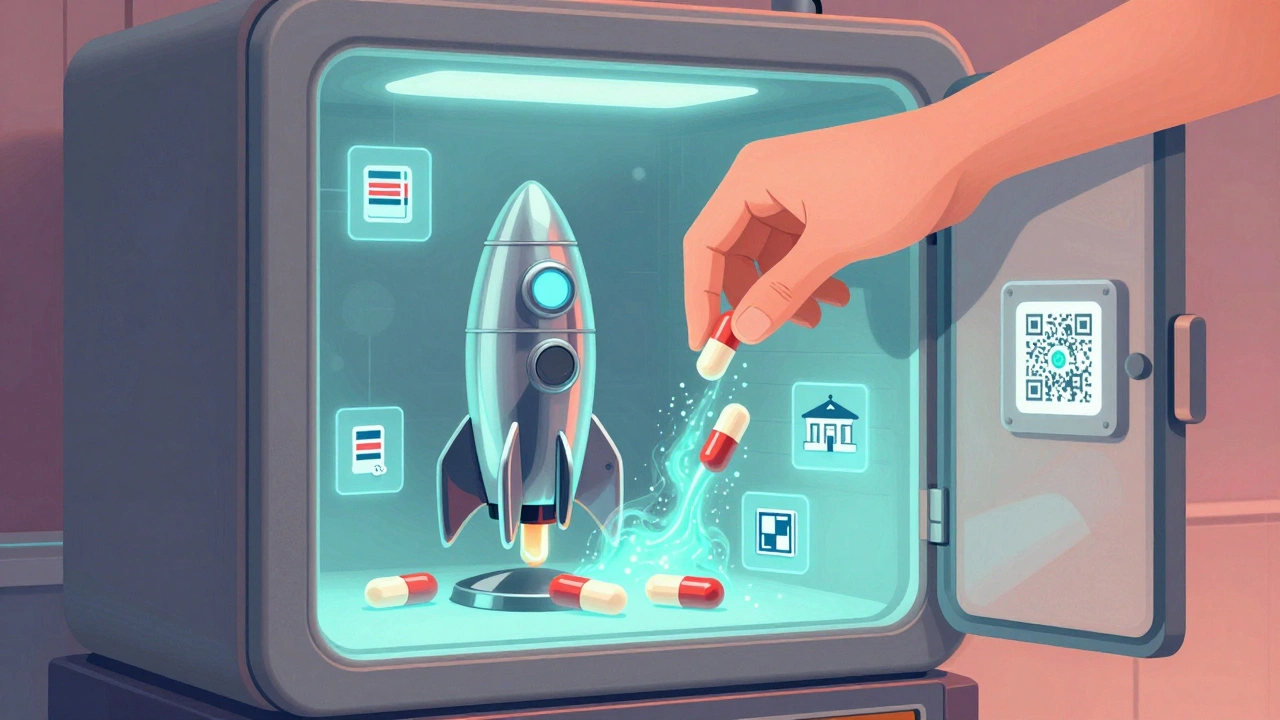
If there’s no take-back site nearby-or if you need to dispose of opioids right away-deactivation pouches are a reliable alternative. Brands like Deterra and SUDS use activated carbon and chemical agents to permanently neutralize opioids within 30 minutes. Here’s how they work: Put your pills or patches into the pouch, add water, seal it, and shake gently. The pouch then locks in the drugs and makes them unusable. Lab tests show these pouches deactivate 99.9% of opioids. They’re available at most major pharmacies for $2.50 to $5 per pouch. One common mistake? Not using enough water. A University of Pittsburgh study found that 28% of users didn’t add enough water, which slowed or incomplete deactivation. Always follow the instructions on the package.3. Household Disposal (When Nothing Else Is Available)
If you can’t get to a take-back site and don’t have a pouch, you can still dispose of opioids safely at home-but you must do it right. The FDA recommends this three-step method:- Remove pills from their original container.
- Mix them with something unappetizing-like used coffee grounds, cat litter, or dirt. This makes them smell and look disgusting, reducing the chance someone will dig through the trash.
- Seal the mixture in a plastic bag or empty container (like a jar or coffee can), then throw it in the trash.
4. Flush Only If Specifically Listed by the FDA
Flushing is the least recommended method-and only for a very short list of drugs. The FDA allows flushing for 15 high-risk opioids because they’re so dangerous even in small doses. These include:- Fentanyl patches
- Oxycodone (OxyContin, Percocet)
- Morphine sulfate
- Hydrocodone (Vicodin)
- Meperidine (Demerol)
What NOT to Do
Don’t throw pills in the toilet unless they’re on the FDA’s flush list. Don’t pour them down the sink. Don’t keep them “just in case.” Don’t give them to someone else. Don’t leave them in the original bottle where they’re easy to find. And don’t assume “no one will look” - because someone always does.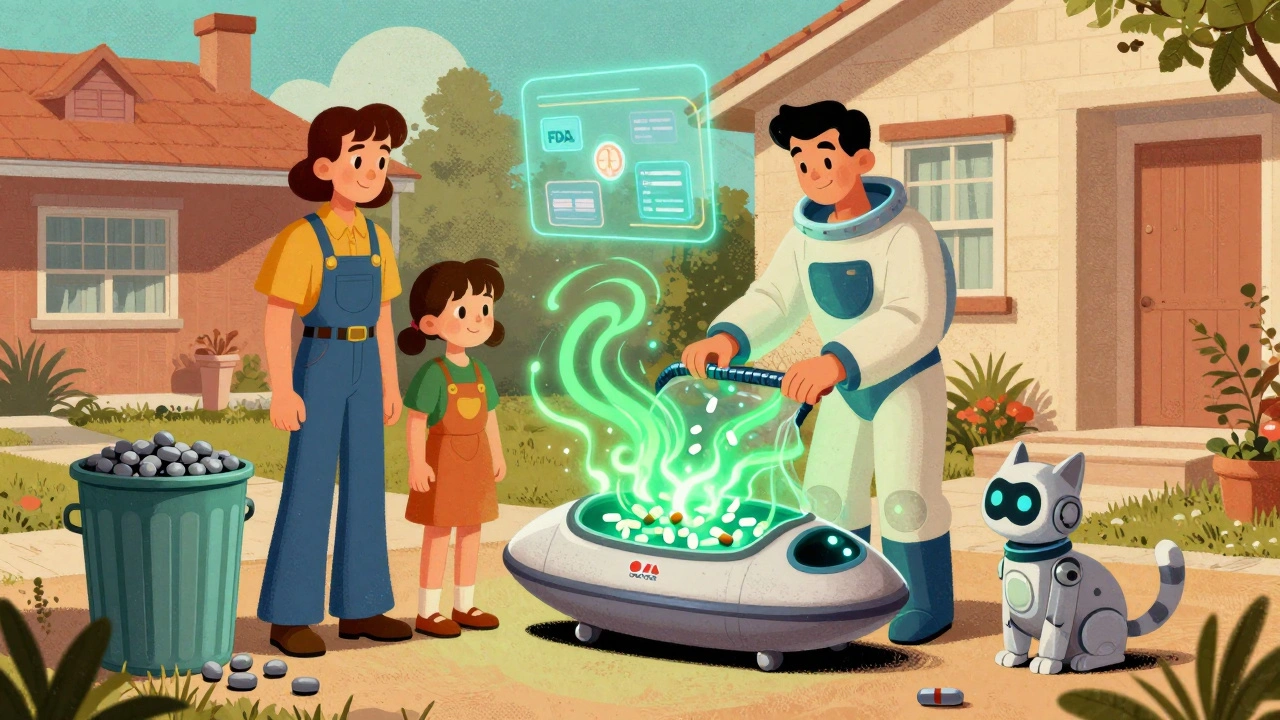
What Doctors and Pharmacies Should Be Doing
You shouldn’t have to figure this out alone. The American Society of Regional Anesthesia and Pain Medicine says every opioid prescription should come with disposal instructions. Yet only 38% of prescribers actually talk about it during the consultation. Hospitals and clinics that make disposal part of discharge paperwork see huge improvements. Mayo Clinic’s program, for example, gets 89% of patients to dispose of their opioids properly-compared to the national average of just 32%. The key? They hand out deactivation pouches or direct patients to the nearest drop-off site before they leave. If your doctor didn’t mention disposal, ask. It’s your right. And if you’re a pharmacist, make sure you’re offering pouches or information at the counter. You’re on the front lines of overdose prevention.Barriers to Safe Disposal-and How to Overcome Them
Many people don’t dispose of opioids because they don’t know how, or they think it’s too hard. Here’s what gets in the way-and how to fix it:- “There’s no drop-off site near me.” Rural areas have fewer collection points. Solution: Use a deactivation pouch. They’re affordable and shipped to your door.
- “I’m worried about privacy.” Some people fear their drug use will be tracked. Solution: Take-back sites and pouches are anonymous. No ID needed. No records kept.
- “I don’t know which ones I can flush.” Confusion is common. Solution: Keep the FDA’s flush list handy. Or use a pouch-no guesswork needed.
- “I’ll just keep them.” This is the most dangerous choice. Solution: Make disposal part of your routine. When you’re done with your prescription, set a reminder to dispose of it within 7 days.
What’s Changing in 2025
The landscape is improving. In 2023, the DEA added 1,200 new collection sites-many in tribal communities that previously had no access. The FDA is testing QR-code-enabled pouches that track usage anonymously to improve distribution. And by 2025, hospitals will be required to report disposal compliance as part of national patient satisfaction surveys. States are also using opioid settlement money to fund disposal programs. California spent $5 million on kiosks. Wyoming gave $1.2 million to put pouches in every pharmacy. These efforts are working. Communities that use multiple methods-take-back, pouches, education-see 37% fewer opioid diversion incidents.What You Can Do Today
You don’t need to wait for a policy change or a government program. You can act now:- Check your medicine cabinet. Find any unused opioids.
- Look up the nearest DEA take-back site using their online locator.
- If none is nearby, buy a deactivation pouch at your pharmacy.
- If you’re in a rural area with no options, follow the FDA’s household disposal method exactly.
- Ask your doctor or pharmacist: “What should I do with leftover opioids?”
Can I flush any opioid painkiller down the toilet?
No. Only 15 specific opioids are on the FDA’s flush list because they’re extremely dangerous in small doses-like fentanyl patches and oxycodone. Flushing other opioids pollutes water and isn’t recommended. Always check the FDA’s official list before flushing.
Do I need to remove pills from the bottle before disposal?
Only for household disposal. For take-back programs or deactivation pouches, leave pills in the original bottle. For home disposal, remove them and mix with coffee grounds or cat litter to make them unappealing and unrecognizable.
Are deactivation pouches really effective?
Yes. Lab tests show pouches like Deterra deactivate 99.9% of opioids within 30 minutes. They’re FDA-recognized and used by hospitals and pharmacies nationwide. Just make sure to use enough water and seal the pouch properly.
What if I can’t find a take-back site near me?
Use a deactivation pouch or follow the FDA’s household disposal method. Many pharmacies sell pouches for under $5. If neither is available, mix pills with used coffee grounds or cat litter, seal in a container, and throw them in the trash. Don’t leave them in the bottle.
Can I give my leftover opioids to someone else who needs them?
Never. It’s illegal and dangerous. Even if someone has pain, their body reacts differently to opioids. A dose that’s safe for you could kill them. Always dispose of unused opioids properly instead.
Why don’t doctors always tell me how to dispose of opioids?
Many don’t. A 2022 report found only 38% of prescribers routinely discuss disposal. But it’s your right to ask. If you’re prescribed opioids, ask your doctor or pharmacist: “What should I do with the leftover pills?” Most will point you to a take-back site or give you a pouch.

Paul Dixon
I just threw out my dad's leftover oxycodone last week. Took him 3 days to get over it. He kept saying 'just in case' like it was a spare tire. Guess what? It was a time bomb. Glad I did it.

Jean Claude de La Ronde
so we're supposed to trust the fda now? after they approved oxycontin in the 90s? lol. but sure, flush away. i'm sure the fish appreciate the gesture. 🐟💀

Courtney Blake
this is why america is falling apart. you let some bureaucrat tell you how to dispose of your medicine like you're a child. i kept mine. if my kid wants to try it, they'll learn fast. survival of the fittest. 🇺🇸

Lisa Stringfellow
i mean... i get the intent but like... how many of these people are even real? i feel like this post was written by a public health intern trying to get a promotion. the stats are too clean. too perfect. it smells like propaganda.

Monica Evan
just used a deterra pouch for the first time-$4 at cvs, took 2 mins, no mess, no guilt. my grandma’s fentanyl patches went in there too. she’s 82 and has memory issues. this isn’t just about saving lives-it’s about dignity. 🙏

Mia Kingsley
wait so if i flush my tramadol i’m a bad person but if i flush oxycodone i’m a hero? who decided this? did they take a vote? because i missed the memo. also why is this even a thing? why do we have so many opioids in the first place? 🤷♀️

Katherine Liu-Bevan
The FDA’s flush list is based on lethal dose thresholds and environmental risk assessments. Fentanyl patches can kill a child with 1/10th of a dose. That’s not opinion-it’s pharmacology. Don’t confuse moral panic with science.

Vivian Amadi
you people are ridiculous. i’m not throwing out my pain meds because some stranger might find them. what if i need them again? what if my back flares up? you think i’m gonna crawl to a pharmacy at 2am? nope. i’ll keep them. and if someone steals them? that’s their problem.

Aidan Stacey
i grew up in a small town where everyone knew everyone. my cousin died from a pill he found in his uncle’s bathroom. it wasn’t stolen. it was just... there. like a candy dish. this isn’t about fear. it’s about responsibility. i’m glad someone finally said it.

Kristi Pope
my pharmacist handed me a free deterra pouch when i got my prescription. didn’t even charge me. i was so touched. small acts like that change lives. we need more pharmacists like her. 🌟

Aman deep
in india we just leave them in the trash but i never thought about mixing with coffee grounds. this is smart. i’ll do this now. also, why do americans have so many pills? we only get what we need for 3 days. maybe that’s why we don’t have this problem.

Eddie Bennett
i used to hoard my meds too. then my niece found a bottle and swallowed 3 pills. she’s fine now but i still can’t look at my bathroom cabinet the same. this post saved me from being the villain. thanks.

Jim Irish
Safe disposal is not a suggestion. It is a civic duty. The data is clear. The tools are available. The cost of inaction is measured in lives. Act now.
Write a comment