Recent POST



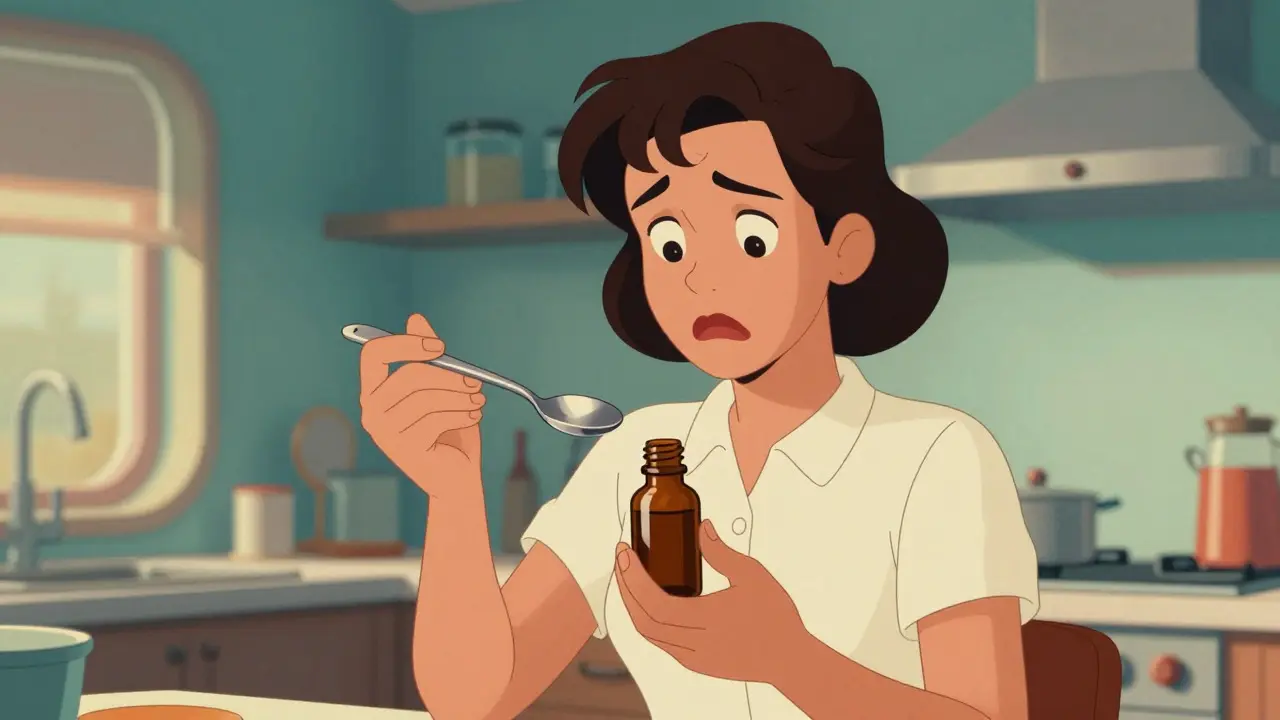
Imagine holding a bottle of liquid medicine for your child. The label says "Take 5 mL twice daily." You reach for the spoon in your kitchen drawer. But wait-is that really 5 mL? In many homes, a standard teaspoon holds anywhere from 2.5 to 7.5 mL. That small difference can mean the gap between a helpful dose and an accidental overdose. This is why learning how to read dose measurements on liquid prescription labels isn't just a nice-to-have; it's a critical safety skill.
Mistakes happen more often than you might think. According to the FDA, medication errors account for about 1.3 million injuries every year in the United States. For liquid prescriptions, the problem is even sharper. A 2016 study found that nearly 40% of parents gave the wrong dose to their children, often because they relied on household spoons instead of proper measuring devices. The good news? Most of these errors are preventable with a clear understanding of what’s actually written on the label.
Key Takeaways
- Milliliters (mL) are the only standard unit allowed on modern liquid prescription labels.
- Household teaspoons and tablespoons vary wildly in volume, making them unreliable for precise dosing.
- The concentration (e.g., 125 mg/5 mL) tells you how much active ingredient is in each measured portion, not the total amount in the bottle.
- Always use the measuring device provided by your pharmacist or buy a dedicated oral syringe.
- If you’re unsure, ask your pharmacist to demonstrate the correct way to measure the dose.
Why Standardization Matters
Before 2015, prescription labels were a mess. Some used teaspoons, others tablespoons, and some mixed both. This inconsistency created confusion. The National Council for Prescription Drug Programs (NCPDP) stepped in with a simple rule: use milliliters only. Their 2015 white paper became the foundation for safer labeling across the industry.
The shift wasn’t just bureaucratic. Research showed that parents using metric-only instructions made fewer mistakes than those using non-metric units. By 2021, 68% of pharmacies had fully adopted these standards, up from just 38% in 2015. Major chains like CVS and Walgreens now print all liquid doses in mL, thanks to automated labeling systems that enforce the rules automatically.
But adoption isn’t universal. Independent pharmacies, which make up a significant portion of the market, still struggle with legacy systems. Only 58% have fully complied, according to a 2022 survey by the National Community Pharmacists Association. This means if you pick up your meds at a smaller, local pharmacy, double-check that the label uses mL exclusively.
Anatomy of a Liquid Prescription Label
Every liquid prescription label contains three key pieces of information. Understanding these will help you avoid the most common errors.
- Total Container Volume: This is the amount of liquid in the bottle, usually printed near the top. Common sizes include 30 mL, 60 mL, 118 mL, and 240 mL. Don’t confuse this with your dose. If the bottle says 118 mL, that’s the total supply, not how much you take at once.
- Concentration: This tells you how much active drug is in a specific volume. For example, "125 mg/5 mL" means there are 125 milligrams of medication in every 5 milliliters of liquid. This is crucial for calculating the right dose based on weight or age.
- Dosage Instructions: This is the actual amount you need to give or take. It should always be in mL. For instance, "Give 10 mL twice daily." Notice how it doesn’t say "two teaspoons"-it specifies the exact metric volume.
Look closely at the spacing and formatting. Proper labels include a space between the number and the unit (5 mL, not 5mL). They also use leading zeros for decimals less than one (0.5 mL, not .5 mL). These small details reduce the risk of misreading a decimal point, which can lead to a tenfold error.
Metric vs. Household Units: The Danger Zone
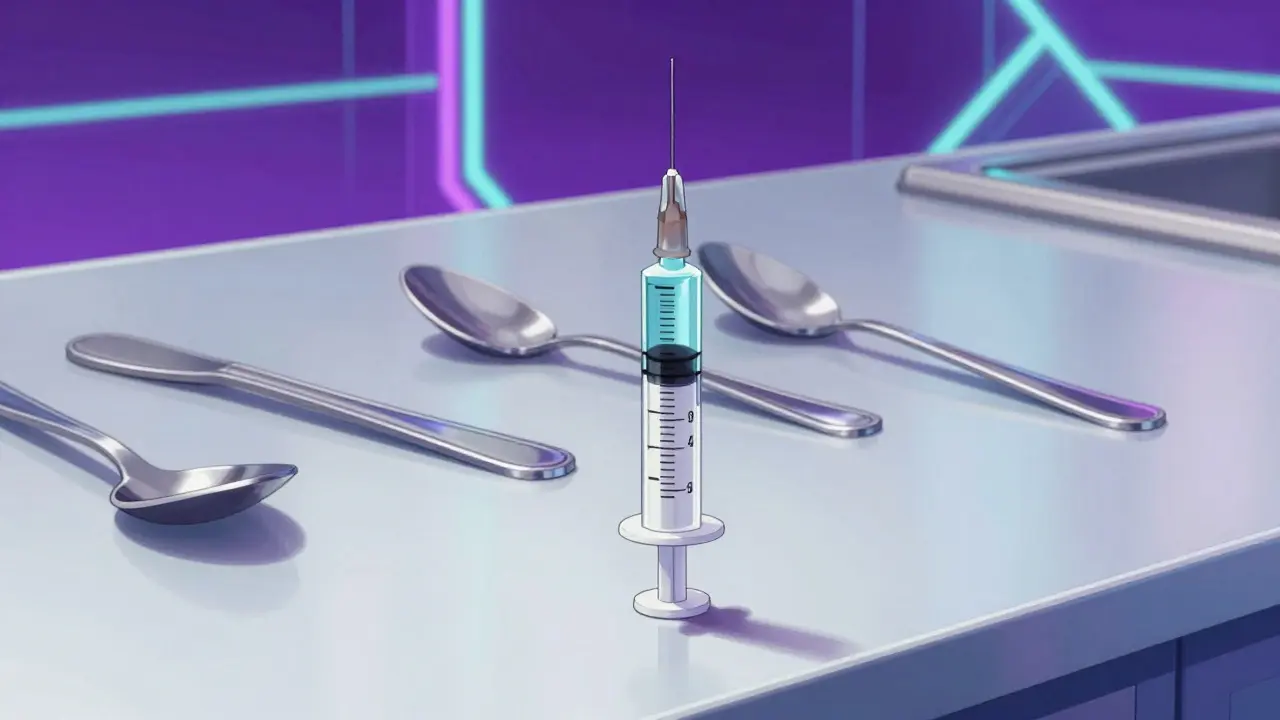
Here’s where most people go wrong. Many families still use kitchen spoons to measure liquid medicine. But household utensils aren’t standardized. A Consumer Product Safety Commission test found that teaspoons held anywhere from 2.5 to 7.5 mL, and tablespoons ranged from 5 to 20 mL. That’s a huge variation for a medication where precision matters.
| Method | Accuracy | Error Risk | Best For |
|---|---|---|---|
| Oral Syringe (mL) | High (±0.1 mL) | Low | Pediatric doses, low volumes (<5 mL) |
| Medicine Cup (mL) | Medium (±0.5 mL) | Medium | Standard adult doses (5-20 mL) |
| Kitchen Teaspoon | Low (2.5-7.5 mL range) | High | Avoid for prescriptions |
| Kitchen Tablespoon | Low (5-20 mL range) | Very High | Avoid for prescriptions |
The numbers back this up. A 2017 systematic review found that using milliliter-based labeling reduced administration errors by 52% compared to teaspoon/tablespoon labeling. If you’re giving medicine to an infant who needs a tiny dose like 0.8 mL, a kitchen spoon is simply too imprecise. An oral syringe, however, has markings every 0.1 mL, making it far safer for small volumes.
Common Mistakes and How to Avoid Them
Even with clear labels, misunderstandings happen. Here are the top pitfalls and how to sidestep them.
- Confusing Total Volume with Dose: Seeing "240 mL" on the bottle and thinking you need to drink the whole thing. Remember, that’s the total supply. Check the dosage instruction line for the actual amount per serving.
- Misreading Decimals: Reading 0.5 mL as 5 mL. Always look for the leading zero. If the label says 0.5 mL, use a syringe that can measure that small amount accurately.
- Ignoring Concentration: Assuming the dose is fixed regardless of the concentration. If your doctor prescribes 125 mg and the bottle is 125 mg/5 mL, you take 5 mL. But if the bottle is 250 mg/5 mL, you’d only take 2.5 mL. The concentration changes the volume needed.
- Using the Wrong Device: Using a cup meant for water to measure medicine. Cups often have wide mouths, making it hard to see the exact level. Oral syringes allow you to draw up the liquid precisely and push it into the mouth without spilling.
The "teach-back" method is a powerful tool here. After your pharmacist explains the dose, repeat it back to them in your own words. Show them how you plan to measure it. Studies show this reduces errors by 63%. It’s a simple conversation that can save a lot of trouble later.

Practical Tips for Safe Administration
You don’t need to be a healthcare professional to get this right. Follow these practical steps every time you administer liquid medication.
- Check the Label Twice: Verify the patient name, drug name, concentration, and dosage instructions before opening the bottle.
- Use the Provided Device: Most pharmacies include a dosing cup or syringe with the prescription. Use it. If it’s lost, ask for a replacement or buy an oral syringe at any pharmacy.
- Measure at Eye Level: When using a cup, hold it flat and view the liquid at eye level to ensure an accurate reading. For syringes, pull the plunger until the tip aligns with the desired mL mark.
- Store Properly: Keep the measuring device clean and dry. Store the medication as directed (some require refrigeration).
- Ask Questions: If anything seems unclear, call your pharmacist. They prefer you ask now rather than guess later.
For parents of young children, consider keeping a log of doses given. This helps track consistency and provides useful info if you need to speak with a doctor. Also, watch for signs of over- or under-dosing, such as unusual sleepiness or lack of effect, and report them promptly.
The Future of Medication Labeling
Things are getting better. The FDA proposed a rule in 2023 requiring pictograms on liquid labels to show proper measuring techniques. Early studies suggest visual aids can reduce errors by another 37%. Additionally, some pharmacies are experimenting with QR codes that link to video demonstrations, helping patients see exactly how to use the measuring device.
By 2026, full industry adoption of these enhanced standards is expected. Until then, your best defense is knowledge. Understanding what’s on the label empowers you to catch errors early and ensure safe, effective treatment for yourself or your loved ones.
What is the standard unit of measurement on liquid prescription labels?
The standard unit is milliliters (mL). Since 2015, the NCPDP and FDA have mandated that all liquid prescription labels use mL exclusively, eliminating teaspoons and tablespoons to reduce dosing errors.
Can I use a kitchen spoon to measure liquid medicine?
It is not recommended. Kitchen spoons vary significantly in volume, with teaspoons ranging from 2.5 to 7.5 mL. This variability can lead to significant dosing errors. Always use the measuring device provided by your pharmacist or a dedicated oral syringe marked in mL.
What does "125 mg/5 mL" mean on a label?
This indicates the concentration of the medication. It means there are 125 milligrams of active drug in every 5 milliliters of liquid. To determine the correct dose volume, you must know the prescribed amount of the drug (in mg) and calculate the corresponding mL based on this ratio.
Why do labels use leading zeros like 0.5 mL instead of .5 mL?
Leading zeros prevent misreading decimals. Writing ".5 mL" can easily be mistaken for "5 mL" if the dot is missed or faint. Using "0.5 mL" makes the value clearer and reduces the risk of a tenfold dosing error, a practice supported by research from Johns Hopkins University.
What should I do if my pharmacy doesn't provide a measuring device?
Ask your pharmacist for one. Under CMS Conditions of Participation, pharmacies are required to provide measuring devices that match the label units. If you lose it, you can buy an oral syringe or dosing cup at any pharmacy. Never rely on household utensils for prescription medications.