Recent POST


When you pick up a prescription, you might see two versions: the familiar brand name you’ve seen on TV, or a cheaper generic with a different color and shape. You might wonder - is the generic really the same? Can it be just as safe? The answer isn’t just yes - it’s backed by one of the most rigorous drug approval systems in the world. The FDA doesn’t just allow generics to enter the market; it forces them to prove they work exactly like the brand name before they’re ever sold.
What the FDA Actually Requires for Generic Approval
The FDA doesn’t treat generic drugs as second-rate. They’re held to the same standards as brand-name drugs - just with a smarter path to prove it. Instead of repeating every animal study and clinical trial (which would cost billions), generic makers use a shortcut called the Abbreviated New Drug Application, or ANDA. But don’t let the word "abbreviated" fool you. This process is still packed with hard data.
First, the generic must contain the exact same active ingredient as the brand name. Not a similar one. Not a slightly different version. The same chemical compound, at the same strength, in the same form - tablet, capsule, injection, etc. That’s not optional. It’s written into federal law under 21 CFR 314.94(a).
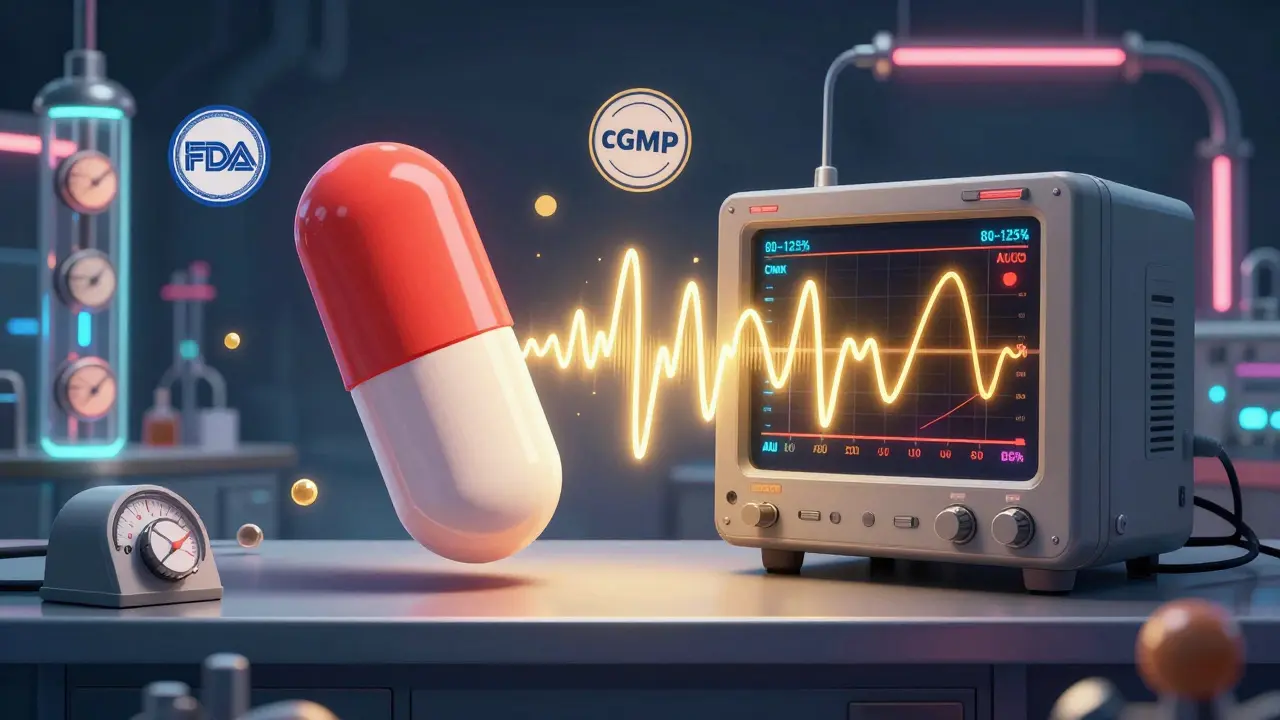
Second, the generic must be bioequivalent. That means your body absorbs it the same way. The FDA measures this by comparing two key numbers: Cmax (how high the drug spikes in your blood) and AUC (how much of the drug your body is exposed to over time). For the generic to pass, the 90% confidence interval for both numbers must fall between 80% and 125% of the brand name’s results. In plain terms: your body gets nearly the same dose, at nearly the same speed.
For tricky drugs like warfarin or levothyroxine - where even a tiny difference can cause serious problems - the FDA tightens the rules. The acceptable range shrinks to 90-111%. That’s not a suggestion. It’s a hard limit.
Manufacturing Has to Be Flawless
It’s not enough for the drug to work the same in a lab. The factory that makes it has to be just as good as the one making the brand name version. Every generic manufacturer must follow Current Good Manufacturing Practices (cGMP). That means:
- Every step of production is documented - from raw materials to final packaging.
- Equipment is cleaned, calibrated, and tested regularly.
- Workers are trained, and changes to the process require FDA review.
The FDA inspects these facilities - both in the U.S. and overseas - more than 3,000 times a year. In 2022, they increased inspections of foreign plants by 22% because so many generics are made abroad. If a factory fails an inspection, the FDA can block the entire shipment. No second chances.
Impurities Are Tightly Controlled
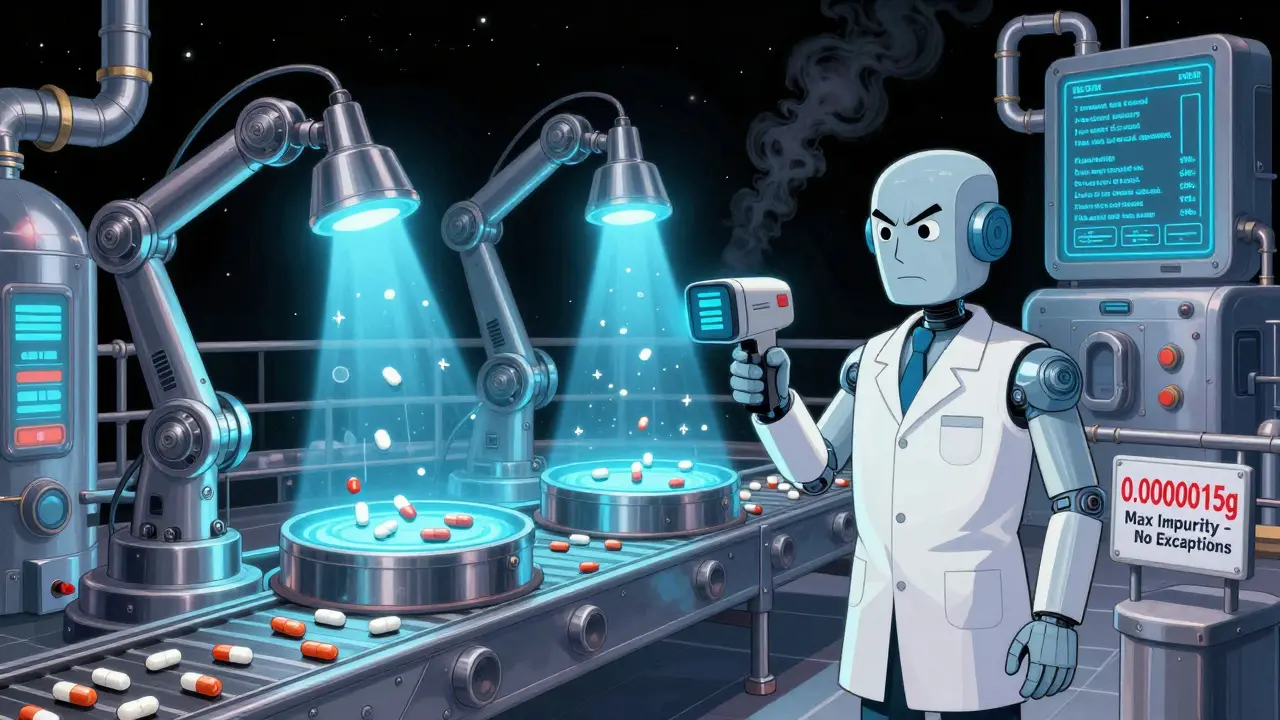
Every drug has tiny traces of unwanted chemicals - impurities. Some come from the manufacturing process. Others form over time. The FDA doesn’t ignore them. They follow international guidelines (ICH Q3B and ICH M7) that set strict limits based on how dangerous each impurity is.
For example, a potential cancer-causing impurity can’t exceed 1.5 micrograms per day in your dose. That’s less than the weight of a single grain of salt. The FDA uses advanced testing to detect even trace amounts. If a generic drug has an impurity above the limit, it’s rejected - even if the active ingredient is perfect.
Labeling, Packaging, and Inactive Ingredients
You might notice generics look different. That’s allowed - and intentional. The FDA permits differences in color, shape, size, and scoring. They also allow different inactive ingredients - the fillers, dyes, or flavors that don’t affect how the drug works. But here’s the catch: if an inactive ingredient causes a reaction in someone allergic to it, the label must say so. And the generic’s label must match the brand name’s safety warnings, dosing instructions, and side effect information - exactly.
There’s one big change coming: since late 2022, the FDA proposed a rule that lets generic makers update safety labels faster. Before, only the brand-name company could add new warnings. Now, if new safety data emerges, the generic maker can update the label without waiting. That’s a major shift in patient safety.
Complex Drugs Are a Bigger Challenge
Not all drugs are created equal. Simple pills? Easy to copy. Inhalers? Eye drops? Injectable biologics? Much harder. These are called complex generics. The FDA’s own data shows they have a 25% higher rejection rate than regular pills.
Why? Because you can’t just measure blood levels and call it done. For an inhaler, you need to prove the drug particles are the same size and reach the lungs the same way. For a cream, you need to show it penetrates the skin at the same rate. For a biologic like insulin or a multiple sclerosis drug, you need to prove the immune system reacts the same way.
The FDA now requires extra testing for these - sometimes clinical studies, sometimes advanced lab tests. In 2023, over 30% of pending generic applications involved complex products. The agency has invested $50 million through 2027 to develop better tools for testing them.
Real-World Evidence: Do Generics Actually Work?
Some patients say, "My generic doesn’t feel the same." You’ll hear this with thyroid meds, seizure drugs, or blood thinners. But what does the science say?
A 2022 study in JAMA Internal Medicine looked at 38,000 Medicare patients taking statins. Half got the brand name, half got the generic. The results? No difference in heart attacks, strokes, or hospital stays. The p-value was 0.37 - meaning any difference was random noise, not real.
On Drugs.com, 87% of users reported no difference between generic and brand name heart medications. But 8% said they felt worse - often because of a change in inactive ingredients. One common culprit: lactose. People with severe lactose intolerance can have symptoms from a generic version that uses it as a filler, even if the brand didn’t.
Neurologists are split. In a 2021 survey, 68% trusted generic seizure drugs. But only 42% felt the same about complex MS drugs. Why? Because those are biologics - living molecules that are harder to copy exactly. The FDA is still working on better ways to test them.
Why Generics Are So Cheap - And Why That’s a Good Thing
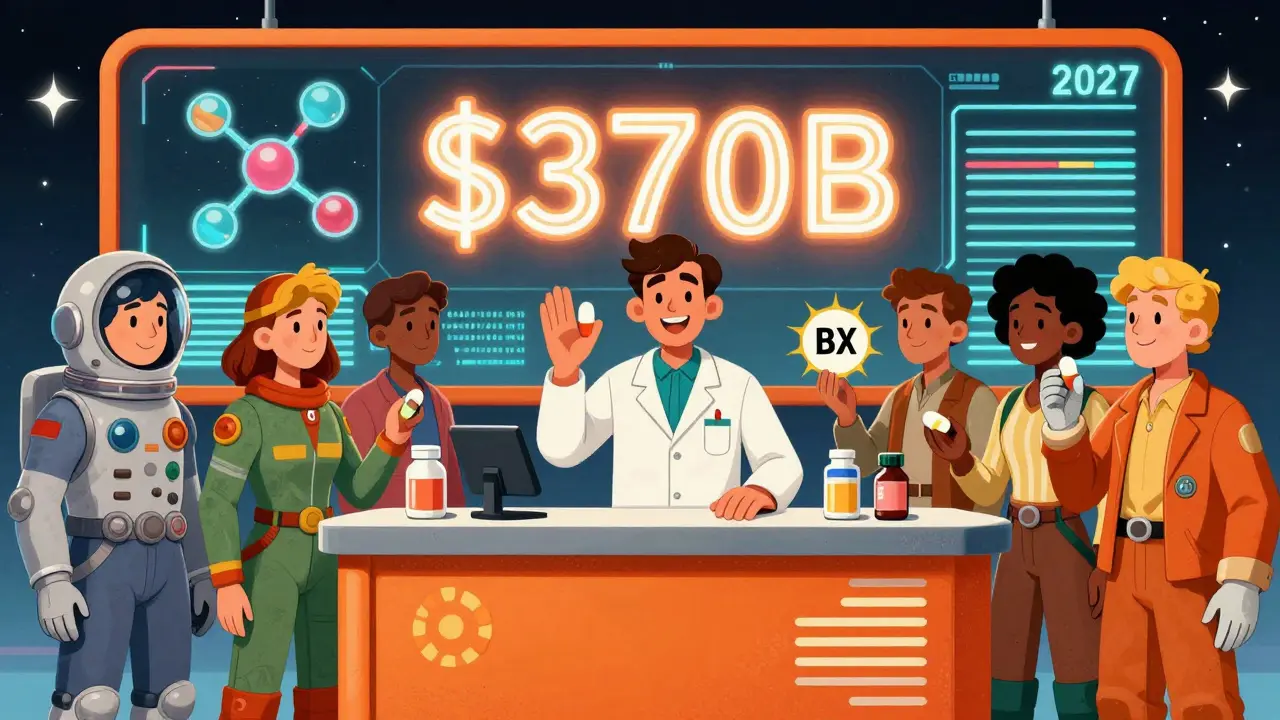
Generics make up 90% of all prescriptions filled in the U.S. But they cost only 23% of what brand-name drugs do. In 2022, Americans saved $370 billion by using generics instead of brands. That’s not a small number. It’s life-changing for people on fixed incomes, seniors on Medicare, families without insurance.
That savings doesn’t come from cutting corners. It comes from cutting redundancy. The brand name company spent $1-3 billion and 10-15 years to develop the drug. The generic maker doesn’t have to do that. They just have to prove they can make the same thing - safely and reliably. That’s how the system works.
What’s Next for Generic Drugs?
The FDA isn’t resting. They’re using AI to predict dangerous impurities before they even show up in tests. They’re building computer models to simulate how a drug behaves in the body - saving time and volunteers. And they’re pushing for more transparency: every approved generic now has a rating in the Orange Book. "AB" means it’s fully equivalent. "BX" means it’s not recommended for substitution.
The biggest challenge ahead? Keeping up with complexity. As drugs get more advanced - gene therapies, personalized meds, complex injectables - the rules have to evolve. The FDA’s 2023 Strategic Plan includes $15 million to develop new bioequivalence methods. Without this, patients might not get affordable access to the next generation of medicines.
Bottom line: The FDA doesn’t cut corners on generics. They enforce the same safety rules - just more efficiently. If you’re worried about switching, talk to your pharmacist. But don’t assume a cheaper pill is a weaker one. In most cases, it’s the exact same medicine - just without the marketing budget.

Sarthak Jain
bro i just switched my lisinopril to generic and thought i was gonna die lmao. turned out my stomach was just mad cause the new one had lactose and i didnt even know i was sensitive. pharmacist caught it right away. wild how inactive ingredients can mess you up like that.

Jonny Moran
big shoutout to the FDA for not letting generics slide. i work in pharma logistics and seen firsthand how some overseas plants cut corners-until the FDA shows up with a checklist longer than a college syllabus. they don’t play. the 3k inspections a year? that’s not bureaucracy, that’s patient protection.

Daniel Wevik
the bioequivalence range of 80–125% is actually genius. it accounts for natural human variability in metabolism. if your body absorbs 90% of the brand, the generic at 92% is functionally identical. the math doesn’t lie. this is why generics are statistically indistinguishable in outcomes across millions of prescriptions.

Rich Robertson
heard a story from a nurse in rural Ohio-she had a patient on warfarin who switched generics and started clotting. turned out the new batch had a different filler that affected absorption. FDA tightened the range to 90–111% for anticoagulants after incidents like that. that’s the system working: react, refine, protect.

Dwayne hiers
the ANDA process is one of the most efficient regulatory frameworks in existence. brand-name companies spend $2B and 12 years on Phase I–III trials. generics bypass that by demonstrating pharmacokinetic equivalence-same active ingredient, same dissolution profile, same bioavailability. no need to re-invent the wheel. saves billions and keeps meds affordable. this isn’t a loophole-it’s smart regulation.

jeremy carroll
my grandpa’s on levothyroxine and he swears the generic made him feel like a zombie. switched back to brand, back to normal. i get it. for some people, even 5% difference matters. but statistically? 90% of folks don’t notice. just gotta find your sweet spot and talk to your doc.

Daniel Thompson
you people are naive. the FDA is a captured agency. they approve generics based on industry lobbying, not science. look at the foreign manufacturing facilities-80% of them have violations. they just get a pass because it’s cheaper. this isn’t safety, it’s cost-cutting disguised as progress.

Alexis Wright
the FDA’s entire system is a scam. they allow generics to be 20% less effective and call it "bioequivalent." that’s not medicine, that’s gambling with people’s lives. and don’t get me started on the impurity thresholds-1.5 micrograms of a carcinogen? that’s like saying it’s fine to inhale a speck of asbestos if it’s "under the limit." this isn’t science-it’s corporate convenience dressed in lab coats.

Natalie Koeber
my cousin works at a generic plant in India. he says they use recycled chemicals and skip stability tests. the FDA only inspects every 3 years and they get warned 2 weeks before. the "AB" rating? total lie. they just print it and ship it. you think your cheap pill is safe? it’s a russian roulette with your thyroid.

Thomas Anderson
if you’re worried about generics, talk to your pharmacist. they know which ones are reliable and which ones have weird fillers. most are totally fine. the science backs it. save your cash and don’t stress. your body won’t know the difference.

Wade Mercer
you’re all missing the point. generics are fine for the masses, but if you’re someone who actually cares about your health, you pay for the brand. it’s not about money-it’s about responsibility. cheap medicine is lazy medicine. and lazy medicine kills.
Write a comment