Recent POST
Drug Recall Checker
Enter the name of your prescription medication to see if it's been recalled by the FDA.
Enter a medication name and click "Check Recall Status" to see if it's been recalled.
Every year, thousands of medications are pulled from shelves because something went wrong. Maybe a batch was contaminated. Maybe it causes unexpected heart problems. Or maybe it interacts dangerously with another common drug. These aren’t rare accidents-they’re tracked, reported, and acted on by one of the most important public health systems in the world: the FDA’s drug safety network.
But here’s the problem: most people have no idea how to find out about these recalls. They don’t know where to look. They don’t know what to do when they hear a drug was pulled. And that’s dangerous. If you or someone you care about takes prescription medication, knowing how to stay informed isn’t optional-it’s life-saving.
What Really Triggers a Drug Recall?
Not every recall means the drug is dangerous. Some are about contamination-a pill made in a factory with mold, or a liquid that got mixed with the wrong chemical. Others are about labeling errors-wrong dosage printed on the bottle, or missing warnings about side effects. The FDA doesn’t wait for hundreds of people to get hurt before acting. If even one report suggests a serious risk, they investigate.
In 2022 alone, the FDA issued 127 drug recalls. Thirty-one of those were linked to compounded drugs-medications mixed in pharmacies, not mass-produced. That’s important because these aren’t always tested the same way as regular drugs. A fungal meningitis outbreak in 2012, which sickened over 750 people across 20 states, showed just how risky unchecked compounding can be.
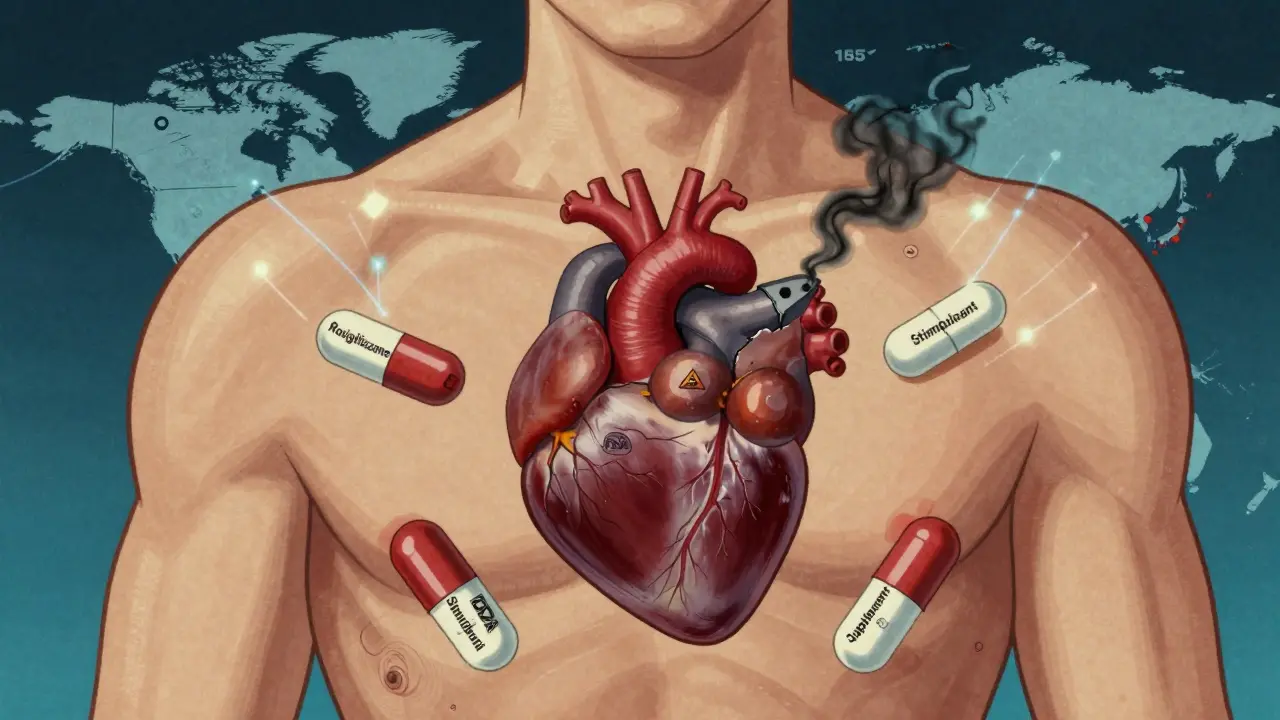
But the most dangerous recalls are the ones no one sees coming. Think of rosiglitazone, a diabetes drug pulled in 2007 after years on the market. Clinical trials didn’t catch it, but once millions of people started taking it, heart attack risks became clear. That’s why the FDA’s system exists-not to prevent every problem, but to catch the ones that only show up after real-world use.
The FDA’s Main Tool: MedWatch
If you want to stay informed, start with MedWatch the U.S. Food and Drug Administration’s official system for reporting and receiving drug safety alerts. It’s free. It’s reliable. And it’s the only source that gives you direct access to FDA-issued alerts before they show up in the news.
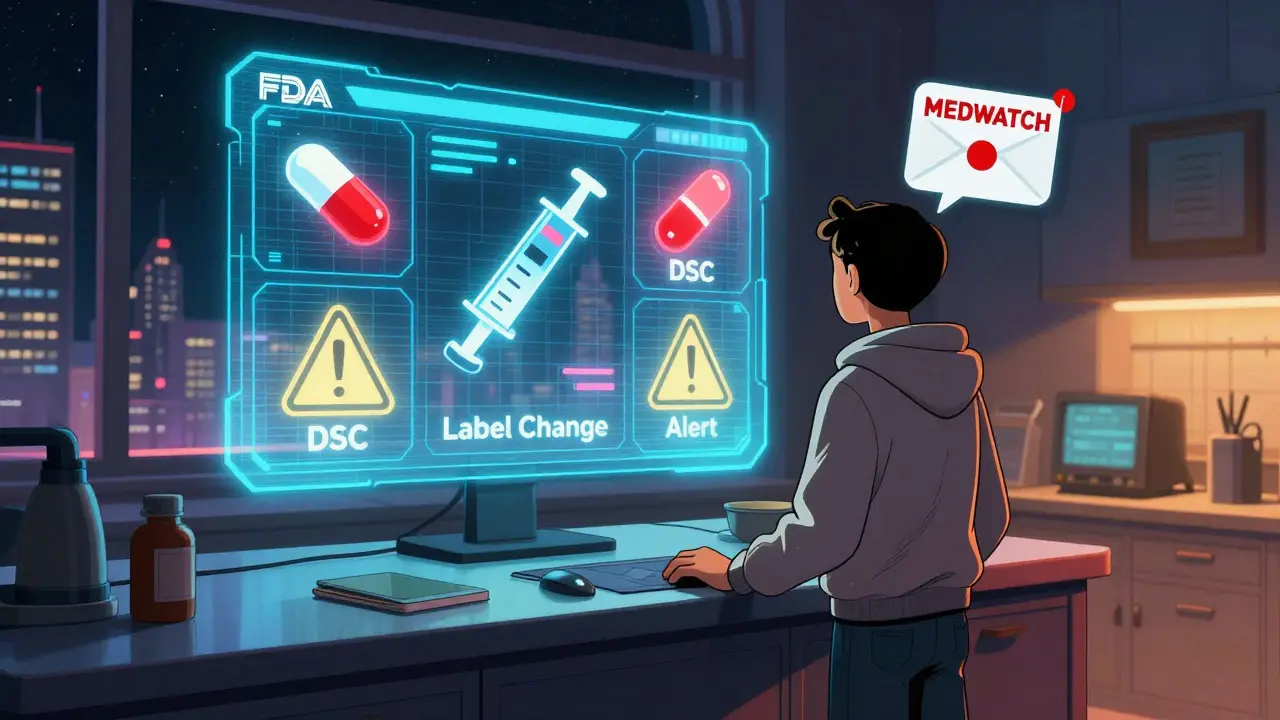
MedWatch has two main parts: one for reporting problems, and one for getting alerts. You can sign up for email notifications of Drug Safety Communications (DSCs)-the FDA’s highest-priority alerts. In 2022, they sent out 37 of these. One in May 2023 warned that all prescription stimulants for ADHD needed updated boxed warnings about heart risks. That wasn’t just one drug-it affected every single one in the class.
You can also download the MedWatch app (available on iOS and Android). It lets you report side effects directly from your phone. In 2023, over 187,000 people had downloaded it. If you’ve ever had a strange reaction to a medication-dizziness, rash, chest pain, trouble breathing-reporting it helps others. The FDA says 85% of reports come from doctors and pharmacists. But consumer reports matter too. They catch things professionals miss.
How Alerts Are Ranked: Not All Warnings Are Equal
The FDA doesn’t send the same alert for every issue. They have three levels:
- Drug Safety Communications (DSCs) - These are urgent. They mean serious risk. You’ll see them on the FDA homepage and in your inbox if you’re subscribed.
- Drug Alerts and Statements - These are important updates, like changes to dosage instructions or new warnings about interactions.
- Labeling Changes - These are updates to the official drug package insert. They’re technical, but if your pharmacist updates your prescription label, this is why.
Here’s what most people don’t realize: you don’t need to read every alert. The FDA sends out dozens of minor updates every month. The key is knowing which ones require action. If you’re taking a medication and see a DSC, check with your doctor or pharmacist immediately. Don’t stop taking it on your own-some drugs are dangerous if stopped suddenly. But don’t ignore it either.
What You Can’t Rely On
Google searches? News headlines? Social media? These aren’t reliable.
Facebook posts about a "scam drug"? Often false. A news article from last week? It might be outdated. The FDA updates its website daily. Most other sources update weekly-or not at all.
And here’s another blind spot: dietary supplements. The FDA doesn’t review them for safety before they hit shelves. They only act after reports of harm. In 2022, there were 2,750 adverse event reports for supplements-but only 12 formal safety alerts. That means if you’re taking herbal products, energy pills, or weight-loss powders, you’re on your own. Always check the label. Look for third-party testing seals like USP or NSF. And if you feel weird after taking one, report it.
How Doctors and Pharmacies Stay Informed (And Why You Should Too)
Hospitals use automated systems that push alerts directly into electronic health records. But even they’re overwhelmed. A 2023 study found clinicians get an average of 67 drug safety alerts per week. Most of them are ignored. Why? Because too many are low-priority.
That’s why smart clinics now filter alerts into three tiers: Critical (act now), Important (review within 24 hours), and Informational (just know). If your doctor’s office uses a system like this, they’re doing it right. Ask them how they handle alerts. If they say they just "read the FDA website," they’re not doing enough.
Pharmacists are your frontline defense. When you pick up a prescription, ask: "Has there been any new safety info on this drug?" Most will check in seconds. If they say they don’t know, find a new pharmacy. Your medication safety isn’t optional.
Global Systems: What Happens Outside the U.S.?
The FDA isn’t alone. The European Medicines Agency (EMA) runs EudraVigilance, which tracks over 25 million reports. Health Canada has its own system. And the World Health Organization (WHO) runs VigiBase, which collects reports from 155 countries.
If you’re traveling, or if your medication was made overseas, this matters. A drug recalled in the U.S. might still be sold in another country. The WHO’s global database helps identify patterns across borders. For example, a heart rhythm problem seen in Brazil might also show up in Australia or Germany. That’s how global safety nets work.
But there’s a gap. High-income countries report 212.7 adverse events per 100,000 people. Low-income countries report just 0.2. That means most of the world’s population is invisible to these systems. If you’re in a country with weak reporting, you need to be even more cautious.
What You Should Do Right Now
Here’s your action plan:
- Go to fda.gov/medwatch and sign up for email alerts.
- Download the MedWatch app on your phone. Set it to notify you when new DSCs are posted.
- Keep a list of all your medications-name, dose, why you take it. Update it every time your doctor changes something.
- Ask your pharmacist at every visit: "Has there been any new safety info on any of these?"
- If you have a reaction-itching, swelling, chest pain, confusion-report it. You can do it online or by phone. It takes five minutes. It could save someone’s life.
You don’t need to be a doctor to make this work. You just need to be proactive. The system only works if people use it.
What’s Changing in 2024?
The FDA launched its AI-powered Drug Safety Sentinel System in January 2023. It scans 1.2 billion patient records to spot problems 40% faster than before. It’s already catching issues that human reviewers missed.
They’re also testing social media monitoring. Every month, they’re analyzing 15 million health-related posts for signs of unexpected side effects. If people are complaining online about a drug causing seizures, the system can flag it before the FDA gets 10 formal reports.
But funding is tight. The FDA’s Office of Surveillance and Epidemiology is $47 million short in 2024. That could delay upgrades. That’s why your participation matters more than ever. Every report you file, every alert you read, every question you ask your pharmacist-keeps the system alive.
How do I know if my medication has been recalled?
Check the FDA’s Drug Recalls page at fda.gov/drugrecalls. You can search by drug name, manufacturer, or recall date. You can also sign up for email alerts through MedWatch. Never rely on news stories or social media-they’re often delayed or inaccurate.
Should I stop taking a drug if I hear about a recall?
Not always. Some recalls are about contamination and don’t affect the drug’s safety. Others are about labeling errors. If the recall is a Drug Safety Communication (DSC), contact your doctor before stopping. Suddenly stopping some medications-like blood pressure pills or antidepressants-can be dangerous. Your doctor will tell you if you need to switch or adjust.
Can I report a side effect if I’m not in the U.S.?
Yes. If you’re outside the U.S., report to your country’s health authority. If you’re unsure, you can still submit to the WHO’s VigiBase through their online portal. Even if you’re not in the U.S., your report helps global safety monitoring. The WHO collects reports from 155 countries.
Do over-the-counter drugs and supplements get recalled?
Yes, but less often. The FDA doesn’t approve supplements before they’re sold, so they only act after harm is reported. In 2022, there were 2,750 reports about supplements, but only 12 formal recalls. Always check for third-party testing seals like USP or NSF on supplement bottles. If you have a bad reaction, report it-even if it’s "natural."
Why do I keep getting so many drug alerts from my pharmacy?
Many pharmacies use automated systems that flag every possible interaction, even minor ones. This is called "alert fatigue." You’re not alone-74% of primary care doctors say they ignore most alerts. Ask your pharmacist to prioritize only Critical and Important alerts. You can also request a printed summary of safety updates instead of constant digital notifications.
If you take any medication-prescription, over-the-counter, or supplement-your awareness is your protection. The FDA doesn’t have eyes everywhere. But together, with millions of people paying attention, the system works. Stay informed. Stay alert. And never assume someone else is watching out for you.

Korn Deno
I just signed up for MedWatch after reading this. Took me 3 minutes. Why the hell didn't I do this years ago? My mom's on blood thinners and I never even checked if her script got flagged. Stupid.

Jefferson Moratin
The real failure isn't the FDA's system-it's our passive relationship with medical authority. We treat prescriptions like sacred texts, not data points in a dynamic system. The moment you stop seeing medication as something you 'take' and start seeing it as something you 'monitor,' you become part of the surveillance network that keeps us all safe.
This isn't about compliance. It's about epistemic responsibility.

rebecca klady
I’m so glad you mentioned supplements. My aunt took one of those ‘natural’ energy boosters and ended up in the ER. The label had zero warnings. I reported it and never heard back. Feels like shouting into a void.

Alex Arcilla
So let me get this straight - we’ve got AI scanning a BILLION records, social media monitoring 15 million posts a month, and yet the whole system’s $47 mil short? Bro. The FDA’s got more tech than my ex’s new boyfriend and less budget than a college dorm pizza fund. We’re letting the future get starved by bureaucracy. Sad.

Brandon Shatley
i just looked up my meds on fda.gov and found a recall from last year i never knew about. my heart rate has been weird lately. maybe it’s connected. i’m calling my dr tomorrow. thanks for the kick in the pants.

Blessing Ogboso
In Nigeria, we don’t have MedWatch. We have WhatsApp groups. My cousin in Lagos just sent me a screenshot of a drug that caused seizures - no official alert, just a mother’s post with a photo of her child in the hospital. We rely on community because systems fail. The FDA’s AI is brilliant, but if it doesn’t reach places like this, it’s just noise. Global safety isn’t built on databases - it’s built on people sharing what they’ve seen.
My daughter takes antimalarials. I check every month. I tell five others. That’s how we survive.

Caroline Dennis
DSCs are the only alerts that warrant immediate clinical review. Everything else is noise. If your EMR isn’t filtering by severity tier, you’re contributing to alert fatigue. Pharmacies need to stop spamming. Clinicians need to demand intelligent triage. Patients need to ask for summaries - not notifications.

Marissa Staples
I’ve been taking lisinopril for 8 years. Never thought to check if it was recalled. I just assumed the pharmacy checked. Turns out they didn’t. I’m not mad. I’m just… embarrassed. I didn’t think I needed to be this involved. But now I get it. My life isn’t outsourced.

Pat Fur
I downloaded the app. It’s weirdly satisfying to report a side effect. Like I’m doing my part. Also - I just realized I’ve been taking a supplement with ‘natural caffeine’ that’s actually synthetic. The label lied. I’m done trusting ‘natural’.

Anil Arekar
In India, we have no centralized system comparable to MedWatch. Pharmacists are often the only source of information. Yet, they are overburdened and undertrained. The FDA’s approach is commendable, but scalability remains a challenge in low-resource settings. A global framework, supported by WHO and integrated with local health workers, is imperative. Patient advocacy must be institutionalized, not individualized.

peter vencken
my dr told me to 'just google it' if i had concerns. i did. first result was a blog that said my drug was 'a scam.' i called the pharmacy. they checked medwatch in 20 seconds. turned out it was a label mixup. dr should’ve known that. we need better training.

Chris Crosson
If you’re not reporting side effects, you’re not just passive - you’re complicit. The FDA doesn’t have magic eyes. It has data. And data comes from people. I reported a rash after my statin. Two weeks later, they updated the warning. Someone else’s kid might not get that rash because I took five minutes. Do it. Seriously.
Write a comment