Recent POST



Medication Value Clarification Tool
Before your next appointment, use this tool to clarify what matters most to you. This helps you and your doctor move from passive receiving to active partnership.
Step 1: Rank Your Priorities
Step 2: Visualizing Risk (The "Icon Array")
Your Priority: None
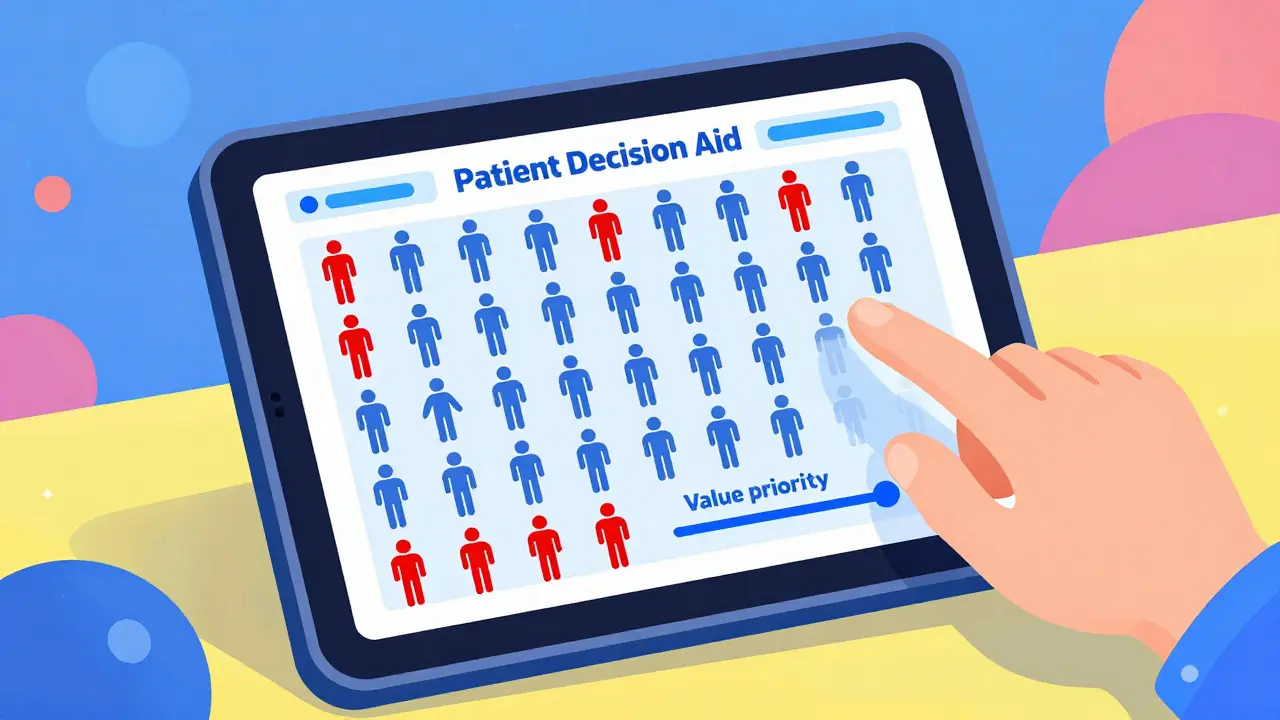
Example: If this priority was a potential side effect, here is how a Decision Aid would visualize a 3% risk (3 out of 100 people):
Discussion Prompt for your Doctor:
"I've identified that [Priority] is very important to me. Can we look at the absolute risk of this for the new medication compared to my current one?"
Select your priorities on the left to see how this information is presented to avoid "data overload."
Changing a prescription isn't as simple as swapping one pill for another. For many, the fear of a new side effect or the uncertainty of whether a new drug actually works better can lead to a state of "decisional conflict." In fact, a 2022 JAMA Internal Medicine study found that 25-50% of patients stop taking their meds within the first year simply because their concerns about risks and benefits weren't addressed. This is where medication switching decision aids is structured, evidence-based tools designed to help patients and doctors make a joint decision about changing a treatment plan come into play.
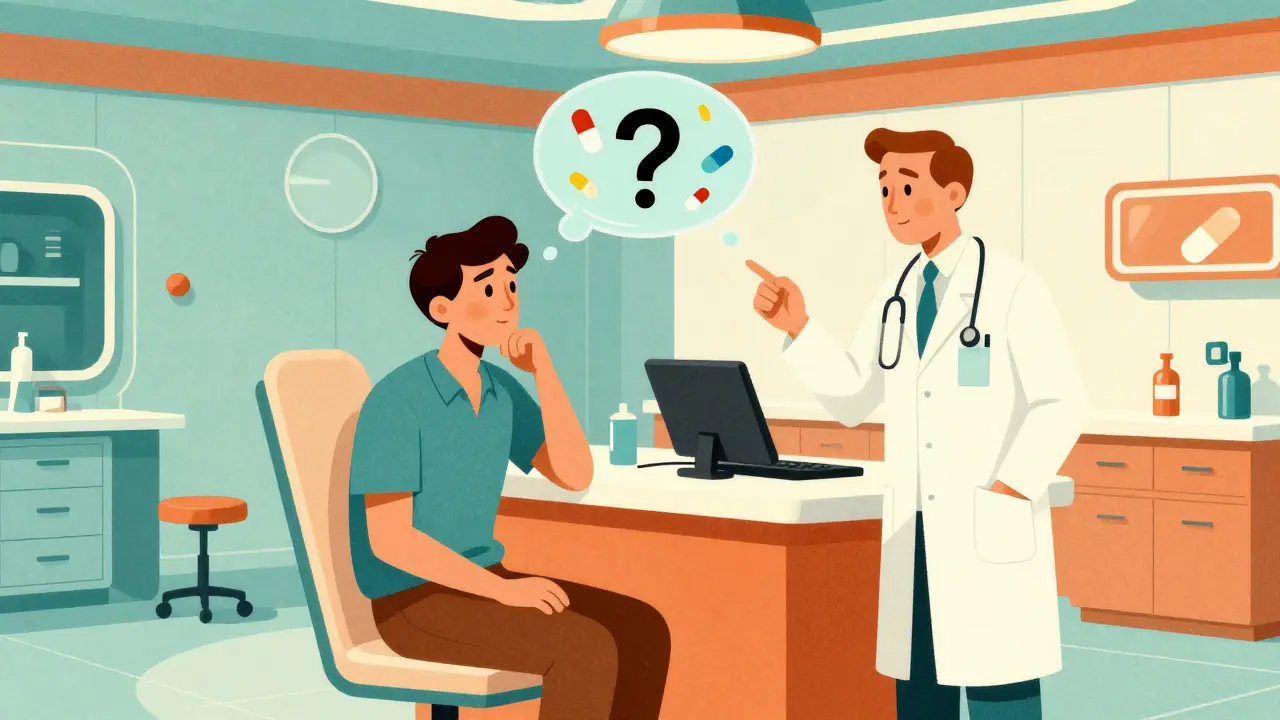
If you've ever felt like your doctor rushed through the "pros and cons" of a new drug, you aren't alone. These tools move you from being a passive recipient of a prescription to an active partner in your own care. They don't tell you which drug to take; instead, they give you a clear map of the trade-offs so you can choose the path that fits your life.
What Actually Happens Inside a Decision Aid?
A good decision aid does more than just list side effects. It uses specific psychological and visual tools to make complex data easy to digest. Instead of a doctor saying, "There's a low risk of bleeding," a Patient Decision Aid (PDA) might use an icon array-a grid of 100 little people where only 3 are colored in-to show exactly how likely a side effect is. This visual approach stops the brain from overestimating rare risks.
Most of these tools, like those managed by the Ottawa Hospital Research Institute or the Mayo Clinic, include a "value clarification" exercise. This is essentially a priority list. Do you care more about how often you have to take the pill, the monthly cost, or whether the drug causes weight gain? By ranking these, the tool helps you see which medication aligns with your personal priorities.
| Feature | Traditional Counseling | Decision Aids |
|---|---|---|
| Information Flow | One-way (Doctor to Patient) | Interactive / Two-way |
| Risk Presentation | Vague terms ("Low/High") | Absolute numbers & Visuals |
| Patient Role | Passive recipient | Active partner |
| Knowledge Retention | Lower (standard pamphlets) | 32% higher at 6-month follow-up |
When These Tools Work Best (and When They Don't)
Not every medical switch requires a complex tool. Decision aids shine in "preference-sensitive" scenarios-situations where there are multiple valid options, each with different trade-offs. For example, if you're choosing between different GLP-1 agonists for diabetes, one might be better for weight loss while another is easier on the stomach. A study in Diabetes Care showed that using these tools led to 41% better alignment between what the patient valued and the drug they actually ended up taking.
However, they aren't a magic bullet. In emergency rooms where a medication change must happen in seconds, there's no time for a 10-minute digital module. Additionally, these tools require a certain level of cognitive function. Research in the Journal of General Internal Medicine found that for patients with severe cognitive impairment (specifically those with MMSE scores below 24), these aids didn't provide a significant benefit over standard care because the probabilistic data was too hard to process.
The Real-World Trade-Offs for Doctors
If these tools are so effective, why isn't every clinic using them? The biggest hurdle is time. According to a 2023 Annals of Internal Medicine study, implementing a decision aid adds about 7 to 12 minutes to a consultation. In a world of 15-minute appointments, that's a huge ask. About 68% of primary care physicians cite workflow disruption as the main reason they don't use them.
That said, there is a learning curve. Once a doctor uses these tools 10 or more times, the added time drops from 12 minutes down to about 5 minutes per visit. They get faster at guiding the patient through the tool, and the conversation becomes more focused. The VA's MIRECC program has been a leader here, integrating these aids directly into electronic health records so the data is right there during the visit.
Common Pitfalls and Expert Warnings
While most experts, including those from the National Academy of Medicine, push for wider adoption, some warn against "data overload." Dr. John Ioannidis of Stanford has pointed out that some patients misinterpret absolute risk. For instance, if a tool says a drug reduces the risk of a heart attack from 10% to 7.8%, some patients mistakenly think the risk has been eliminated entirely.
There's also the issue of "digital divide." Some users report that accessing these tools on a tablet or portal is frustrating. If the interface is clunky, the patient spends more time fighting the software than thinking about their health. This is why the latest standards, like WCAG 2.1 AA, are being applied to make these tools accessible to people with visual or motor impairments.
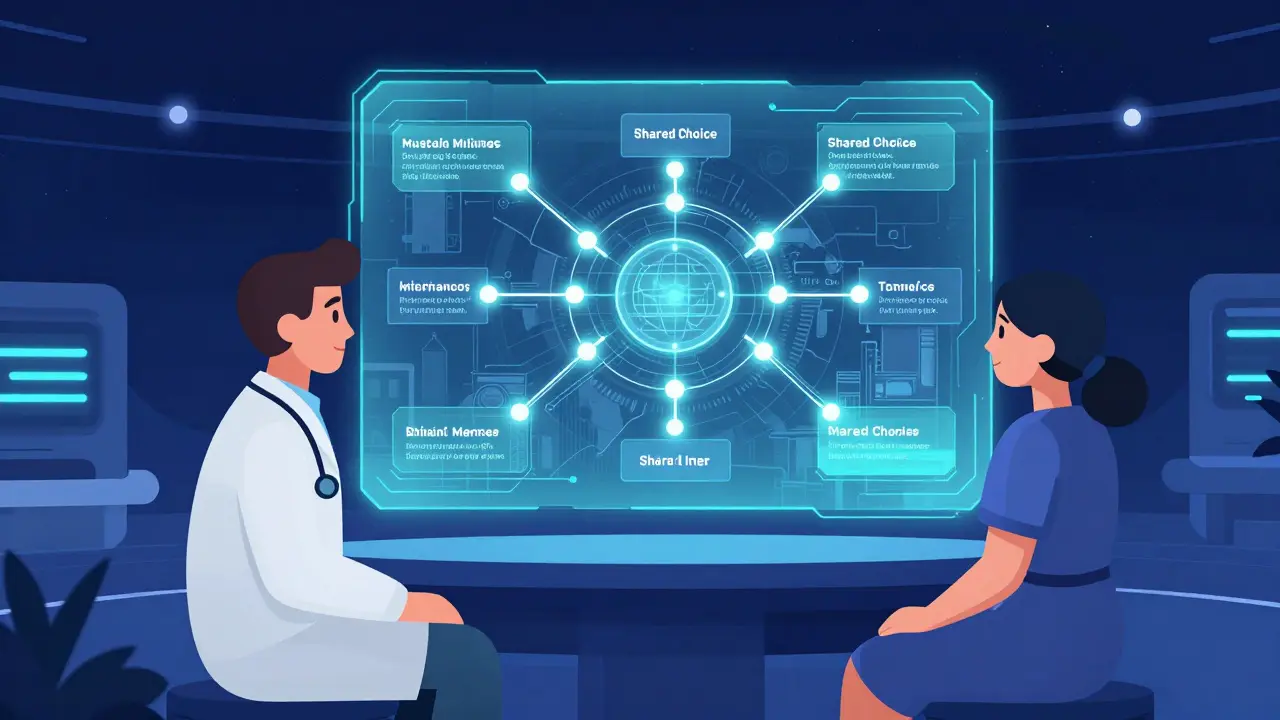
How to Use a Decision Aid for Your Next Visit
If you're considering a switch in medications-especially for antidepressants, anticoagulants, or diabetes meds-you can request a decision aid. The most effective way to use them follows a specific rhythm:
- The Identification: Your doctor identifies that you're at a crossroads (e.g., "Your current blood pressure med isn't working well enough, let's look at alternatives").
- The Prep: You receive the decision aid 24 to 72 hours before your appointment. This gives you time to browse the risks and benefits without the pressure of the clock.
- The Value Check: You use the tool to rank what matters most to you (e.g., "I care more about avoiding drowsiness than I do about the cost").
- The Shared Choice: During the visit, you and your doctor discuss your rankings and the evidence, then jointly pick the drug.
The Future: AI and Personalized Risk
We are moving toward a world where these tools aren't generic. In early 2024, Intermountain Healthcare began using machine learning to tailor how risk is presented. If the AI knows you learn better through stories than through percentages, it can adjust the interface. This personalization aims to solve the "too many numbers" problem that some patients report.
Furthermore, the FDA is tightening the rules. Because some developers were caught "minimizing serious risks" to make certain drugs look more attractive, new guidelines require a strictly balanced presentation of harms and benefits. This ensures that the tool remains a neutral piece of evidence, not a sales pitch for a pharmaceutical company.
What is a medication decision aid exactly?
It is a structured tool-often a website, app, or interactive document-that provides balanced evidence on the risks and benefits of different medication options. Unlike a brochure, it includes interactive elements to help you figure out which side effects you are willing to tolerate and which are deal-breakers.
Do these tools replace my doctor's advice?
No. They are designed to support "shared decision-making." The tool provides the data and helps you clarify your values, but the final decision is a joint agreement between you and your healthcare provider based on your specific medical history.
Which medications are best suited for these tools?
They are most useful for "preference-sensitive" decisions. Common examples include switching antidepressants, choosing between different blood thinners (anticoagulants), or selecting a new diabetes medication like a GLP-1 agonist, where different options have very different side-effect profiles.
Are these tools free for patients?
Many are free, especially those provided by academic institutions like the Ottawa Hospital Research Institute or government systems like the VA. Some commercial versions may be integrated into your health plan's patient portal.
What if I find the numbers and percentages confusing?
Look for tools that use "icon arrays" (pictures of people) rather than just percentages. If you're still confused, write down the specific numbers that worry you and ask your doctor, "In real terms, how many people actually experience this side effect?"

Trish Perry
It's interesting how we're outsourcing our intuition to digital grids. There's a certain irony in trying to remove the "guesswork" from health when the human experience is basically one big guess. Still, having a way to visualize risk instead of just hearing a vague "low chance" feels like a step toward actually owning our autonomy in a system that usually just treats us like barcodes.

Justin Crice
The efficacy of these Patient Decision Aids (PDAs) likely correlates with the reduction of cognitive load during the heuristic processing of probabilistic outcomes. Utilizing icon arrays effectively mitigates the framing effect, ensuring that the absolute risk reduction is not conflated with relative risk, which is a common failure in standard clinical communication.

Thomas Jorquez
I think it's a gud idea to let patients prepare befor the actual visit. Most doctors are way too rushed anyway.

Jarrett Jensen
One finds it utterly pedestrian that such rudimentary tools are presented as a revolution in patient care. The inherent flaw remains the reliance on the patient's capacity to synthesize data-a capacity that is, in the vast majority of the populace, severely lacking. It is quite pretentious to assume that a few colorful icons can bridge the chasm between clinical expertise and layperson ignorance.

Darrin Oneto
This is some real top-shelf stuff right here. Totaly changes the game for anyone who feels like a lemon in the doctor's office. Love the idea of a "value check" to keep things crystal clear.

Peter Minto
Why we letting some fancy software tell us what to take!! This is just more way for the govment to track our health data and push some weird new drugs on us. I dont trust these "aids" from some fancy hospital in Canada or whatever. Keep it simple and trust a real American doctor who knows what hes doin without a tablet in his face!!

Amber McCallum
People just don't get it. Your body is a temple but you're treating it like a science project. These tools are just a way to feel in control when you're actually just following a map made by someone else. It's all very surface level. If you actually looked inside, you'd see that the data doesn't matter as much as your energy alignment with the medicine.

Michael Yoste
I totally see where you're coming from, but you have to realize that most people are just too scared to make these choices alone. It's kind of sad that we've reached a point where we need a little grid of people to tell us if we're safe. I've spent years helping people find their inner strength and this just feels like a band-aid for a deeper lack of trust in the healing process.

Jenna Riordan
I want to know exactly which portals your specific insurance uses these tools on and if they share that data with third-party marketers. Most of these "free" tools are just data harvesting operations in disguise. You should check your privacy settings immediately if you used one of these.
Write a comment